The Pune edition of the DEP MeshWorks & AIWorks Conclave 2026, organized by Detroit Engineered Products, brought together a vibrant community of design, simulation, and manufacturing professionals to explore the next phase of digital engineering. Held on April 7, 2026, the event was part of a multi-city series across India and witnessed participation from around 250 professionals representing leading organizations such as Tata Motors, Mahindra & Mahindra, Whirlpool Corporation, and Bharat Forge, among others. The strong turnout reflected the growing industry interest in leveraging AI within engineering workflows.
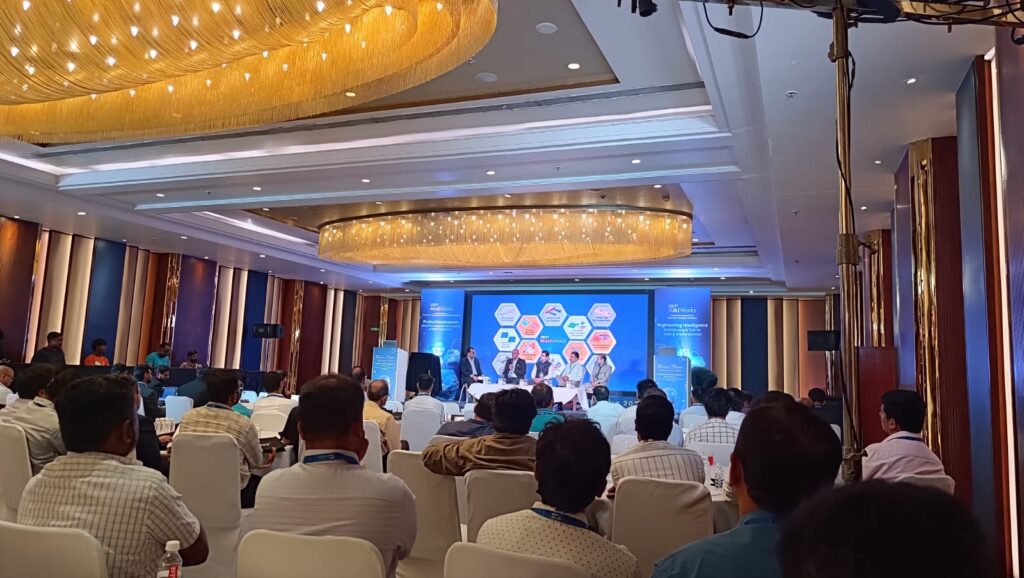
From the outset, the conclave established a clear narrative: AI in engineering is no longer experimental but is actively shaping how products are designed, simulated, and manufactured. The event opened with a keynote by Radha Krishnan, who shared a forward-looking perspective on the convergence of AI, CAE, and manufacturing. His address emphasized how AI is redefining the speed, scalability, and confidence of modern product development, while also reflecting on how concepts discussed in earlier editions of the conclave are now maturing into practical, deployable solutions within MeshWorks.
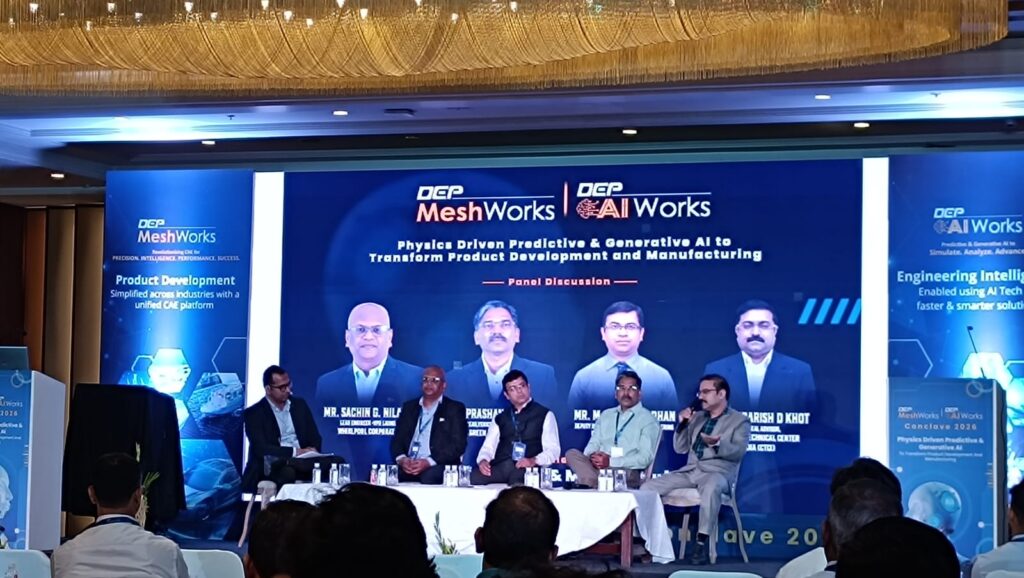
A key highlight of the event was the panel discussion on AI in simulation and manufacturing, where industry experts including Ambarnath D Khot from Cummins Inc., Prashant Chavan from Altigreen Propulsion Labs, Mahesh Patwardhan from Automotive Research Association of India, and Sachin Nilawar from Whirlpool Corporation shared practical insights from their respective domains. The discussion went beyond theory, focusing on how AI is being implemented across industries, from early-stage design to manufacturing, and addressing real challenges such as limited data availability and integration with existing engineering processes.
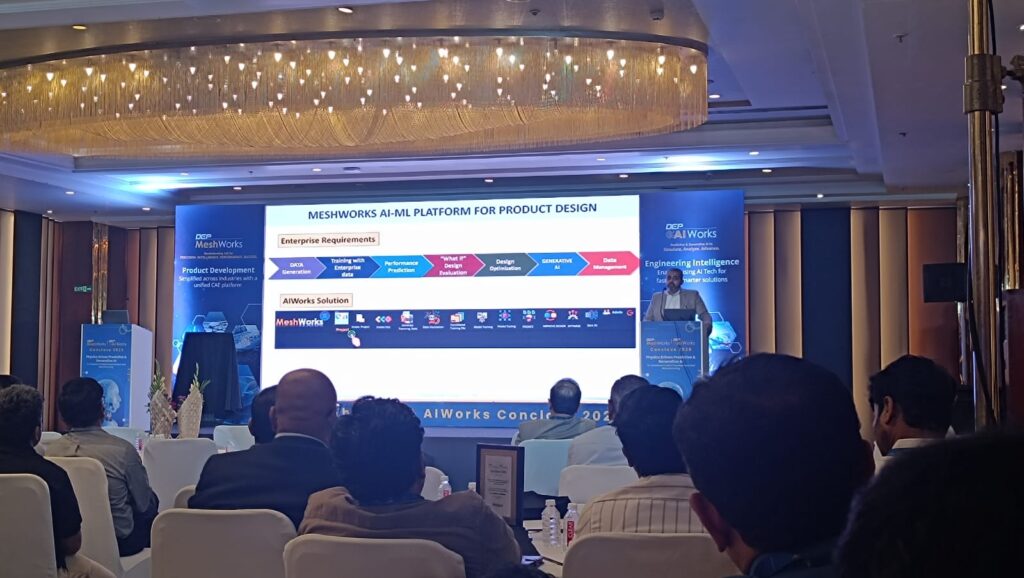
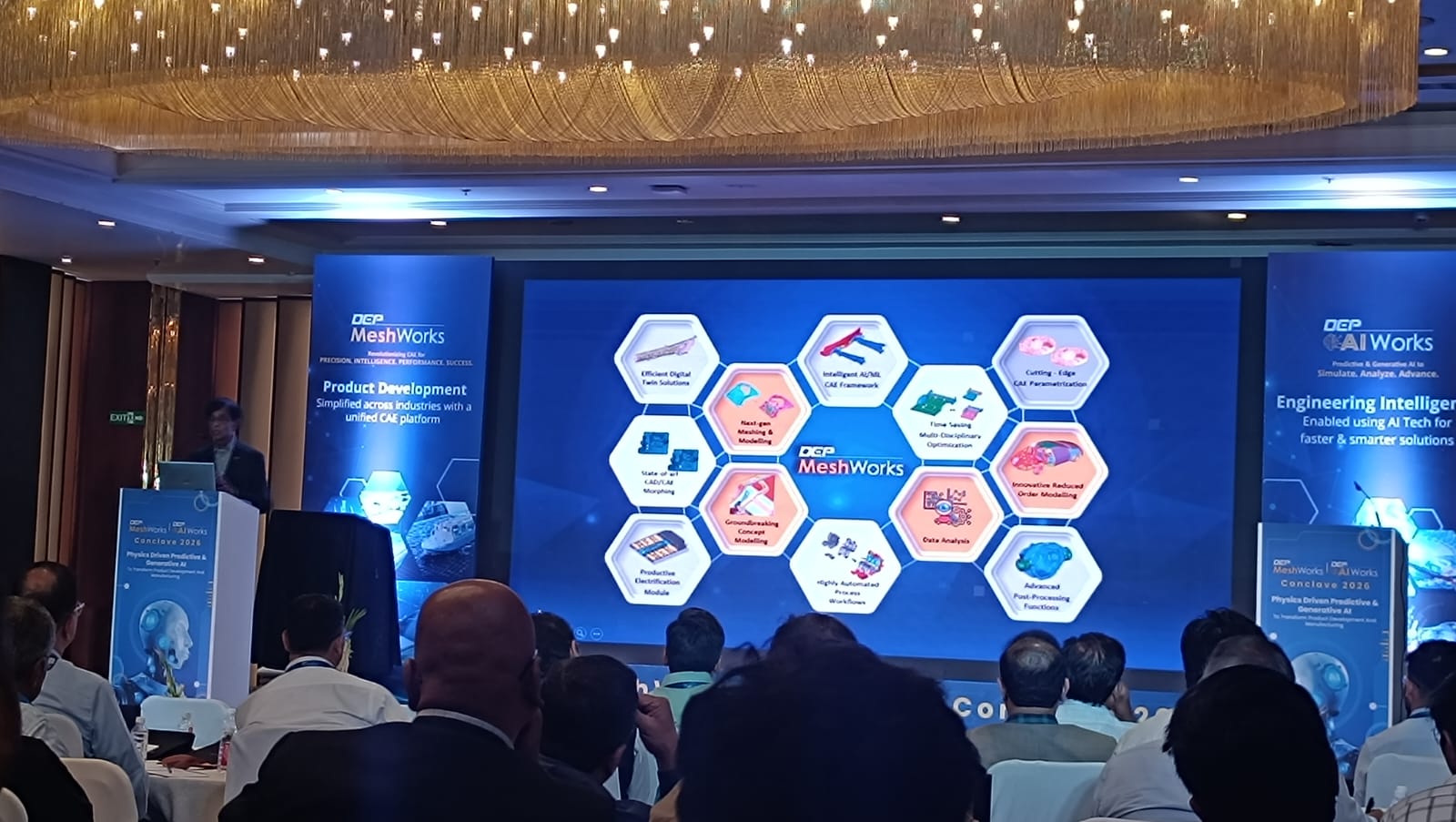
The spotlight session on MeshWorks and AIWorks provided a deeper understanding of how DEP is embedding intelligence into engineering workflows. MeshWorks, known for its strong capabilities in CAE pre-processing, meshing, and model preparation, is evolving into a more intelligent platform by integrating AIWorks. This combination transforms traditional simulation workflows into systems capable of delivering predictive insights and enabling faster decision-making. What stood out during the session was the shift from simulation as a validation tool to simulation as a real-time decision support system. Engineers can now access instantaneous predictions for structural performance, evaluate multiple load cases, and gain insights without running full-scale simulations, significantly reducing turnaround times.
AIWorks further extends this capability by introducing predictive physics and generative intelligence directly into the engineering cycle. By leveraging historical simulation data and combining it with physics-based models, AIWorks enables rapid estimation of performance parameters such as stress, deformation, and flow behavior. This allows engineers to explore design alternatives much earlier in the development process, reducing reliance on time-intensive simulation runs. The introduction of generative AI also opens new possibilities, where the system can suggest optimized design configurations, enabling engineers to focus more on innovation rather than iteration.
Another notable aspect of the technology showcased was the integration of geometry-driven intelligence. By working directly with CAD data, the platform can identify critical design features, prepare simulation-ready models, and even predict manufacturability outcomes. This approach not only accelerates the transition from design to simulation but also ensures that engineering decisions are aligned with downstream manufacturing requirements. The inclusion of capabilities for CFD prediction, manufacturing process evaluation, and multi-disciplinary optimization further highlights how the platform is evolving into a comprehensive engineering solution.
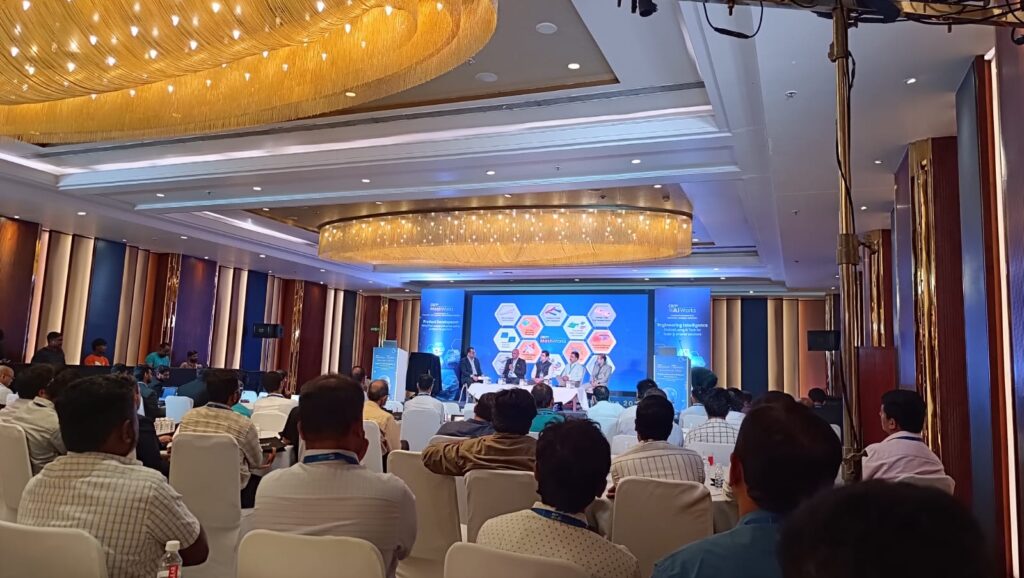
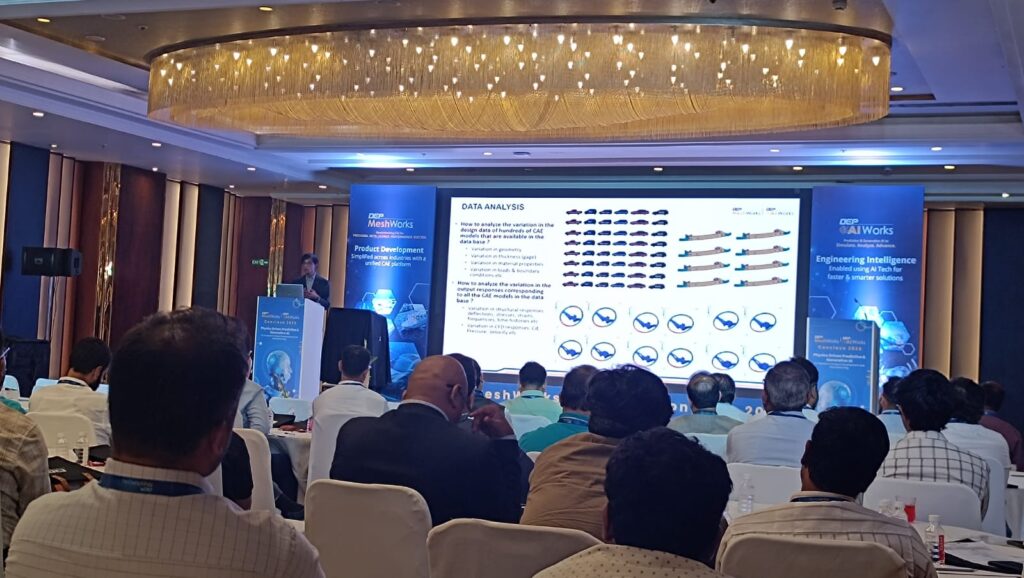
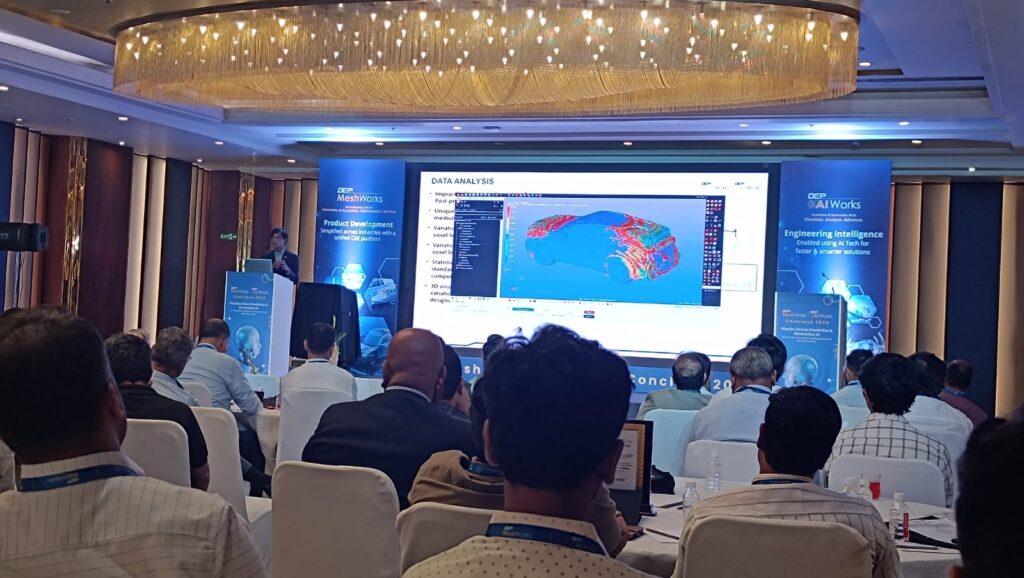
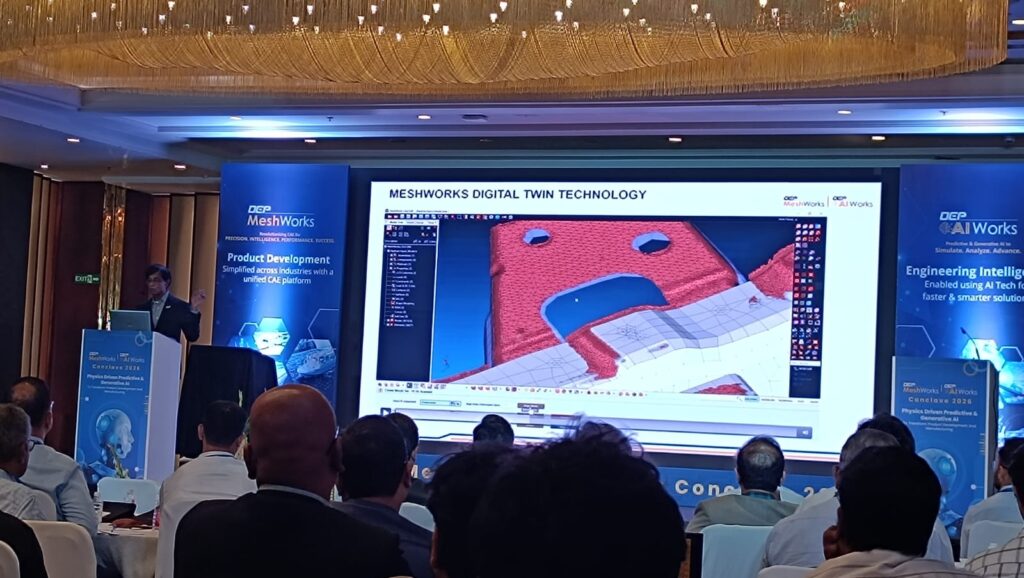
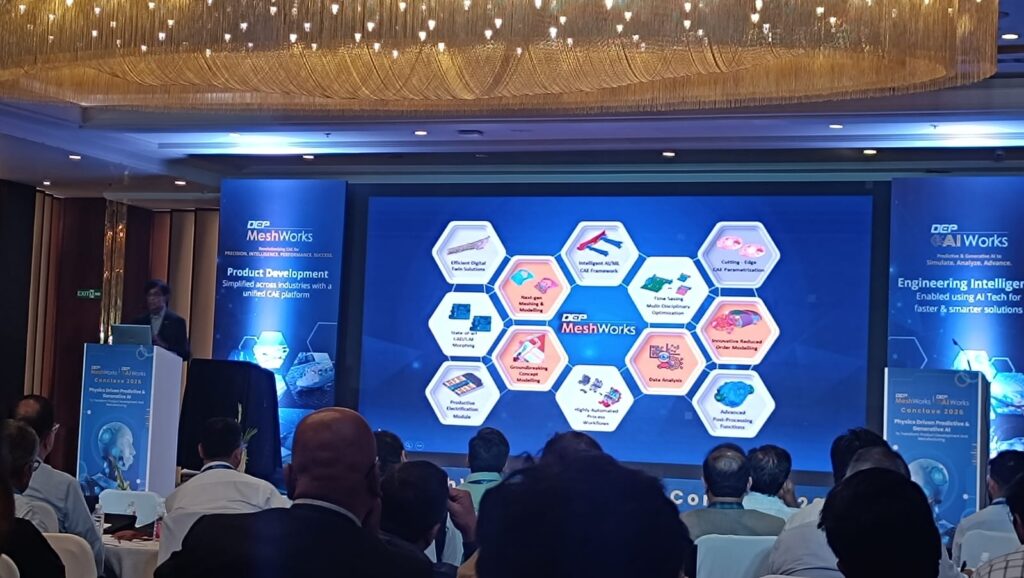
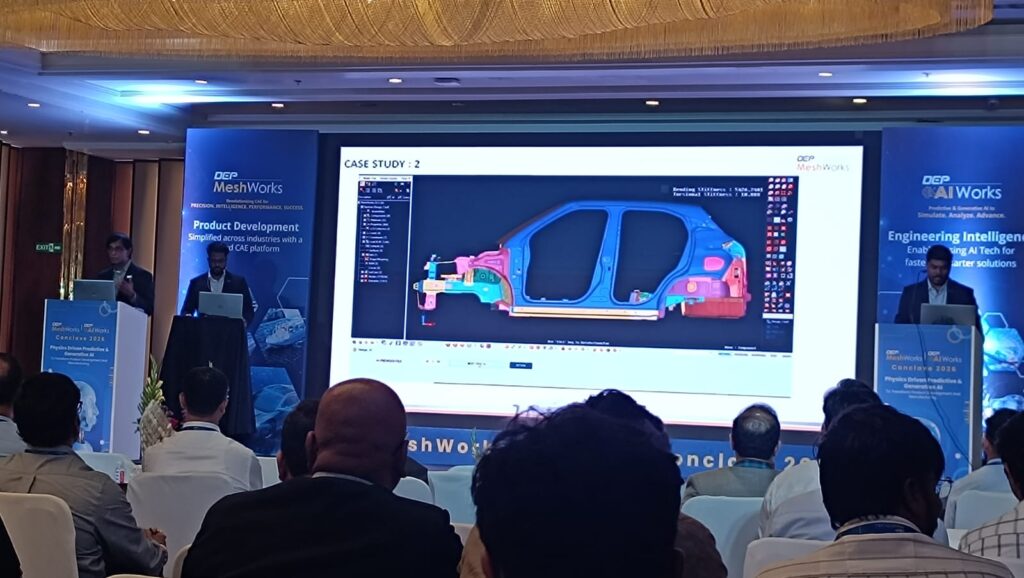
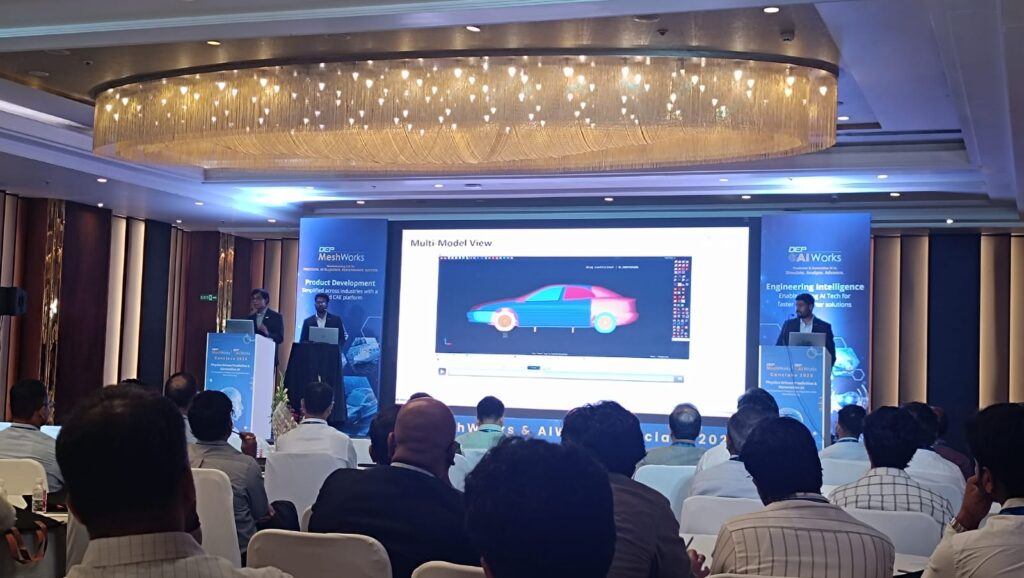
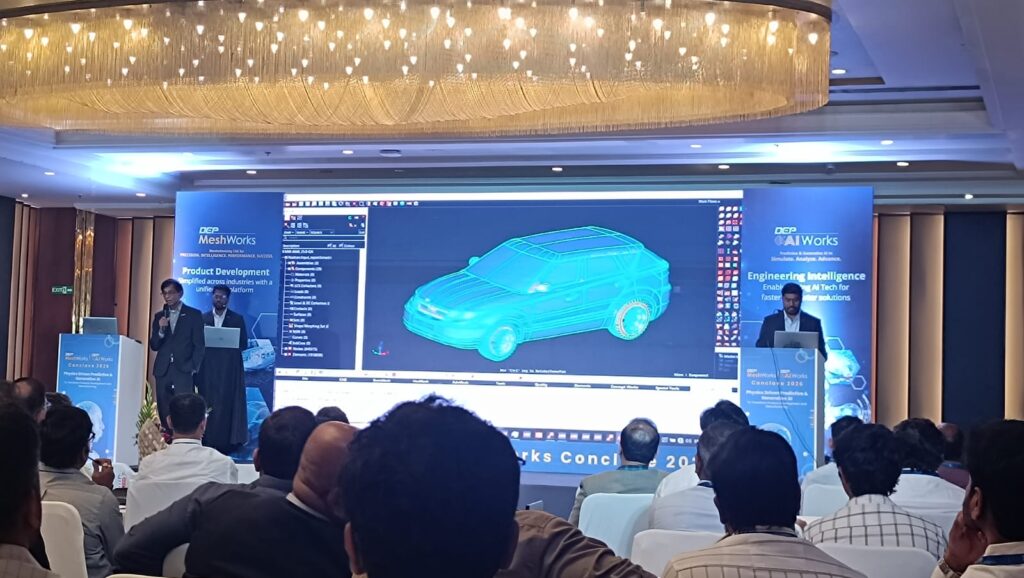
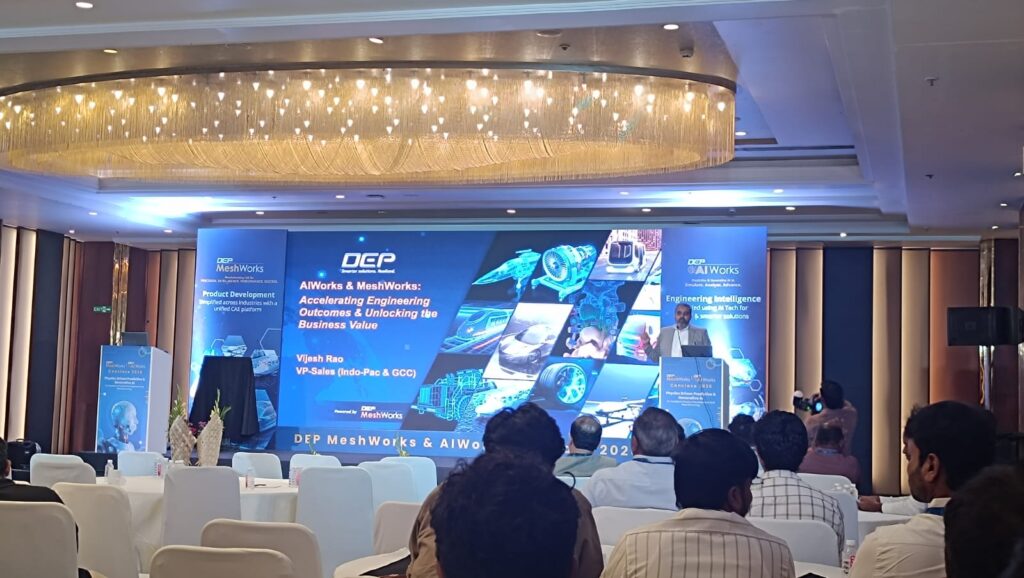
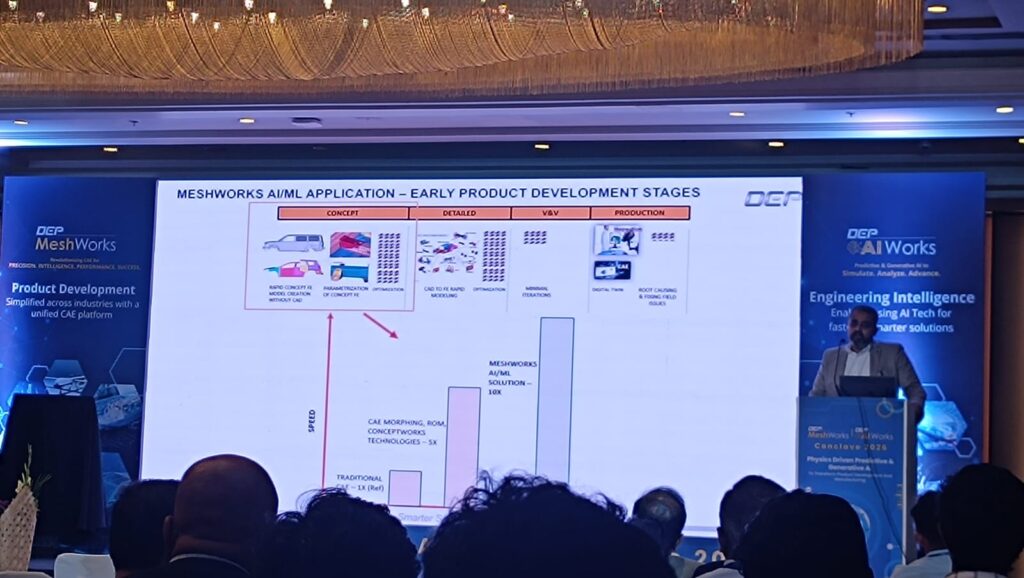
The concluding session by Vijesh Rao emphasized the business impact of these technologies, demonstrating how AI and automation can be seamlessly integrated into existing product development cycles. The live demonstrations highlighted the ease of adoption and the tangible benefits in terms of reduced development time, improved accuracy, and enhanced engineering productivity. The presence of DesignTech Systems as a regional partner further reinforced the accessibility of these solutions for Indian industries.
Overall, the Pune conclave successfully showcased a clear shift in the engineering landscape—from traditional, simulation-heavy workflows to intelligent, AI-driven decision-making environments. By combining the strengths of MeshWorks with the advanced capabilities of AIWorks, Detroit Engineered Products is enabling organizations to move toward faster, smarter, and more confident product development. For the engineering community, the event provided not just a glimpse of future possibilities but a practical roadmap for adopting AI in real-world workflows.