Home Blog Page 16

ESTECO Releases VOLTA, modeFRONTIER, nDAI 2026R1

0
2026R1

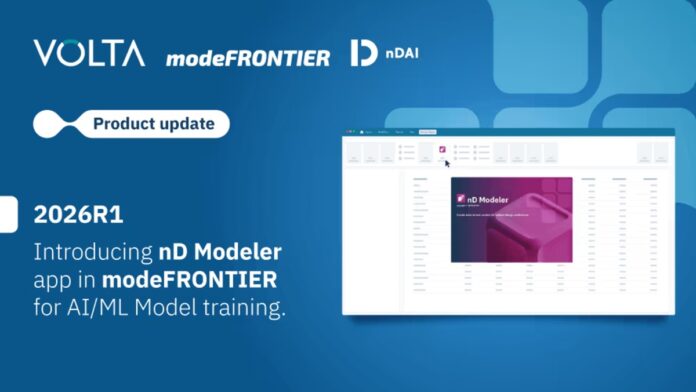
TRIESTE, Italy, Mar 11, 2026 – ESTECO is pleased to announce that the new VOLTA, modeFRONTIER and nDAI 2026R1 is now available. modeFRONTIER introduces nD Modeler, the app within the new ESTECO’s nDAI platform for building data-driven models for instant design predictions. VOLTA makes the Data Manager more intuitive, customizable, and robust.

Release highlights

Introducing the nD Modeler for AI/ML Model training

We announce the release of nD Modeler, the first addition to the new ESTECO’s nDAI platform for instant design predictions, sustainable AI/ML training and data governance. The nD Modeler allows you to build, compare, and train surrogate models directly from your existing simulation data, helping you choose the right AI/ML approach based on accuracy, data availability, and design goals.

nD Modeler is now fully integrated with modeFRONTIER, allowing you to launch it directly from your current project and use any Design Space table as the training dataset.

VOLTA: improved Data Manager experience

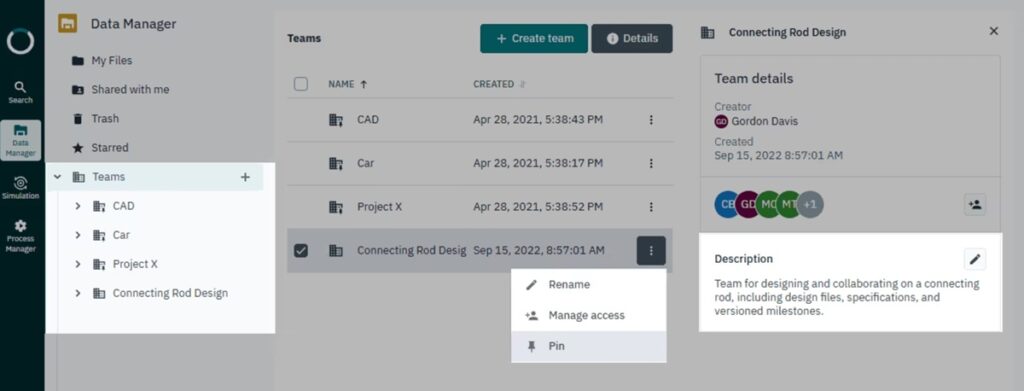
The navigation pane now features a dedicated Teams section, joining your familiar My Files, Shared with Me, Starred, and Trash. You can significantly reduce the number of clicks required to reach the areas you use the most. Every section in the navigation pane is now expandable. You can quickly browse and navigate to teams, files, and folders directly from the sidebar. With the new Teams section you can also add a description in the Details panel, to explain the team’s purpose, scope, or ownership.

3465

For other new features please refer to the release notes included in the software updates.

About ESTECO

ESTECO is an independent software provider, highly specialized in numerical optimization and simulation data management with a sound scientific foundation and a flexible approach to customer needs. With more than 15 years’ experience, the company supports leading organizations in designing the products of the future, today. ESTECO smart engineering suite brings enterprise-wide solutions for design optimization, simulation data management and process integration and automation with the aim of helping companies excel across this innovation journey. Over 300 international organizations across many different industries have chosen ESTECO to consolidate specialized expertise, streamline teamwork and boost product development. Founded in 1999, the company is headquartered in Trieste (Italy), with offices in Michigan (USA), Pune (India) and an international network of channel partners. For more information, visit www.esteco.com.

Invitation
Siemens sd17

Smart Manufacturing and Automation: The Next Leap for India’s Industrial Growth

0
DAILYcadcam pune

Why India Needs Automation to Become a Manufacturing Superpower

India stands at a crucial moment in its industrial journey. With initiatives such as Make in India, the country aims to strengthen domestic manufacturing, attract global investment, and become a key player in global supply chains. While India already has a strong industrial base in sectors such as automotive, aerospace, electronics, and heavy engineering, achieving the goal of becoming a true manufacturing superpower will require large-scale adoption of automation and digital manufacturing technologies.

Automation is no longer just a productivity tool—it has become a strategic necessity for companies competing in a globalized market.


The Changing Global Manufacturing Landscape

Global manufacturing is undergoing a massive transformation driven by Industry 4.0, digital engineering, robotics, and artificial intelligence. Leading manufacturing nations such as Germany, Japan, and South Korea have heavily invested in automation technologies to maintain their competitiveness.

To compete effectively with these industrial leaders, Indian manufacturers must accelerate the adoption of robotics, smart manufacturing systems, digital twins, and AI-driven production processes.

Automation will enable Indian industries to produce higher-quality products, reduce manufacturing costs, and scale production efficiently.


Improving Productivity and Efficiency

One of the biggest advantages of automation is the ability to significantly improve productivity.

Automated manufacturing systems can operate with high precision and consistency, minimizing human errors and reducing production downtime. For example, robotic systems used in automotive manufacturing can perform tasks such as welding, painting, and assembly with unmatched accuracy.

Companies using advanced CAD and manufacturing platforms like Siemens Xcelerator, 3DEXPERIENCE and NX, CATIA, SOLIDWORKS can integrate design and manufacturing workflows, enabling faster product development and efficient production planning.

With automation, factories can move toward 24/7 operations, increasing production output without proportionally increasing labor costs.


Enhancing Product Quality

In global markets, product quality is often the key differentiator. Automated manufacturing systems ensure consistent quality across large production volumes.

Advanced technologies such as machine vision systems, automated inspection, and AI-powered analytics can detect defects in real time and ensure that every product meets strict quality standards.

By integrating manufacturing systems with digital platforms such as the 3DEXPERIENCE Platform, Teamcenter companies can maintain a digital thread from product design to manufacturing and quality management.-*

This level of integration enables faster problem resolution and continuous process improvement.


Addressing Skilled Workforce Challenges

India has a large workforce, but modern manufacturing requires highly skilled technicians and engineers capable of handling advanced machines and digital systems.

Automation does not replace workers; instead, it transforms the nature of jobs. Workers move from repetitive manual tasks to more advanced roles such as system supervision, robotics programming, data analysis, and process optimization.

Training programs focused on robotics, digital engineering tools, and smart manufacturing systems will play a key role in preparing India’s workforce for the factories of the future.


Strengthening Supply Chain Resilience

The global disruptions during the pandemic highlighted the importance of resilient and localized manufacturing ecosystems.

Automation allows manufacturers to produce components faster and more efficiently, reducing dependency on overseas suppliers.

Technologies such as additive manufacturing (3D printing) and automated production systems enable companies to manufacture critical parts locally and respond quickly to supply chain disruptions.

This capability is particularly important for strategic industries such as aerospace, defense, energy, and healthcare.


Supporting Innovation and Advanced Manufacturing

Automation also drives innovation. When manufacturing processes become more efficient and flexible, companies can experiment with new product designs, materials, and production methods.

Digital engineering tools enable engineers to simulate manufacturing processes before production begins. Platforms like Siemens NX, SOLIDWORKS support integrated design, simulation, and manufacturing workflows that help companies develop complex products more efficiently.

Automation technologies such as collaborative robots, smart factories, and digital twins will enable Indian manufacturers to move beyond traditional production methods and adopt next-generation manufacturing practices.


Opportunities for Indian Industry

India has several advantages that position it well for an automation-driven manufacturing future:

  • A large and growing engineering talent pool
  • Expanding industrial infrastructure
  • Government initiatives supporting manufacturing growth
  • Increasing interest from global companies looking to diversify supply chains

With the right investments in automation, India can strengthen its position as a global manufacturing hub and attract more international manufacturing partnerships.


Automation is no longer optional for countries that aspire to lead in global manufacturing. For India, adopting advanced manufacturing technologies will be critical to improving productivity, ensuring product quality, and strengthening supply chain resilience.

By combining its engineering talent, growing industrial ecosystem, and digital manufacturing technologies, India has the potential to become a true manufacturing superpower in the coming decades. For engineers, manufacturers, and technology providers in the DailyCADCAM community, the message is clear: the future of manufacturing in India will be driven by automation, digital engineering, and smart factory technologies.

Eplus3D Introduces Beam Shaping Technology for its Metal PBF Systems

0
Eplus3d beam shaping

HANGZHOU, China, Mar 11, 2026 – Eplus3D is pleased to introduce its Beam Shaping technology across selected metal PBF systems, marking a significant advancement in energy input control for industrial metal additive manufacturing.

The technology has been fully integrated into Eplus3D’s system architecture and is designed to support high-efficiency, stable, and repeatable production under demanding industrial conditions.

Proven Technology Readiness for Industrial Use

Beam Shaping technology introduced by Eplus3D has been validated for deployment across its metal PBF systems and supported materials.

The technology is applicable to Eplus3D’s PBF systems, including high-power and multi-laser configurations as well as large-format build environments, and supports a broad range of qualified metal materials.

This confirms Beam Shaping as a mature, system-integrated capability ready for industrial production use.

Quantifiable Advantages Enabled by Beam Shaping

Compared with conventional Gaussian beam profiles, Eplus3D’s Beam Shaping technology delivers a broad range of quantifiable process and production advantages, including:

  • Reduced melt pool spatter under identical process conditions, leading to a cleaner build environment
  • Increased build volume rate, allowing greater scan coverage per pass without compromising part quality.
  • Noticeably expanded stable processing window across laser power and scan speed ranges, enhancing parameter flexibility
  • Increased keyhole formation threshold, providing a greater margin for stable high-power operation.
  • Reduced melt pool width variation, which directly improves geometric consistency in multi-laser builds.
  • Enhanced processing capability for challenging materials, including high-thermal -conductivity alloys such as copper.
eplus3d-introduces-beam-shaping-technology-for-its-metal-pbf-systems.jpg
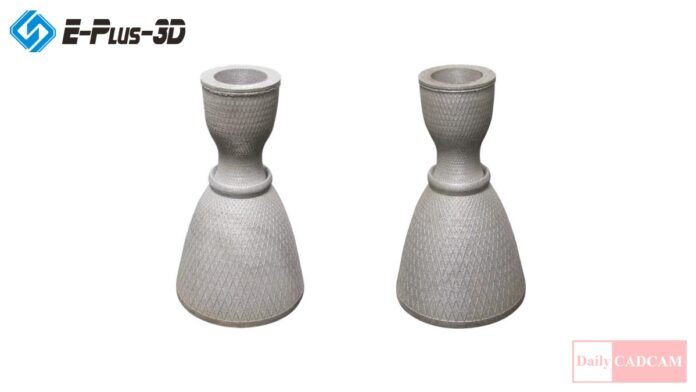
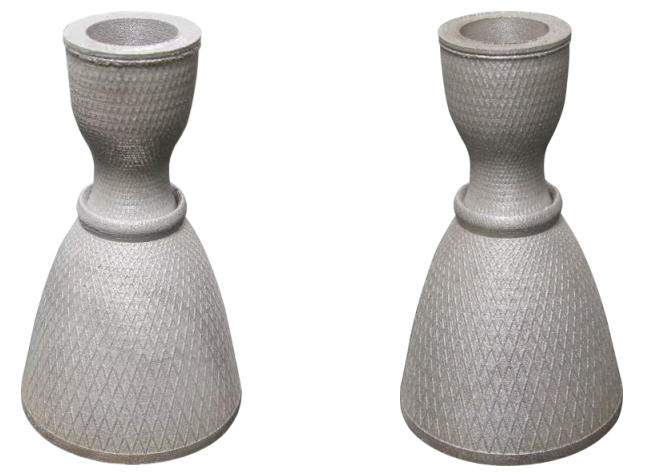
Printed components with Gaussian Beam (left) and Beam Shaping (right)

Engineering Difference from Traditional Gaussian Energy Input

Unlike conventional Gaussian spots that concentrate energy at the beam center, Eplus3D’s Beam Shaping technology engineers the spatial energy distribution to deliver a more controlled and application-optimized thermal interaction with the powder bed.

This approach introduces energy distribution as a core process design variable, working in coordination with scanning strategies and system architecture to achieve consistent, scalable production performance.

Application Industries and Use Scenarios

Eplus3D’s Beam Shaping technology is designed to support demanding industrial applications, including:

  • Aerospace and large structural components
  • Energy and thermal management parts
  • Copper-based electrical and heat-exchange components
  • High-throughput production environments requiring stability and repeatability

Technology Roadmap and Next Steps

Eplus3D will further expand the industrial impact of Beam Shaping technology by enabling higher productivity, greater stability, and broader material applicability.

As application requirements continue to evolve, Beam Shaping will play an increasingly important role in supporting reliable, repeatable, and scalable metal additive manufacturing for industrial customers.

About Eplus3D

Since founding the first PBF machine in China in 1993, Eplus3D is engaged in research and development of industrial-grade Additive Manufacturing systems and application technologies using with MPBF (Metal Powder Bed Fusion) and PPBF (Polymer Powder Bed Fusion) 3D printing technology. Eplus3D provides professional application solutions for the fields of aerospace & aviation, energy, oil & gas, automotive, tooling, healthcare, consumer goods and precision manufacturing.

Eplus3D has four facilities in Beijing, Hangzhou, Stuttgart and Houston, with an annual scientific research investment of more than 20% of the revenue with comprehensive invention patents, utility model patents, software copyrights as well as appearance patents. It has made great achievements in the design, process, software, materials and post-processing development for additive manufacturing and has successfully implemented AM solutions at customer site in more than 40 countries and regions such as Europe, Americas, Middle East, East Asia and Southeast Asia. For more information, visit https://www.eplus3d.com.

Medidata Deepens Partnership with Menarini, Deploying its Study Build AI Technology to Advance Stemline’s Oncology Research

0

NEW YORK, NY, USA, Mar 11, 2026 – Medidata, a Dassault Systèmes brand and leading provider of clinical trial solutions to the life sciences industry, today announced a strategic expansion of its partnership with The Menarini Group (“Menarini”), a leading international pharmaceutical and diagnostics company, and Stemline Therapeutics, Inc. (“Stemline”), a wholly-owned subsidiary of the Menarini Group, focused on bringing transformational oncology treatments to cancer patients. Through this partnership, Medidata AI Study Build technology will power Stemline’s oncology portfolio to initiate clinical trials faster to meet the urgent needs of people living with cancer. The announcement follows the milestone of Stemline launching its first oncology study entirely in-house, using the Medidata Data Experience.

AI for Impact

By transitioning to unified, AI-driven workflows, Stemline is further modernizing the trial lifecycle from protocol to patient. AI Study Build allows Stemline to leverage a vast clinical data set of more than 38,000 trials to automate configurations — reducing the time between protocol finalization and trial startup from months to weeks with:

  • Rapid study startups: Accelerating the study builds at an unprecedented pace
  • Internal agility: Empowering Stemline to build and launch future oncology studies independently, powered by the Medidata Data Experience
  • Stronger oncology research at speed: Delivering high-quality data faster to meet the urgent requirements of research into different cancers

“Stemline is deepening its commitment to advancing oncology research by embracing our established AI foundation and latest AI Study Build capabilities,” said Wayne Walker, senior vice president, Data Experience, Medidata. “Stemline’s commitment to adopting Medidata AI-powered technologies sets a high bar for how sponsors can independently harness a unified platform to accelerate the delivery of new therapies for patients. Together, we are setting a new standard for how oncology trials are built and executed.”

“Innovation is at the core of our mission to bring transformational treatments to patients, and we recognize the impact of Medidata AI to further streamline our workflows,” said Elcin Barker Ergun, CEO of the Menarini Group. “Our expanded partnership with Medidata supports our internal expertise, enabling us to advance crucial research and reflecting the urgency of our team in bringing new options to patients as quickly and safely as possible.”

A Foundation of Trusted Collaboration

This expansion builds upon a 14-year relationship between the Menarini Group and Medidata. While the Menarini Group has long utilized the Medidata platform — including Medidata Rave EDC and Medidata eCOA — to manage the end-to-end cycle of its clinical studies, the move to Medidata AI Study Build marks a significant transition. By combining the Menarini Group’s clinical expertise with Medidata’s established AI and Data Experience leadership, Stemline is positioned to advance its oncology portfolio with unprecedented speed and independence.

To learn more about the Medidata Experiences, please visit here. More information about Medidata AI is available here.  

About Medidata

Medidata is powering smarter treatments and healthier people through digital solutions to support clinical trials. Celebrating over 25 years of ground-breaking technological innovation across more than 38,000 trials and 12 million patients, Medidata offers industry-leading expertise, analytics-powered insights, and one of the largest clinical trial data sets in the industry. More than 1 million registered users across approximately 2,300 customers trust Medidata’s seamless, end-to-end platform to improve patient experiences, accelerate clinical breakthroughs, and bring therapies to market faster. A Dassault Systèmes brand (Euronext Paris: FR0014003TT8, DSY.PA), Medidata is headquartered in New York City and has been recognized as a Leader by Everest Group and IDC. Discover more at www.medidata.com. Listen to our latest podcast, from Dreamers to Disruptors, and follow us at @Medidata.

About Dassault Systèmes

Dassault Systèmes is a catalyst for human progress.  Since 1981, the company has pioneered virtual worlds to improve real life for consumers, patients and citizens. With Dassault Systèmes’ 3DEXPERIENCE platform, 370,000 customers of all sizes, in all industries, can collaborate, imagine and create sustainable innovations that drive meaningful impact.  For more information, visit: www.3ds.com

Roboze Secures Investment from Rule 1 Ventures to Accelerate AI-Driven Distributed Manufacturing for Defense, Critical Infrastructure

0
Roboze new

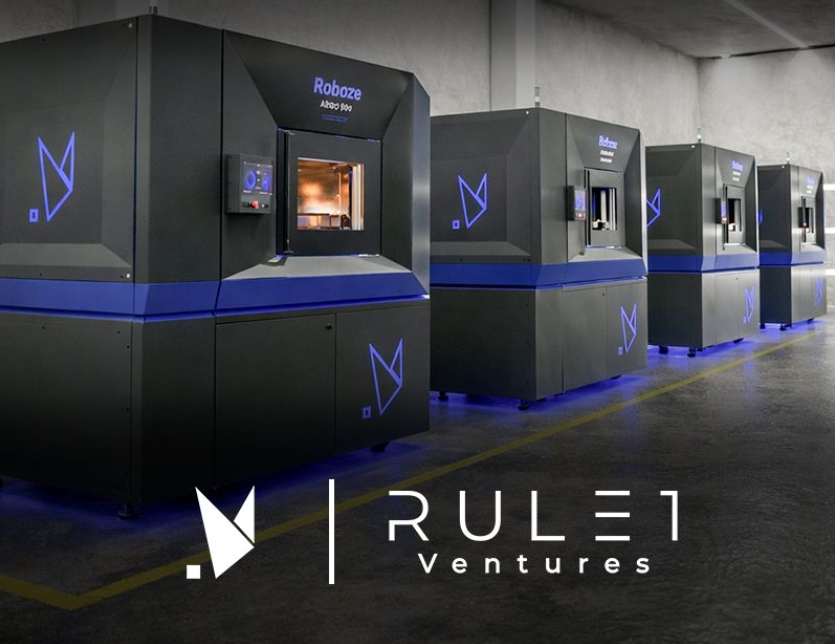
EL SEGUNDO, CA, USA, Mar 10, 2026 – Roboze, a manufacturing technology company developing advanced production platforms for mission-critical industries, announced an investment from Rule 1 Ventures, a U.S. venture capital firm focused on defense and national security technologies. The investment will support Roboze’s expansion of distributed manufacturing infrastructure, enabling governments and industrial operators to produce critical components closer to the point of need.

Roboze Rule 1 Ventures

Roboze’s platform integrates high-performance additive manufacturing hardware, proprietary materials science, software-driven process intelligence and embedded Physical AI to deliver reliable production of complex parts for aerospace, defense, energy and other strategic sectors.

“We are proud to welcome Rule 1 Ventures and this exceptional group of investors to Roboze,” said Alessio Lorusso, founder and CEO of Roboze. “Modern industrial resilience requires more than machines — it requires a complete manufacturing platform that combines hardware, materials science and intelligent software. Our mission is to build the infrastructure that allows critical industries to produce advanced components wherever they are needed.”

Rule 1 Ventures is led by national security leaders including James A. Winnefeld Jr., a retired four-star admiral and former vice chairman of the Joint Chiefs of Staff, and Todd Ehrlich, a former U.S. Navy SEAL and defense entrepreneur. The firm invests in technologies designed to strengthen operational readiness and industrial capacity.

“Future readiness depends not only on advanced systems but also on the ability to sustain and produce them,” said James Winnefeld, partner at Rule 1 Ventures. “Roboze is building industrial capability that will become increasingly critical to national security.”

Broad Institutional Support

The funding round also includes participation from investors with experience across defense, government affairs and global industrial markets, including Privcorp Ventures; Heather Podesta, founder and CEO of Invariant LLC; Gary Ang, former Temasek operating partner and Singaporean Air Force official; Tholus Capital; and the Ferrari Family Office. Existing Roboze

shareholders also participated in the round, including Federico Faggin, inventor of the microprocessor, and Rialto Venture Capital.

Building the Next Generation of Industrial Infrastructure

Global supply chains for defense, energy and critical infrastructure are increasingly challenged by long lead times, fragile logistics and limited production flexibility. Roboze’s technology platform is designed to address these challenges by enabling localized, on-demand production of mission-critical components through an integrated stack that combines:

  • Advanced additive manufacturing hardware
  • High-performance polymer and composite materials
  • AI-driven process intelligence
  • Digital manufacturing software
  • Distributed Smart Factory infrastructure

This approach allows industrial operators to reduce supply chain vulnerabilities while accelerating the production of complex components traditionally dependent on long and centralized manufacturing processes.

Global Expansion

The new investment will support Roboze’s continued expansion across operational hubs in the United States, Europe and the Middle East, enabling the deployment of distributed manufacturing capabilities for governments, defense contractors and strategic industrial sectors.

About Roboze

Roboze is a manufacturing technology company developing advanced production platforms for mission-critical industries. By combining proprietary hardware, materials science, software and embedded Physical AI, Roboze enables the distributed production of high-performance components for aerospace, defense, energy and transportation. Through its global Smart Factory network, Roboze provides certified, repeatable manufacturing solutions where performance, reliability and supply chain resilience are essential. For more information, visit https://www.roboze.com.

About Rule 1 Ventures

Rule 1 Ventures is a U.S.-based venture capital firm investing in defense and national security technologies that strengthen operational capability and industrial resilience. For more information, visit https://www.r1vs.com.

Mantle Appoints Kim Hayashi as CEO

0
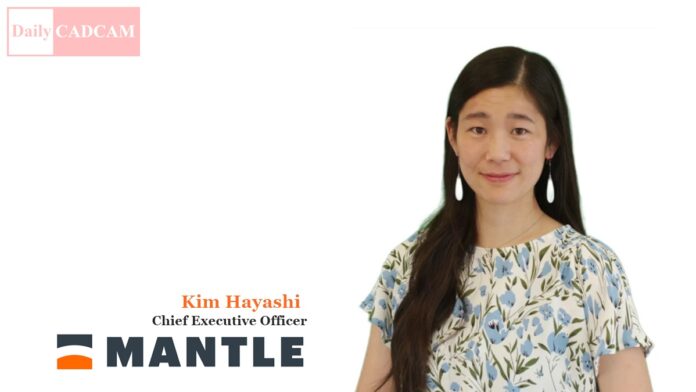
Kim Hayashi

SAN FRANCISCO, CA, USA, Mar 10, 2026 – Mantle 3D Systems, LLC, announced that Kim Hayashi has been appointed Chief Executive Officer.  She succeeds Ted Sorom, who stepped down earlier this year after 10 years of leadership.

“Mantle started as an idea in a lab, and today the company’s technology is rapidly being adopted by global OEMs to transform their injection mold tooling operations. We are grateful for Ted’s leadership during these formative years and know that Mantle is in a position to succeed under Kim’s leadership moving forward.” – Steve Connor, Mantle Co-founder and CSO.

Kim has been with Mantle since 2018 and most recently served as Mantle’s Vice President of Product and Process Engineering. During her time at Mantle, she has played a key role in developing and shaping Mantle’s technology to meet rigorous customer needs by working closely with external partners and orchestrating across internal departments.

“I am excited to lead Mantle in this next chapter with Angstrom to continue Mantle’s growth and expand our ability to deliver our game-changing technology to the injection molding industry.” – Kim Hayashi, Mantle CEO

Mantle remains focused on delivering its reliable, high-performance toolmaking technology to its customers while continuing to scale capabilities and operations.

About Mantle

Mantle has developed an automated toolmaking system specifically designed for the production of injection mold tooling. The combined metal 3D printing and CNC machining technology automates the production of high-quality tooling components, enabling molders, moldmakers, and OEMs to build tooling in-house. Implementing Mantle allows companies to take control of their tooling, reduce lead times and costs, and address today’s labor challenges in the toolmaking industry. For more information, visit https://mantle3d.com.

Meltio Strengthens Irish Market Presence Through Partnership with 3D Technology Ltd.

0

Galway & Meath (Ireland) & Linares (Spain) – March, 9th. 2026 – 3D Technology Ltd., and Meltio; a disruptive laser metal deposition technology manufacturer today announced that 3D Technology Ltd. is going to play a key role in the distribution and support of the Meltio metal 3D printing solutions in the Irish market, as an official sales partner for Ireland and Northern Ireland.

3D Technology Ltd. becomes Meltio’s official sales and technical support partner across the territory, bringing Meltio’s full portfolio to Irish industry. The partnership enables manufacturers to adopt reliable and cost-effective advanced metal additive manufacturing solutions for production, repair, tooling, and hybrid manufacturing workflows – enabling Irish manufacturers to gain supply chain independence

Meltio offers a pioneering metal 3D printing solution that enables industrial applications with a process built around welding wire, the safest, cleanest, and most affordable metal feedstock in the market. Its wire-laser metal deposition (LMD) technology provides a clean, safe, and industrially reliable process for manufacturing environments.

3D Technology Ltd. will provide comprehensive local support, including consultation and solution design, installation and commissioning, technical support and maintenance, application development and training, The company will focus on building a supportive ecosystem for Meltio’s technology in the Irish territory, partnering and driving business opportunities alongside technology centers, tooling machine companies, robotic integrators, academia, and industry. The partnership strengthens the availability of industrial metal AM technology for sectors such as aerospace, precision engineering, automotive, research, and education.

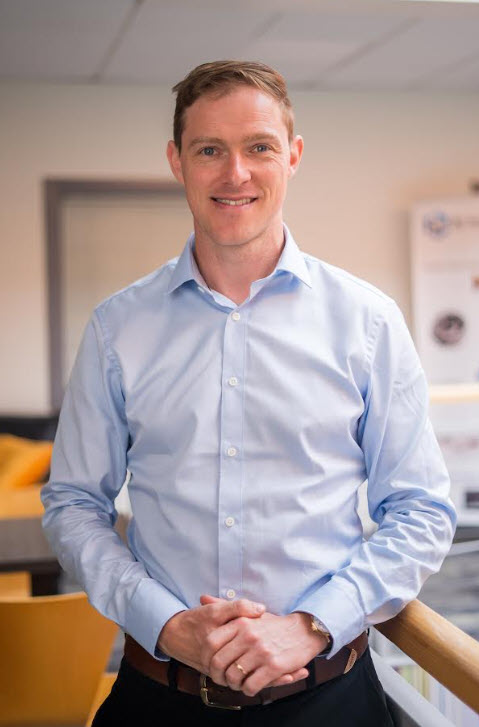
James Wall, Managing Director at 3D Technology Ltd.

“We are incredibly excited to partner with Meltio and bring their world-class metal additive manufacturing technology to Ireland and Northern Ireland. Meltio’s wire-LMD systems are transforming how companies think about metal production, repair, and hybrid manufacturing. This partnership aligns perfectly with our mission to deliver innovative, reliable, and accessible advanced manufacturing solutions to our customers. We look forward to supporting Irish industry as it embraces the next generation of metal AM.” said James Wall, Managing Director at 3D Technology Ltd.

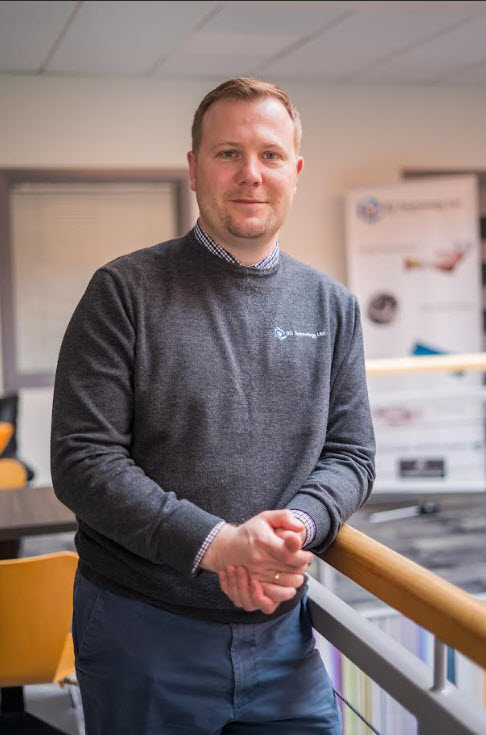
Johannes Werner, Engineering Manager at 3D Technology Ltd.

“Meltio’s technology represents a major step forward for manufacturers who want the flexibility of additive manufacturing combined with the robustness of traditional metalworking. Their wire-LMD process is clean, safe, and industrially reliable, qualities that matter deeply to our engineering team and our customers. We’re excited to integrate Meltio systems into real-world production environments and help companies unlock new levels of capability and efficiency,” said Johannes Werner, Engineering Manager at 3D Technology Ltd.

Meltio proudly announces its official sales partner in the Irish territory, 3D Technology Ltd., reinforcing its commitment to expanding its global partner ecosystem and accelerating the adoption of metal additive manufacturing across key industrial markets.

“We are delighted to welcome 3D Technology Ltd. as our official sales and technical support partner for Ireland and Northern Ireland. Now, customers in Ireland can gain access to solutions on their own soil from trusted advisors. The team at 3D Technology Ltd. is well respected for their strong engineering expertise, deep understanding of the Irish manufacturing landscape, and commitment to customer success – this combination makes them the ideal partner to drive the adoption of Meltio’s wire-laser metal deposition technology in the region. Our partnership represents an important step in strengthening our presence across the Irish territory, and in supporting manufacturers as they transition toward more flexible, efficient, and cost-effective advanced metal additive manufacturing solutions,” said Adam Hourigan, UK, Ireland, and APAC Channel Sales Manager at Meltio.

About 3D Technology:

3D Technology Ltd. is a leading Irish provider of additive manufacturing equipment, materials, and technical support, representing global brands across polymer, composite, and metal 3D printing. With offices in Galway, Meath, and Belfast, the company supports customers across Ireland and Northern Ireland in engineering, medical, education, and industrial sectors.

About Meltio:

Meltio takes metal additive manufacturing to the next level by developing high-performance, affordable, and easy-to-use metal 3D printing solutions using wire-laser metal deposition technology. The company’s mission is to delight customers, partners, and employees by pioneering the development of affordable metal 3D printing systems that are reliable, safe, and powerful, continually reinforcing their status as disruptors.

DMG MORI Develops Adaptive Coolant Flow for Improved Energy Efficiency during Machining

0
DMG MORI

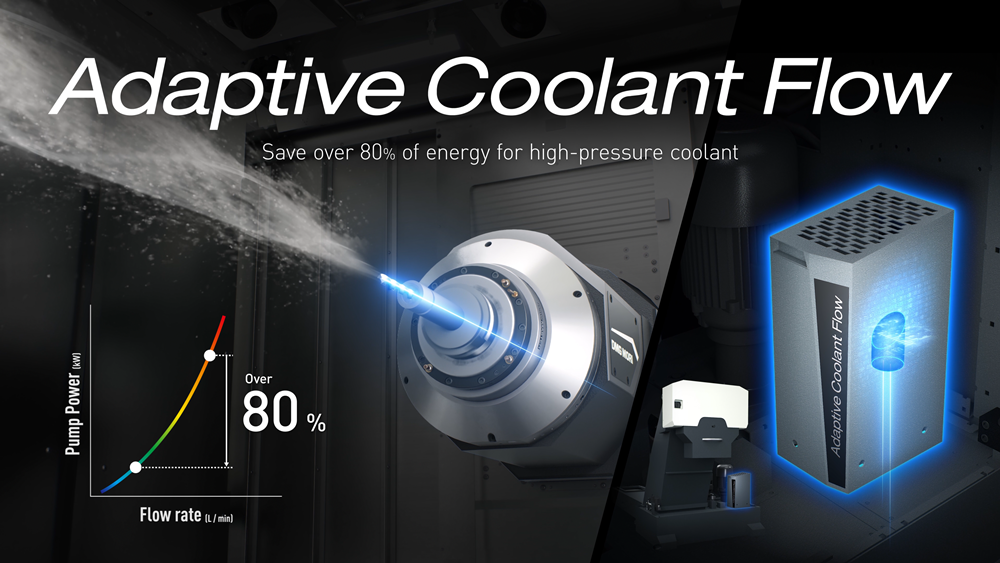
TOKYO, Japan, Mar 10, 2026 – DMG MORI has developed “Adaptive Coolant Flow,” a new solution that automatically optimizes high‑pressure coolant flow during machining. The function reduces excessive coolant usage while maintaining machining performance, contributing to lower energy consumption, reduced CO2 emissions, and progress in Green Transformation (GX).

2603 adaptive coolant flow picture 01 data

Rising global energy prices in recent years have led to increasing electricity costs in manufacturing, making sustainable production systems more important than ever. While DMG MORI already provides energy-saving functions such as “GREENMODE”, peripheral equipment like coolant systems still account for a considerable share of total energy consumption. Precise coolant flow control therefore enables direct reductions in both operating costs and environmental impact.

Adaptive Coolant Flow automatically optimizes high‑pressure coolant flow according to the cutting tool. The system consists of two elements: software that calculates and regulates the optimal flow rate, and a control unit on the coolant tank. Conventional systems discharge coolant at maximum pressure by default, causing unnecessary coolant and energy loss.

2603 adaptive coolant flow picture 02 data

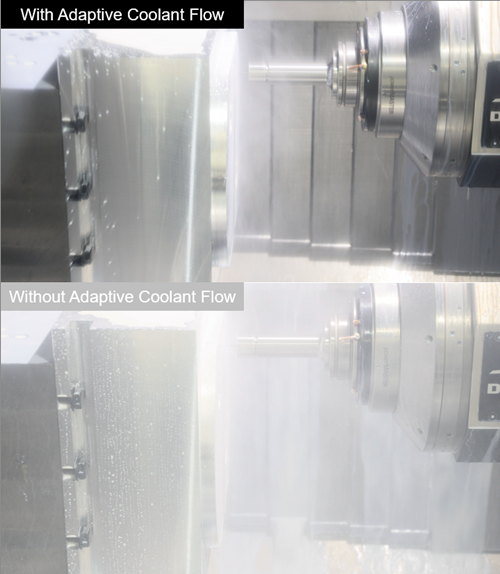
In comparison, Adaptive Coolant Flow reduces the energy consumption of high-pressure pumps by over 80 %*1 while maintaining tool life and surface quality. Its complex high-pressure piping components, which cannot be machined with traditional cutting equipment, are realized with additive manufacturing on DMG MORI’s LASERTEC 30 SLM. The compact design enables efficient pressure and flow control integrated directly onto the coolant tank. Built-in sensors monitor flow rate, pressure, concentration, and temperature, with all data displayed in real time on ERGOline X with CELOS X.

Beyond reducing energy costs and CO₂ emissions, Adaptive Coolant Flow also minimizes mist generation and coolant evaporation in the machining area, significantly decreasing total coolant consumption. This results in fewer refills, higher operability, and stable automated production, particularly during unmanned nighttime and weekend operation.

DMG MORI will continue to address customer needs with highly functional and reliable products that deliver long term value.

About DMG MORI

DMG MORI is a worldwide leading manufacturer of high-precision machine tools and sustainable technologies that are at the heart of global value chains. In the “Global One Company” more than 12,000 employees are in direct contact with over 100,000 customers from 57 industries. DMG MORI is globally present in 88 countries with 16 production plants, 113 sales and service locations.

Integrated automation and end-to-end digitization solutions expand the core business with lathes and milling machines, ultrasonic, lasertec and additive manufacturing. The entire manufacturing know-how from more than 152 years flows into technology excellence for the focus industries Aerospace, Automotive, Die & Mold, Medical and Semiconductor. Customer-oriented services accompany the entire life cycle of a machine tool – including training, repair, maintenance and spare parts service. The strategic fit of automation, digitization and sustainability fits perfectly with DMG MORI’s vision and mission statement: We empower our customers in manufacturing and digitization! We want to be the most attractive machine tool manufacturer worldwide with digital and sustainable products!

Dirk Musser to Succeed Jörg Stech as MD, KraussMaffei Technologies w.e.f. Apr 1, 2026

0

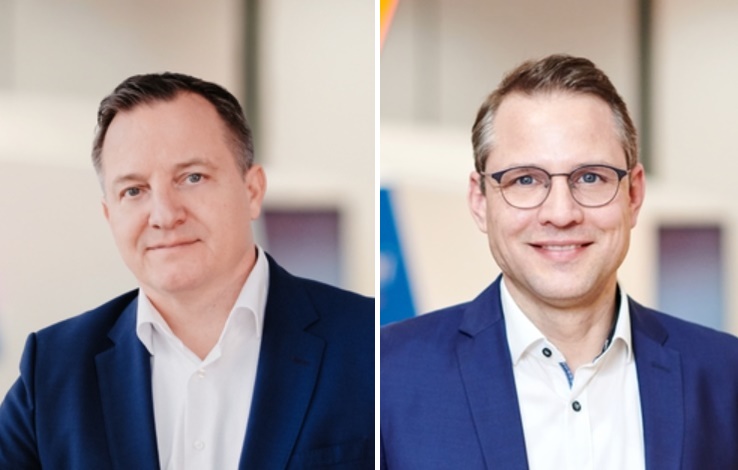
PARSDORF, Germany, Mar 10, 2026 – The KraussMaffei Group announces a change in the management of KraussMaffei Technologies: Jörg Stech, who has played a decisive role in shaping the company’s development since 2023 as Chairman of the Board of KraussMaffei Technologies and also as global head of the technology divisions of injection molding, automation, and additive manufacturing, is stepping down at his own request on March 31, 2026. Dirk Musser, currently Head of Group Transformation at the parent company KraussMaffei Group, has been appointed as Managing Director to the Board to replace him.

3459 horz
Dirk Musser (left) and Jörg Stech (right)

Successful stabilization and realignment under Jörg Stech

Jörg Stech’s tenure coincided with a challenging period in which KraussMaffei Technologies was confronted with losses and a diminishing market environment. By taking comprehensive measures to improve margins and balance sheet quality, Jörg Stech set the course for securing earnings and future viability. He renewed the product portfolio for IMM and automation, starting with the LRXplus linear robot, the new fully electric PX series and the MC7 control system both launched at the end of 2025, as well as AI applications. Jörg Stech also initiated another multi-year development project. Jörg Stech placed particular emphasis on tapping into new market opportunities through technological expertise, including ColorForm, and opened up new markets such as aerospace and drone applications. In parallel, programs for operational excellence, price and cost quality, and capital discipline were implemented. Despite a declining market environment, especially in the area of injection molding technology, KraussMaffei Technologies is now in a much more robust position than it was three years ago.

“Jörg Stech took on responsibility in a difficult situation, set clear priorities, and launched decisive initiatives. The successful market launch of the LRXplus linear robot and the all-electric PX machine series, the consistent focus on profitability, and the sustainable strengthening of our balance sheet are visible results of this work. We would like to express our sincere thanks to Jörg Stech for his leadership, integrity, and team spirit,” said Alex Li, CEO of the parent company KraussMaffei Group. “We value Dirk Musser as a leader who combines strategic clarity with operational excellence. In a short period of time, he has provided vital impetus for the transformation of the group and impresses with his analytical strength, decisiveness, and deep understanding of our processes—not least through his successful collaboration with the managing directors of KraussMaffei Technologies. We are convinced that he will continue on this path with clarity and creative drive to successfully align KraussMaffei Technologies.” 

Jörg Stech: “After many years in an environment full of technological, economic, and geopolitical challenges, I look back with great gratitude on a time in which I was always surrounded by an exceptional workforce. Together, we achieved things that many initially thought were impossible. This cooperation, this willingness to push boundaries and create something new, was a joy for me. My special thanks go to all stakeholders in the company and, of course, to all employees. I leave with respect, gratitude, and the conviction that this long-established company will continue to achieve great things in the future.” 

Dirk Musser as internal successor

Effective April 1, 2026, Dirk Musser will take over as Managing Director of KraussMaffei Technologies. He is an experienced transformation and finance manager who, in his previous role as Head of Group Transformation within the KraussMaffei Group, has already provided significant impetus for strategic development and improvement of operating results in close coordination with the managing directors of KraussMaffei Technologies. His strong analytical skills, deep understanding of processes, and international experience make him particularly well qualified for this role. 

Dirk Musser, who holds a degree in economics, has more than two decades of management experience in international industrial and technology companies. Prior to his role at KraussMaffei, he served as Senior Vice President of Business Transformation at CRRC New Material Technologies, where he led extensive transformation, lean, and turnaround projects and stabilized the earnings of two plants in the US and Mexico within a short period of time. Previously, as Senior Manager Turnaround & Restructuring at Deloitte, he was responsible for operational and financial restructuring programs for industrial and technology companies. Dirk Musser also had many years of P&L responsibility as Head of Business Unit at CRONIMET Raw Materials Suisse AG, where he managed global procurement and production networks, opened up new markets, and was responsible for post-merger integration processes. Other career milestones include positions at Fujian Benz Automotive in China, Daimler Trucks, Bombardier, and DaimlerChrysler. 

The transition is seamless: the handover between Jörg Stech and Dirk Musser is already underway. “Together with my fellow managing directors Dr. Frank Szimmat and Markus Bauer, I want to resolutely drive forward the further development of KraussMaffei Technologies. Our focus is on further expanding stability and performance and taking the necessary steps to successfully position the company in a dynamic market environment. I look forward to shaping this path together with our teams,” said Dirk Musser. 

About KraussMaffei – Pioneering Plastics

KraussMaffei is among the world’s leading manufacturers of machinery and systems for the production and processing of plastics and rubber. Our brand stands for cutting-edge technologies – for more than 185 years. Our range of services covers all areas of injection molding machinery, extrusion technology, reaction process machinery and automation. In 2022 we added additive manufacturing to our portfolio. This broad range of technologies gives KraussMaffei a unique selling point in the industry. With the high innovative power of our standardized and individual product, process, digital and service solutions, we can guarantee customers sustained additional value over the entire value-adding chain. Our range of products and services allow us to serve customers in many sectors including the automotive, packaging, medical and construction industries, as well as manufacturers of electrical and electronic products and household appliances.

KraussMaffei employs around 4.200 people all over the world. With more than 30 subsidiaries and over 10 production plants, as well as about 570 commercial and service partners, we are represented internationally close to our customers. The company was founded in 1838 in Munich. Today, KraussMaffei is part of Sinochem Holdings Corporation Ltd., one of the world’s leading chemical companies. For more information, visit www.kraussmaffei.com.

ENGEL to Present First Fully Automated Series Production of Thermoplastic Composite Rotor Blades for Drones at 2026 JEC World

0
ENGEL1

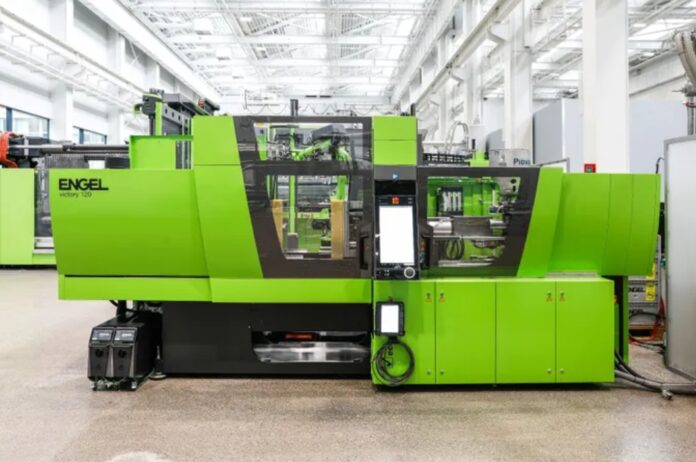
SCHWERTBERG, Austria, Mar 10, 2026 – At JEC World 2026 (10–12 March 2026, Paris), ENGEL will demonstrate how thermoplastic composite rotor blades for drones can be manufactured efficiently, with consistent quality and fully automated in series production. The globally active machine manufacturer is presenting a scalable production solution that combines high component performance, integrated noise reduction and sustainability in one seamless process.

3454 horz
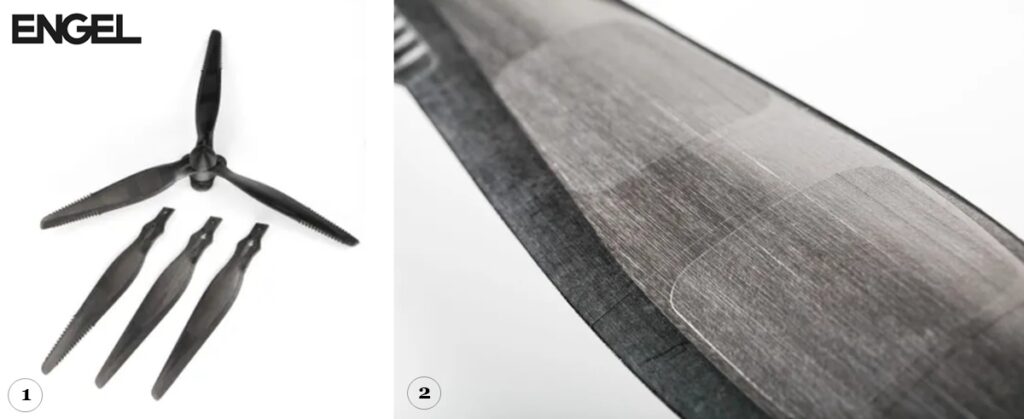
1. Drone propeller with carbon-fibre reinforced composite rotor blades manufactured using tape-sandwich injection molding.,
2. Detail view of a carbon-fibre reinforced composite rotor blade, manufactured near-net-shape using tape-sandwich injection molding

With its expertise in injection moulding and automation, ENGEL is transferring proven high-volume manufacturing principles to lightweight composite applications. At the heart of the exhibit is a highly efficient, integrated process that brings together the key steps – placing the reinforcement layers, forming, functional integration and removal of the finished rotor blade – in a continuous cycle within the injection mould.

Lightweight, strong and near-net-shape: tape-sandwich injection moulding as the core technology

The central element of the demonstrated process is a structural sandwich design consisting of carbon-fibre-reinforced thermoplastic tapes and an injection-moulded short-fibre compound. The tapes form the load-bearing outer layers of the rotor blade and are positioned precisely in the mould and secured using vacuum fixation. This allows the reinforcements to be aligned exactly along the load paths – material is used only where it is needed for structural performance.

In the next step, the core material made of a short-fibre thermoplastic is injected between the pre-positioned tapes and bonded to the outer layers to form a near-net-shape component structure. To further increase the lightweight potential, the core is foamed chemically, reducing component weight while maintaining structural performance.

The result is a lightweight yet highly durable rotor blade in which shaping, structural function and material bonding are realised in an automated cycle. After a defined final trim, the component is ready for use.

ENGEL2
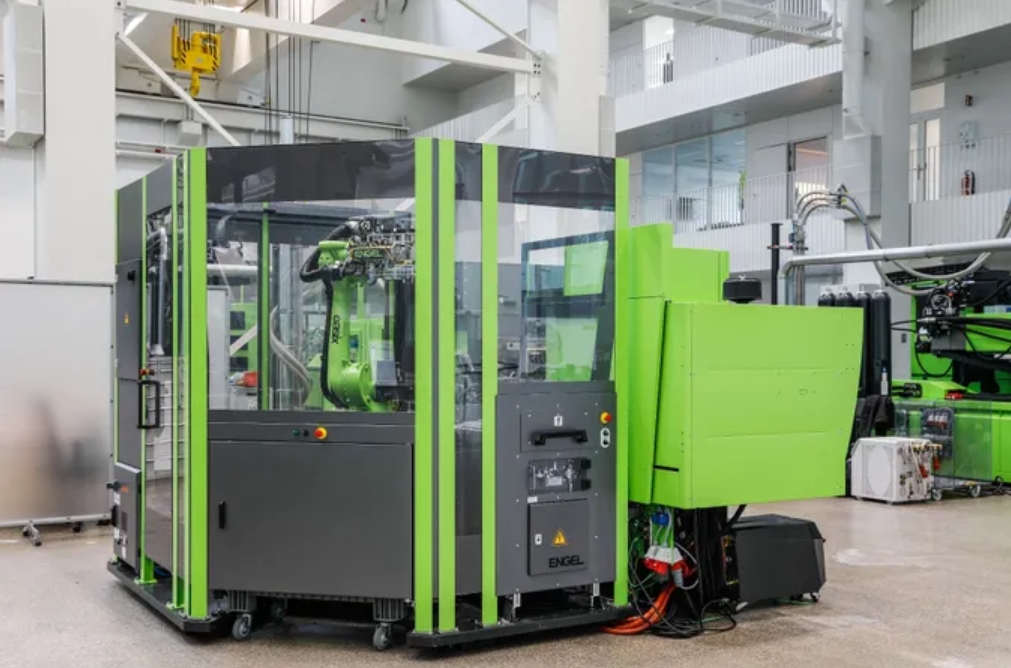
Injection moulding cell with ENGEL victory and easix six-axis robot – basis of the fully automated production solution for thermoplastic composite rotor blades (rear view)

Functional integration and design freedom

One of the key advantages of injection moulding is the high level of design freedom it offers. Noise-reducing features such as serrated trailing edges can be integrated directly into the component geometry using interchangeable mould inserts, without additional machining steps. This makes it possible to address the acoustic requirements of modern drone applications – particularly in urban environments – and reduce noise emissions.

ENGEL will demonstrate the process live on a tie-bar-less ENGEL victory 120 injection moulding machine equipped with an easix six-axis robot. The tie-bar-less design provides the space required to fully automate material feeding, handling and part removal. This enables cycle times of less than 60 seconds per rotor blade.

NeoBlade: sustainable development with strong partners

NeoBlade was designed as an interdisciplinary research project spanning the entire value chain. The aim was to link aeroacoustic design, material and tool development, process automation and sustainability assessment at an early stage and translate them into an industrially viable overall solution. Project partners include ALPEX Technologies, the Energy Institute at JKU Linz, FACC Operations, Plastic Innovation and TU Wien (Aircraft Systems Research Group).

ENGEL3
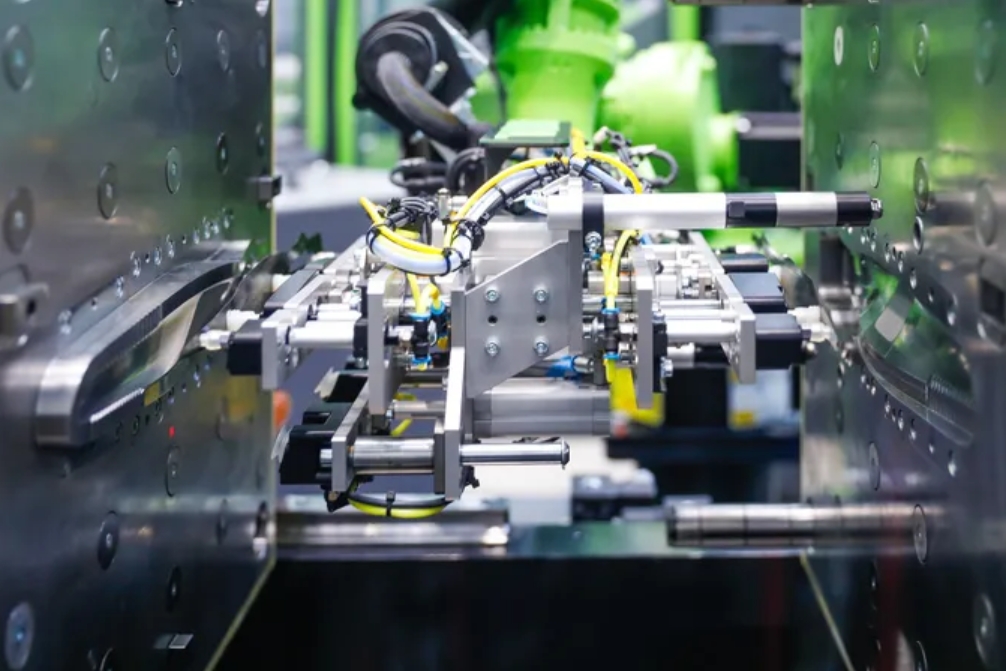
Automated handling in the mould area: precise process steps directly in the injection mould

The project evaluated different thermoplastic systems – from high-temperature-resistant materials to cost-efficient alternatives. Compounds with recycled carbon fibres were also used. Life-cycle assessments showed a significant reduction in CO₂ footprint compared with established thermoset processes. Another advantage is that thermoplastics are generally recyclable: production waste and end-of-life components can be more easily returned to the materials loop.

In addition to sustainability, economic efficiency was also a key focus. The main cost advantage of thermoplastic processes lies in industrial scalability – for example through multi-cavity tooling – combined with very short cycle times and a high degree of automation.

Scalable: from rotor blades to high-voltage battery covers

Alongside the rotor blade, ENGEL is presenting another exhibit at JEC based on the thermoplastic tape-sandwich injection moulding technology: a high-voltage battery cover made of flame-retardant thermoplastic, measuring 1.3 x 1.8 metres. The component was named a finalist for the JEC World Innovation Awards 2026 and underlines the scalability of the process – from rotor blades around 30 centimetres long to large-format structural components.

The battery cover combines low weight, high stiffness and full recyclability. Features such as spacers or fastening points can be integrated directly in the process.

ENGEL at JEC World 2026: Hall 5, Stand 5L106.

For more information about ENGEL and its products, visit https://www.engelglobal.com.