Home Blog

Hexagon’s NCSIMUL 2026.2 Brings NC Verification, CNC Simulation, Optimization in One Digital Twin Environment

0
Hexagon ncsimul

COBHAM, UK, May 22, 2026 – Hexagon’s Production Software Division has announced the latest release of NCSIMUL 2026.2, strengthening its integrated approach to NC program verification, simulation, and optimization with a new Selective Simulation capability.

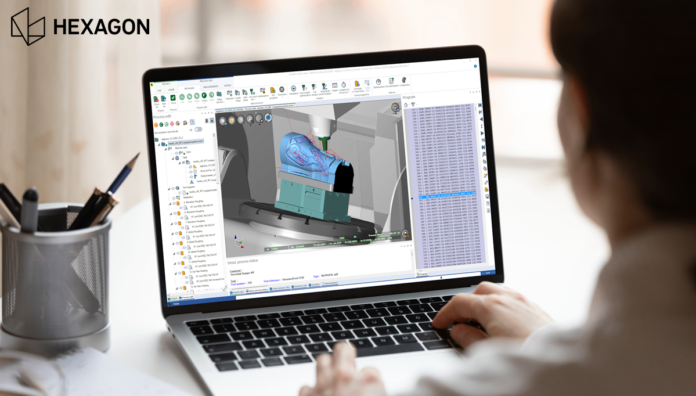
NCSIMUL brings G-code verification, CNC simulation, and optimization together in one digital twin environment. Manufacturers use it to check NC programs, improve machining efficiency, and reduce the need to prove out risky or time-consuming work on valuable machine tools.

As programming and machining workflows accelerate, verification helps manufacturers increase speed without adding avoidable production risk. This is especially important in high-value machining environments, where a single program can involve many hours of machine time, multiple operations, and critical stages that need careful review. 

Selective Simulation gives programmers a faster way to navigate long, complex programs. The patent-pending capability uses GPU-accelerated Rest Stock Previews to generate intermediate stock models during the NC decoding phase, creating earlier views of how the part is developing through the program.

In a customer trial by an American athletic footwear corporation based on a long-cycle mould application, a program with a 47-hour machine cycle previously required 48 minutes of sequential simulation before the programmer could inspect the required operation. Using Selective Simulation, Rest Stock Previews were generated in under two minutes.

Programmers can use these previews to inspect the part state at different stages, identify visible issues earlier, and move more directly to operations that need closer attention. Rest Stock Previews are intended to support earlier review and iteration. Full NC code simulation, including complete collision detection and material removal accuracy, remains the standard for final sign-off before a program is released to the machine.

“Simulation accuracy has always been central to NCSIMUL, and that remains unchanged,” said Jasper Sanders, Product Manager for NCSIMUL, Hexagon’s Production Software division. “Selective Simulation gives programmers a more flexible way to work through complex programs. They can gain useful visibility much earlier, focus their attention on the operations that matter most, and still rely on the full NCSIMUL simulation engine for final verification.”

The capability strengthens NCSIMUL’s wider role in helping manufacturers protect productivity before production begins. By combining simulation and optimisation in one environment, it supports the confidence needed to release NC programs and the efficiency required to keep advanced machining workflows moving.

“Manufacturers are under pressure to make better use of time, skills, and machine capacity,” said Peter Ameloot, Senior Director EMEA North, Hexagon’s Production Software Division. “That pressure is felt strongly at the verification stage, where teams need confidence before a program reaches the machine, but cannot afford unnecessary delay. With this latest release, NCSIMUL helps engineers move through long, complex programs more intelligently, focusing their attention where it matters most.”

The latest release of NCSIMUL is available from 19 May 2026. Full system requirements are available from Hexagon.

Read here for more information about NCSIMUL.

About Hexagon

Hexagon is the global leader in precision technologies at any scale. Our digital twins, robotics and AI solutions are transforming the industries that shape our reality.   

Hexagon (Nasdaq Stockholm: HEXA B) has approximately 24,800 employees in 50 countries and net sales of approximately 5.4bn EUR. Learn more at hexagon.com and follow us @HexagonAB.   

Invitation
Siemens sd17

Verisurf Device Interface Supports API iLT Laser Tracker

0
Verisurf api

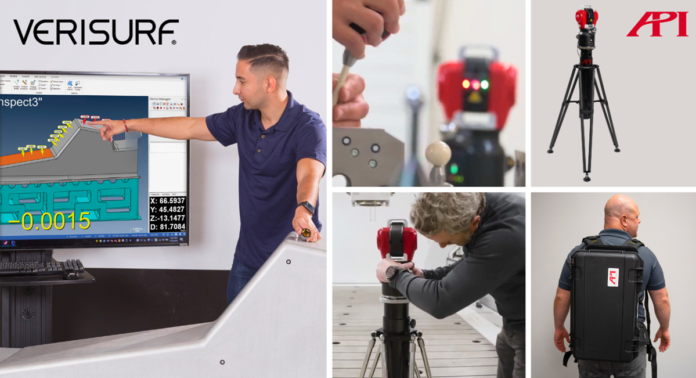
ANAHEIM, CA, USA, May 22, 2026 — Verisurf Software, Inc., a leader in measurement solutions and model-based inspection software, announced enhanced workflow capabilities enabled by full application support for the API iLT laser tracker. Built on Verisurf’s universal, CAD/CAM-based metrology platform, manufacturers can unify inspection, alignment, assembly, and reverse engineering processes within a single, model-based environment, driving faster, more accurate, and more repeatable manufacturing outcomes.

Verisurf’s open architecture and hardware-agnostic design integrate seamlessly with virtually all coordinate measuring systems, including CNC CMMs, portable arms, scanners, and laser trackers. This universal compatibility allows manufacturers to standardize workflows across equipment and facilities, minimize training requirements, and scale metrology operations in line with modern digital manufacturing strategies.

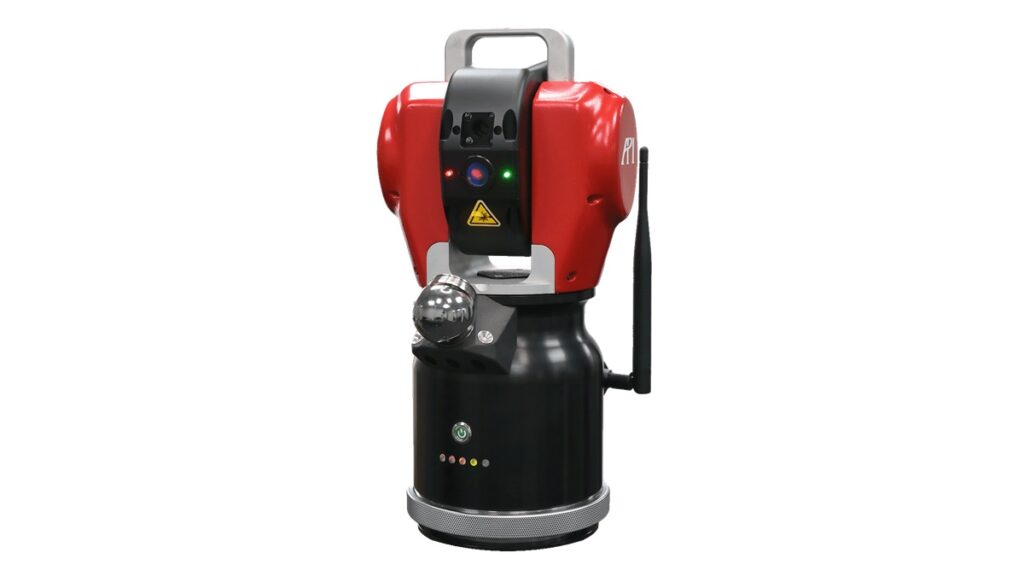
Extending this platform, Verisurf now provides full support for the API iLT laser tracker, the world’s smallest and most portable laser tracker. As part of the Verisurf ecosystem, the API iLT becomes a flexible, mobile measurement solution that leverages the same software, workflows, and data standards used across the manufacturing enterprise.

The combination introduces new levels of agility for manufacturers requiring precision measurement in dynamic environments. Whether deployed on the shop floor, in the field, or across distributed production facilities, the API iLT, powered by Verisurf, enables consistent, repeatable workflows supported by intelligent automation and comprehensive reporting tools.

API iLT Laser Tracker
API iLT Laser Tracker from API Metrology.

“Modern manufacturing depends on connected, model-based workflows that turn measurement into actionable insight,” said Nick Merrell, Executive Vice President at Verisurf. “Verisurf delivers that foundation. By extending our platform to the API iLT tracker, we give customers the ability to apply the same proven workflows anywhere, without sacrificing accuracy, consistency, or control.”

Unlike traditional metrology solutions, Verisurf combines CAD, CAM, and inspection into a single platform, ensuring alignment between design intent and manufacturing execution. Users can automate processes, guide assemblies in real time, and validate parts without interrupting production, supporting true closed-loop manufacturing.

The API iLT enhances these capabilities with unmatched portability. Measuring just 14 inches tall, weighing under 20 pounds, and fully battery-operated, the system is designed for mobility without compromise. Its onboard camera enables rapid target acquisition and tracking, while its compact form factor allows the entire system to fit in a backpack for easy transport.

“The ease of use and universal compatibility of Verisurf software make it the perfect fit for the API iLT,” said API’s Matt Ledger. “Customers can deploy a highly portable tracker while maintaining the same trusted workflows and software environment used throughout their operations.”

About Verisurf

Verisurf Software, Inc. is a measurement solutions company committed to delivering advanced surface analysis, quality inspection, tool building, assembly guidance, and reverse engineering. Verisurf products and processes are vital to maintaining a digital thread between design, engineering, manufacturing, and finished part validation. Based on a powerful CAD platform, Verisurf is committed to digital Model-Based Definition (MBD), open standards, and interoperability with all coordinate measuring machines and CAD software. Verisurf solutions help manufacturers produce higher quality products in less time. You can learn more about Verisurf Software at https://verisurf.com

Xometry Adds Lukas Biewald to its Board

0
Lukas Biewald

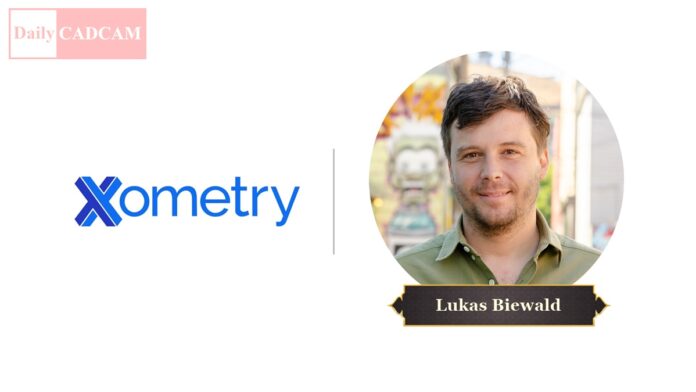
NORTH BETHESDA, MD, USA, May 22, 2026 – Xometry, Inc. (NASDAQ: XMTR) the global, AI-native marketplace connecting buyers and suppliers of custom manufacturing, announced the appointment of Lukas Biewald, co-founder and former CEO of Weights & Biases, and SVP, AI Initiatives at CoreWeave, Inc., to its Board of Directors.

“Lukas has spent his career building the platforms that AI teams actually rely on during production, most notably at Weights & Biases, where he helped establish the system of record for how the world’s leading teams train and deploy models. That experience maps directly to what we’re building at Xometry: AI that makes manufacturing capacity instantly accessible, starting with our AI-powered quoting engine,” said Randy Altschuler, CEO and Co-founder at Xometry. “As we scale that intelligence across supplier matching and agentic procurement workflows, having a board member who understands both the technical depth and the operator’s discipline required to get AI right is exactly the kind of perspective we need.”

“Manufacturing is one of the most complex, data-intensive industries in the world, and Xometry has built the platform infrastructure to bring it into the AI era. As someone who has spent my career building tools that help engineers and developers work smarter, I have a deep appreciation for what this team has accomplished, and where it can go. I’m looking forward to contributing to the team,” said Lukas Biewald, SVP, AI Initiatives at CoreWeave.

Biewald joins the Xometry Board of Directors at a pivotal moment. The company has recently launched new AI capabilities — including personalized pricing and design-for-manufacturability (DFM) intelligence — that together move the platform toward a more autonomous procurement experience, with further enhancements in development. Biewald’s background scaling AI platforms used by hundreds of thousands of engineers will directly inform how Xometry develops and operates these capabilities at marketplace scale.

About Lukas Biewald

Lukas Biewald is SVP of AI Initiatives at CoreWeave, Inc., and a founder with two successful exits whose work sits at the intersection of AI infrastructure and the engineering teams that build with it. He is the former CEO and co-founder of Weights & Biases — the AI developer platform used by more than 1 million engineers worldwide — which CoreWeave, Inc., acquired in 2025. Earlier in his career, Lukas founded Figure Eight (formerly CrowdFlower), a machine learning data platform, and served as Senior Scientist at Powerset as well as led the Search Relevance team at Yahoo! Japan. He holds a B.S. in Mathematics and an M.S. in Computer Science from Stanford University.

About Xometry

Xometry’s (NASDAQ: XMTR) AI-native marketplace, popular Thomasnet industrial sourcing platform and suite of cloud-based services are rapidly digitizing the manufacturing industry. Xometry provides manufacturers the critical resources they need to grow their businesses and streamlines the procurement process for buyers through real-time pricing and lead time data. Learn more at xometry.com or follow Xometry on LinkedIn.

SHINING 3D Launches OptimScan Q12 HD: Bringing Micron-Level Accuracy to Advanced 3D Inspection

0
Optiscan q12

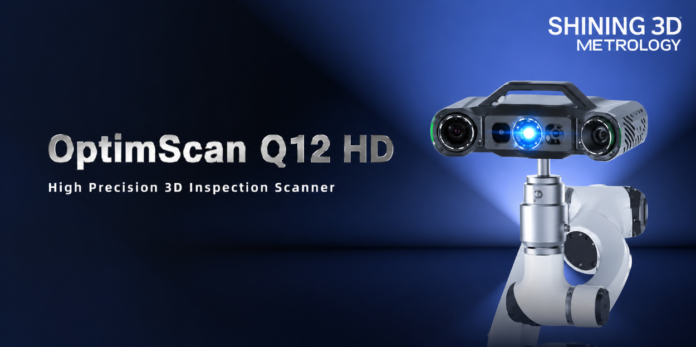
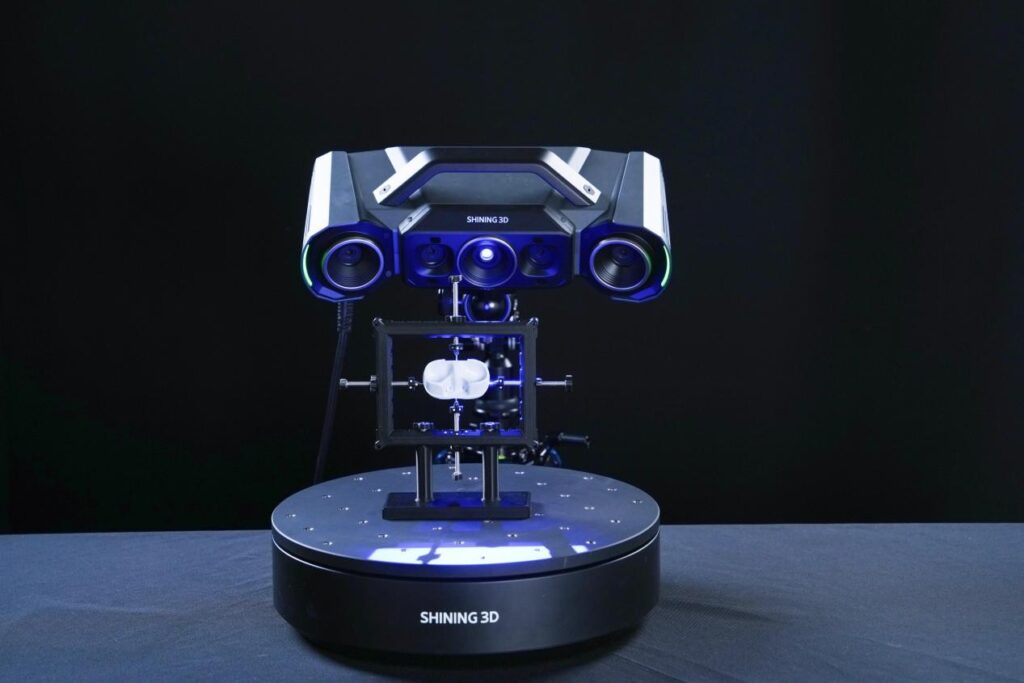
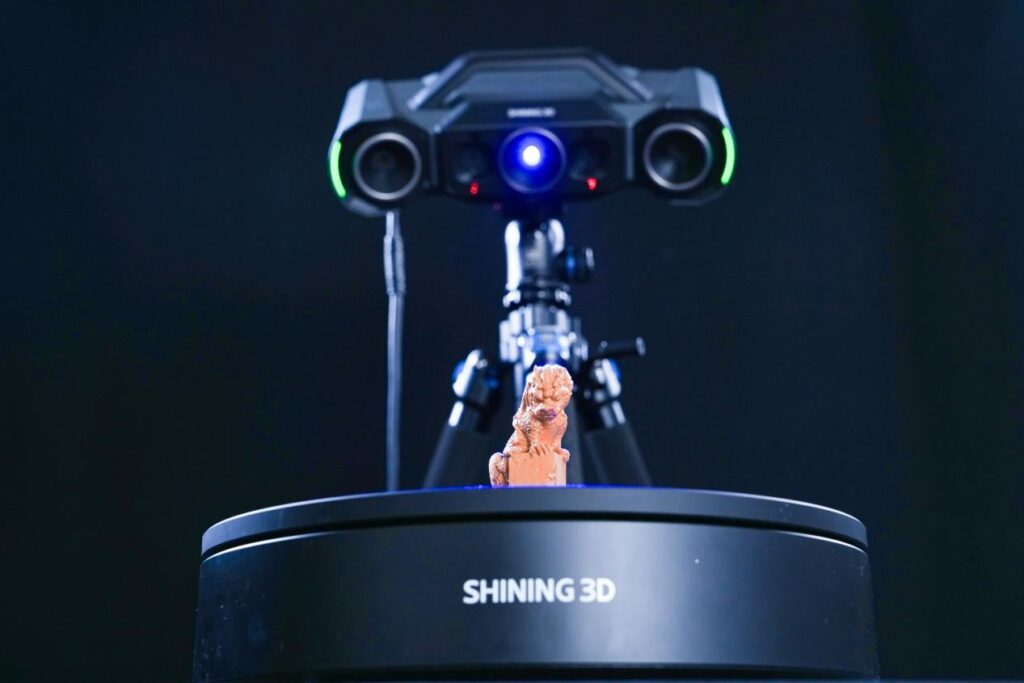
SHINING 3D announces the launch of the OptimScan Q12 HD, a new high-precision 3D inspection scanner designed for industrial metrology applications that require exceptional accuracy, detailed data acquisition, and flexible automation capabilities.

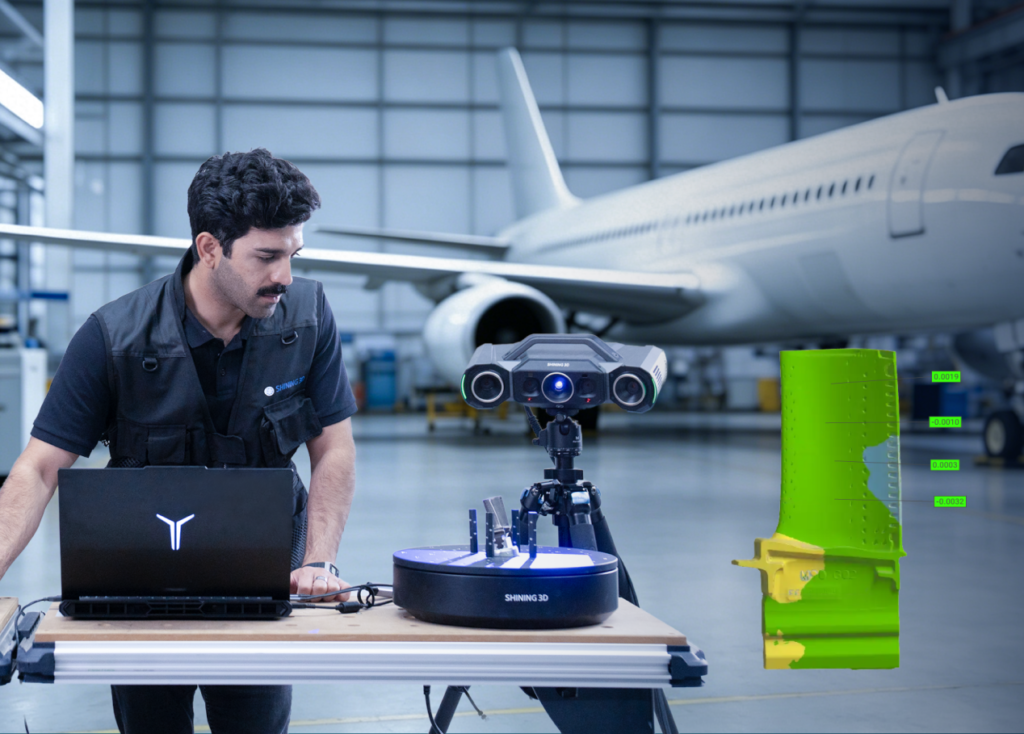
With an accuracy of up to 0.004 mm and a minimum point distance of 0.02 mm, the OptimScan Q12 HD pushes beyond the conventional performance limits of fringe projection optical scanning systems. Equipped with four high-resolution cameras, the system captures complex surfaces and minute features with exceptional clarity and precision.

Supporting Precision Inspection Across Multiple Industries

Civil Aviation

For the inspection of critical components such as engine blades and turbine blades, the OptimScan Q12 HD delivers highly accurate capture of fine blade edges, curved surfaces, and intricate structural features.

Its high-resolution scanning capability supports dimensional inspection, wear analysis, reverse engineering, and quality verification of complex aerospace components, helping manufacturers and maintenance teams improve inspection reliability and efficiency.

Picture1asa

3C Electronics and Precision Injection Molding

In industries such as 3C electronics and precision injection molding, manufacturers face increasing demands for dimensional consistency, fine-detail verification, and high-efficiency quality control.

Components including earbud housings, precision plastic parts, connectors, electronic casings, and molded structural components often feature miniature geometries, glossy surfaces, thin walls, and complex edge transitions that are challenging for conventional measurement methods. The OptimScan Q12 HD enables high-resolution 3D digitization of small and intricate components, helping manufacturers accurately inspect fine features, assembly gaps, deformation, shrinkage, and surface defects.

Picture2ghk

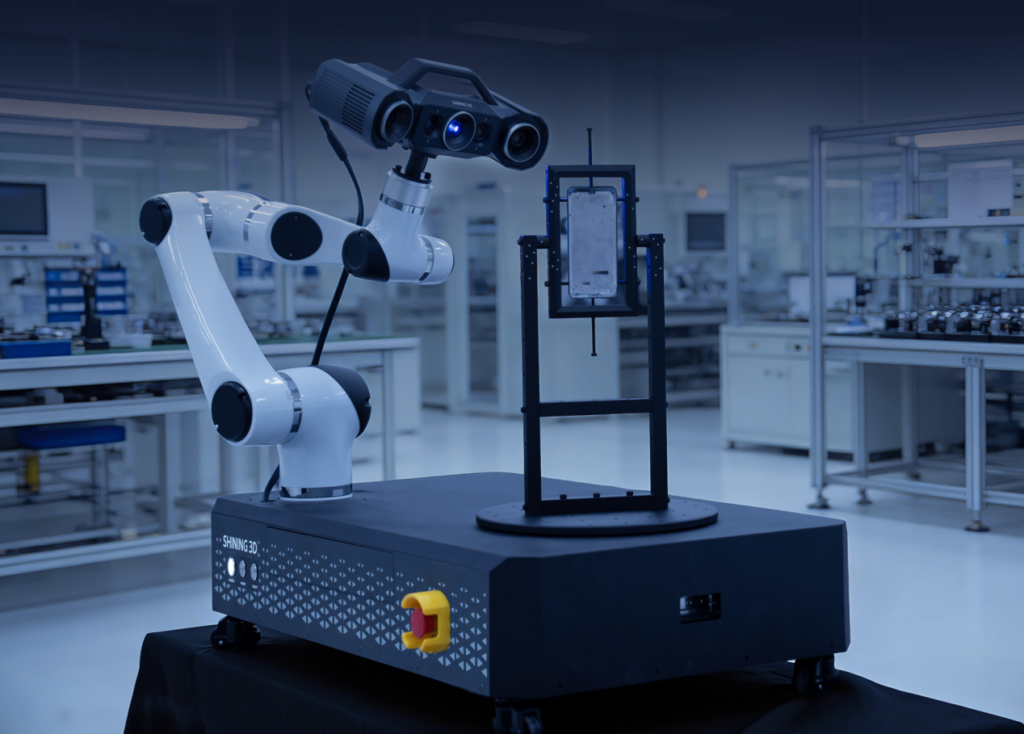
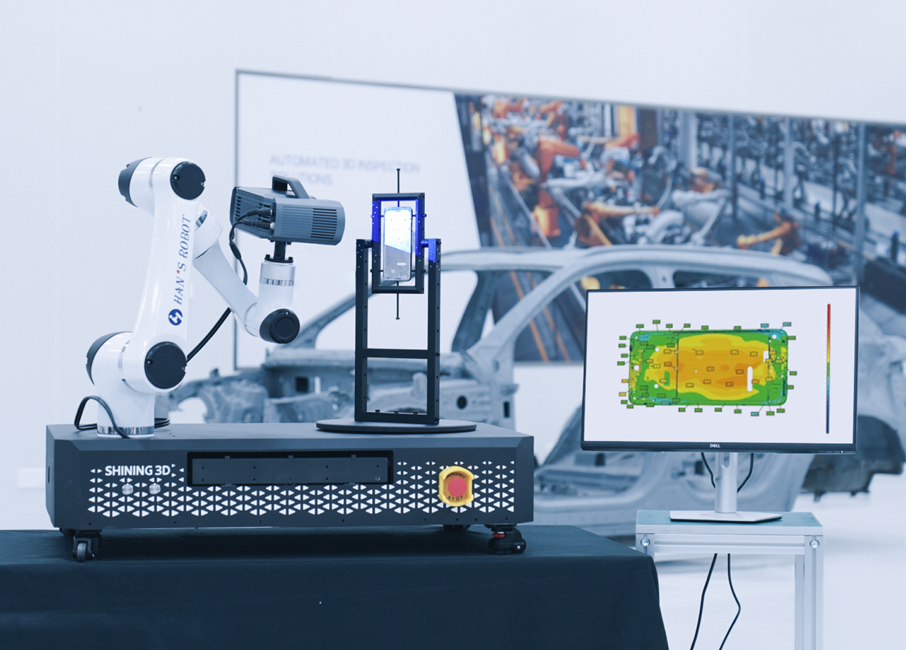
For batch inspection scenarios, the system can also integrate with robotic automation solutions, enabling repeatable and efficient inspection workflows suitable for high-volume manufacturing environments.

Picture4kl

Medical Devices and Cultural Heritage Digitization

Medical devices and cultural heritage artifacts both require highly accurate, non-contact 3D digitization methods capable of preserving intricate geometries and subtle surface characteristics.

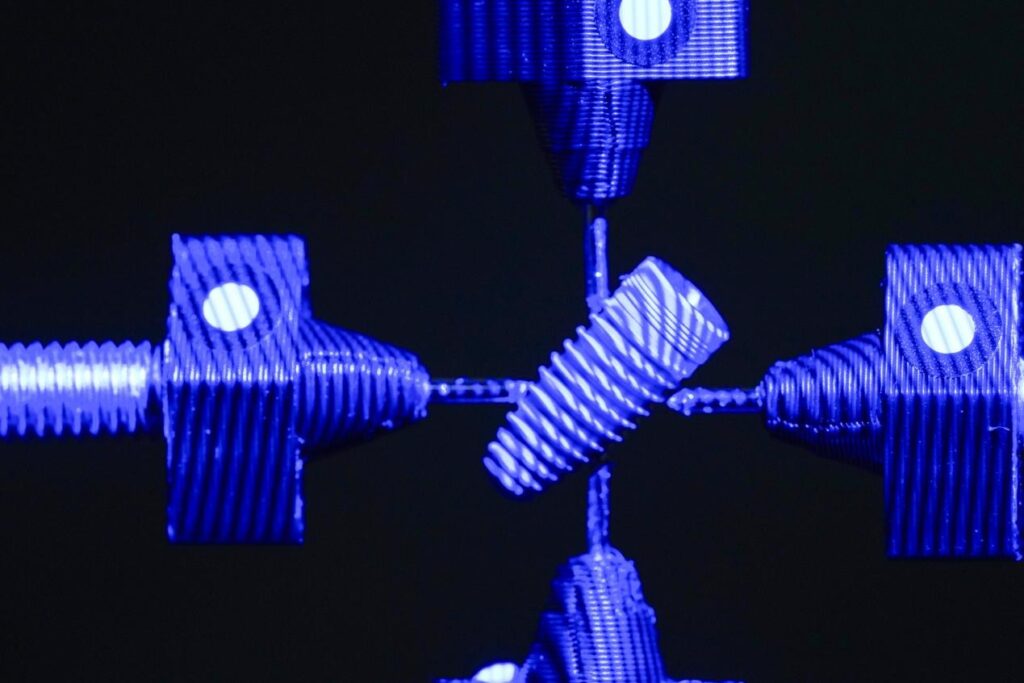
In the medical field, precision instruments and small components often contain fine contours, narrow structures, and freeform surfaces. The OptimScan Q12 HD captures these detailed geometries for applications including dimensional inspection, product development, and digital archiving.

Picture5lll

For cultural heritage preservation, the system is well-suited for digitizing artifacts featuring delicate engravings, relief patterns, and complex carved structures. Its high-detail scanning capability enables highly faithful digital reproduction while minimizing physical contact with valuable objects.

Picture6kll

Advancing the Future of High-Precision 3D Inspection

Industries are rapidly moving toward higher standards of inspection accuracy, automation, and digitalization. With the launch of the OptimScan Q12 HD, SHINING 3D continues to expand the boundaries of high-precision optical metrology, delivering a 3D inspection solution that combines micron-level accuracy, efficient workflows, and flexible automation for advanced industrial applications.

Visit – https://www.shining3d.com/

SHINING3D Inspect 2026 Enhances 3D Inspection with More Streamlined and Modular Workflows

0
SHINING 3D INSPECT

From alignment and GD&T evaluation to full-field analysis and reporting, SHINING3D Inspect 2026 delivers a more streamlined and modular approach to 3D inspection.

A Streamlined, Modular, and Customizable Approach to 3D Inspection

As manufacturing and quality control workflows continue to evolve, industries are placing higher demands on efficiency, flexibility, and inspection accuracy. To support these growing needs, SHINING 3D Metrology introduces SHINING3D Inspect 2026a streamlined, modular 3D inspection software.

Suitable for dimensional inspection and quality control across industries such as automotive, civil aviation, and precision manufacturing, SHINING3D Inspect 2026 delivers a more efficient and connected inspection workflow for a wide range of measurement tasks. Backed by PTB-certified measurement capability and independently developed by SHINING 3D, the software reflects strong in-house expertise in 3D metrology and inspection technologies.

A More Intuitive Workflow from Alignment to Reporting

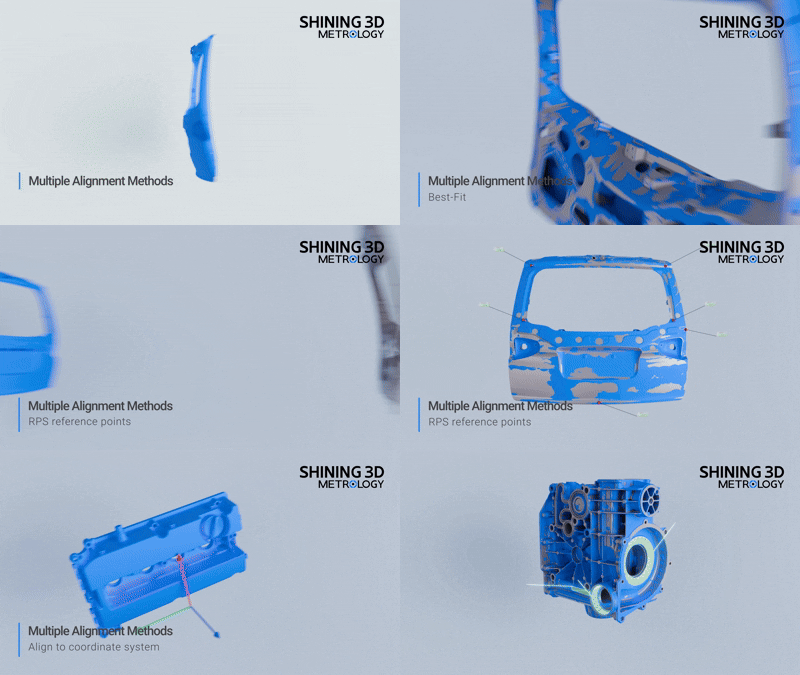
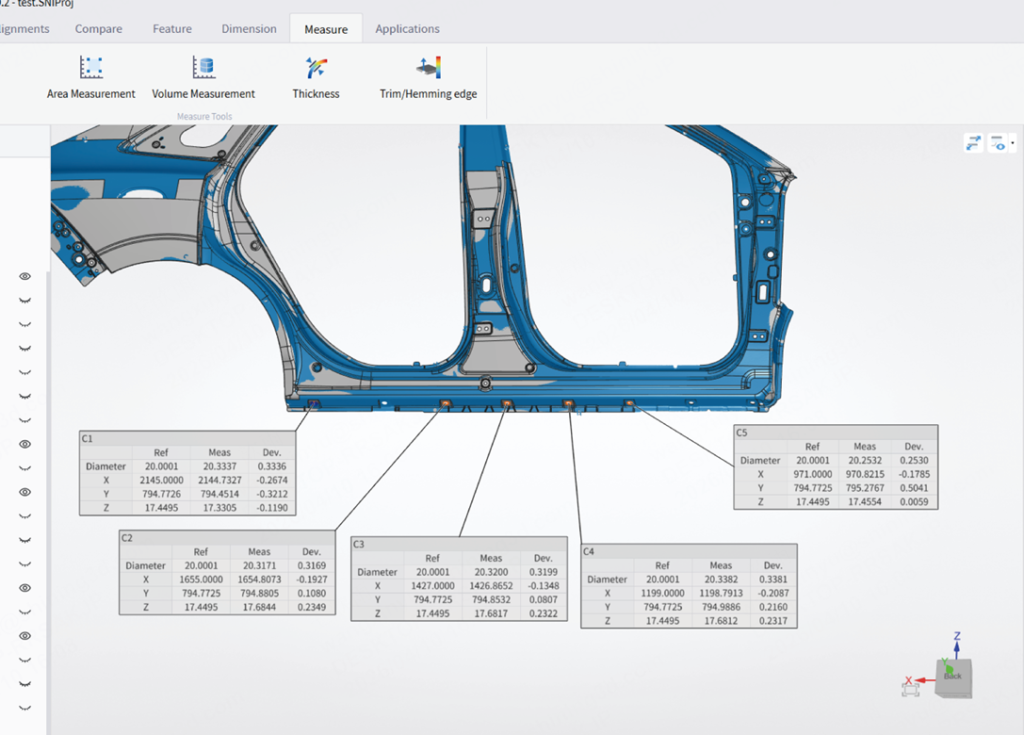
SHINING3D Inspect 2026 enables users to move more efficiently and intuitively through key inspection workflows, from feature creation and alignment to GD&T evaluation, full-field deviation analysis, and report generation. Multiple alignment methods provide flexibility for different inspection scenarios and component structures.

Multiple Alignment Methods
Multiple Alignment Methods | SHINING3D Inspect

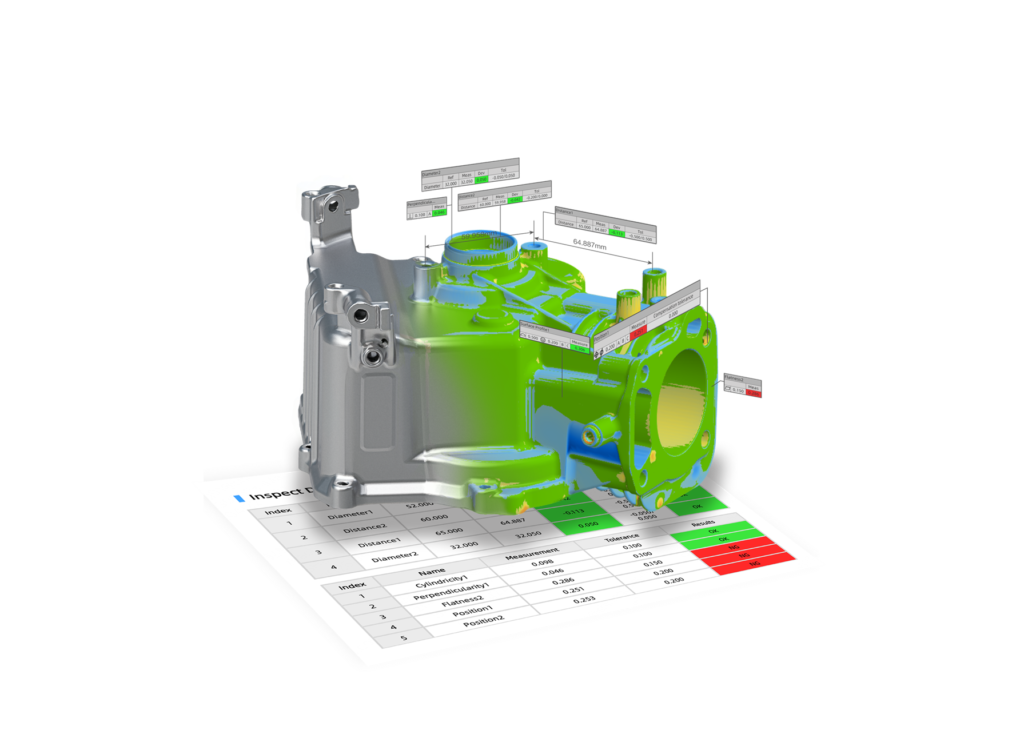
The software supports full-field comparison between scan data and CAD models through intuitive 3D color maps and 2D cross-sectional analysis, helping users visualize deviations more clearly and evaluate critical areas with greater confidence. Support for ISO and ASME GD&T evaluation standards enables reliable tolerance verification for functional features and dimensional validation tasks.

Intuitive 3D Inspection Results
Intuitive 3D Inspection Results | SHINING3D Inspect

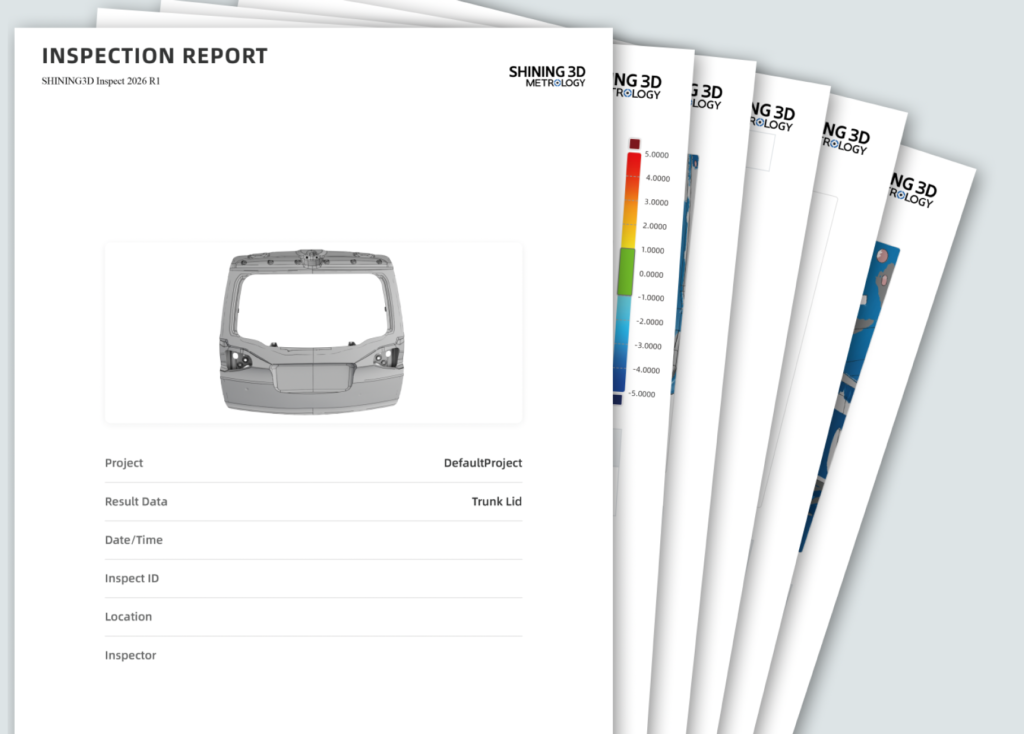
To streamline inspection communication and documentation, SHINING3D Inspect 2026 also features automated and customizable reporting, allowing users to generate clear and traceable inspection reports more efficiently.

Automated and Customizable Reporting
Automated and Customizable Reporting | SHINING3D Inspect

Flexible Tools for Diverse Inspection Needs

To address more specialized inspection requirements, SHINING3D Inspect 2026 includes dedicated modules for applications such as sheet metal inspection and dent inspection. These dedicated modules simplify setup and make it easier for quality engineers and inspectors to quickly access the functions most relevant to their tasks.

Sheet Metal Inspection
Sheet Metal Inspection & Dent Inspection

SHINING3D Inspect 2026 is also designed for flexible deployment across multiple inspection environments. Users can perform full-featured inspection in a desktop workstation setup, carry out on-device inspection directly on FreeScan Omni for faster decision-making, or integrate the software into automated systems for high-efficiency and repeatable workflows.

Automated Inspection
Desktop Inspection & On-Device Inspection & Automated Inspection

With a stronger focus on streamlined workflows and modular inspection capabilities, SHINING3D Inspect 2026 continues to expand SHINING 3D Metrology ecosystem and provide manufacturers with more efficient and flexible 3D inspection solutions.

Siemens Smart Infrastructure Launches AI-enabled Managed Building Service

0
Asset Performance Advanced

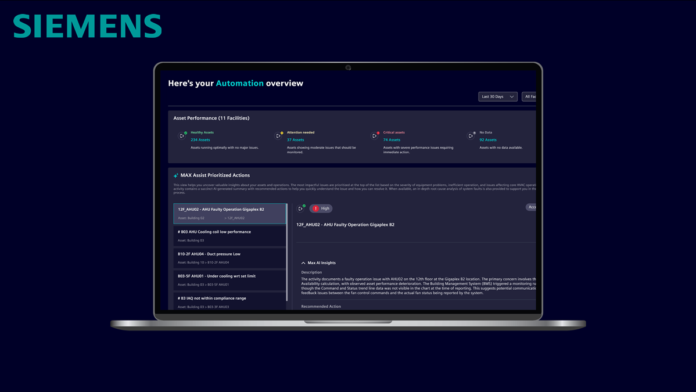
ZUG, Switzerland, May 21, 2026 – Siemens Smart Infrastructure launched Asset Performance Advanced, a new AI-enabled managed building service. By combining an integrated predictive failure mode classification with advanced fault detection and diagnosis (FDD), the solution helps customers across industries optimize operations, improve energy performance, and enhance occupant comfort. Bringing together predictive intelligence, prescriptive AI, and expert-guided actions, Asset Performance Advanced supports the transition toward human-centric autonomous buildings – enabling them to sense issues, decide actions, and continuously improve performance.

The solution is built on three core capabilities: predictive, prescriptive, and workflow. It identifies root causes of performance issues, recommends high impact actions to address them, and enables automated, optimized execution across teams. Unlike analytics-only solutions, Asset Performance Advanced not only detects issues but also operationalizes response – combining AI-assisted recommendations, standardized resolution playbooks, and integrated workflows that route tasks to the right teams, supported by Siemens Digital Service Centers. This ensures that insights consistently translate into measurable outcomes.

Asset Performance Advanced is designed for industries where uptime and operational reliability are critical – including healthcare, higher education, and commercial real estate – and is supported by intuitive dashboards and expert-led reporting. Healthcare facilities operating around the clock can detect issues early and maintain compliance in critical environments such as operating rooms and patient care areas. Higher education institutions gain portfolio-wide visibility to proactively manage assets across distributed campuses. Commercial real estate owners can improve comfort consistency, meet energy and ESG targets, and enhance both tenant satisfaction and asset value. 

“As buildings become more complex and data-rich, the challenge is no longer visibility but translating insights into meaningful impact. At Siemens, our vision is to create human-centric autonomous buildings that continuously adapt to the needs of their occupants while optimizing performance in the background. With Asset Performance Advanced, we are closing the loop between detection, decision, and execution by combining AI, domain expertise, and service delivery to enable more resilient, responsive, and sustainable building operations,” said Brad Haeberle, SVP of Services at Siemens Smart Infrastructure Buildings.

Traditional reactive maintenance can cost three to five times more than planned or predictive approaches, often leading to emergency repairs, service disruptions, and occupant dissatisfaction. Asset Performance Advanced moves beyond rule- and alarm-based monitoring by prioritizing issues based on their impact on comfort, energy, and uptime. By leveraging advanced analytics to continuously monitor heating, ventilation, and air conditioning (HVAC) systems and building automation devices, the service enables early detection – before alarms are triggered – while helping teams focus on the highest-value actions.

AI-assisted recommendations further extend beyond traditional guidance by determining and initiating optimal workflows. Through standardized resolution playbooks and recurring performance reviews, the service continuously optimizes building portfolios and closes the operational loop – shifting from reactive responses to proactive, outcome-driven decision-making. The service also connects insights directly to execution through integrated digital workflows delivered via the Siemens Customer Interaction Portal. Issues are automatically prioritized and routed to the appropriate teams – whether in–house or to Siemens Digital Service Centers – enabling customers to act faster and more efficiently with fewer resources.

Asset Performance Advanced further expands Siemens’ automation services portfolio and is integrated within the Building X ecosystem. Building X is a digital building platform that supports customers to digitalize, manage, and optimize their building operations.

About Siemens Smart Infrastructure 

Siemens Smart Infrastructure (SI) is shaping the market for intelligent, adaptive infrastructure for today and the future. It addresses the pressing challenges of urbanization and climate change by connecting energy systems, buildings, and industries. SI provides customers with a comprehensive end-to-end portfolio from a single source – with products, systems, solutions, and services from the point of power generation all the way to consumption. With an increasingly digitalized ecosystem, it helps customers thrive and communities progress while contributing toward protecting the planet. To protect this journey, we foster holistic cybersecurity to ensure secure and reliable operations. Siemens Smart Infrastructure has its global headquarters in Zug, Switzerland. As of September 30, 2025, the business had around 79,400 employees worldwide.

About Siemens AG

Siemens AG (Berlin and Munich) is a leading technology company focused on industry, infrastructure, mobility, and healthcare. The company’s purpose is to create technology to transform the everyday, for everyone. By combining the real and the digital worlds, Siemens empowers customers to accelerate their digital and sustainability transformations, making factories more efficient, cities more livable, and transportation more sustainable. A leader in industrial AI, Siemens leverages its deep domain know-how to apply AI – including generative AI – to real-world applications, making AI accessible and impactful for customers across diverse industries. Siemens also owns a majority stake in the publicly listed company Siemens Healthineers, a leading global medical technology provider pioneering breakthroughs in healthcare. For everyone. Everywhere. Sustainably. In fiscal 2025, which ended on September 30, 2025, the Siemens Group generated revenue of €78.9 billion and net income of €10.4 billion. As of September 30, 2025, the company employed around 318,000 people worldwide on the basis of continuing operations. Further information is available on the Internet at www.siemens.com.

Quanta Computer Implements Siemens Xcelerator to Advance its Digital Transformation

0

PLANO, TX, USA, May 21, 2026 – Siemens announced that Quanta Computer Inc., a global leader in consumer electronics OEM/ODM manufacturing, is using the Siemens Xcelerator portfolio of industry software to advance its global digital transformation to shorten development cycles and enhance responsiveness to market demand. The initiative establishes an integrated, collaborative environment that connects product design with manufacturing execution, enabling greater speed, consistency and scalability across operations. Amid intensifying global competition and increasing product complexity, Quanta Computer is accelerating its transformation.

3685

As a strategic technology provider, Siemens supports Quanta in building a unified digital thread across its research & development centers and distributed manufacturing network. This end-to-end connectivity is expected to significantly improve operational efficiency, with projected reductions of 20 to 25 percent in NPI timelines, helping teams collaborate on one digital twin so decisions move earlier, and scaling across factory operations become more predictable.

“In a fast-evolving market, optimizing our global operational footprint is critical. Siemens has the toolset that will allow us to achieve our ambitious goals,” said Terrisa Chung, Vice President, Quanta Computer. “Siemens brings deep expertise in high-tech electronics and a comprehensive software portfolio that supports our key objectives – from reducing commissioning time to improving data accuracy and cross-site collaboration.

“Quanta Computer’s adoption of Siemens Xcelerator underscores the value of a connected digital thread in bringing together complex engineering and manufacturing data,” said Bas Kuper, senior vice president and managing director for Asia Pacific, Siemens Digital Industries Software. “By enabling greater transparency, traceability and collaboration, we are helping Quanta scale global operations with increased agility and precision.”

siemens-quanta-computer-newsroom-02-1280x720

To achieve these results, Quanta Computer is adopting an integrated suite of Siemens’ software, including:

  • Application and product lifecycle management: With the adoption of Siemens’ Polarion™ for software application lifecycle management (ALM) and Teamcenter® software for product lifecycle management (PLM)Quantawill achieve end-to-end traceability from customer requirements and Request for Quotations (RFQs) through MCAD/ECAD design data and Bill of Materials (BOM) management
  • Manufacturing process management: Quanta will create a seamless link between engineering and production with Teamcenter Manufacturing managing its Bill of Process (BOP).
  • Production validation and optimization: Simulate and optimize end-to-end manufacturing processes with Siemens Process Simulate, helping Quanta to validate processes digitally, eliminate trial-and-error on the shop floor and maintain one consistent digital thread from design through production and execution.
  • Quality management: Quanta will strengthen its quality processes to assist with IATF 16949 compliance using Siemens’ Teamcenter Quality. With more than 150 devices already in production for leading EV and AD customers since 2015, Quanta demonstrates proven delivery at automotive scale. Citing IATF 16949 further signals its capability to meet automotive-grade quality and reliability, enabling entry into high-growth segments like automotive electronics.

To learn how Siemens is helping high-tech electronics manufacturers accelerate digital transformation, visit: https://www.siemens.com/en-us/products/teamcenter.

About Siemens Digital Industries Software

Siemens Digital Industries Software helps organizations of all sizes digitally transform using software, hardware and services from the Siemens Xcelerator business platform. Siemens’ software and the comprehensive digital twin enable companies to optimize their design, engineering and manufacturing processes to turn today’s ideas into the sustainable products of the future. From chips to entire systems, from product to process, across all industries. Siemens Digital Industries Software – Accelerating transformation.

MathWorks Launches New Renesas Hardware Support Packages for Automotive, Industrial Engineers

0

NATICK, MA, USA, May 21, 2026 – MathWorks, the leading developer of mathematical computing software for designing engineered systems, today announced new Hardware Support Packages that directly connect Model‑Based Design and simulation to execution on Renesas’ RH850/U2A microcontroller for automotive applications and the RA6T2 microcontroller for industrial controls. The new MATLAB® and Simulink® integrations enable engineering teams to move from simulation to running embedded code on hardware with automated build, flashing, and on‑target execution while also accelerating development cycles through the elimination of many manual integration steps.

“Our customers expect a straightforward path from simulation model to microcontroller, and the new integration with MATLAB and Simulink delivers exactly that,” said Brad Rex, Senior Director of System Solution Team, UX (User Experience) Group at Renesas. “By working with MathWorks, we’ve removed the need to assemble toolchains and device drivers by hand so teams can simulate and validate designs earlier, iterate faster, and reduce integration effort across ECU and industrial‑control projects.”

The new support packages give engineering teams a consistent Model-Based Design workflow across both automotive and industrial programs, reducing integration effort and accelerating deployment. Renesas’ RA microcontroller platform is optimized for industrial and robotics applications that require flexible connectivity, real-time responsiveness, and scalable embedded control. The integration with the RA family enables rapid prototyping of servo and variable‑speed drive applications, with one-click deployment that streamlines hardware bring‑up and on‑bench validation for motion profiles and closed‑loop tuning.

The Renesas RH850/U2A microcontroller, widely used in automotive electronic control units, provides the deterministic performance and safety-critical features required for EV motor control, advanced driver-assistance systems (ADAS), and body electronics. Automotive engineers developing traction motor control for electric vehicles can deploy field‑oriented control and regenerative braking algorithms directly from Simulink to RH850/U2A‑based ECUs. This shortens the time from concept to vehicle‑level testing, supports smoother torque delivery during rapid transients, and speeds calibration across drive cycles—without writing initialization code or custom build scripts.

“Our collaboration with Renesas strengthens the level of interoperability that engineers expect when using MATLAB and Simulink,” said Anuja Apte, India Product Marketing Manager, MathWorks. “By providing a direct path from Simulink models to optimized microcontroller deployment, we help engineering teams move from design to hardware more efficiently while staying integrated with the broader toolchains they rely on. This approach reflects the MathWorks Connections program, which brings partners and customers together to accelerate innovation and reduce time to market within a widely adopted engineering and scientific platform.”

For more information on the new hardware support packages in MATLAB and Simulink, visitthe Renesas RH850 hardware support page and the Renesas RA hardware support page on the MathWorks website.

About MathWorks

MathWorks is the leading developer of mathematical computing software for designing engineered systems. MATLAB, the language of engineers and scientists, is a programming and numeric computation environment for algorithm development, data analysis, and visualization. Simulink is a block diagram environment for simulation and Model-Based Design of multidomain and embedded systems. MATLAB and Simulink provide a unified computing platform that empowers engineering teams to model, simulate, and deploy complex engineered systems spanning industries such as automotive, aerospace, energy, and medical devices. MATLAB and Simulink are fundamental teaching and research tools at the world’s top universities and learning institutions. Founded in 1984, MathWorks employs more than 6,500 people in 34 offices globally, with headquarters in Natick, Massachusetts, USA. Visit www.mathworks.com.

Axtra3D Expands Dental Material Ecosystem through Keyprint Partnership, Launches KeyModel Ultra Ivory on Lumia X1 Platform

0
Axtra3D Keystone

CHARLOTTE, NC, USA, May 21, 2026 – Axtra3D, Inc., an emerging leader in advanced additive manufacturing, continues to strengthen its leadership in dental manufacturing through the expansion of its materials ecosystem in partnership with Keystone Industries. As part of this collaboration, the company introduces KeyModel Ultra, a high-precision, ultra-fast printing, non-chipping resin integrated with a proprietary thermoforming quick-release agent. Axtra3D and Keystone Industries are continuing efforts to expand the keyprint materials available in the Material Ecosystem with additional material validations in process:

  • KeyOrtho Model
  • KeyGuide
  • KeySplint Hard Clear
  • KeySplint Soft
  • KeySplint Soft Clear

“Keystone Industries’ 3D Dental R&D team worked closely with Axtra3D to validate KeyModel Ultra on the Lumia X1 printer,” says Arianna Waters (PhD), Dental Research Manager at Keystone. “Axtra3D’s optimized resin settings produced high-quality parts that met stringent dimensional accuracy requirements, allowing the team to advance efficiently to mechanical testing. With several additional validations currently underway and set to be announced in the coming months, this partnership is off to a strong start.”

KeyModel Ultra™ delivers a differentiated and elevated combination of material properties tailored for dental production environments. Once cured, the material can be carved without chipping, eliminating one of the most prevalent roadblocks to dental model printing. It’s also formulated with a quick-release agent, allowing ease of use for forming molds, perfect for clear aligners and restorations. The smooth surface finish and sharp detail this resin achieves enables reliable, consistent, and fast printing.

CSO of Axtra3D, Rajeev Kulkarni, states, “This material is designed to improve dental lab productivity, reduce cost per part, and minimize rework that drives waste and delays. By removing a key downstream failure point in carving and finishing, it helps increase throughput and operational efficiency.

It also streamlines thermoforming workflows, improving turnaround times for high-volume applications like clear aligners and restorations. The result is more predictable output at scale, with higher consistency and reduced operational variability.”

The resin is also available in Sand and Light Gray color, however, Ivory is the only color validated on the Lumia.X1 as of this press release.

This resin pairs perfectly with the Lumia.X1 because both provide high detail accuracy and fast printing, but most importantly, they both enable highly repeatable outcomes, allowing labs to feel more stable with workflows based on AM. This repeatability is what moves the AM industry to a fully scalable foundation for these labs.”

Axtra3D has consistently demonstrated its ability to deliver high-performance dental prints that meet the demanding requirements of advanced manufacturing environments. The introduction of KeyModel Ultra™ builds on this foundation, enabling broader application coverage across the dental market.

KeyModel Ultra is now available for purchase through Axtra3D sales channels. Please contact sales@axtra3d.com for inquiries.

About Axtra3D

Based in the US and Italy, Axtra3D is a global company specializing in Hi-Speed SLA systems that eliminates tradeoffs between print throughput, accuracy, feature resolution, and surface finish typically found in traditional SLA or DLP systems.

The flagship LumiaX1 Hi-Speed SLA system by Axtra3D represents a significant advancement, combining its Hybrid PhotoSynthesis resin polymerization process with TruLayer, a layer separation technology. HPS utilizes both a laser and a DLP to image simultaneously, while TruLayer enables rapid detachment of the active print layer, resulting in a 20X throughput improvement while preserving the accuracy and fidelity of SLA parts.

Axtra3D operates with two business models.

Axtra Solutions: This model provides fully optimized, turnkey 3D printing solutions. Customers receive complete print profiles fine-tuned for maximum performance and reliability, supported by Axtra3D’s Applications team and quality material partners.

Axtra OpenAccess: This model further builds on Axtra Solutions™ and allows customers the flexibility to experiment with new materials and applications. It supports innovation and adaptability, enabling added flexibility.

Learn more at https://axtra3d.com.

Sigmetrix Releases EZtol v3.2.1 for 1D Tolerance Stack-Up Analysis

0
Sigmetrix

MCKINNEY, TX, USA, May 21, 2026 – Sigmetrix, experts in mechanical variation management, announced their release of EZtol v3.2.1. This new version offers several enhancements to the standalone version of EZtol as well as EZtol for SOLIDWORKS.

EZtol UI Generic May 2026 Cropped

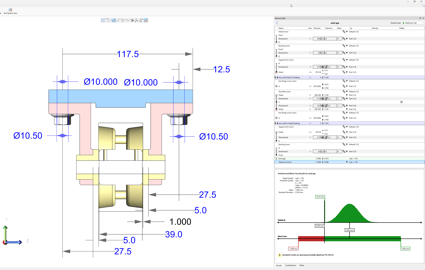
EZtol streamlines 1D tolerance stack-up analysis, making it easy for engineers to quickly calculate, visualize, and validate tolerance impacts without relying on error-prone spreadsheets. The result is faster design cycles, more accurate assemblies, and lower manufacturing risk. 

EZtol v3.2.1

Added ability to clone a stackup

  • EZtol now allows you to create a copy of an existing stackup, and the new copy will remain independent of the original stackup. This can be useful if you want to evaluate the same stackup measurement but with different assembly shift settings (Maximize vs. Minimize), different stackup objectives (Tolerance type or value), or different analysis type (Worst Case vs. RSS). 

Added ability to redefine mating features of an existing stackup

  • EZtol now allows you to redefine mating features in an existing stackup. This can be helpful if you inadvertently selected the wrong feature when initially defining the stackup, or if you want to evaluate a different path of mating features in the part loop of the stackup.

Switch license manager from Reprise to Flexera

  • EZtol has switched license managers from Reprise to Flexera. This change aligns EZtol with other Sigmetrix products in using Flexera and will simplify license management by consolidating all Sigmetrix solutions on the same license manager.

EZtol for SOLIDWORKS v3.2.1, all of the above plus:

Use of assembly mates to automatically define the stackup dimension sequence

  • EZtol will interrogate existing mates in the assembly. If at least one path between the start and end features of the stackup can be found, EZtol can use that path to automatically define the stackup dimension sequence. This can save time and streamline the process of generating a new stackup.

Sigmetrix’s comprehensive, integrated portfolio includes other products and services including: 

  • CETOL 6σ, a 3D tolerance analysis solution that works directly with NX, SOLIDWORKS, PTC Creo and CATIA V5-6 models. 
  • EZtol, a 1D tolerance analysis software that works directly with NX, SOLIDWORKS, and CATIA V5-6 models. The same technology is used in PTC Creo’s EZ Tolerance Analysis (EZTA) tool and Autodesk Inventor’s Tolerance Analysis tool. 
  • GD&T Advisor, an interactive tool that provides expert guidance on the correct application of GD&T within the PTC Creo and Autodesk Inventor environments. 
  • Training  provided through more than a dozen instructor-led and computer-based courses covering basic to advanced GD&T/GPS, MBE, tolerance analysis, and instructional courses for software developed by Sigmetrix. 
  • Consultation and implementation  services team with years of experience in tolerance analysis and GD&T definition offers a variety of consulting services to augment your team, speed your project along and run analyses for your assemblies.

About Sigmetrix

Sigmetrix has been helping companies produce better solutions for over 25 years through a combination of software solutions, training, and consulting services that focus on managing the impact of mechanical variation. For more information, visit their website at https://www.sigmetrix.com.