Home Blog Page 25

Driving EV Development with a Twin-Battery Approach

0
Comsol dailycadcam

Considering energy efficiency, energy density, and environmental concerns, IAV combined complementary sodium-ion and solid-state lithium iron phosphate battery technologies in a twin-battery system optimized and validated with multiphysics simulation that opens up new possibilities for car manufacturers and battery designers.

GUEST POST BY COMSOL, Inc.- Author: Joseph Carew

Avoiding the rare raw materials required for the production of traditional batteries without sacrificing energy density is a major goal for those looking to electrify the world. Lithium-ion batteries power most of today’s electric vehicles (EVs)1 but are associated with high costs as well as sustainability and environmental concerns. Engineers and developers in the battery industry are investigating alternative chemistries and designs to find new approaches that address these concerns and reduce costs while fulfilling the demands of most lithium-ion applications.

IAV is one of the world’s largest engineering companies. Within an extensive portfolio geared toward the future of mobility, battery development plays a critical role. A team of IAV engineers including Jakob Hilgert, a technical consultant at the company, felt that, with the right approach, IAV could achieve better battery designs. The team leaned on its understanding of what makes existing single-chemistry designs successful — as well as what holds each back — to develop a novel approach to solving battery energy density, sustainability, and thermal management issues: a twin-battery design.

Instead of turning solely to lithium-ion cells, IAV engineers thought a pair of alternative battery chemistries could be combined to form a less expensive and more ecofriendly system that could handle EV applications. With this approach in mind, IAV turned to multiphysics simulation to successfully design and validate its twin-battery solution.

Avoiding Lithium-Ion Battery Pain Points

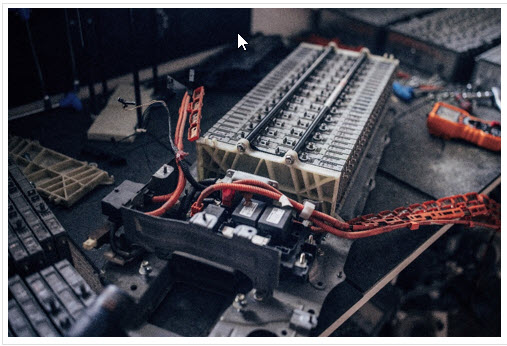
While lithium-ion batteries (Figure 1) are often used for their high energy density2, their creation can have environmental drawbacks. Open-pit mining for lithium removes vegetation, creates toxic soil, and releases dust that elevates the risk of illness in animals and people3. Producing these batteries is also an expensive prospect1 and reliant on a relatively rare material. IAV engineers looked to avoid these concerns when choosing the technologies to be included in their twin-battery approach.
Battw
Figure 1. Lithium-ion batteries in a repair shop

“We need to be prepared for batteries that have a larger focus on recycling and resources,” Hilgert said. “We cannot always take the highest-energy-density cell that is theoretically possible and use that as our solution.”

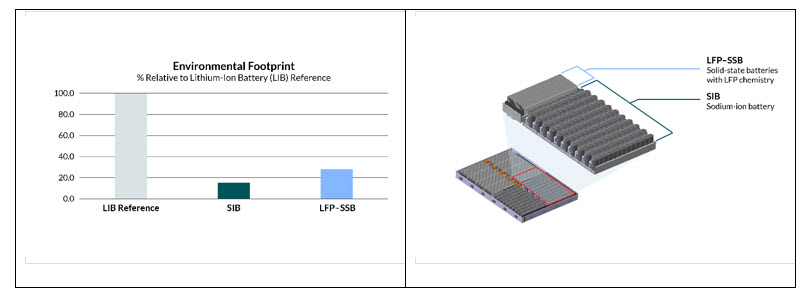
Instead, the team at IAV chose to pair a sodium-ion battery (SIB) and a lithium iron phosphate (LFP) solid-state battery (SSB) for its design because of the chemistries’ unique ability to complement one another. SIBs are typically cheaper, more sustainable to source, and easier to recycle than conventional lithium-ion batteries4; however, they tend to have comparatively lower energy density and a shorter cycle life. Meanwhile, traditional LFPs are known for their stability and long cycle life but also lack in energy density when compared to conventional lithium-ion batteries. Finally, SSBs are known for having higher energy density than traditional lithium-ion battery chemistries. By combining an SIB with an LFP-SSB, the resulting design should theoretically have an improved environmental footprint (Figure 2), cost less money to create, and feature a relatively strong energy density for demanding applications such as powering EVs.
Grr
Figure 2. A comparison of the two battery technologies used in the twin-battery approach. Image courtesy of IAV and modified by COMSOL.

“The development of batteries for automotive use is progressing rapidly. It goes hand in hand with a rising demand for scarce raw materials,” Hilgert said. “Diversification of cell chemistries is a promising approach to respond to market fluctuations and at the same time minimize system costs.”

Creating Thermal Compatibility

IAV’s twin-battery design was also developed, in part, to test the thermal compatibility between an SIB and LFP-SSB. The idea was that channeling the waste heat from the SIB into the LFP-SSB would rapidly activate the latter’s solid-state cells and push them into the higher temperature ranges where they perform best5 — while simultaneously keeping the SIB from exceeding its maximum operating temperature and increasing the system’s overall energy efficiency.

“If we have some cells that can operate at high temperatures and some cells that can operate at low temperatures, it is beneficial to take the exhaust heat of the higher-running cells to heat up the lower-running cells, and vice versa,” Hilgert said. “That’s why we came up with a cooling system that shifts the energy from cells that want to be in a cooler state to cells that want to be in a hotter state.”

Cells with liquid electrolyte have limited thermal stability and require cooling (true for both sodium and lithium cells), and temperatures above ~60°C need to be avoided. Solid-state cells can operate at higher temperatures because of their solid electrolyte, and these need an elevated temperature to reach usable ion conductivity. Therefore, the SIB cells in this concept need cooling while the SSB cells need heating, and both cells benefit from the mutual heat exchange. IAV engineers knew that this interaction in particular would be a significant optimization challenge and felt that modeling and simulation would be essential to easing the complexity. For this, the team turned to the COMSOL Multiphysics® software.

Designing the Battery System

IAV first began using COMSOL Multiphysics® more than a decade ago to improve its design workflow.

“We were using a large quantity of different specialized tools for different specialized topics,” Hilgert said. “When we started working with batteries, it was time to say, ‘We need one tool to deal with all of these topics.'”

The platform’s comprehensive workspace gives IAV the opportunity to avoid building unnecessary prototypes for clients and easily optimize its designs. With the twin-battery model, IAV engineers can tweak different parameters (whether, for example, they impact the cooling of particular circuits or the maximum power that cells at a certain temperature produce) and alter the design to ensure that any real-world creation is as efficient as possible. “If you have this knowledge and you do not have to guess at all of these parameters, then the technology readiness level of the prototype will be a lot higher,” Hilgert said.

Because of the multiphysics nature of battery modeling, the COMSOL® software’s capabilities were well suited for the twin-battery system (Figure 3) development project: Designing operational batteries requires proper thermal management, an understanding of how the materials of different cells are going to perform within their modules, knowledge of the varying pressures within the internal processes in the battery, as well as an electrochemical understanding of the whole. There also needs to be an understanding of how swelling or contraction during charging and discharging can impact the mechanics of these systems.

“A highly integrated model-based development process can be used to investigate the potential of different cell chemistries, designs, and cooling concepts,” Hilgert said. “It reduces the need for physical prototypes and allows for performance optimization toward typical requirements of automotive applications.”
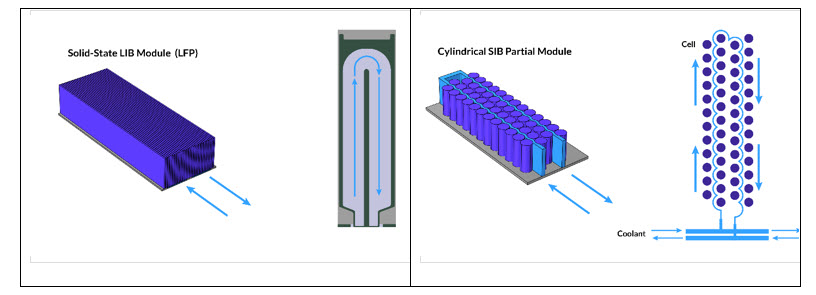
Drr
Figure 3. The two battery technologies as they appear in the COMSOL model. Image courtesy of IAV and modified by COMSOL.

Heating, Cooling, and Design Optimization

Engineers at IAV were able to verify the performance of its twin-battery concept using coupled multiscale and multidomain simulation (Figure 4). The team found that the design worked as desired during concept development, paving a path forward for better battery design. The model showed very fast on-demand activation of solid-state cells, with partial preconditioning done by the SIB’s waste heat. The team has optimized the thermal management of the two cells and shortened the time and energy input needed for SSB activation in cold conditions.

“The simulations showed that it is actually possible to do what we had in mind,” Hilgert said. “The waste heat actually can be transported by the cooling system, and the amount of heat is sufficient to heat up the other part of the battery.”
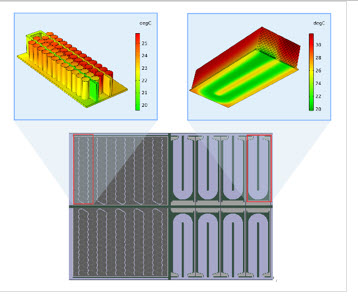
Grrt
Figure 4. The two battery technologies working as one system. Image courtesy of IAV and modified by COMSOL.

IAV was able to run different scenarios, comparing various levels of sensitivity for different surrounding conditions or parameter selections with its model, which functions as a virtual prototype. The team successfully integrated 3D cell temperature distributions, pseudo-2D (P2D) electrochemical modeling, and 1D cooling circuit dynamics into a comprehensive electric powertrain model.

Democratizing the Twin-Battery Model with Apps

Once IAV’s simulation specialists have developed a white-box model for a customer, they often use the Application Builder in COMSOL Multiphysics to additionally package its functionality into a simulation app, a custom-configured user interface with restricted inputs and outputs that the customer can distribute internally to colleagues in different domains who use it to run simulations and evaluate results in their respective contexts. App users do not need in-depth knowledge of the underlying complex model; instead, simulation apps are designed to be easy to use and hard to break, making them ideal for IAV’s many customers who “want to distribute these simulation tasks to people that usually do not do modeling,” as Hilgert put it.

“We can start with the basic functionality and hand it out to everybody, and nobody will have a problem using it. Later on, if things get more detailed, we can have the apps grow with the application and add more physics, more options, more buttons,” shared Hilgert.

IAV engineers use COMSOL Compiler™ to turn their simulation apps into standalone executable files that they send to their customers alongside the white-box versions of the underlying models, who can then run them without a COMSOL license (Figure 5). This makes it easier to run simulations in distributed development environments. In the case of the twin-battery design, cooling system engineers can run parallel optimization calculations without COMSOL licenses. Streamlined access to simulation results leads to more efficient development processes and has greatly improved the acceptance of model-based development both internally and among IAV’s customers.

“Having COMSOL Compiler as a distribution option is a great benefit for our work,” Hilgert said. “We can use our own models for some simulation or profiling tests just by compiling some apps and then having other people do their jobs, without having to wait for the licenses.”

Interfacing Java code is used to provide remote control of the apps that IAV builds thanks to the COMSOL software’s API. This remote control allows users to automate repetitive modeling steps. The team also implements Functional Mock-up Unit (FMU) interfaces, which it couples to vehicle simulation environments in third-party software for cosimulation.

Users of the twin-battery app are given the voltage, state of charge (SOC), temperatures, and power dissipation as inputs to the battery management system and cooling system. Design engineers can view the internal cell states through these apps and make changes to the cooling system as they evaluate the varying battery performance.
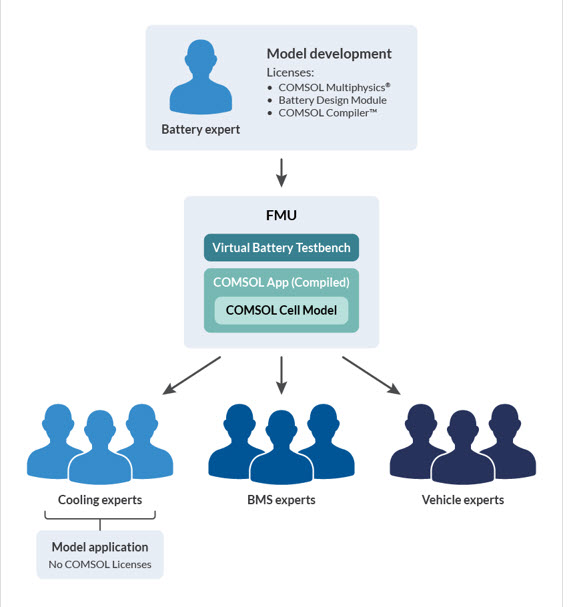
Hrr
Figure 5. The workflow created at IAV through the Application Builder and COMSOL Compiler™.

Using Apps Internally

Apps that are used internally at IAV are often designed for cosimulation with COMSOL Multiphysics® and external toolchains and are routed through IAV‘s virtual test bench interface. Figure 6 shows an example battery module app used for cosimulation, which provides basic user feedback about the internal states of the models like current, voltage, temperatures, etc. App results are provided as a real-time data stream to other programs in the cosimulation framework, where detailed evaluation of results is performed.

Jrra
Figure 6. In IAV’s battery module app, output graphs provide the user with convenient visual feedback on the state of the model during execution. Image courtesy of IAV.

(T)Winning the Battle for a Better Battery

IAV hopes that its twin-battery design concept will function as a showcase to others in the battery industry that, even if you have demands that are contradicting, there can still be a solution.

“The twin-battery approach gives the car manufacturer or the battery designer more options to solve their problems,” Hilgert said. “It also shows that there is a way of integrating future technologies with very different principles into existing frameworks.”

References

  1. “Batteries for Electric Vehicles,” Alternative Fuels Data Center (AFDC)https://afdc.energy.gov/vehicles/electric-batteries
  2. “Lithium-Ion Battery,” Clean Energy Institute, University of Washington; https://www.cei.washington.edu/research/energy-storage/lithium-ion-battery/
  3. “Environmental Impacts of Lithium-ion Batteries,” UL Research Institutes,16 Mar. 2022; https://ul.org/research-updates/environmental-impacts-of-lithium-ion-batteries/
  4. “Sodium-Ion Batteries,” Battery Research & Innovation Hubhttps://batteryhub.deakin.edu.au/battery-storage/sodium-batteries/
  5. D. Murden, “LiFePO4 Battery Operating Temperature Range: Safety, Precautions, and Common Mistakes,” Eco Tree Lithium, 24 Apr. 2023; https://ecotreelithium.co.uk/news/lithium-iron-phosphate-battery-operating-temperature-range/
  6. M. Sens et al., “Towards a Sustainable Vehicle Concept Part 1: The High-Voltage Battery – Technologies and Methods,” Austrian Society of Automotive Engineers, 2023; https://oevk.at/en/papers/189d672b-9b1f-4aa3-ba4f-3915871336e3

Oracle and Java are registered trademarks of Oracle and/or its affiliates.

GUEST POST BY COMSOL, Inc.- Author: Joseph Carew

Images & Content Provided by COMSOL India Team. Thank you.
Invitation
Siemens sd17

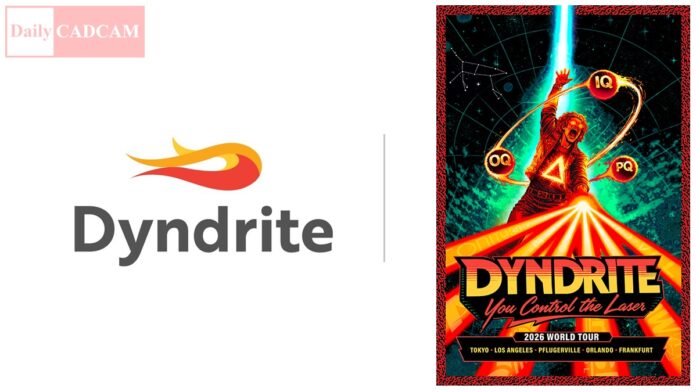
Dyndrite Announces 2026 World Tour

0
Dyndrite world tour

SEATTLE, WA, USA, Feb 20, 2026 — Dyndrite, a provider of next-generation industrial software for additive manufacturing, announced its 2026 World Tour, a global series of in-person workshops, technical sessions, and partner presentations designed to educate AM engineers on advanced vector-level toolpath control and Delta Qualification. This is a modern, data-driven framework for qualifying metal additive manufacturing processes across disparate OEM platforms at industrial scale.

Building on the strong response to Dyndrite’s 2025 World Tour, the 2026 series extends the deep-dive, hands-on experience for metal LPBF AM manufacturers advancing from R&D and pilot programs into serial production, where traditional qualification approaches often limit scale, cost efficiency, and speed.

From Qualification Bottleneck to Competitive Advantage

As presented by Steve Walton, Head of Product at Dyndrite, at ASTM ICAM 2025, Dyndrite LPBF Pro proposes a novel Delta Qualification framework that replaces traditional, time-consuming, costly, and rigid additive manufacturing qualification methods with a flexible, process-window-driven approach. The Delta Qualification framework moves qualification away from a machine-centric model and toward controlled, data-driven equivalency, enabling organizations to qualify the change itself rather than repeatedly requalifying entire processes.

Throughout the 2026 World Tour, Dyndrite will demonstrate how the combination of vector-level toolpath control and agile qualification enables:

  • Automated build preparation, reducing file preparation time by more than 95%
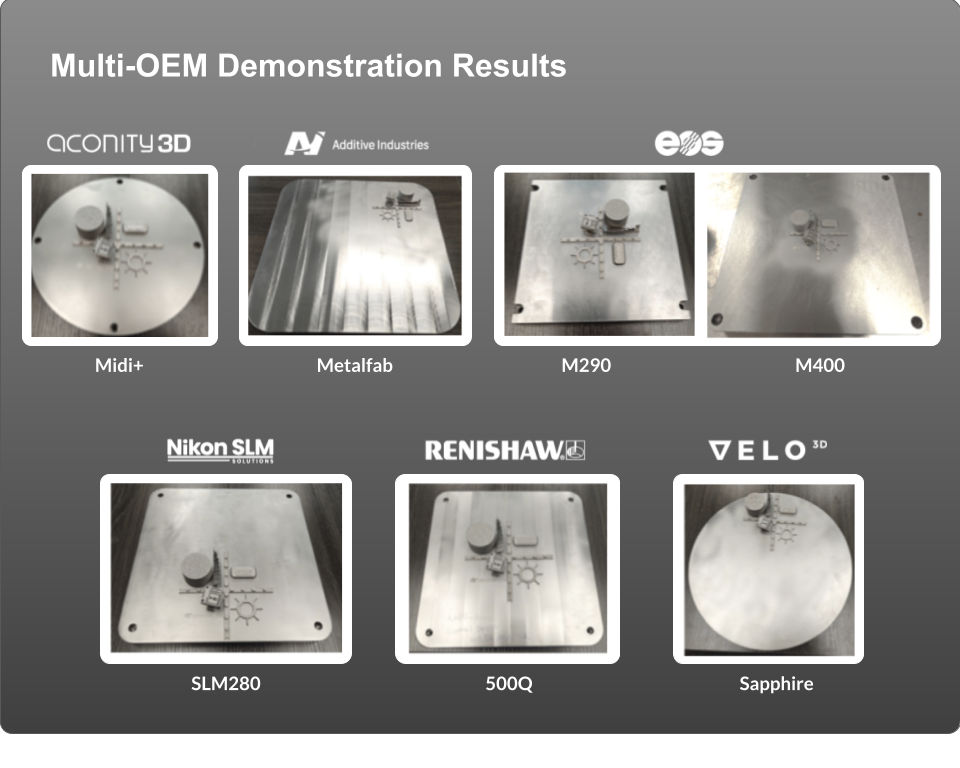
  • Build file equivalency across LPBF OEMs, including Aconity3D, Additive Industries, EOS, Nikon SLM Solutions, Renishaw, Velo3D and Xact Metal.
  • Reductions in supports by approximately 50%
  • Up to 2× build speed for representative geometries
  • Feature-optimized overhangs at 30°, 35°, 40°, 45°, 50°, 55°, 60°, 65°, and 90°
  • And more
Workshop attendees will explore the principles of build file equivalency across LPBF OEMs and how they support scalable production and agile qualification workflows.

Hands-On Technical Sessions with Industry Partners

The 2026 World Tour is designed for Materials and Process, Application, Design, and Quality Engineers, and is open to both new and returning attendees. Each session will include hands-on workshops, live demonstrations, and technical deep dives led by Dyndrite engineers and ecosystem partners across the additive manufacturing value chain.

Attendees will gain practical insight into:

  • CAD-to-print automation workflows that reduce “human-in-the-loop” variability
  • Build file development techniques optimized for common features across part families, including support-free printing, thin walls, and low-overhang geometries
  • Methods for creating build files with multiple build strategies within a single layer
  • Sorting and filtering techniques for gas flow optimization and plume avoidance
  • Time-efficient Design of Experiments (DoE) approaches for developing geometry-specific parameters optimized for productivity and quality

“In 2025, we opened the eyes of engineers around the world to what happens when you control the laser – you produce better parts, faster,” said Harshil Goel, Founder and CEO at Dyndrite. “Now the challenge isn’t discovering what’s possible; it’s qualifying it at scale. The 2026 World Tour is about combining toolpath control with qualification to transform a constraint into a competitive advantage.”

“As an LPBF manufacturer serving the aerospace community, we focus on what works on the shop floor,” said Jonathan Cohen, Founder and CEO of Mimo Technik. “Dyndrite gives engineers a level of control and visibility into the process that is difficult to achieve with any other solution. We are excited to host the Los Angeles workshop and showcase the power of Dyndrite LPBF Pro to the broader community.”

Global Reach, Local Engagement

The 2026 World Tour will include stops across Asia, North America, and Europe, hosted in collaboration with Dyndrite partners and customer sites. Dates, locations, and registration details will be announced on a rolling basis throughout 2026.

Manufacturers interested in attending a 2026 World Tour event or hosting a session are encouraged to visit https://www.dyndrite.com/dyndrite-world-tour-2026 

About Dyndrite

Dyndrite’s mission is to fundamentally change how geometry is created, transformed, and transmitted on computers. Built on its Accelerated Computation Engine (ACE)—the world’s first GPU-based geometry kernel—Dyndrite’s flagship product, Dyndrite LPBF Pro, delivers unmatched control, performance, scalability, and automation for additive manufacturing engineering applications. Customers across defense, space, energy, medical, and automotive industries gain full control over the additive process, enabling faster, more agile qualification, higher quality, and true production scale. For more information, visit dyndrite.com.

Keysight Introduces 3D Interconnect Designer for Chiplet, 3DIC Advanced Package Designs

0

SANTA ROSA, CA, USA, Feb 20, 2026 – Keysight Technologies, Inc. (NYSE: KEYS) introduced 3D Interconnect Designer, a new addition to its Electronic Design Automation (EDA) portfolio. The solution addresses the mounting complexity of designing 3D interconnects for high-chiplet and 3DIC advanced packages used in AI infrastructure and data center applications.

As chiplet architectures are increasingly adopted, engineers face complex 3D interconnect designs for multi-die and stacked-die applications which traditional workflows struggle to handle efficiently. As a result, teams spend significant time manually optimizing the interconnects that include vias, transmission lines, solder balls, and micro-bumps while ensuring signal and power integrity in densely packed systems. This results in more design spins and longer product development cycles, creating a bottleneck that can delay product launches and increase development costs.

Keysight EDA software streamlines the process with a dedicated workflow for designing and optimizing 3D interconnects accurately. The tool handles complex geometries, including hatched or waffled ground planes, which are critical to overcome manufacturing and fabrication constraints, especially silicon processes such as interposers and bridges, in advanced package designs. By enabling engineers to quickly design, optimize, and validate 3D interconnects used in chiplets and 3DICs, it minimizes iterations and speeds time-to-market.

Key benefits include:

  • Accelerates Design Cycles: Streamlined automation removes time‑consuming manual steps in 3D interconnect design, minimizing errors and boosting first‑pass success
  • Reduced Compliance Risk: Validates designs against emerging standards such as UCIe and BoW, ex VTF (Voltage Transfer Function), early in the lifecycle, reducing the risk of late-stage failures that lead to costly redesigns
  • Predicts Performance Accurately: Electromagnetic-based simulation provides precise electrical analysis of printed circuit boards (PCB) and package 3D interconnect designs

The solution integrates with Keysight’s EDA tools as well as supporting the standalone version, enabling teams to incorporate 3D interconnect design and optimization into existing workflows. When combined with Chiplet PHY Designer, engineers can design and optimize 3D interconnects specifically for chiplets and three-dimensional integrated circuits (3DICs), ensuring accuracy and reducing costly iterations in multi-die systems. 

Nilesh Kamdar, EDA Design and Verification General Manager at Keysight, said: “With today’s complexity, manual 3D interconnect design and optimization have become a significant bottleneck. By streamlining the process and providing early insights into potential issues like signal and power integrity, we’re enabling engineers to get products to market faster and deliver compliant designs on tighter timelines.”

About Keysight Technologies   

At Keysight (NYSE: KEYS), we inspire and empower innovators to bring world-changing technologies to life. As an S&P 500 company, we’re delivering market-leading design, emulation, and test solutions to help engineers develop and deploy faster, with less risk, throughout the entire product life cycle. We’re a global innovation partner enabling customers in communications, industrial automation, aerospace and defense, automotive, semiconductor, and general electronics markets to accelerate innovation to connect and secure the world. Learn more at Keysight Newsroom and www.keysight.com

SimuTech Achieves Synopsys’ Highest Global Channel Partner Award

0
SimuTech

ROCHESTER, NY, USA, Feb 20, 2026 – SimuTech Group, a leading provider of Ansys simulation software — now part of the Synopsys portfolio — alongside comprehensive consulting and training services, announced it has been named 2025 Worldwide Channel Partner of the Year at Synopsys’ Simulation and Analysis (S&A) Global Sales Conference.

This award represents the highest recognition within the global channel partner ecosystem, honoring exceptional performance, growth, and strategic partnership across both software and services.

The recognition caps a landmark year for SimuTech Group, marked by record‑breaking results, successful integration following the SimuTech–Ozen Engineering merger, and continued leadership in delivering simulation‑driven innovation.

“Being named Worldwide Channel Partner of the Year is an extraordinary honor. It’s a testament to the strength and success of our team as well as our partnership with Synopsys,” said Katie Lally, CEO and Owner of SimuTech Group. “In a year defined by industry change and transformation, our teams remained focused, resilient, and customer‑driven—delivering historic results across both software and services.”

A Year of Global Recognition and Performance Excellence

In addition to being named Worldwide Channel Partner of the Year, SimuTech Group received multiple regional and global honors in 2025 — including awards for Americas Channel Partner of the Year, marketing leadership, new customer acquisition (driven in large part by the legacy Ozen Engineering team), and sales excellence across both regional and worldwide categories.

Together, these recognitions reflect SimuTech Group’s ability to deliver end-to-end value — from enterprise software deployment and advanced simulation consulting to training, enablement, and long-term customer success.

Strategic Partnerships Powering Industry Impact

SimuTech Group’s 2025 recognition highlights the company’s role in enabling large‑scale, high‑impact engineering programs through deep collaboration with customers and technology partners. At the global sales conference, SimuTech leadership co‑presented alongside Synopsys executives on strategic partnership initiatives, showcasing customer engagements that represent some of the largest and most complex simulation programs in the global channel ecosystem.

“SimuTech Group’s recognition as Worldwide Channel Partner of the Year reflects what happens when innovation meets execution,” said Ravi Kumar, VP of Global Channel Sales at Synopsys. “Their record‑breaking results across software sales and customer success, delivered with focus and resilience, set a high standard for channel excellence. We’re pleased to recognize this achievement and look forward to continuing our successful collaboration.”

Lally added, “We are incredibly grateful for our partnership with Synopsys. Their collaboration, trust, and shared commitment to customer success continue to be foundational to everything we do.”

Looking Ahead to 2026

With momentum from a record-setting year and multiple top-tier recognitions, SimuTech Group enters 2026 focused on expanding its global reach, advancing digital engineering capabilities, and helping customers solve increasingly complex engineering challenges through simulation-driven innovation.

“We are also energized by the evolving industry landscape and the opportunities ahead — including our growing relationship with Synopsys — as we expand our ability to support customers across the electronic design automation (EDA) domain, alongside Ansys simulation and analysis software,” said Lally.

About SimuTech Group

SimuTech Group empowers innovation through trusted engineering expertise and a 25+ year partnership with Ansys. We support our customers with industry-leading simulation software, hands-on training, expert consulting, and physical testing services — helping bring groundbreaking ideas from concept to reality. For more information, visit https://simutechgroup.com.

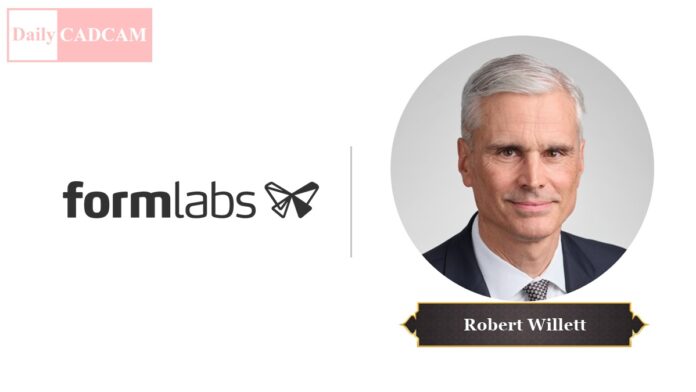
Formlabs Adds Robert Willett to its Board

0
Rob Willet Formlabs

SOMERVILLE, MA, USA, Feb 20, 2026 – Formlabs, the leader in professional 3D printing, announced the appointment of Robert Willett, former Chief Executive Officer of Cognex Corporation, to its Board of Directors. 

Willett brings more than three decades of leadership experience in industrial automation, machine vision, and global operations. During his tenure as CEO, he led Cognex through sustained expansion, scaling the company into a highly profitable, billion-dollar leader in machine vision systems used across advanced manufacturing environments worldwide. 

“Formlabs has built an industry-leading platform at the intersection of manufacturing hardware, software, and materials,” said Willett. “The company is uniquely positioned to drive the next era of digital production by making powerful fabrication tools more accessible without sacrificing performance. I’m excited to join the Board of Directors and help guide the company as it continues to scale globally.”

Willett joins Formlabs as the company advances its long-term vision of making hardware production as fast, affordable, and scalable as software development. Formlabs has sold more professional SLA and SLS printers than any other company, and customers have used its technology to print more than 500 million parts for product development, manufacturing, and healthcare applications.

“Rob has built and scaled global industrial technology businesses with operational rigor and discipline,” said Natan Linder, Chairman of the Board at Formlabs. “There is a strong MIT-rooted heritage connecting Cognex and Formlabs, two companies built at the intersection of software, hardware, and manufacturing. As Formlabs continues its evolution from breakthrough startup to enduring manufacturing platform, his experience scaling complex hardware and automation companies will be invaluable.”

Formlabs also announced that Carl Bass will step down from the Board following more than eight years of dedicated service. Bass joined the Formlabs Board in 2017 and has played a significant role in helping the company redefine additive manufacturing. 

“Carl has been an extraordinary partner to Formlabs,” said Linder. “He brought strategic clarity, bold ambition, and deep empathy for builders and designers. We’re deeply grateful for his leadership and the lasting impact he has made on the company.”

Willett’s appointment is effective immediately. 

About Formlabs

Formlabs builds the tools that make it possible for anyone to bring their ideas to life. Headquartered in Somerville, Mass., with offices across the globe, Formlabs is the professional 3D printer of choice for engineers, designers, healthcare providers, manufacturers, and decision-makers. Formlabs’ products include SLA and SLS 3D printers, post-processing solutions, best-in-class software, and over 45 materials to suit dozens of applications. In 2024, Formlabs was named one of the world’s Most Innovative Companies in Manufacturing by Fast Company. To learn more, visit www.formlabs.com.

3D Systems Adds Three New Base Shades to its NextDent Jetted Denture Solution

0

ROCK HILL, SC, USA, Feb 20, 2026 – 3D Systems (NYSE: DDD) announced three new NextDent Jet Base shades for its NextDent Jetted Denture Solution: Dark Pink (DP), Light Pink (LP), and Red Pink (RP). The new shade materials join the existing NextDent Jet Base LT (Light Tone), providing a total of four shades to more accurately match diverse natural gum tones—from lighter to deeper and ruddier variations. This expanded portfolio enables dental laboratories to address real patient diversity with great confidence, delivering highly personalized, esthetically superior restorations that improve fit, comfort, and case acceptance rates.

As the dental industry accelerates its shift toward digital workflows, demand continues to grow for solutions that elevate esthetics, boost throughput, and significantly reduce hands-on labor. The new base shades, combined with NextDent Jet Teeth White and Yellow shades, which enable digital color-mixing for custom blending on the NextDent 300 printer, give labs unprecedented control over final denture appearance—a critical driver of patient satisfaction and long-term success.

“These new base shades give labs the tools they need to meet real patient diversity with high-quality, predictable results,” said Stijn Hanssen, Director Dental Solutions, 3D Systems. “Coupled with our one-piece jetted workflow, dental professionals can now deliver dentures that provide an outstanding patient experience through superior beauty, comfort, durability, and efficiency.”

The NextDent Jetted Denture Solution remains the only commercially available platform for 3D printing integrated, multi-material monolithic dentures—printing base and teeth together as a single, seamless part. This approach eliminates assembly steps, minimizes manual post-processing, and dramatically accelerates production cycles compared to traditional or separate-print methods, helping labs maximize efficiency, scale output, and achieve strong ROI in the rapidly digitizing dental prosthetics market.

Dentistry partners using the platform report meaningful operational benefits, including fully cured parts straight from the build plate, improved long-term material stability, superior end-product quality that meets or exceeds industry benchmarks, and ground-breaking efficiency gains—such as up to 300% faster production versus analog workflows and over 50% reduction in manual labor.

“The material performance stands out,” said Josh Jakson, President of Evolve Dentistry. “We’re running faster, with less labor and greater confidence in shade consistency and durability.”

Availability of the new NextDent Jet Base DP, LP, and RP shades is planned for the U.S. market in May 2026 and will be orderable starting in late February 2026.

3D Systems will feature these material shades in its booth (Booth A-43/B-42) at LMT Lab Day 2026 (February 19-21 in Chicago, Illinois) as part of its full portfolio of solutions for dental additive manufacturing. Visit the booth to see live demonstrations of the new shades and discuss how this expansion can transform your lab’s capabilities and profitability.

About 3D Systems 

For nearly 40 years, Chuck Hull’s curiosity and desire to improve the way products were designed and manufactured gave birth to 3D printing, 3D Systems, and the additive manufacturing industry. Since then, that same spark continues to ignite the 3D Systems team as we work side-by-side with our customers to change the way industries innovate. As a full-service solutions partner, we deliver industry-leading 3D printing technologies, materials and software to high-value markets such as medical and dental; aerospace, space and defense; transportation and motorsports; AI infrastructure; and durable goods. Each application-specific solution is powered by the expertise and passion of our employees who endeavor to achieve our shared goal of Transforming Manufacturing for a Better Future. More information on the company is available at www.3dsystems.com.

Stratasys Q4 FY2025 Conference Call on Mar 5, 8:30AM ET

0

MINNETONKA, MN, USA and REHOVOT, Israel, Feb 20, 2026 – Stratasys Ltd. (Nasdaq: SSYS) will release financial results for the fourth quarter and full year ended December 31, 2025 on Thursday, March 5, 2026. The Company plans to hold the conference call to discuss its fourth quarter and full year 2025 financial results on Thursday, March 5, 2026 at 8:30 a.m. (ET).

The investor conference call will be available via live webcast on the Stratasys Web site at investors.stratasys.com; or directly at the following web address:

https://event.choruscall.com/mediaframe/webcast.html?webcastid=E1fXyUKp

To participate by telephone, the U.S. toll-free number is 877-407-0619 and the international dial-in is +1-412-902-1012. Investors are advised to dial into the call at least ten minutes prior to the call to register. The webcast will be available for 6 months at investors.stratasys.com, or by accessing the above-provided web address.

About Stratasys

Stratasys is leading the global shift to additive manufacturing with innovative 3D printing solutions for industries such as aerospace, automotive, consumer products and healthcare. Through smart and connected 3D printers, polymer materials, a software ecosystem, and parts on demand, Stratasys solutions deliver competitive advantages at every stage in the product value chain. The world’s leading organizations turn to Stratasys to transform product design, bring agility to manufacturing and supply chains, and improve patient care.

To learn more about Stratasys, visit www.stratasys.com, the Stratasys blogTwitterLinkedIn, or Facebook.

Caracol, ESA Develop AI-based Robotic LFAM for Space

0
Caracol ESA Project

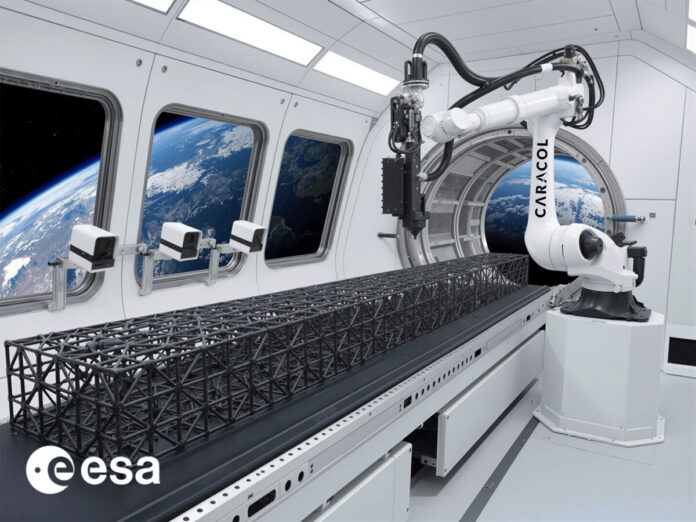
BARLASSINA, Italy, Feb 20, 2026 – With the AIMIS-LFAM project, Caracol and the European Space Agency explore how artificial intelligence and robotic LFAM can enable autonomous manufacturing in orbit, unlocking a new era for space infrastructure.

The future of space exploration is no longer limited to launching fully assembled structures from Earth. As missions grow in scale and complexity, the ability to manufacture directly in orbit is emerging as a strategic game changer. Producing large structures – such as trusses, solar array supports, and deployable systems – directly in space allows engineers to overcome launch constraints, reduce mass, and unlock design solutions that would be impossible to transport from Earth.

This vision lies at the core of the AIMIS-LFAM project (AI-Based Monitoring of Large Robotic Format Additive Manufacturing in Space), developed under the European Space Agency – Technology Development & De-Risking program. As Prime Contractor, Caracol led the initiative, coordinating a consortium that also included Politecnico di Milano and OBO Space, reinforcing its position as one of Europe’s most advanced players in robotic large-format additive manufacturing. The nine-month project directly supports ESA strategic frameworks such as the Technology Vision 2040 and the SOLARIS initiative, which promote sustainable, autonomous, and resilient space infrastructure.

From terrestrial LFAM to autonomous manufacturing in orbit

Manufacturing in space is fundamentally different from manufacturing on Earth. Microgravity, vacuum, extreme temperature gradients, and radiation can significantly affect material behavior and process stability. At the same time, human supervision is limited or entirely absent, making traditional quality control approaches impractical. For robotic LFAM to become a viable solution for in-space applications, the process must be autonomous, intelligent, and self-aware; capable of monitoring itself, detecting defects, and ensuring reliability in real time. Leveraging its deep expertise in robotic extrusion, LFAM, and advanced manufacturing systems, Caracol developed an AI-driven, multi-sensor monitoring architecture specifically designed for its large-scale robotic 3D printing technology, Heron AM.

Within the AIMIS-LFAM project, visible and infrared sensors were integrated into Heron AM to capture both geometric and thermal data during the printing process. These data streams were then processed using artificial intelligence algorithms trained to identify anomalies such as thermal instabilities and material irregularities during material deposition. Politecnico di Milano contributed its scientific expertise in data analysis, artificial intelligence, and process modelling, supporting the development of advanced monitoring algorithms and data fusion strategies. OBO Space complemented the consortium with its aerospace engineering know-how, providing insight into space environment constraints, system integration, and mission-oriented requirements.

On-Earth experimental trials demonstrated that combining multi-sensor data with AI-based analysis enables early and accurate defect detection, significantly improving process stability. Over the project duration, the monitoring system was successfully advanced from TRL 2 to TRL 3. In parallel, a structured Development Plan was defined to guide future activities toward TRL 4–6, through extended testing and prototype demonstration in representative environments.

From technology validation to orbital manufacturing

AIMIS-LFAM confirms that AI-enabled monitoring is a key enabler for autonomous manufacturing in space: by combining advanced artificial intelligence with Heron AM, Caracol has demonstrated outstanding system integration capabilities and deep process expertise, delivering a robust foundation for reliable in-space LFAM. The project aligns with ESA’s long-term vision for sustainable and self-reliant space infrastructure, opening the door to future applications such as space-based solar power systems, large deployable structures, and orbital manufacturing platforms.

Building on these results, Caracol is uniquely positioned to lead the next generation of in-space manufacturing projects. Future developments will focus on advancing Heron AM toward higher Technology Readiness Levels, with prototype validation in vacuum and microgravity environments and the expansion toward full-scale autonomous orbital manufacturing. With AIMIS-LFAM, Caracol is not simply adapting manufacturing for space, it is defining how large structures will be built directly in orbit, shaping the industrial future of space.

About Caracol

Caracol was founded in 2017 in Milan, Italy, with the vision of pushing the limits of additive manufacturing in terms of scale, efficiency, and sustainability. The company accomplished this by developing an integrated technological platform, including both hardware and software, to produce advanced large-scale components. Through the integration of a patented extrusion head, the development of dedicated software – Eidos Manufacturing, and the use of robotic arms as movement support, Caracol offers an additive manufacturing technology for advanced components for customers in industries such as aerospace, marine, energy, design, and architecture. Heron AM manufactures parts such as jigs and molds for aircraft components, finished parts for yacht and boat superstructures, or revolutionary projects to initiate virtuous circular economy processes for the energy or design sectors. Vipra AM is the latest launched LFAM system to produce large-scale metal applications in the most demanding industries such as aerospace, energy, construction and shipbuilding. Today, the company has opened the largest LFAM production center in Europe, a production facility in Austin (TX), USA opened in August 2023, and a commercial office in Dubai, has a core team of over 80 international professionals with highly specialized competences, in areas such as mechanical engineering, automation, computational design, design for additive, and advanced manufacturing processes.

For more information, visit www.caracol-am.com.

Zoo Introduces Zookeeper, a Conversational Agent for CAD Design

0
Zoo logo

Zoo, a company that creates infrastructure for hardware design, today announced the launch of Zookeeper, a conversational CAD design agent that helps engineers move from intent to fully editable CAD models through natural language interaction. With Zookeeper, users can describe what they want to design, ask questions, explore alternatives, and iterate on existing designs, all within Zoo Design Studio.

Zookeeper lets engineers delegate tasks such as research, reasoning, and manufacturing-aware design decisions to an AI agent that designs based on their goals and descriptions. It conducts relevant research, proposes design constraints and parameters, and generates a clear design plan before producing a CAD model. The resulting model is fully editable using the same sketch and feature tree workflows engineers already rely on. Building on their Text-to-CAD experience, the team added research and reasoning capabilities and engine-level tools that allow the agent to inspect, snapshot, and debug geometry while generating production-ready CAD.

“We built Zookeeper as a toolchain, not a walled garden,” said Jessie Frazelle, CEO and Co-Founder of Zoo. “The same CAD tools it uses in Zoo Design Studio are exposed through our Zoo-MCP server, so teams can plug Zookeeper into whichever AI agent and model they trust, including agents running locally. That’s what modern hardware development needs: composable, inspectable design workflows that fit your stack.”

What differentiates us

Zoo provides a unified platform that includes AI-driven generation and modification of boundary-representation CAD files within a traditional CAD environment. Other solutions typically generate uneditable, mesh-based CAD files or rely on disjointed, plugin-based workflows.

Unlike other AI-driven design tools that operate as black boxes, Zookeeper produces transparent, structured outputs within the traditional CAD environment. It proposes explicit design constraints, parameters, and references, and represents designs through a clear, inspectable feature tree. Engineers can modify designs manually, conversationally, or programmatically, with changes reflected consistently across all interfaces.

Our Products

“Zookeeper doesn’t replace the tools engineers already trust,” said Jordan Noone, Executive Chairman and Co-Founder of Zoo. “It amplifies them. You can ask it to design a part from scratch, iterate on an existing model, or explain how something works. Delegating design tasks helps engineers focus their time on the most valuable creative work.”

Zookeeper is available within Zoo Design Studio and leverages Zoo’s proprietary geometry engine, which enables scalable, cloud-native CAD workflows. The agent is also accessible through Zoo’s ML-ephant Machine Learning API and works alongside the KittyCAD Design API, allowing developers and companies to integrate conversational design capabilities into their own applications.

Company Overview

About Zoo

Zoo develops modern tools for hardware design, including first-of-their-kind generative AI capabilities for CAD. Its flagship product, Zoo Design Studio, is modeling software that serves as the central hub of a broader CAD ecosystem, which includes innovative tools like Text-to-CAD and a suite of enterprise-ready CAD APIs for developers. Zoo’s products are built on its proprietary geometry engine, which acts as a digital bridge between hardware development and machine learning frameworks. The engine is the first to be GPU-based, cloud-implemented, API-accessible, and dynamically scalable. Zoo was incubated within Embedded Ventures, with additional investors including Venrex Partners, Adventure Fund, Alan Rutledge, Andrew Cote, Anomaly Fund, Autopilot Fund, Bernie Lagrange, Carl Bass, Chestnut Street Ventures, Ex Nihilo, Gaingels, IEQ Capital, Jude Gomila, Kelvin Beachum, Liquid 2, Madrona, Matt Terrell, Nat Friedman, Quantonation, Preston-Werner Ventures, Undeterred Capital, Unpopular Ventures, and USC’s Viterbi School of Engineering. Zoo is led by co-founders Jessie Frazelle, Jordan Noone, and Jenna Bryant.

Trimble Announces Two-Year Sponsorship for Engineering for People Design Challenge

0
Engineering for People Design Challenge

WESTMINSTER, CO, USA, Feb 19, 2026 — Trimble recently announced a two-year sponsorship of the Engineering for People Design Challenge, led by Engineers Without Borders UK in collaboration with Engineers Without Borders South Africa. The competition challenges university students to design engineering solutions that address the complex, real-world needs of underserved communities.

Trimble has long supported EWB’s mission in the U.S. through technology donations, STEM initiatives, and financial grants for climate resiliency projects via the Trimble Foundation Fund. Now, the company is expanding its support.

Engineering for a changing world

Now in its 15th year, the Engineering for People Design Challenge puts multidisciplinary teams of engineering students to work at the forefront of social and environmental challenges. The 2025/2026 challenge focuses on Ladywood, an inner-city community in Birmingham, England, which faces the same pressures as many global cities: economic inequality, infrastructure under-investment, and a changing climate.

The challenge uses project-based learning to immerse students in real-world contexts. Teams work collaboratively to propose sustainable solutions, developing critical skills in ethical decision-making, cultural sensitivity and community engagement.

“The Engineering for People Design Challenge instills a new mindset in the next generation of professionals,” said John Kraus, CEO of Engineers Without Borders UK. “It pushes students to look beyond technical considerations and ask: ‘Why do we engineer? How does this serve people while remaining within the natural limits of our planet?'”

Bridging education and impact

By 2024/2025, the Engineering for People Design Challenge had reached over 110,000 students. The 2025/2026 Challenge already involves more than 40 universities and 1650 teams from the UK, Ireland, Nepal, the Netherlands, South Africa and the US, including a record cohort from Aston University in Birmingham, which will field more than 250 teams. The goal is for the winning ‘idea’ to be able to progress in collaboration at the community partner’s discretion. Read more about the winning teams from last year at https://www.ewb-uk.org/human-needs-sustainable-solutions/.

“What we hear time and again is that this program is transformative,” said Dr. Panos Doss, lead for the challenge at Aston University. “Many students are initially attracted to the technical side of engineering. We introduced this experience early to show them the vital importance of sustainability, helping to shape the rest of their careers.”

Throughout the academic year, interdisciplinary student teams develop design concepts which are evaluated by academic staff and EWB volunteers. The top teams advance to national finals to pitch their solutions to a panel of industry judges.

“Trimble is proud to support a program that moves beyond theory and challenges the future workforce to learn how to connect digital innovation with human impact,” said Mark Schwartz, senior vice president of AECO software at Trimble. “In turn, this is a creative approach for Birmingham to reimagine its civic infrastructure through community-led design and consider how neighborhood-scale systems can drive sustainable outcomes.”

About Trimble

Trimble is a global technology company that connects the physical and digital worlds, transforming the ways work gets done. With relentless innovation in precise positioning, modeling and data analytics, Trimble enables essential industries including construction, geospatial and transportation. Whether it’s helping customers build and maintain infrastructure, design and construct buildings, optimize global supply chains or map the world, Trimble is at the forefront, driving productivity and progress. For more information about Trimble, visit: www.trimble.com.

About the Engineers Without Borders network

Engineers Without Borders organisations leverage engineering skills and expertise towards ensuring a safe and just future for all within the sustainable limits of our planet, in particular to support those that are most vulnerable in society. Established approximately 40 years ago, the global Engineers Without Borders network spans more than 50 EWB organisations across Africa, Asia, the Pacific, the Middle East, Europe, North, South and Central America, and is coordinated by EWB International. Visit www.ewb-international.org/.

About Engineers Without Borders UK

Engineers Without Borders UK is leading the transition to globally responsible engineering. By reimagining how engineering is taught and practised, we equip individuals, teams, and organisations with the skills and mindset to accelerate this transformation. As part of a global movement of over 50 Engineers Without Borders organisations, we are shaping a future where engineering contributes to a safe and just world for all. Learn more at www.ewb-uk.org.