Home Blog Page 26

Nemetschek Group Signs MoU with TNSKILL to Train 2,200 Civil Engineering Students in Advanced BIM Level 2

0
Tm12

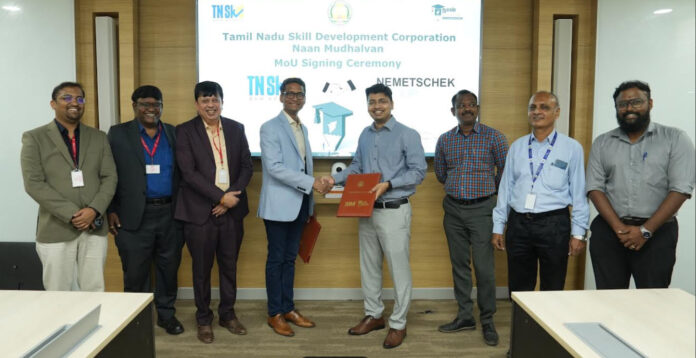
National | February 19, 2026: The Nemetschek Group, a globally leading software provider for digital transformation in the AEC/O and media industries, has signed a strategic Memorandum of Understanding (MoU) with the TNSKILL Corporation, the skilling arm of the Government of Tamil Nadu, to train 2,200 civil engineering students under their flagship program Naan Mudhalvan  across the state in Advanced Building Information Modeling (BIM) Level 2 course approved by Anna University.

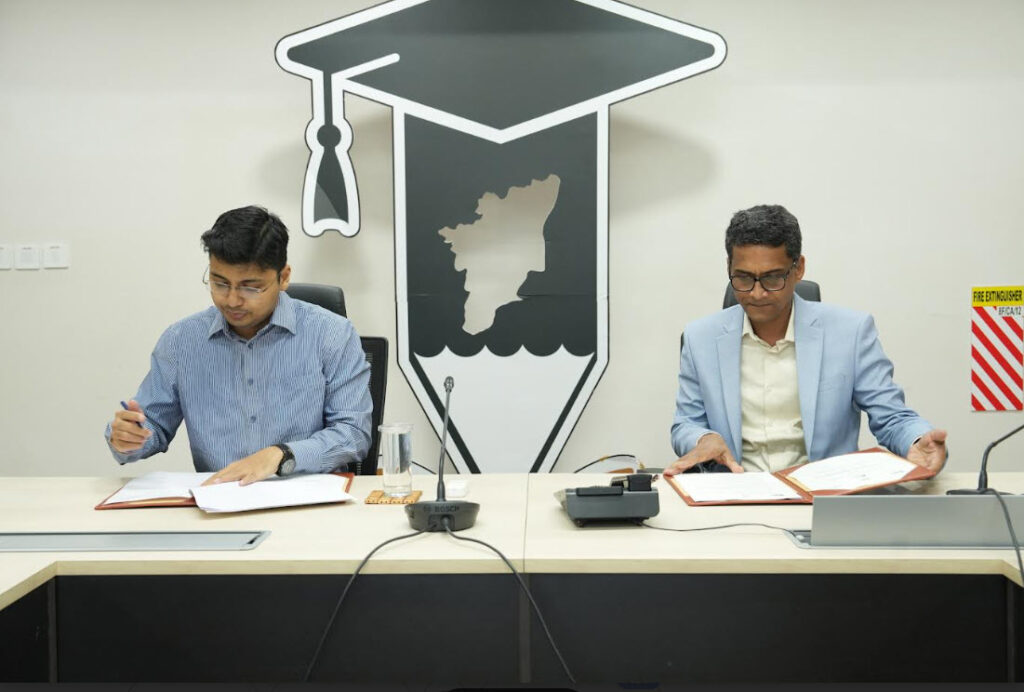
The MoU was formalized in the presence of of Thiru  Kranthi Kumar Pati IAS, Managing Director of TNSKILL Corporation and senior leadership from the Nemetschek Group, including Sanjay Kumar Singh, Managing Director – Nemetschek India, underscoring a shared commitment to strengthening industry-academia collaboration and enhancing employability through future-ready digital skills.

Under this partnership, students will receive specialized training on globally recognized BIM tools including ARCHICAD, Solibri, ALLPLAN SDS2 and Bluebeam, equipping them with advanced competencies in digital design coordination, model validation, and construction documentation workflows aligned with international standards.
Tmq

This initiative aims to bridge the gap between academic learning and industry requirements by embedding practical, technology-driven capabilities within the civil engineering curriculum. With the increasing adoption of BIM and digital construction methodologies across infrastructure and real estate projects in India and globally, the program will empower students with skills directly relevant to modern project delivery frameworks.

Speaking on the occasion, Sanjay Kumar Singh, Managing Director – Nemetschek India, said:
“We are proud to collaborate with Tamil Nadu Skill Development Corporation to enable the next generation of civil engineers with advanced BIM capabilities. Digital construction technologies are transforming the AEC industry, and equipping students with hands-on expertise in industry-leading tools will significantly enhance their career readiness and global competitiveness.”

Thiru Kranthi Kumar Pati IAS, Managing Director of TNSKILL Corporation highlighted the importance of industry partnerships in scaling high-impact skilling programs and emphasized the Government of Tamil Nadu’s focus on positioning the state as a hub for advanced digital engineering talent.

This collaboration aligns with Nemetschek Group’s broader vision of driving digital transformation in the AEC/O sector through open standards (OPEN BIM), innovation, and sustainable practices. By fostering early exposure to professional-grade digital tools, the initiative contributes to building a future-ready workforce capable of delivering smarter, more efficient, and sustainable infrastructure. We acknowledge our local CSR partners Almaknack Foundation & ICT Academy for their support in this program.


About Nemetschek Group

The Nemetschek Group is a globally leading software provider for digital transformation in the AEC/O and media industries. Its intelligent software solutions cover the entire lifecycle of construction and infrastructure projects and allow creatives to optimize their workflows. Customers can plan, construct, and manage construction projects more efficiently and sustainably, and develop digital content such as visualizations, films, and computer games in a creative way.

The software company drives new technologies such as artificial intelligence, digital twins, and open standards (OPEN BIM) in the AEC/O industries to increase productivity and sustainability and continuously expands its portfolio, including through acquisitions and investments in innovative start-ups. More than 7 million users are currently using the customer-focused solutions. Founded by Prof. Georg Nemetschek in 1963, the Nemetschek Group today employs around 4,000 experts.

The company, which has been listed in the MDAX and TecDAX since 1999, achieved a revenue of EUR 995.6 million and an EBITDA of EUR 301.0 million in 2024. Since the end of 2024, the Nemetschek Group has been certified in accordance with ISO 27001, the internationally recognized standard for information security management systems (ISMS).

nemetschek.com 

About TNSKILL Corporation ( formerly TNSDC) : 

TNSKILL Corporation is the Nodal Agency for the skill development related activities in the State and it aims to converge the activities of various stakeholders including industries, industrial associations, training partners, sector skill councils, assessment agencies apart from various other State and Central Government bodies. TNSKILL strives to ensure placement oriented quality skill training by empanelling private and Government training partners.
Invitation
Siemens sd17

VariCAD 2026-2.0 Released for Windows, Linux

0

LIBEREC, Czech Republic, Feb 19, 2026 – VariCAD announces the release of a new version of its flagship product, VariCAD 2026-2.0.

This version contains some additional features in 3D solid transformations and copying, creations of basic elements (like box, cylinder…) and predefined operations like drilling holes. Also, there are improvements within working with 3D objects loaded from STL. Next, an extra option is joining solids. In 2D, a new possibility of creation of construction lines is added. There are new options in editing of 2D block attributes and improvements in loading of 2D dimensions from DWG/DXF.

Highlights:

3D Solids Transformations

For solid rotations, you have an extra option of angle definitions – from the number of all copies on a full circle. You can conveniently change the rotation axis. Also, you can switch into rotation and translation together. This feature allows you copying of objects along a helix. For 3D translations, you can select whether the vector length is a distance between each copy or a distance from the beginning to the latest copy.

3D Creation of Basic Solids and Predefined Operations

Creating basic solid elements, like a box, cylinder, cone… from a table of dimensions, you can select an option to step into modifications of dimensions in 3D space. While locating a new solid, you can also go into additional modification of 3D dimensions and return back into location. This is possible not only for basic solids, but also for location of a tool for drilling holes and similar operations. Moreover, for these predefined Boolean operations you no longer need entering an outer tool excess during the first dimension settings.

3D solids Loaded from STL

Solids loaded from STL and/or from STEP described only by planar triangular facets have limited usage. The new version is faster when calculating volumes or surface areas. Since all patches are planar and all curves are plain lines, such objects do not contain real circles. However circles are quite common as circular ends of holes or outer cylinders. The new version allows you to define circle center, diameter or circle axis by three points. In case of STL objects, all three points should be located at endpoints of connection of facets – in other words, at vertices of polygons replacing real circles.

Joining of Solids into One Object.

VariCAD allows you to join solids together without calculations of intersections. The new version allows you to connect multiple objects into one at a time. These objects can be selected by clicking them, by a rectangular area or by any other method.

New 2D Features

In 2D, you can create construction lines around one or multiple objects. These lines are located at XY min/max – either exactly, or at optional offset. Thus, you create a surrounding rectangle. Another additional features are in creation / editing of 2D block attributes. For loading 2D drawings from DWG/DXF, the new version creates exactly defined complex dimensions texts. This means texts containing various extensions, mainly upper and lower tolerances, and similar text parts. This works now  for 2D dimensions from many sources – not only from Autocad.

Changing Units of VariCAD 2D/3D

The function changing units is enhanced in the new version.

To evaluate a free 30-day license, download it here.

About VariCAD

Founded in 1994, VariCAD today has long-time experience in developing CAD systems. Since its inception, the company has focused on solutions tailored to meet the needs of mechanical engineers. Today, our team provides software and services to customers from over 70 countries around the world. Our employees share VariCAD’s commitment to helping mechanical engineers design easier and faster. The software VariCAD is a powerful, yet inexpensive 3D/2D CAD system for mechanical engineering. For more information, visit http://www.varicad.com.

AMD, TCS Join to Bring State-of-the-Art Helios Rack-Scale AI Architecture to India

0
Tcs amd

SANTA CLARA, CA, USA and MUMBAI, India, Feb 19, 2026 – AMD (NASDAQ: AMD), a leader in high-performance and AI computing, and Tata Consultancy Services (TCS) (BSE: 532540, NSE: TCS), a global leader in IT services, consulting, and business solutions, have expanded their strategic collaboration. TCS, through its subsidiary HyperVault AI Data Center Limited (HyperVault), and AMD will codevelop a rack-scale AI infrastructure design based on the AMD “Helios” platform in support of India’s national AI initiatives.

Powered by AMD Instinc MI455X GPUs, next-generation AMD EPY “Venice” CPUs, AMD Pensando Vulcano NICs and the open ROCm software ecosystem, “Helios” is purpose-built to deliver a rack-scale AI platform supporting sovereign AI factories. “Helios,” combined with TCS’ enterprise expertise and scale, will accelerate deployment and enhance operational efficiencies for enterprises. As part of this strategic collaboration, both companies will offer an AI-ready data center blueprint supporting up to 200 MW of capacity and will work with hyperscalers and AI companies to accelerate data center build-outs in India.

Dr. Lisa Su, Chair and CEO, AMD, said, “AI adoption is accelerating from pilots to large-scale deployments, and that shift requires a new blueprint for compute infrastructure. With ‘Helios,’ we are delivering an open, rack-scale AI platform designed for performance, efficiency, and long-term flexibility. Together with TCS, we are enabling enterprises across India to deploy AI at scale today while building the compute foundation of tomorrow.”

K. Krithivasan, MD and CEO, TCS, said, “This collaboration lays the foundation for AMD’s first ‘Helios’ powered AI infrastructure in India. By combining our strengths in AI, connectivity, sustainable power, and advanced data center engineering, we are poised to deliver state-of-the-art infrastructure solutions for AI companies and global enterprises. We are thrilled to deepen our longstanding partnership with AMD as we expand our participation in the AI ecosystem – Infrastructure to Intelligence.”

TCS established HyperVault in 2025 with the vision of delivering GW-scale, secure, and reliable AI-ready infrastructure for hyperscalers, AI companies, and global enterprises. This announcement builds on the recent strategic collaboration between TCS and AMD to help enterprises scale AI adoption and modernize hybrid environments.

About AMD

AMD (NASDAQ: AMD) drives innovation in high-performance and AI computing to solve the world’s most important challenges. Today, AMD technology powers billions of experiences across cloud and AI infrastructure, embedded systems, AI PCs and gaming. With a broad portfolio of AI-optimized CPUs, GPUs, networking and software, AMD delivers full-stack AI solutions that provide the performance and scalability needed for a new era of intelligent computing. Learn more at www.amd.com.

Tata Consultancy Services Ltd (TCS)

Tata Consultancy Services (TCS) (BSE: 532540, NSE: TCS) is a digital transformation and technology partner of choice for industry-leading organizations worldwide. Since its inception in 1968, TCS has upheld the highest standards of innovation, engineering excellence and customer service.

Rooted in the heritage of the Tata Group, TCS is focused on creating long term value for its clients, its investors, its employees, and the community at large. With a highly skilled workforce of over 580,000 spread across 55 countries and 202 service delivery centers across the world, the company has been recognized as a top employer in six continents. With the ability to rapidly apply and scale new technologies, the company has built long term partnerships with its clients – helping them emerge as perpetually adaptive enterprises. Many of these relationships have endured into decades and navigated every technology cycle, from mainframes in the 1970s to Artificial Intelligence today.

TCS sponsors 14 of the world’s most prestigious marathons and endurance events, including the TCS New York City Marathon, TCS London Marathon and TCS Sydney Marathon with a focus on promoting health, sustainability, and community empowerment.

TCS generated consolidated revenues of over US $30 billion in the fiscal year ended March 31, 2025. For more information, visit www.tcs.com

Stratasys Introduces Dental Anatomical Model Preset for Simulation-based Training, Clinical Education

0

MINNETONKA, MN, USA and REHOVOT, Israel, Feb 19, 2026 – Stratasys (NASDAQ: SSYS) announced the launch of its new dental anatomical model preset, a 3D-printed solution for simulation-based training that is designed to help dental schools, training centers, and medical device manufacturers deliver more realistic and consistent hands-on education. The cost-effective solution makes training more accessible by minimizing complexity and eliminating the ethical challenges of traditional training methods.

Dental education and clinical training are increasingly shifting toward digital workflows and simulation-based learning. This comes as commonly used tools such as stone models, cadavers, and animal specimens remain expensive, difficult to manage, and limited in their ability to reflect real-world anatomy.

The Stratasys solution allows for creating models with life-like realism, repeatability, and customization in a format suitable for classrooms, clinics, conferences, and product demonstrations.

Stratasys presets are built around predefined parameters that control how multiple materials are mixed and distributed within a model, using specific ratios and patterns to achieve consistent, repeatable results. By applying these presets, medical and dental organizations can produce musculoskeletal and anatomical systems that biomechanically and accurately resemble real human anatomy.

The Stratasys models are fully synthetic, eliminating the biohazard risks, ethical approvals, storage requirements, and disposal challenges associated with cadavers and animal specimens.

The model is designed to support a broad range of users across the dental ecosystem:

  • Medical device and dental OEMs can accelerate clinician adoption through high-quality, hands-on demonstrations and shorten development cycles by testing tools and techniques on anatomically accurate replicas.
  • Training centers can replace animal and cadaver labs with repeatable, on-demand scenarios that reduce operational costs and logistical complexity.
  • Dental schools can better prepare students for real procedures, helping reduce the learning curve and improve clinical confidence before entering patient care.

Together, these capabilities are helping modernize how dental education and clinical training are delivered.

“With this preset for dental anatomical models, we are entering a new segment of digital dental education and clinical simulation, helping customers move beyond traditional training methods toward more standardized, technology-driven learning environments,” said Erez Ben Zvi, VP Medical at Stratasys. “By combining anatomical realism with repeatability and customization, we’re enabling educators, clinicians, and device manufacturers to prepare for real-world procedures with greater confidence and consistency.”

Built using Stratasys’ multi-material 3D printing technology, the models replicate the biomechanical behavior of bone, teeth, nerves, and soft tissue, providing realistic haptic feedback for drilling, cutting, suturing, and implant placement. Unlike basic plastic models, which offer limited anatomical detail, or biological specimens, which vary widely and require special handling, the dental anatomical model preset delivers consistent, high-fidelity anatomy that can be reproduced at scale.

Models can also be customized using CBCT scan data to reflect patient-specific pathologies and complex clinical cases, including atrophic jaws, sinus lifts, and bone grafting procedures. They support a wide range of surgical techniques such as tooth extractions, implant placement, periodontal surgery, endodontic surgery, and sinus augmentation, enabling comprehensive procedure planning and training across disciplines.

In addition to dental anatomy, Stratasys offers a growing library of presets developed for a range of anatomical structures and tissue behaviors, including bone, cartilage, muscle, ligament, and soft tissue – enabling realistic simulation across multiple medical and educational applications.

For more information about 3D Printing Solutions for Medical Research and Education, visit here.

About Stratasys

Stratasys is leading the global shift to additive manufacturing with innovative 3D printing solutions for industries such as aerospace, automotive, consumer products, and healthcare. Through smart and connected 3D printers, polymer materials, a software ecosystem, and parts on demand, Stratasys solutions deliver competitive advantages at every stage in the product value chain. The world’s leading organizations turn to Stratasys to transform product design, bring agility to manufacturing and supply chains, and improve patient care.

To learn more about Stratasys, visit www.stratasys.com, the Stratasys blogX/TwitterLinkedIn, or Facebook.

CIMdata to Host Webinar on Introducing Framework for Understanding AI Implementations in PLM on Mar 12, 11AM EDT

0
March 2026 Webinar

ANN ARBOR, MI, USA, Feb 19, 2026 – CIMdata, Inc., the leading global research, consulting, and education firm specializing in Product Lifecycle Management (PLM) and the digital transformation it enables, announces an upcoming free educational webinar, “The Five AI Implementation Patterns in PLM: A Framework for Informed Decision-Making.” The webinar will take place on Thursday, 12 March 2026, at 11:00 a.m. (EDT) and last for one hour.

The arrival of generative AI and its large language models has created both genuine opportunities and significant confusion in the global PLM economy. While software providers race to embed AI capabilities, enterprises are struggling to determine what to “build” and what to “buy.” Adding to the confusion, terms like “agents,” “copilots,” and “RAG” are used inconsistently, making it harder for decision-makers to evaluate their options clearly.

This webinar introduces a practical framework of five distinct patterns developed by CIMdata to help understand AI implementation options in PLM environments. These patterns have been organized into two critical categories:

  1. AI Source (where the capability originates)
  2. AI Orchestration (how it is coordinated across systems)

The webinar will help attendees:

  • Understand foundational AI concepts and establish a common vocabulary: Gain clarity on the AI landscape, including LLMs, RAG, and Agents.
  • Master the five implementation patterns: Learn the critical distinctions between AI Source and AI Orchestration.
  • Navigate the fundamental trade-off: Recognize when a lower-effort solution provider-embedded AI is enough versus when high-effort, customer-built AI is necessary for cross-system reasoning.
  • Identify specific requirements: Determine the skills, infrastructure, and data readiness required for each implementation pattern.
  • Make data-backed decisions: Use CIMdata’s structured framework to evaluate your organization’s AI readiness and replace FOMO-driven choices with informed “build vs. buy” strategies.

“The challenge is not whether to adopt AI in PLM. The challenge is understanding which AI capabilities you need to support PLM and whether to build or buy them. This CIMdata framework offers enterprises a clear lens for making those decisions based on their specific situation, skills, and data rather than through software provider marketing or industry hype,” states Diego Tamburini, Ph.D., CIMdata Executive Consultant & Director, AI in PLM Practice, and the host of this webinar.

Dr. Tamburini is a recognized leader in leveraging AI to drive digital transformation within the industrial sector. With over 25 years of experience in PLM, CAD, CAM, CAE, and digital manufacturing, he leads CIMdata’s AI in PLM Practice, guiding clients in understanding and implementing practical, high-value AI applications that deliver measurable business results. His extensive background includes time at Microsoft as Director of Engineering Agility, where he pioneered the use of AI to enhance developer productivity and streamline engineering processes, and at Autodesk, where he served as a Design & Manufacturing Industry Strategist, shaping the company’s strategy in digital manufacturing and generative design. With a Ph.D. in Mechanical Engineering from the Georgia Institute of Technology, Dr. Tamburini is a frequent speaker and advocate for applying AI to transform how products are designed and built.

This webinar is designed for a broad range of professionals involved in AI strategy, PLM implementation, and product development technology decisions. It is particularly relevant for engineering and R&D leaders evaluating AI for product development, as well as for PLM program managers, strategists, and solution architects. Additionally, IT leaders supporting engineering AI initiatives in manufacturing and digital transformation executives assessing AI’s role in product lifecycle processes will find the framework essential. The webinar will provide insights for anyone involved in critical make-vs-buy decisions about AI capabilities in product development.

To find out more, visit https://www.cimdata.com/en/education/educational-webinars/the-five-ai-implementation-patterns-in-plm-a-framework-for-informed-decision-making.

To register for the webinar, please visit https://register.gotowebinar.com/register/245822664276698975.

About CIMdata

CIMdata, a global strategic management consulting firm, provides services designed to maximize an enterprise’s ability to design, deliver, and support innovative products and services. For more than forty years, CIMdata has provided industrial organizations, providers of digital technologies and services, and investment firms with world-class insight, expertise, and best-practice methods on a broad set of product lifecycle management (PLM) topics and the digital transformation they enable. CIMdata also offers research, subscription services, publications, and education through certificate programs and international conferences. To learn more, visit www.CIMdata.com or email info@CIMdata.com.

Siemens Foundation Launches Careers Electric American Electrical Workforce Initiative

0
Siemens Foundation Careers Electric

RALEIGH, NC, USA, Feb 18, 2026 – The Siemens Foundation launched Careers Electric, a national initiative to expand access to high quality electrical training and create clear pathways to well-paying, in-demand electrical careers. Designed to meet the nation’s accelerating electrification needs, Careers Electric equips students and workers with technical, digital, safety, and other workplace skills required in today’s rapidly evolving energy, healthcare manufacturing and infrastructure sectors.

Electrification is accelerating across the U.S. economy as data centers, AI infrastructure, advanced manufacturing, and additional sources of energy expand. This growth is driving unprecedented demand for skilled electrical workers. By 2030, the U.S. will need 130,000 additional electricians to support industry growth and critical infrastructure, at a time when the nation is working to stay competitive in AI, reshore manufacturing, and strengthen its energy independence. Careers Electric responds to this challenge by equipping more people with the skills and opportunities needed to enter high-quality electrical careers.

Careers Electric launches in North Carolina with a $9.25 million investment from the Siemens Foundation and partnerships with state leaders, education partners, and national workforce organizations. Partners include the North Carolina Business Committee for Education (NCBCE), the North Carolina Community College Foundation (NCCCF) and System (NCCCS), Wake Technical Community College (Wake Tech), Electric Vehicle Infrastructure Training Program (EVITP), the Families and Workers Fund (FWF), and other industry employers across North Carolina. The initiative will expand training capacity, modernize curriculum around emerging technologies, and create multiple entry points—from high school training and youth apprenticeships to community college credentials and specialized electrical training—positioning North Carolina as a robust, replicable model for other states. The initiative aims to train 25,000 people in the first 10 years.

“For years we’ve heard about the widening skills gap and growing worker shortages in skilled trades,” said David Etzwiler, CEO of the Siemens Foundation. “Careers Electric provides a model to solve this—validating the solution in one state, then working together to scale it nationwide. Careers Electric is about opening doors to high-demand, high-impact electrical careers that offer purpose-driven work, financial security, and a strong foothold in the middle class. Together, we will ensure innovation creates opportunities for workers across America and benefits individuals, families, and communities.”

“North Carolina’s strong workforce ecosystem, business-friendly climate, and surging demand for electrification position our state to lead the nation in building the skilled electrical workforce of the future,” said North Carolina Governor Josh Stein. “As our energy, technology, and manufacturing sectors expand, this partnership opens the door for more North Carolinians to access high-quality training and secure good-paying careers that support families and strengthen our economy.”

The initiative is rooted in the Siemens Foundation’s mission to build a strong national trade workforce and expand economic opportunity, reflecting its longstanding commitment to increasing access to stable, in-demand careers. This includes its support for national electrification and infrastructure training programs that now reach thousands of trainees annually through standardized curriculum and hands-on learning.

“America’s electrification and energy needs are outpacing the supply of skilled electrical workers,” said Ann Fairchild, Interim President and CEO of Siemens USA. “With Careers Electric, the Siemens Foundation is addressing this need with a coalition of stakeholders, recognizing that we can make a more powerful impact on people’s lives, our communities, and U.S. innovation when we work together. This is how we build the workforce that our nation needs.”

Through Careers Electri, the Siemens Foundation aims to accelerate the talent development required to support America’s electrification, reindustrialization, and AI-enabled industrial growth.

About Siemens Foundation 

The Siemens Foundation advances workforce development in focused fields, including manufacturing, electrification, and healthcare in the United States. Established in 1998, the Siemens Foundation has invested $174 million in the United States to support the development of U.S. workers by scaling best-practices and investing in workforce training and education. Through partnerships with national organizations, we work to improve individual lives and local communities. Further information is available at www.siemens-foundation.org.

IDS GeoRadar Launches MyMO for Structural Health Monitoring

0
IDS GeoRadar MyMo

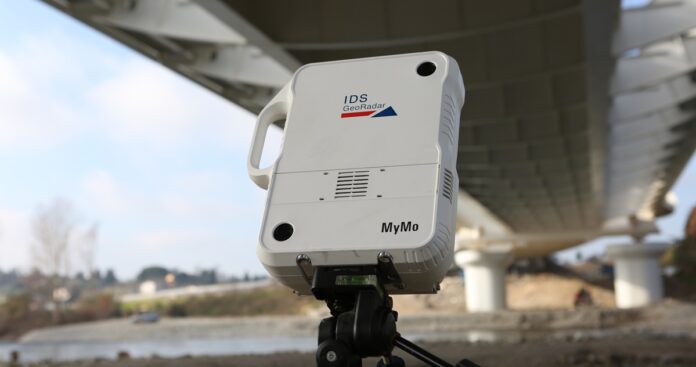
PISA, Italy, Feb 18, 2026 – IDS GeoRadar, part of Hexagon, announced the launch of MyMo, a portable solution for fast, non-contact structural health monitoring. MyMo enables engineers and infrastructure owners to scale monitoring.

IDS GeoRadar MyMo

Much of the world’s infrastructure was built decades ago and not designed for today’s usage patterns. While long-term monitoring remains critical for high-risk assets, practical constraints result in selective rather than widespread adoption. By enabling fast and frequent assessments across a large number of structures, MyMo helps engineers generate insights that help inform where deeper investigation, long-term monitoring, or immediate intervention may be required – and where structures are behaving as expected.

A compact approach to structural monitoring

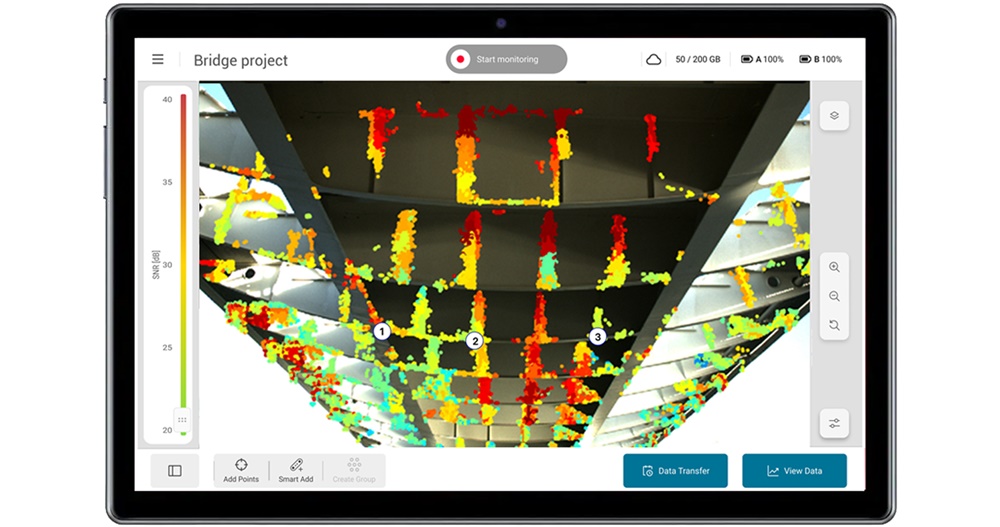
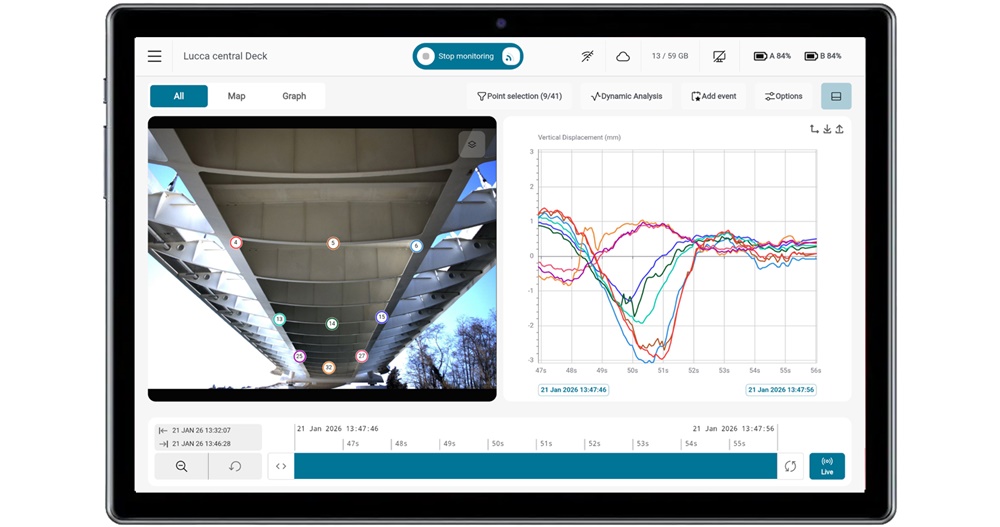
MyMo is the first device on the market that combines photogrammetry and interferometric radar technology in one compact system. It provides a straightforward visualisation of displacements and measures how structures move and vibrate under real load conditions.

Photogrammetry creates a detailed three-dimensional model of the structure, enabling precise identification of the monitoring points measured remotely through radar interferometry. This technology captures structural vibrations and natural frequencies, delivering actionable insights into structural health well before any visible signs of damage emerge.

IDS GeoRadar MyMo

Deployed on a tripod and operated via a tablet, a single engineer can set up MyMo in minutes without accessing the structure. This reduces logistical barriers to monitoring and minimises disruption to traffic or operations. Results are available immediately via a dedicated web app with real-time insights and visualisations.

“With MyMo, we are addressing a critical gap in how infrastructure is monitored today. Infrastructure owners need practical ways to understand how structures are behaving,” says Niccolò Coli, President, Radar & Monitoring Division, at Hexagon.“Long-term monitoring isn’t feasible everywhere. Meanwhile, traditional inspections are time-consuming, and experienced inspectors are increasingly scarce. MyMo provides rapid, objective insight into how structures are behaving, enabling engineers to timely define which structures warrant further attention.”

With MyMo, IDS GeoRadar builds on its decades of expertise in radar-based technologies to address structural health monitoring. This innovation complements Hexagon’s broader monitoring portfolio including Leica Geosystems solutions. In addition to bridge assessment, the new technology is ready to be deployed across a wide range of civil, industrial, and slope-monitoring applications.

Visit the MyMo product page: https://idsgeoradar.com/products/interferometric-radar/mymo.

About IDS GeoRadar

IDS GeoRadar, part of Hexagon, provides products and solutions based on radar technology, for mining, civil engineering and monitoring applications. The company is a leading provider of Ground Penetrating Radar (GPR) and Interferometric Radar solutions worldwide. IDS GeoRadar is committed to delivering best-in-class performance solutions and to the pursuit of product excellence, through the creation of application-specific, innovative and cost-efficient systems for a wide range of applications including mining, utility detection and mapping, civil engineering, geology, archaeology and public safety. For more information, visit https://idsgeoradar.com/

Hexagon (Nasdaq Stockholm: HEXA B) has approximately 24,800 employees in 50 countries and net sales of approximately 5.4bn EUR. Learn more at hexagon.com.

Velo3D Secures $11.5 Million Full Rate Production Contract from Key US Defense Contractor

0

FREMONT, CA, USA, Feb 18, 2026 – Velo3D, Inc. (NASDAQ: VELO), a leading additive manufacturing technology company for mission-critical metal components has been awarded a multi-year full rate production contract from a key U.S. defense contractor, valued at $11.5 million in support of a high-profile national security program.

“Velo3D is absolutely honored to continue supporting key industry partners delivering critical programs that strengthen our national security,” said Dr. Arun Jeldi, CEO of Velo3D. “This multi-year full rate production contract signals the trust and confidence our customers have in Velo3D to scale programs rapidly through faster part delivery, enhanced reliability and the surge capacity needed to meet evolving demands of their customers.”

The contract leverages Velo3D’s Rapid Production Solution (RPS) and industrial-scale Laser Powder Bed Fusion (LPBF) printing capability to produce high-performance, critical components quickly and at a lower cost than the same components produced using traditional subtractive manufacturing methods.

All Velo3D Sapphire printers are assembled in the United States and capable of printing parts up to 600mm in diameter and one meter in height repeatably across the entire fleet of Velo3D Sapphire printers. This advancement significantly expands addressable applications, enabling larger part production while offering the many benefits of LPBF technology, such as higher fidelity printing and Velo3D’s best in class layer-by-layer in-situ process monitoring.

About Velo3D

Velo3D is a metal 3D printing technology company. 3D printing—also known as additive manufacturing (AM)—has a unique ability to improve the way high-value metal parts are built. However, legacy metal AM has been greatly limited in its capabilities since its invention almost 30 years ago. This has prevented the technology from being used to create the most valuable and impactful parts, restricting its use to specific niches where the limitations were acceptable.

Velo3D has overcome these limitations so engineers can design and print the parts they want. The company’s solution unlocks a wide breadth of design freedom and enables customers in space exploration, aviation, power generation, energy, and semiconductor to innovate the future in their respective industries. Using Velo3D, these customers can now build mission-critical metal parts that were previously impossible to manufacture. The fully integrated solution includes the Flow print preparation software, the Sapphire family of printers, and the Assure quality control system—all of which are powered by Velo3D’s Intelligent Fusion manufacturing process. The company delivered its first Sapphire system in 2018 and has been a strategic partner to innovators such as Honeywell, Honda, Chromalloy, and Lam Research. Velo3D has been named as one of Fast Company’s Most Innovative Companies for 2024. For more information, please visit Velo3D.com, or follow the company on LinkedIn or X.

Materialise Expands CMF Portfolio with Custom-Made PEEK Implants

0
Materialise CMF PEEK

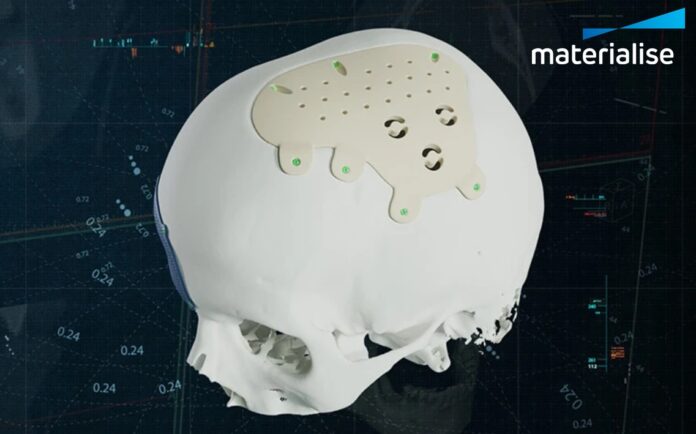
LEUVEN, Belgium, Feb 18, 2026 — Materialise NV, a global leader in personalized medical solutions, today announced the addition of PEEK (polyetheretherketone) implants to its cranio-maxillofacial (CMF) portfolio. The expansion provides surgeons with the flexibility to choose between titanium and PEEK for patient-specific reconstructions, while maintaining the continuity of Materialise’s integrated digital ecosystem — one planning session, one workflow, one partner.

The custom-made PEEK implants are fully integrated into the company’s established CMF portfolio, which includes collaborative 3D planning with dedicated clinical engineers in Mimics Enlight CMF software, seamless case management through Mimics Flow, and fixation with Materialise Standard+ Solutions. This continuity ensures surgeons can select the appropriate material for each clinical indication while maintaining the same validated, traceable process they rely on.

“Personalization isn’t just about material choices but about the precision of the planning process and the reliability of execution,” said Maarten Zandbergen, Market Manager at Materialise. “Our clinical engineers work hand in hand with surgeons to design each implant, and that collaborative approach remains constant whether the case calls for titanium or PEEK. What changes is the surgeon’s freedom to choose; what stays the same is the peace of mind that comes from a proven, end-to-end process.”

Clinical versatility within a trusted framework

The addition of PEEK complements Materialise’s existing titanium 3D printed implant portfolio, providing surgeons with expanded options while maintaining the precision, predictability, and clinical collaboration that define the Materialise approach to personalized CMF surgery.

PEEK’s radiolucent properties make it a preferred choice by many surgeons for cranial reconstruction, as well as facial contour restoration and onlay applications. The material complements titanium’s established role in load-bearing applications, giving surgeons expanded options for addressing diverse patient needs — from artifact-free postoperative imaging to lightweight anatomical restoration.

Each PEEK implant is manufactured in Europe by Ad Mirabiles, Materialise’s experienced manufacturing partner. Ad Mirabiles operates under an EN ISO 13485 certified quality management system and ensures consistent accuracy across every case. Materialise commits to a 72-hour turnaround time for PEEK implants following surgical plan approval, providing the same reliability the company has established with its titanium portfolio.

The custom-made PEEK implants are now available to surgeons across Europe (excluding Switzerland), where Materialise CMF solutions are established.

About Materialise

Materialise incorporates more than three decades of 3D printing experience into a range of software solutions and 3D printing services that empower sustainable 3D printing applications. Our open, secure, and flexible end-to-end solutions enable industrial manufacturing and mass personalization in various industries — including healthcare, automotive, aerospace, eyewear, art and design, wearables, and consumer goods. Headquartered in Belgium and with branches worldwide, Materialise combines the largest group of software developers in the industry with one of the world’s largest and most complete 3D printing facilities. For more information, visit https://www.materialise.com.

Artec 3D Localizes its Leo Wireless 3D Scanner for China

0
Artec Leo China

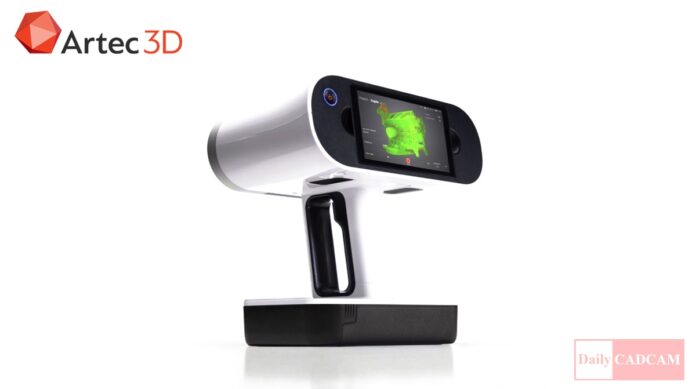
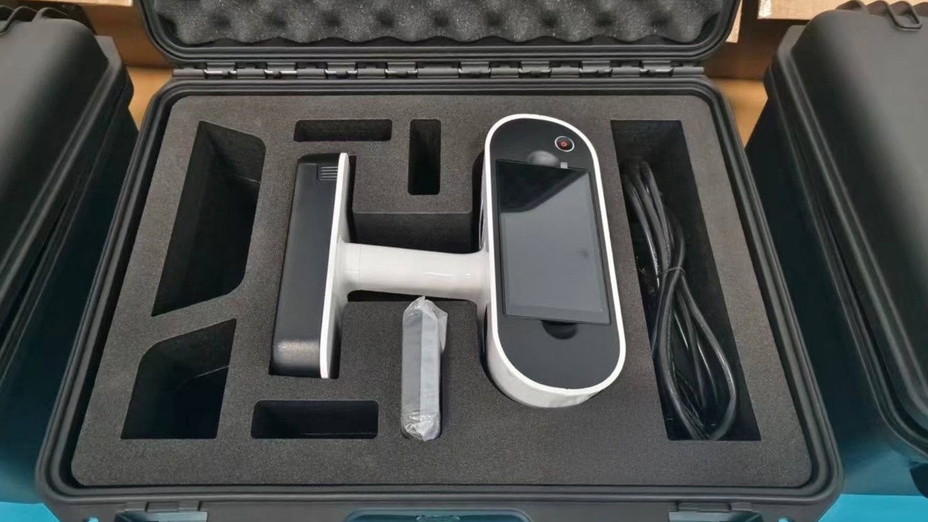
Luxembourg, Feb 18, 2026 – Luxembourg-based 3D scanning leader Artec 3D is delighted to reveal a “Made in China” version of Artec Leo, its all-in-one, wireless 3D scanner, produced exclusively for the Chinese market.

Set to drive regional growth, this “Made in China” Artec Leo delivers the same groundbreaking performance as the original, while offering closer alignment with Chinese standards. Producing the device domestically also brings logistical advantages, simplifying local procurement.

“As part of strengthening our position in China and following our strategic partnership with Lenovo New Vision, we have launched local production dedicated to the Chinese market,” said Art Yukhin, President & CEO of Artec 3D. “The ‘Made in China’ Leo expands our presence in China and reinforces our role as a key partner in the region.”

Built to meet growing demand

Home to rapidly developing manufacturing, construction, energy, and heritage preservation industries, China is becoming a key market for 3D scanning. Though cross-border logistics and product compliance requirements can affect product availability, making Artec Leo in China and aligning it with local standards should improve access for new users across the country.

Artec Leo

Domestic manufacturing simplifies supply chains, shortens delivery times, and reduces costs, yielding savings that will be passed directly on to customers. By reducing shipping complexity and introducing consistent regional pricing, Artec 3D can provide a smoother purchasing and fulfillment experience.

Expanding further in China

Renowned for its speed, accuracy, and versatility, Artec Leo is used everywhere from industrial reverse engineering and inspection to CGI/VFX, education, medical, and more. The “Made in China” Artec Leo retains the same quality as its predecessor, only undergoing assembly elsewhere.

The “Made in China” Artec Leo significantly accelerates Artec 3D’s Chinese activities. For more than five years, the company has marketed industry-leading 3D scanners via its sales office in Shanghai. This growing area of Artec’s business has seen cutting-edge 3D scanning applied in the digitization of objects ranging from automotive parts to forensic clues and historic treasures.

Artec Leo

Over time, Artec 3D has taken steps to strengthen these ties, most recently partnering with Lenovo NV. Moving forward, Artec aims to leverage its partner’s huge production and computing capacity to grow its presence and better penetrate the Chinese market.

Altogether, these closer regional partnerships are positioning Artec 3D for stronger growth, greater competitiveness, and long-term success in the market. Improved recognition in China is expected to boost customer confidence, improving the potential of products for local business, government, and other national-level projects, where Artec Leo can really make a difference.

About Artec 3D

Artec 3D is an international company, headquartered in Luxembourg, with offices in China (Shanghai), Japan (Tokyo), Montenegro (Bar), Portugal (Lisbon), and the United States (Santa Clara, California). Artec 3D develops and manufactures innovative 3D scanners and software. Artec has a team of professional experts in the capture and processing of 3D surfaces as well as biometric facial recognition. Artec 3D’s products and services can be used in many industries, such as engineering, medicine, media and design, entertainment, fashion, heritage preservation, security technology, and more. For more information, visit https://www.artec3d.com.