Home Blog Page 689

Stratasys Appoints ARK Infosolutions as New Partner in India for Production-grade 3D Printers

0

The agreement allows Stratasys to expand its footprint in the local market with its production-grade FDM® & PolyJetTM 3D printing solutions in India.

Mumbai – (Feb 24, 2021) – ARK Infosolutions Pvt Ltd (ARK), a leading value-added distributor in India, signs an agreement with Stratasys (Nasdaq: SSYS). With this inclusion of commercial, professional, & industrial Stratasys printers, ARK will further fortify its distribution position in the 3D printing market space. Stratasys is a global leader in additive manufacturing or 3D printing technology and is the manufacturer of FDM®, PolyJetTM, 3D printers.

ARK joined the Stratasys partner network to expand 3D printing adoption and its market outreach in India, therefore enhancing local access to the latest technologies that Stratasys has to offer. This partnership comes at a time when additive manufacturing (AM) is transforming product design, production, and service. AM enables on-demand production without dedicated equipment or tooling, unlocks digital design tools, and offers breakthrough performance and unparalleled flexibility across industries. Through this partnership, ARK plans to reach newer markets, accelerate growth and bring mutual benefit to its customers.

Rishi Khemka, CEO, ARK Infosolutions Pvt Ltd, views this opportunity as an important milestone towards expanding the range of additive manufacturing or 3D printing product distribution in India. He said, “Professional users are reinventing design, manufacturing, and unlocking the different ways to manufacture production parts or product itself. In this current crisis, we saw many innovative products manufactured through 3D printing technology with quality, less time-to-market, and cost. It’s a testament to how 3D printers have taken shape. We are committed and hoping it will further improve Stratasys product reach and help companies with their engineering innovation under these challenging times.”

“This partnership reflects our interest to collaborate with companies that share our vision to empower customers to innovate and reimagine the way they design and manufacture their products. With increased portfolio from the recent acquisitions of Origin and RPS, we aim to continue serving our customers with latest technologies from Stratasys and best in class partners to support them”, said Mr. Rajiv Bajaj, Managing Director Stratasys India and SEA For more information on ARK’s product offering and services,

visit https://www.arkinfo.in/stratasys 

Stratasys (Nasdaq: SSYS) is a global leader in additive manufacturing or 3D printing technology and is the manufacturer of FDM®, PolyJet™, and stereolithography 3D printers. The company’s technologies are used to create prototypes, manufacturing tools, and production parts for industries, including aerospace, automotive, healthcare, consumer products, and education. For more than 30 years, Stratasys products have helped manufacturers reduce product development time, cost, and time-to-market, as well as reduce or eliminate tooling costs and improve product quality. The Stratasys 3D printing ecosystem of solutions and expertise includes 3D printers, materials, software, expert services, and on-demand parts production.

To learn more about Stratasys, visit www.stratasys.com, the Stratasys blog, Twitter, LinkedIn, or Facebook. Stratasys reserves the right to utilize any of the foregoing social media platforms, including the company’s websites, to share material, non-public information pursuant to the SEC’s Regulation FD. To the extent necessary and mandated by applicable law, Stratasys will also include such information in its public disclosure filings. Stratasys is a registered trademark and the Stratasys signet is a trademark of Stratasys Ltd. and/or its subsidiaries or affiliates. All other trademarks are the property of their respective owners.

ark_ansys

About ARK:

Founded in 2012, ARK Infosolutions Pvt. Ltd. (ARK) is a niche player and a leading value-added distributor of Technology Products in India for the industry segments like Animation, Architectural Engineering & Construction, Gaming, Graphic Design, Digital Manufacturing Solutions, Product Design & Education.

Headquartered in New Delhi with 330+ employees spread across major cities in India including Mumbai, Pune, Bangalore, Chennai, and Hyderabad. Increasingly, the company has become one of the key partners of leading brands, through a focused investment approach that has supported and fueled growth for everyone.

Connect with us on Blogs, LinkedIn, Facebook, & Twitter
Invitation
Siemens sd17

GTXRaster CAD 2021 Series Add-ons Compatible with ZWCAD 2021

0

GUANGZHOU, China, Feb 23, 2021 – The latest GTXRaster CAD 2021 Series add-ons have been fully ported to ZWCAD, a DWG-compatible CAD platform. This popular solution allows engineers and designers to make productive use of the GTX raster editing and raster to vector conversion tools all in a familiar CAD environment.

Consisting of two product modules — GTXRaster CAD and GTXRaster CAD PLUS, the GTXRaster CAD 2021 Series are developed by GTX Europe, Ltd., the founding developer of raster editing and conversion software. The GTX intelligent paper-to-CAD solutions® have become indispensable for thousands of users worldwide who work with scanned paper drawings.


The GTXRaster CAD 2021 Series add-ons have been fully ported to ZWCAD 2021
Figure 1. GTXRaster CAD 2021 Series add-ons have been fully ported to ZWCAD 2021


Efficient Raster Conversion

Automatic raster-to-vector conversion is nothing new. But high speed and great accuracy are hard to come by. Thanks to the GTXRaster CAD 2021 Series, ZWCAD users can convert raster objects into rectified and accurate CAD entities, such as lines, arcs, circles, and polylines. Besides, characters associated with individual or company drafting styles can be recognized for you to edit them as true texts in ZWCAD. And since this add-on can recognize line styles, splines, cross-hatching, arrowheads, and set a gap jump variable, the conversion is guaranteed to be remarkably precise.


Raster-to-vector conversion with GTXRaster CAD 2021 Series in ZWCAD 2021
Figure 2. Raster-to-vector conversion with GTXRaster CAD 2021 Series in ZWCAD 2021


Quickly Enhance, Clean, and Edit Images

Either using the automatic image cleanup tools, or manually deskewing, despeckling, and cropping, you can easily clean up the scanned raster image, even when it is blurred and noisy. Also, before drawing vectors tracing over the image in ZWCAD, you can erase any part of the image, with raster erase and raster outline.

Moreover, with the state-of-the-art raster and hybrid editing features available, you are free to edit and save the raster data using over 20 powerful raster manipulation commands. When you finish designing, you can continue to plot the drawing in various file formats (.tif/.pdf/.cal/.cg4, etc.), or even as hybrid files.

Bring Legacy Paper to CAD at a Reasonable Price

“We are excited to release our flagship GTXRaster CAD Series products on the ZWCAD platform, providing our solutions to more customers and dealers worldwide at a very competitive price point,” stated Mr. Andrew Ling, President and CEO of GTX Europe, Ltd. Indeed, these solutions offer users full DWG compatibility, 2D and 3D CAD features, an intuitive user interface, including the Light and Dark customized GTX Ribbons, and so much more.


New and updated GTX icons and Ribbons in ZWCAD 2021
Figure 3. New and updated GTX icons and Ribbons in ZWCAD 2021


All in all, if your work involves scanned paper drawings, either black and white or color, then you must not miss out on the efficient and budget-friendly “GTXRaster CAD 2021 Series + ZWCAD 2021” combination.

About ZWSOFT

ZWSOFT CO., LTD. (Guangzhou) is a reliable and innovative engineering software provider with its flagship products ZWCAD and ZW3D. Committed to providing complete and seamless user experience to worldwide users with its all-in-one CAx solutions, ZWSOFT has continuously satisfied diverse needs of various industries such as AEC and MFG. With over 20 years’ experience in the industry, its products and service have been proven by over 900,000 clients across 90 countries. For more information, visit https://www.zwsoft.com.

About GTX Europe, Ltd.

GTX Europe, Ltd. (Fareham, Hampshire, U.K.) is celebrating over thirty-five years in business this year having been founded in 1984 by Dr. Marvin T. Ling to develop a complete integrated system for interfacing paper technical drawings with CAD-EDM-GIS environments. beginning with the introduction in 1987 of products for the scanning and conversion of paper and aperture card drawings, the company has been recognized for its ability to incorporate the latest developments in artificial intelligence and neural network technology to keep its products at the forefront of data recognition and conversion solutions. the GTXRaster CAD and GTXImage CAD series of products provide state-of-the-art raster editing and automatic raster to cad conversion.

Ansys, Siemens Energy Join to Bring New AM Capabilities to Engineers Across Industries

0

PITTSBURGH, PA, USA, Feb 23, 2021 – Ansys (NASDAQ: ANSS) and Siemens Energy are partnering to offer an improved design process for creating additive manufacturing (AM) parts. The collaboration unites Siemens Energy’s powder bed fusion (PBF) AM printing process with Ansys simulation solutions — empowering AM designers to generate ultra-precise parts, significantly reduce production time and expedite products to market.


siemens_energyHomogenized lattice structure from Ansys Material Designer captures desired stress redistribution


While many companies across sectors employ AM within their engineering organizations, designers often lack expertise in AM manufacturing, print preparation and simulation tools. This typically results in the production of numerous physical prototypes, unnecessarily inflating budgets and development time. Together, Ansys and Siemens Energy will train engineers to decrease costly production rework and provide affordable next-generation AM printing solutions, so new products can be developed with increased speed and quality for global customers.


siemens_energy2Ansys Additive accurately predicts transition print distortion validated post-print


The new partnership powers interoperability between Ansys and Siemens Energy AM technologies to help train designers to affordably produce highly complex parts that cannot be created by conventional manufacturing. Educated on this new AM design process, designers will harness Ansys simulation solutions to lessen the guesswork in product design and validate highly sophisticated part geometries. Leveraging more than a decade of AM experience on gas turbines and other rotating equipment, Siemens Energy can provide real-world application support across the entire design-to-manufacturing value chain for companies looking to bridge toward 3D print capabilities.

“Siemens Energy’s extensive expertise in functional AM printing applications, combined with Ansys’ game-changing AM design technologies improves how organizations of all sizes cost-efficiently produce highly complex parts. Engineering teams’ paramount goal is to print parts right the first time and this partnership makes training them on that task possible,” said Quan Lac, Head of Additive Manufacturing, Americas at Siemens Energy. “Together, we will train our joint customers to design and build products faster, ensuring customers receive new innovations with markedly greater speed.”

“Our partnership with Siemens Energy brings new AM capabilities to engineers across industries, delivering dynamic insights that will radically advance the AM industry and increase new product innovation,” said Shane Emswiler, senior vice president at Ansys. “By breaking the constraints of traditional manufacturing, we are training designers to turn their visions into reality and substantially improve productivity.”

About Ansys

If you’ve ever seen a rocket launch, flown on an airplane, driven a car, used a computer, touched a mobile device, crossed a bridge or put on wearable technology, chances are you’ve used a product where Ansys software played a critical role in its creation. Ansys is the global leader in engineering simulation. Through our strategy of Pervasive Engineering Simulation, we help the world’s most innovative companies deliver radically better products to their customers. By offering the best and broadest portfolio of engineering simulation software, we help them solve the most complex design challenges and create products limited only by imagination. Founded in 1970, Ansys is headquartered south of Pittsburgh, Pennsylvania, U.S.A. For more information, visit www.ansys.com.

Ansys Launches Moxie to Enhance System Model Validation Processes

0

PITTSBURGH, PA, USA, Feb 23, 2021 – Ansys (NASDAQ: ANSS) is equipping engineering teams to cut development time, boost productivity and speed innovation through the launch of Moxie. The new product enables engineers to run and analyze SysML behavioral models in virtual environments and confirm these designs represent systems that will satisfy mission performance requirements—from military aircraft performing reconnaissance to automated cars navigating cities to satellites capturing photos of forest fires.


moxieMoxie executing a SysML state machine in a virtual environment to evaluate how a system architecture functions in a mission scenario


Defining systems requirements with formalized SysML is becoming increasingly popular. However, if engineering teams do not evaluate and validate SysML architectures within a physics-based, virtual representation of their system’s operating environment, there is significant programmatic risk that the physical system resulting from the virtual system design will not satisfy mission performance objectives. A next-gen digital mission engineering solution, Moxie uniquely delivers continuous event detection during simulation runs, synchronizes execution of multiple simulation technologies and provides customizable levels of simulation fidelity.

Moxie reduces programmatic risk and costly rework by integrating SysML authoring tools with mission modeling tools such as AGI’s Systems Tool Kit (STK). Running SysML behavioral architectures in virtual operating environments enables engineers to validate system models against mission-level requirements rather than waiting to perform validation in the lifecycle when physical systems are available. Using Moxie, engineers also gain the unique ability to virtually assess their systems against potential new use cases — a task that would be too expensive or impossible to complete with physical systems.

“Moxie allows the Parsons team to model operational functions in our MBSE tool, Cameo, using state machine and activity diagrams and evaluate those processes in STK. This expands upon our current capability of requirements trace and complements our Phoenix Model Center MBSE capability,” said Stephen Thomas, technical director at Parsons. “We have been demonstrating this capability to model all the activities related to missile defense and evaluate how those processes affect the performance requirements of the sensors, interceptors and command and control.”

“Through our acquisition of AGI and the introduction of Moxie, Ansys is empowering engineers to virtually evaluate and improve their SysML behavioral models within real-world environments, using time-synchronized, event-based, executable architectures,” said Shane Emswiler, senior vice president at Ansys. “By analyzing and validating their system models against mission-level requirements earlier in the product lifecycle, engineers can confidently and cost-effectively forecast mission outcomes and appraise capability performance.”

About Ansys

If you’ve ever seen a rocket launch, flown on an airplane, driven a car, used a computer, touched a mobile device, crossed a bridge or put on wearable technology, chances are you’ve used a product where Ansys software played a critical role in its creation. Ansys is the global leader in engineering simulation. Through our strategy of Pervasive Engineering Simulation, we help the world’s most innovative companies deliver radically better products to their customers. By offering the best and broadest portfolio of engineering simulation software, we help them solve the most complex design challenges and create products limited only by imagination. Founded in 1970, Ansys is headquartered south of Pittsburgh, Pennsylvania, U.S.A. For more information, visit www.ansys.com.

Pointwise v18.4 R3 Released, Features Built-in Support for AzoreCFD

0

FORT WORTH, TX, USA, Feb 23, 2021 – The latest release of Pointwise’s computational fluid dynamics (CFD) mesh generation software includes a native interface to the AzoreCFD flow solver.


v184r3A Pointwise mesh and AzoreCFD simulation result for a branching HVAC air supply duct for an office building. The CFD simulation results show flow pathlines colored by total velocity.


“Pointwise is committed to empowering solver development of any type, which is why we developed a flexible and powerful plugin SDK for mesh export and import,” said Patrick Baker, Pointwise’s director of product development. “Our latest release includes a plugin authored by Azore Software that writes files in their AzoreCFD flow solver’s native format.” In addition to the AzoreCFD plugin, Pointwise Version 18.4 R3 includes several smaller productivity enhancements.

Customers can immediately download Pointwise V18.4 R3 from www.pointwise.com/downloads.

About Pointwise

Pointwise, Inc. is solving the top problem facing computational fluid dynamics (CFD) today – reliably generating high-fidelity meshes. The company’s Pointwise software generates structured, unstructured, overset and hybrid meshes; interfaces with CFD solvers such as ANSYS FLUENT, STAR-CCM+, OpenFOAM, and SU2 as well as many neutral formats, such as CGNS; runs on Windows, Linux, and Mac, and has a scripting language, Glyph, that can automate CFD meshing. Manufacturing firms and research organizations worldwide have relied on Pointwise as their complete CFD preprocessing solution since 1994. For more information, visit https://www.pointwise.com.

About AzoreCFD

AzoreCFD is a Computational Fluid Dynamics (CFD) software tool for analyzing fluid flow and heat transfer. CFD provides engineers and scientists a method for analyzing a wide array of fluid mechanic, thermal, and chemical problems numerically on a computer. Many different types of fluid dynamic situations can be simulated using AzoreCFD, including air, gas, liquid, or particulate-laden flows. For more information, visit https://www.azorecfd.com.

PROLIM Wins Contract with ACI to Deploy Teamcenter X SaaS PLM for Digital Transformation

0

CINCINNATI, OH, USA, Feb 23, 2021 – PROLIM wins contract with ACI to deploy Teamcenter X  software – the new software as a service (SaaS) PLM offering for digital transformation from Siemens Digital Industries Software. ACI has been growing since 1960 and pioneered in providing manufactured products, engineered solutions and performance software for reciprocating compressors.


teamcenterX_pr1


Being known as “The Compressor Experts”, ACI has been working with PROLIM and Siemens, using Solid Edge software for designing and developing compressors and control devices. ACI is innovating new products and modernizing the existing ones with software enabled for digital transformation. “The most intriguing part of Teamcenter X is the complete SaaS platform. We are very excited about the increased functionality, increased accessibility, and decreased management of the PLM,” says Joe Reiheld, VP of Engineering at ACI Services.

Teamcenter X, a cloud-based Product Lifecycle Management (PLM)-as-a-service innovation platform, offers the convenience of choosing from pre-configured engineering and business solutions that deliver immediate value, with the flexibility to add more capabilities as business needs grow. Teamcenter X brings the power of the cloud to all users, to help reduce time-to-market and connect distributed, cross-disciplinary teams while improving effectiveness and efficiency at any scale. “Combining traditional PLM with cloud computing allows PLM to be available anywhere and, on any device, reduce IT resource needs, and keep up with the latest innovative technology, while enabling enterprises to move the investment from a capital expenditure to an operational expenditure,” says Prabhu Patil, Founder & CEO of PROLIM.

“Teamcenter X is a true cloud solution, building on our PLM expertise and leveraging the modern technology of microservices, artificial intelligence, and low-code development”, said Joe Bohman, Senior Vice President for Teamcenter, Siemens Digital Industries Software. “Our partnership with PROLIM is an excellent example of how we can help companies of every size achieve digital transformation with instant-on value and a solution that grows with them. I’m excited to see how ACI’s expertise in the compressor industry combined with Siemens expertise in PLM is going to help them drive the innovations of tomorrow.”

About PROLIM

PROLIM is a leading provider of end-to-end IoT, IT and PLM solutions for 400+ customers in Aerospace, Automotive, Healthcare and Industrial Machinery with global operations in the USA, Canada, Europe and India. PROLIM helps customers to improve profitability and efficiency by providing PLM, CAD, CAM, IoT Solutions, Advisory, and Engineering consulting services to worldwide businesses of all sizes, including many Fortune 500/1000 companies. For more information, visit https://www.prolim.com.

About ACI

ACI Services, Inc.’s vision is to provide manufactured products, engineered solutions and performance software for reciprocating compressors, and to earn customer recognition for its innovation, technical superiority, customer service and product quality. ACI Services, Inc. holds patents and patent-pending status on various engineered products. ACI Services, Inc. started in 1960 as Yorde Machine Products. Since then, ACI has grown and maintained its reputation for excellence in compressor performance and cylinder design. For more information, visit https://aciservices.

Stratasys Q4 FY2020 Conference Call on Mar 1, 8:30AM ET

0

MINNEAPOLIS, MN, USA and REHOVOT, Israel, Feb 23, 2021 – Stratasys Ltd. (Nasdaq: SSYS) will release financial results for the fourth quarter and full year ended December 31, 2020 on Monday, March 1, 2021. The Company plans to hold the conference call to discuss its fourth quarter and full year 2020 financial results on Monday, March 1, 2021 at 8:30 a.m. (ET).

The investor conference call will be available via live webcast on the Stratasys Web site at investors.stratasys.com; or directly at the following web address: https://78449.themediaframe.com/dataconf/productusers/ssys/mediaframe/43687/indexl.html

To participate by telephone, the U.S. toll-free number is 877-407-0619 and the international dial-in is +1-412-902-1012. Investors are advised to dial into the call at least ten minutes prior to the call to register. The webcast will be available for 6 months at investors.stratasys.com, or by accessing the above-provided web address.

About Stratasys

Stratasys is leading the global shift to additive manufacturing with innovative 3D printing solutions for industries such as aerospace, automotive, consumer products and healthcare. Through smart and connected 3D printers, polymer materials, a software ecosystem, and parts on demand, Stratasys solutions deliver competitive advantages at every stage in the product value chain. The world’s leading organizations turn to Stratasys to transform product design, bring agility to manufacturing and supply chains, and improve patient care.

To learn more about Stratasys, visit www.stratasys.com, the Stratasys blogTwitterLinkedIn, or Facebook.

The Value of Insourcing and Standardizing Component Work

0

In a time when everyone seems to be trying to look at outsourcing as a way to stay competitive, Oldcastle, Ontario-based Aalbers Tool & Mold has gone against the grain, and it has paid off.
If you walk through this company’s crib, you will see the usual rows upon rows of components waiting to be installed into jobs. Screws, springs, pins and bushings line the shelves. Look a little closer, however, and you will start to notice some components that similar manufacturers don’t typically keep in stock. That’s because Aalbers has a components division that builds a growing selection of its own components.

Aalbers Tool & Mold was founded in 1982 by CEO Gary Aalbers to design and manufacture large plastic injection molds for the automotive and consumer goods industries. (The company also has expertise in fabric insert tooling.) Traditionally, these molds are made from raw blocks of steel machined to shape, combined with about 80 percent purchased components (screws, pins bushings, etc.) and 20 percent components custom-made for a particular job.

d2

“A few years ago we looked at all the custom components we were making for each job, and we soon realized that we needed more standardization,” explains Toni Hansen, president. “For instance, we noticed that designers put in wear plates based on the size of the slide. The size of the wear plate differed from designer to designer. Even screw sizes and placement would vary. These custom plates were expensive and time-consuming to manufacture, so we set out to standardize them.”
In developing standards, the Aalbers team decided on the proper screw spacing and size, as well as proper clearance and critical dimensions. Once the team developed the standards, it could then make the components in advance and stock them in various sizes.

Reaping the Benefits

Aalbers Tool & Mold has experienced numerous benefits from the standardization and in-house manufacturing of its mold components, including:

– Fewer opportunities for error. “Our designers are aware of the sizes in stock, and they use those sizes whenever possible,” notes Engineering Manager Don Stockwell. “Each plate is part of our CAD library in TopSolid. The models contain everything: wear plates, pockets, screws and screw holes—all finished. In addition, we keep all manufacturing information on file for each size. This reuse of information saves us time with each design and also reduces opportunity for error.”

– Decreased manufacturing time. “In the past, a custom component would take a fair amount of time to produce,” Hansen points out. “We now manufacture them in batches using an automated process. It takes less time and has reduced the chance of errors. One custom component could take 30 minutes to produce, but now we can produce 10 of them in the same amount of time—a 90-percent savings in labor.”

– Reduced lead times. As a result, lead times at Aalbers have been significantly impacted. “We can produce molds faster because no one is waiting for a custom part to be manufactured. We always have our own components in stock,” Hansen says. Aalbers still purchases a few standard components from other suppliers, but if there is ever a problem with lead time on these orders, its component division can quickly manufacture the part to order.

– Improved customer service. Standardization has truly benefited Aalbers customers, according to Doug Thompson, who is in the company’s technical sales department. “If a part gets damaged or worn, we can quickly take one off the shelf and send it along to the customer. No more waiting for a custom part to be manufactured,” he says. “If our customer isn’t local, he doesn’t have to look for a local tool shop to repair the tool or pay expensive shipping costs; we can ship him the part and he can be back up and running in no time.”

– Hidden cost savings. Other cost savings are harder to measure but are very evident to Aalbers. For example, parametric CAD systems enable designers to design parts to any size they desire, but this flexibility can also be a big problem, according to Hansen. “Not all designers have the same experience, and all are prone to typing in the occasional wrong value. The more we standardize, the more we reduce these potential errors.” In addition to the increased potential for actual engineering errors, allowing a designer to pick any size he wants can have drastic cost implications that may not be caught until it’s too late. “Designers are not purchasers, and purchasers are not designers,” Hansen says. “A designer may not know that the size he picked is much more expensive than the next size up or down. A purchaser has no way of knowing if the designer considered a cheaper size. This type of situation occurs all the time, so by taking control of standards, we can lessen the chance of this happening.”

– Continuous improvement. Standardization also has helped foster a culture of continuous improvement at Aalbers. The company now holds monthly meetings to discuss ideas for improving component design. Team leaders from design, manufacturing and sales meet to ensure everyone is looking at improvements from all aspects.

d3

The goal is simple, Hansen says. “It has to improve time and quality, and help lower costs. We still purchase some components from suppliers, but what started with a few components has now grown to a large library of our own standard components.

“We are moldmakers not just mold assemblers. We know how each part functions within our tools. We know what works. Having our own components manufacturing division in house allows us to think outside the box. When in the past we may have just purchased a standard component, today we consider each component’s purpose and design. We have added many improvements to our own components that are not offered by industry catalogs.”

Component standardization also enables Aalbers to better judge an item’s long-term durability. “Previously, when parts were designed one up, we had zero repeatability with no control over the long-term quality of our products,” Hansen explains. “Now if we see a problem arise, we can fix it in the v standards and know that this fix will carry on to each new build, improving our overall quality.”

Opportunity Keeps on Knocking

CEO Gary Aalbers says it’s not uncommon for his company to receive requests from other mold manufacturers wishing to purchase components. “With our recent expansion—coinciding with our 30-year anniversary—we now have over 100,000 square feet of manufacturing space, and we are currently investigating the potential of offering a line of specialty components from our patent-pending designs.”

d4

MakerBot METHOD 3D Printers Support BASF Forward AM Ultrafuse 316L Stainless Steel Composite Material

0

BROOKLYN, NY, USA, Feb 22, 2021 – MakerBot, a Stratasys company (Nasdaq: SSYS), announced that the BASF Ultrafuse 316L Stainless Steel material by Forward AM has been qualified for the MakerBot LABS Experimental Extruder1 for the MakerBot METHOD 3D printers. With an open materials platform and a growing portfolio of advanced engineering-grade materials, METHOD is now the only industrial desktop 3D printer in its price-class with a heated chamber that can print polymer, composite, and metal materials.


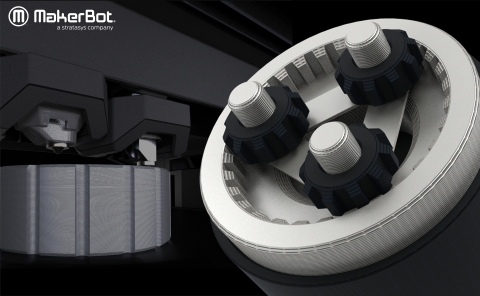
MakerBot METHOD now prints BASF Ultrafuse 316L Stainless Steel material by Forward AM (Photo: Business Wire)
MakerBot METHOD now prints BASF Ultrafuse 316L Stainless Steel material by Forward AM


Ultrafuse® 316L Stainless Steel material combines high strength, rigidity and durability needed for a range of applications including functional prototypes and manufacturing tools. Available using the MakerBot LABS GEN 2 Experimental Extruder, this metal-polymer composite material provides METHOD users with an accessible and cost-effective option to experiment with metal 3D printing applications without making the significant investment typically needed for a dedicated metal 3D printing solution. 3D printing stainless steel parts can also shorten the time it takes to produce parts, further reducing operational costs compared to traditional methods. METHOD’s heated chamber and ability to control the speed at which a part cools down during the printing process can also help reduce the risk of delamination.

Once the part is printed with BASF Forward AM Ultrafuse 316L, it can then be sent out to post-processing or specialized manufacturing facilities for debinding and sintering, which turns the part printed with the composite material into solid stainless steel. This process allows users to create stainless steel parts without investing in expensive debinding and sintering equipment. Final parts can achieve up to 96%2 of the density of pure 316L metal material. Users can produce lightweight, hollow metal parts with high tensile strength compared to polymers that would be difficult to produce in other ways.

“Ultrafuse Metal Filaments removed the barriers between metal 3D printing and users to make the technology more accessible to a larger audience. We are very excited to have our Ultrafuse 316L part of the MakerBot LABS program. We aim to add our recently launched Ultrafuse 17-4 PH filament, with the Ultrafuse 316L to make our entire portfolio accessible to MakerBot users,” said Firat Hizal, Head of Metal Systems Group, BASF 3D Printing Solutions.

“We are excited to have MakerBot METHOD 3D printers join the metal 3D printing ecosystem that we’ve built alongside BASF Forward AM. Making 3D printing more accessible has always been a major goal at MatterHackers, and having reliable desktop printers like the METHOD and METHOD X that are capable of printing real metal parts affordably is a huge step forward,” said Dave Gaylord, vice president of Product and Technology at MatterHackers.

“Our customers have expressed interest in exploring metal 3D printing but have been deterred by the high costs and extensive processes of traditional metal 3D printing solutions. By supporting a metal filament as part of the MakerBot LABS program, customers now have an easier and more affordable way to experiment with 3D printing metal before investing in a full printing, debinding, and sintering solution,” said Johan-Till Broer, vice president of Product Development, MakerBot.

Ultrafuse® 316L material properties make it ideal for a variety of manufacturing tools, jigs and fixtures, and end-use parts, such as workholdings that need to withstand high temperatures; brackets that require high strength and custom designs for specialty machinery; or robotic grippers that need to be strong, lightweight, and wear resistant.

Processing tickets for debinding and sintering are available through MatterHackers, a leading material and 3D printer reseller in the U.S. MatterHackers is an Ultrafuse 316L authorized reseller, and also offers build plate adhesives needed to print the material and design consultation, which is highly recommended due to the special design requirements for this material.

Ultrafuse 316L and additional debinding and sintering options are available through authorized resellers.

The MakerBot LABS GEN 2 Experimental Extruder enables users to print with a diverse list of third-party materials on METHOD, opening the possibilities of new and different applications. With the METHOD platform, users can print engineering-grade plastics and carbon fiber materials, while also exploring applications with experimental metal 3D printing solutions. METHOD’s modular platform lets users easily switch between six different extruders that allow them to print different base and model materials. MakerBot is continuing to identify additional industrial 3D printing materials for the METHOD platform.

For more information, visit http://www.makerbot.com/metal.

About MakerBot

MakerBot, a Stratasys company, is a global leader in the 3D printing industry. The company helps create the innovators of today and the businesses and learning institutions of the future. Founded in 2009 in Brooklyn, NY, MakerBot strives to redefine the standards for 3D printing for reliability, accessibility, precision, and ease-of-use. Through this dedication, MakerBot has one of the largest install bases in the industry and also runs Thingiverse, the largest 3D printing community in the world.

To learn more about MakerBot, visit makerbot.com, the MakerBot blogTwitterLinkedIn, or Facebook.

Creaform to Host a Webinar on ‘Comparing Accuracy and Performances of 3D Scanning and Traditional CMMs in Automotive Industry’

0

LEVIS, QC, Canada, Feb 22, 2021 – Creaform, the worldwide leader in portable 3D measurement solutions and engineering services, announced that it will be hosting the first 2021 webinar of its Ask an expert series on March 4th. In this first iteration, the subject will be “3D Scanning vs. Traditional: Comparing CMM Accuracy in Automotive”. A must see for any industry professionals to scale up their production or quality control process, without sacrificing measurement accuracy and repeatability.


Traditionally, quality control (QC) and quality assurance (QA) in the automotive industry were tasks mostly undertaken with the help of a fixed CMM or a contact measuring arm. Today, however, companies are moving more and more towards automation for speed, efficiency, accuracy, repeatability, and to improve overall productivity. Now, robot-mounted 3D scanning CMM solutions are becoming the new norm in the QC and QA business.

In this presentation, Jérôme-Alexandre Lavoie, Product Manager at Creaform, and David Robichaud, Technical Product Manager at Creaform, will discuss these changes in the industry, the advantages and disadvantages of each CMM types and for which application they are most suitable for. Guest speaker Don Mahon, metrology specialist at 1 Source Metrology and a professional with more than 15 years of experience selling CMMs, will discuss real life challenges in the industry.

This webinar’s key features:

  1. 3D scanning CMM definition
  2. Comparison between 3D scanning vs traditional CMMs
  3. Real life challenges in the automotive industry
  4. ROI calculation tips for 3D scanning CMM

Register now for this free presentation to connect with Creaform’s experts and experience the technology in action.

Register here for Americas session or here for EMEA session.

About Creaform

Creaform develops, manufactures, and sells 3D portable and automated measurement technologies and specializes in engineering services. The company offers innovative solutions for applications such as 3D scanning, reverse engineering, quality control, non-destructive testing, product development, and numerical simulation (FEA/CFD). Its products and services cater to a variety of industries, including automotive, aerospace, consumer products, heavy industries, healthcare, manufacturing, oil and gas, power generation, research and education.

With headquarters and manufacturing operations in Lévis, Québec, Creaform operates innovation centers in Lévis as well as Grenoble, France, with direct sales operations in Canada, USA, Mexico, Brazil, France, Germany, Italy, Spain, China, Japan, Korea, Thailand and Singapore. Creaform is part of the Ultra Precision Technologies division of AMETEK Inc., a leading global manufacturer of electronic instruments and electromechanical devices with annual sales of approximately $5 billion. For more information, visit www.creaform3d.com.