Home Blog Page 8

MagiCAD 2026 UR2 Available for Revit, AutoCAD, BricsCAD

0
MagiCAD 2026 UR2

TURKU, Finland, Mar 23, 2026 – The new release of MagiCAD for Revit, AutoCAD and BricsCAD is now available for download. MagiCAD 2026 Update Release 2 introduces important new functions and resolves existing issues.

MagiCAD 2026 UR-2 new features

About MagiCAD

MagiCAD enables MEP design using Europe’s largest product model database, featuring over 1,000,000 actual products and product variants from 300 leading manufacturers across the world. Each model within the database comes complete with accurate dimensions and comprehensive technical data. MagiCAD offers localisation for different country-specific standards, and it is used by contractors and designers in projects in over 80 countries across the world. For more information, visit https://www.magicad.com.

Invitation
Siemens sd17

Farsoon Unveils FS812M-U 800mm-Class Large-Format Metal AM System

0

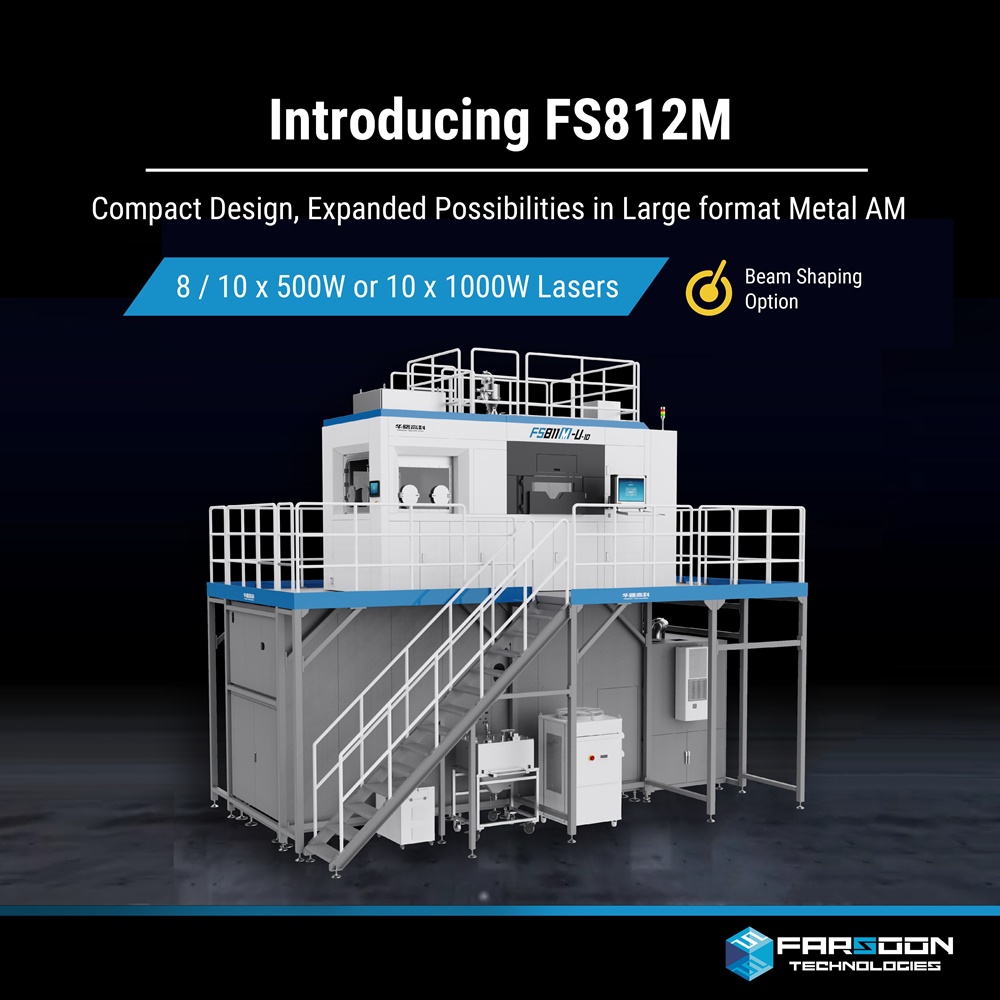
CHANGSHA, China, Mar 23, 2026 – Farsoon Technologies announced the launch of the FS812M-U, the latest evolution of its market-leading 800mm-class metal additive manufacturing system. Since the introduction of the first 800-series platform in 2021, Farsoon has achieved global sales leadership in this class, with over 40 systems installed globally by 2025. Now, after four years of intensive technology iteration, the new FS812M-U sets a higher standard for large-format production.

FS812M

Designed to meet the growing demands of both aerospace and high-volume automotive manufacturing, the FS812M-U delivers a 41% reduction in footprint compared to its predecessor FS811M while expanding build height to nearly 1700mm. This enables the production of complex, tall components such as grid stabilizer fins and hypersonic precoolers with minimal supports, significantly reducing material waste and post-processing costs.

Unmatched Build Envelope for Large-Scale Applications

The FS812M-U offers a generous build volume of 810 x 810 x 1700mm, accommodating the tallest components in its class. A standard configuration of 8 or 10 lasers ensures rapid throughput, while optional beam shaping technology delivers exponential efficiency gains, enabling manufacturers to scale production with confidence.

Superior Part Quality and Process Consistency

The FS812M-U incorporates a suite of advanced technologies to ensure repeatable, high-quality results across every build. At the core of its performance is a multi-layer gas flow field featuring dual-layer slits and dual exhaust, which ensures uniform flow across the entire build area. By optimizing the height, width, and depth of airflow channels, the system effectively eliminates turbulence and recirculation, ensuring a clean printing environment over extended runs while protecting optical components from contamination. This delivers exceptional part uniformity and consistency regardless of build height or complexity.

The system’s high-performance optical chain ensures perfect multi-laser overlap and calibration. To guarantee stability during hundreds of hours of continuous printing, multiple independent cooling circuits with precise temperature control actively manage all optical components. This advanced thermal management eliminates thermal drift, ensuring consistent beam quality, accurate laser positioning, and uniform mechanical properties across all parts in the build.

Real-time sensors continuously monitor pressure, oxygen levels, and humidity, with dual oxygen sensors ensuring explosion-proof safety throughout every print cycle. A closed-loop chamber pressure control function maintains a consistent atmosphere, further enhancing print quality and process stability.

The recoating system has been optimized for both performance and ease of use. A simplified blade replacement process features an in-chamber reference guide, allowing for tool-free blade changes inside the chamber. The optimized blade design reduces powder accumulation and improves spreading quality, while dual-blade, highly efficient recoating maximizes efficiency across the large build platform.

Engineered for Cost-Effective Series Production

Beyond print quality, the FS812M-U is designed to drive down the total cost of operation for series production. Smart scanning strategies and MES connectivity streamline production workflows, enabling seamless integration into existing manufacturing environments. A closed-loop powder circulation system minimizes material waste, while a three-station design enables parallel operations for improved throughput. Front and rear access doors simplify maintenance, and the system is engineered throughout for easy serviceability and minimal downtime.

“With over 40 units already in the field, the 800-series has proven itself as the workhorse for large-format metal AM across demanding industries,” said Dr. Xiaoshu Xu, Founder and chairman at Farsoon. “The new FS812M-U represents a quantum leap forward. By drastically reducing the system footprint while increasing build height and integrating advanced thermal management, we are empowering our customers to produce taller, more complex parts with greater efficiency and lower cost-per-part than ever before. This is large-format AM engineered for true series production.”

About Farsoon

FARSOON Technologies, founded in 2009 in China, is a system supplier of industrial grade plastic laser sintering and metal laser melting systems. Farsoon has developed a team of world-class experts with competencies in electrical/mechanical engineering, laser, scanning and optics, thermal controls, as well as material development and applications engineering. As a globally diverse company, Farsoon was founded with the clear vision and core commitment to creating open platform systems which will give the industry the freedom to innovate and expand the implementation of additive manufacturing in the global product’s marketplace. For more information, visit www.farsoon-gl.com.

Axtra3D Launches Three New Elastomers for North America, Opens Pre-orders for Axtra Workflow

0
Axtra3D Elastomers NA

CHARLOTTE, NC, USA, Mar 23, 2026 – Axtra3D announced the availability of three new functional elastomers for the Americas region.

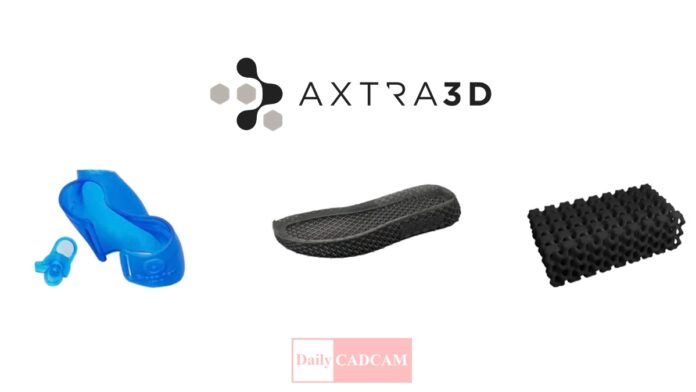
The newly qualified materials expand Axtra Solutions into production-grade elastomer applications through collaborations with ecosystem partners Loctite and ForwardAM. These include Loctite 3D IND475, Loctite 3D Med414, and Ultracur3D EL 4000, now qualified for use as part of the Axtra Solutions portfolio and ready for purchase in the states.

Axtra3D’s Head of Materials and Process, Gioia Della Giustina, commented: “We saw customer demand for an expanded elastomeric portfolio through Axtra Solutions, especially after we launched these elastomers for our European customers at FormNext last November. Bringing these materials to the U.S. market strengthens our partnerships with Loctite and ForwardAM and expands our material ecosystem with best-in-class options for elastomeric applications.”

All three materials are now available in the United States as part of the Axtra3D portfolio.

Loctite 3D IND475 is an industrial-strength, single-component UV resin that cures into a soft Shore 48A elastomer. It delivers high resilience, strong energy return, and dependable snap-back performance. Designed for durability and tear resistance, the material prints efficiently with low shrinkage and supports production-grade elastomeric parts, including complex lattice structures and functional prototypes. This black material is well suited for applications such as air and dust gaskets, flexible seals and housings, and cushioning pads, maintaining elastomeric behavior under repeated load.

Loctite 3D Med414 is a medical-grade Shore 50A resin engineered for elastomeric performance in healthcare environments. The material offers a strong balance of elongation, tear strength, and durability, along with torsional flexibility and true elastomeric behavior. Available in blue, Med414 supports regulated applications requiring consistent performance and safety. With 240% elongation, it is ideal for fitted medical and patient-facing parts such as soft interface components, skin-contact wearables, flexible seals, and functional medical device elements.

The third new material, Ultracur3D EL 4000 from ForwardAM, is a high-performance elastomeric resin designed for durability and flexibility. With Shore 90A hardness, 160% elongation at break, and 49 N/mm tear strength, it is well suited for demanding applications including footwear components, bike saddles, and cushioning pads. The material also supports the production of intricate flexible parts for both prototyping and end-use applications.

Axtra Workflow

Alongside, the company is opening U.S. pre-orders for Axtra Workflow, which includes its flagship Wash and Cure units equipped with Axtra.Insight.

Axtra3D NA

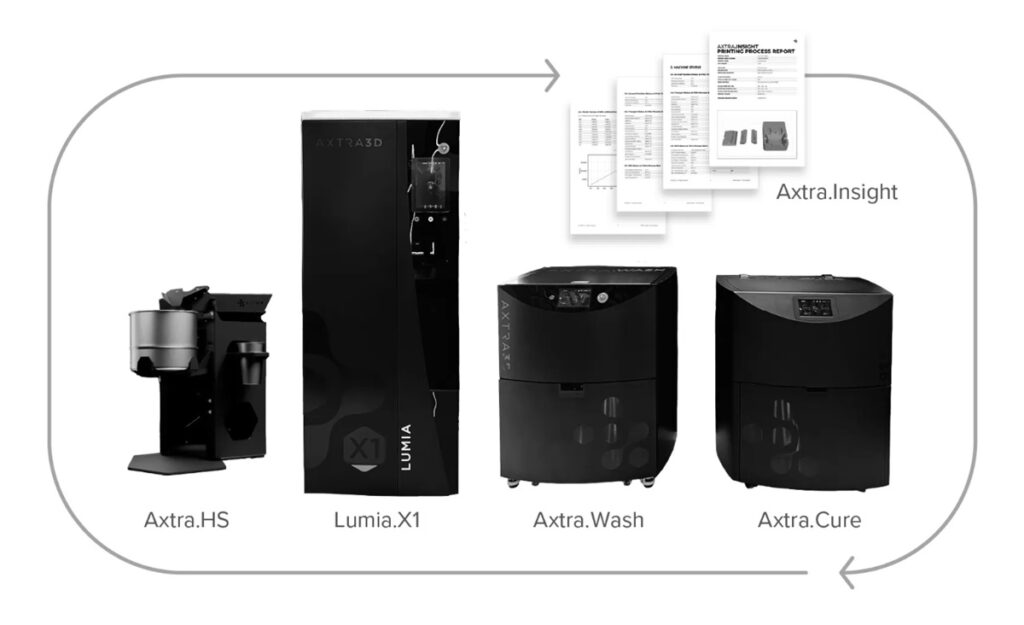
Axtra.Workflow is a fully connected and validated end-to-end additive manufacturing ecosystem that links build setup, printing, post processing, inspection, and data-driven traceability into a single production backbone, including two new machines, Axtra.Wash and Axtra.Cure, and a new process visibility and connectivity platform, Axtra.Insight. The new workflow and materials are now available across the North Americas market.

Chief Strategy Officer at Axtra3D, Rajeev Kulkarni says “Manufacturers need more than one-off print wins. They need validated, repeatable workflows that scale for production. Axtra Workflow solves that problem by tightly integrating printing and processing hardware, materials, and software into a learning, traceable production system. The new products, and the workflow intelligence from Axtra.Insight, users benefit from a fully connected and validated setup from design to final product. It reduces errors and rework, streamlines throughput, enhances part quality, and facilitates traceability for regulatory compliance and quality assurance. It truly enables scalable, repeatable production for any batch size.”

Axtra.Wash & Axtra.Cure are new additions to the portfolio. Each product is designed and validated to operate within the Axtra Workflow ecosystem, while also supporting interoperability with other OEM systems where appropriate.

Axtra.Wash is a fully automated wash and dry station that supports up to three cleaning agents across multiple tanks, which imports validated material-specific wash/dry profiles from the software and printer to reduce manual guesswork.

Axtra.Cure is a combined UV and thermal curing system that consolidates post-cure and heat treatment in a single device. The UV chamber provides three independently controlled wavelength bands (355, 385, 405 nm) with dual photosensor verification and up to 250 °C thermal cycles.

Axtra.Insight is a process visibility and connectivity platform. It provides real-time process visibility and analytics platform that aggregates data from more than 155 onboard and peripheral sensors across the entire workflow. It delivers layer-level process monitoring, predictive maintenance, MES integration, fleet reporting, and complete job history exports for quality systems. The platform correlates TruLayer and HPS sensor data for auditable production outcomes.

The entire Axtra.Workflow is now available for sale in the United States as part of the Axtra3D portfolio, with Axtra.Wash and Axtra.Cure scheduled to ship in the beginning of Q3, 2026.

If you do not yet have a LumiaX1 3D printer, you can also use Axtra.Wash and Axtra.Cure, independently with your other photopolymerization 3D printers.

About Axtra3D

Based in the US and Italy, Axtra3D is a global company specializing in Hi-Speed SLA systems that eliminates tradeoffs between print throughput, accuracy, feature resolution, and surface finish, typically found in traditional SLA or DLP systems.

The flagship LumiaX1 Hi-Speed SLA system by Axtra3D represents a significant advancement, combining its Hybrid PhotoSynthesis resin polymerization process with TruLayer, a layer separation technology. HPS utilizes both a laser and a DLP to image simultaneously, while TruLayer enables rapid detachment of the active print layer, resulting in a 20X throughput improvement while preserving the accuracy and fidelity of SLA parts.

Axtra3D operates with two business models.

Axtra Solutions: This model provides fully optimized, turnkey 3D printing solutions. Customers receive complete print profiles fine-tuned for maximum performance and reliability, supported by Axtra3D’s Applications team and quality material partners.

Axtra OpenAccess™: This model further builds on Axtra Solutions™ and allows customers the flexibility to experiment with new materials and applications. It supports innovation and adaptability, enabling added flexibility.

Learn more at https://axtra3d.com.

Spring Update 2026: Faster, Clearer, More Intuitive – the New Features on 3Dfindit

0
MVAD

Spring is finally here, and with it comes our latest 3Dfindit update. This update not only
brings greater speed and clarity, but also practical new features that make everyday
work much easier. From an optimized onboarding process to improved comparisons
and intelligent search features.

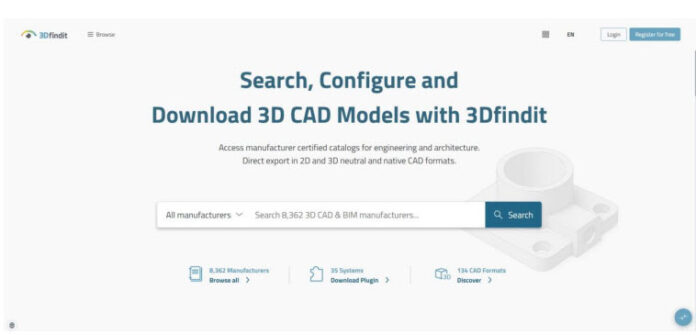
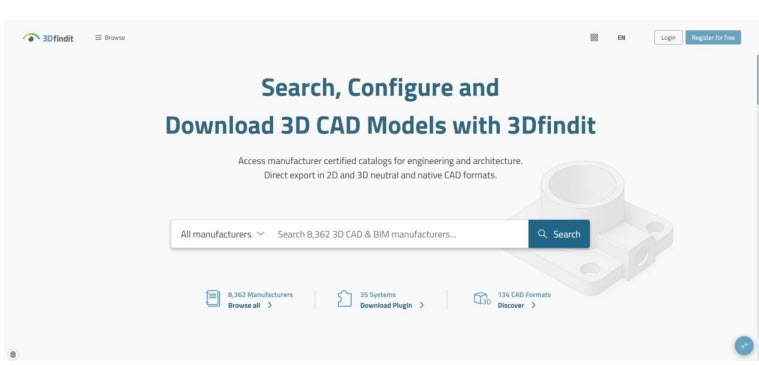
  1. Redesigned navigation & home page – more modern, streamlined, focused

    To make getting started with 3Dfindit as intuitive as possible, the entire upper page
    structure has been redesigned. On the other subpages, the search bar remains in the
    upper area as usual, but is now much more streamlined and clearer overall.
    The result: a tidy interface that puts the search at the center.

The highlights:
o Centrally located search bar for an immediate start.
o Reduced header that takes up less space.
o Direct access to all search methods.
o New browsing sidebar that facilitates access to overviews and classifications.

MVAD
  1. Automatic recommendations after download – find matching components
    faster

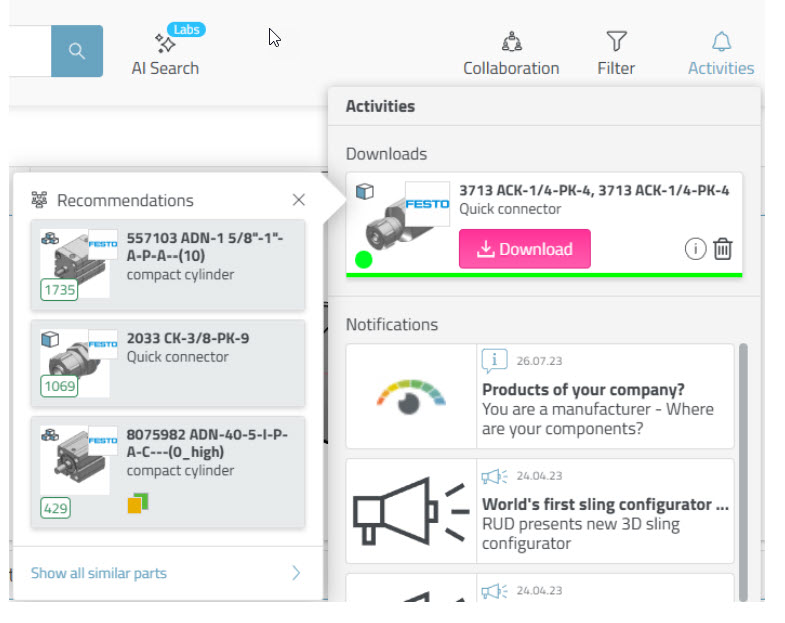
    After downloading a component, 3Dfindit now automatically displays matching
    components that are frequently used together or are functionally compatible.
    This means:
    o Less manual searching
    o Faster assembly of components
    o More relevant results at exactly the right moment
    This feature saves a noticeable amount of time, especially for complex projects
DCAD
  1. New feedback and problem form – support more directly accessible
    Get immediate help in any application situation:
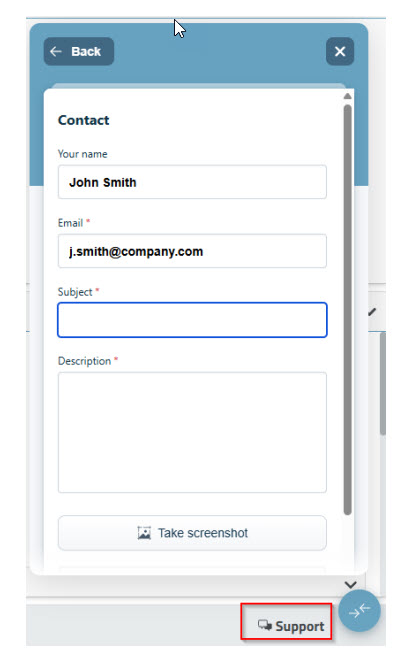
    Direct access to support is now available in the lower right corner of each page.
    Whether you have feedback, a question, or a specific problem, the new form allows you
    to quickly submit your concerns to the service portal. No detours, no extra searching.
FCAD
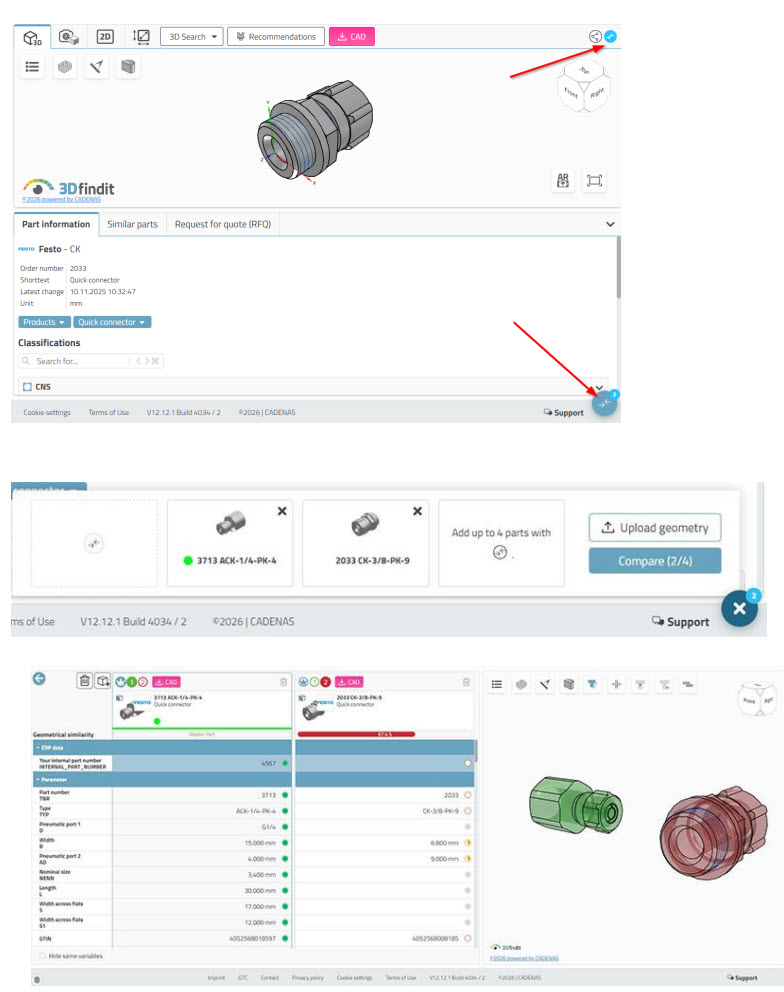
  1. Revised visualization in component comparison – clearer and more intuitive
    The component comparison has been fundamentally modernized. In particular, the new,
    compact component selection at the top of the screen makes it easier to get an
    overview.

The advantages:
o Clearer structure
o Visually more understandable presentation
o Faster comparison of multiple variants
The new comparison is significantly more efficient and user-friendly, especially for
similar components.

GXss
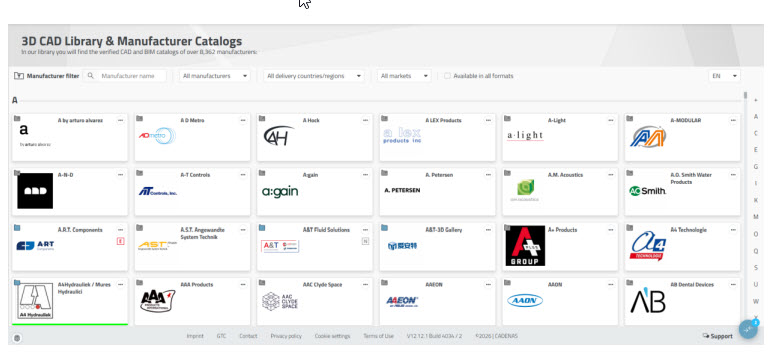
  1. Manufacturer overview sorted alphabetically again
    The manufacturer overview has been streamlined and now follows a clear alphabetical
    order again.
    Instead of different categories (gold, silver, etc.), there is now a simple, logical A-Z
    structure.
    Quality seals remain available; they have been moved to a separate filter above the
    overview.

This ensures:
o Faster orientation
o Consistent structure
o Easier filtering by manufacturer quality

Dvcad
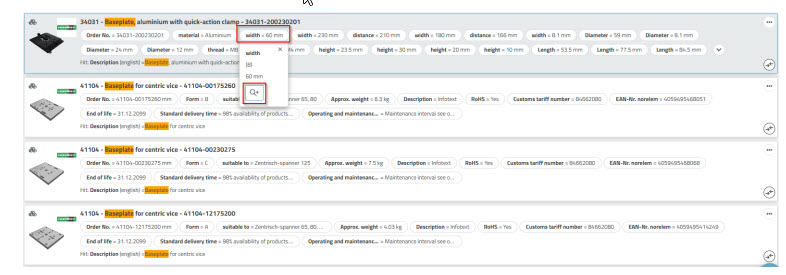
  1. New “attribute labels” in the search – faster filtering without effort
    A real highlight of the release:
    A product’s configuration parameters are now displayed directly as small, clickable
    labels below the product.

How it works:
o Values such as width, diameter, height, length, or specific attributes are
automatically displayed.
o Clicking on a value adds it directly to your current search.
o No more additional navigation in filter menus.
The labels work both in the list view and in the detail view within the grid display.
This makes searching noticeably faster and more intuitive, especially when you want to
narrow down components according to very specific parameters.

Bcad

Stay up to date!
Follow us on LinkedIn so you don’t miss any new updates or new manufacturers on
3Dfindit.
Take a look at our new interface and redesigned website and experience 3Dfindit in an
even more intuitive version.

Guest Post by CADENAS GmbH   

SSAB Opens Steel Service Center in Mumbai

0
Mumbai

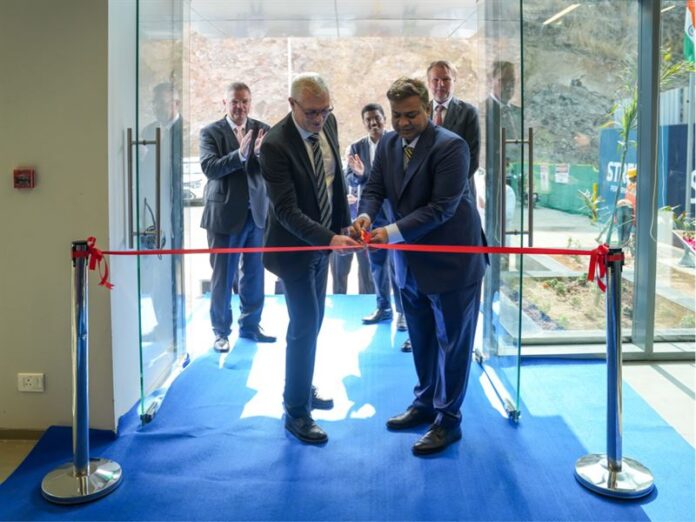
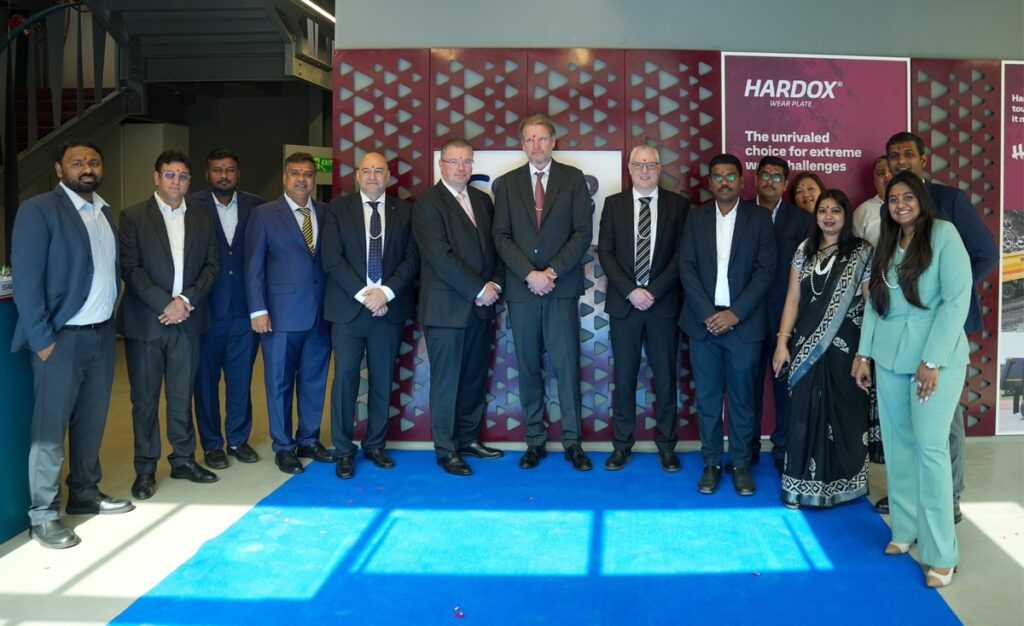
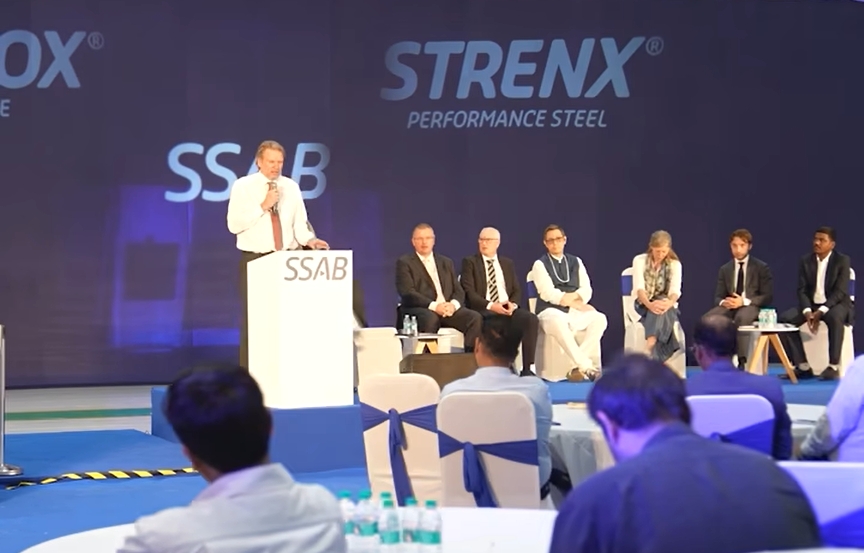
MUMBAI, India, Mar 23, 2026 – SSAB has opened a new steel service center in Mumbai, India dedicated to producing and supplying parts, kits and advanced components made from Hardox wear plate and Strenx performance steel, together with the specialized workshop processing that manufacturers need.

Mumbai

The facility will support Indian manufacturers of transport, construction and lifting equipment by providing ready-to-assemble components made from these two globally recognised steels:

  • Hardox Wear Plate: The world’s leading abrasion-resistant steel, engineered to maximize payload capacity and extend service life in demanding applications such as tippers and rock bodies.
  • Strenx Performance Steel: A high-strength structural steel used to build lighter, stronger and more sustainable equipment including trailers, cranes and lifting booms.

By combining these advanced steels with local processing capabilities, the Mumbai Service Center enables manufacturers to source finished components and kits that improve durability, reduce fabrication time and increase productivity.

Specialised High-Strength Steel Solutions for Transport and Lifting

The SSAB Mumbai Service Center focuses on supplying ready-to-assemble kits and precision-processed components made from Hardox and Strenx steels, enabling body builders to streamline production and enhance equipment performance.

Typical applications include:

  • Box and Rock body tippers
  • Tipping trailers
  • Booms for lifting equipment

The facility also supports designs that require specialized bending of high-strength Hardox or Strenx plate – an increasingly important capability for lightweight rock bodies and other advanced equipment designs. 

Strategic Location and Capacity

Located in an industrial park with convenient access to Mumbai, Navi Mumbai and Thane, the new center includes a 100,000 sq. ft. centralised warehouse with storage capacity for more than 10,000 tonnes of steel plate.

Supporting India’s Transport and Infrastructure Growth

The Mumbai Service Center is strategically positioned to support India’s rapidly growing transport, infrastructure and construction equipment sectors. By combining world-class steel with ready-to-assemble kits, processing capabilities and technical support, SSAB aims to help manufacturers enhance productivity and deliver high-performance equipment.

3492

“Our new Service Center in Mumbai is designed to support customers with ready-made kits for transport equipment such as tippers and lifting booms,” says Subodh Shinde, Country Head, India. “By combining SSAB’s premium steels with precision processing and technical expertise, we aim to simplify manufacturing and help our customers achieve higher productivity and performance.”

Buying Genuine SSAB Steel Products in India

SSAB reaffirms its commitment to delivering genuine Hardox wear plate, wear parts, and Strenx performance steel in India exclusively through authorised channels to ensure its product authenticity, performance and compliance.

Customers can source products directly from SSAB’s local stocks or mills, through Kamlesh Metal & Alloy the sole authorised distributor or via more than 20 Hardox Wearparts Centers nationwide.

About SSAB

SSAB is a Nordic and US-based steel company that builds a stronger, lighter and more sustainable world through value added steel products and services. Working with our partners, SSAB has developed SSAB Fossil-free steel and plans to reinvent the value chain from the mine to the end customer, largely eliminating carbon dioxide emissions from our own operations. SSAB Zero™, a largely carbon emission-free steel based on recycled steel, further strengthens SSAB’s leadership position and our comprehensive, sustainable offering independent of the raw material. SSAB has employees in over 50 countries and production facilities in Sweden, Finland and the US. SSAB is listed on Nasdaq Stockholm and has a secondary listing on Nasdaq Helsinki. For more information, visit https://www.ssab.com.

Sustainability-Driven Product Design: Building Smarter and Future-Ready Products

0
DAILYCADCAM INDIA

Sustainability is no longer an optional consideration in product development—it has become a fundamental design requirement. For manufacturing companies, especially those targeting global markets, integrating sustainability into product design is essential for long-term growth, regulatory compliance, and competitive advantage. For DailyCADCAM readers, the shift is clear: sustainability must be embedded right from the concept stage, not added later as an afterthought.

Traditionally, product design focused on performance, cost, and manufacturability. Today, environmental impact across the entire product lifecycle has become equally important. Engineers must consider how a product affects the environment from raw material extraction to manufacturing, usage, and eventual disposal. This lifecycle thinking ensures that sustainability is not limited to one phase but is integrated throughout the product’s journey.

Material selection plays a crucial role in sustainable product design. Choosing recyclable, lightweight, and low-carbon materials can significantly reduce environmental impact. For example, using recycled metals or advanced lightweight materials not only reduces emissions but can also improve product efficiency, particularly in industries like automotive and aerospace. The right material decisions at the design stage can influence both sustainability and cost-effectiveness over the long term.

Manufacturing efficiency is another key aspect of sustainable design. By optimizing product geometry, reducing unnecessary components, and simplifying assembly processes, companies can minimize material waste and energy consumption. These improvements not only support environmental goals but also enhance productivity and reduce operational costs, making sustainability a practical business strategy rather than just a compliance requirement.

Modern digital engineering tools are playing a significant role in enabling sustainable design. Platforms such as SOLIDWORKS, CATIA, NX, and Teamcenter X allow engineers to simulate product performance, optimize material usage, and evaluate environmental impact early in the design process. These tools help teams make informed, data-driven decisions, reducing the need for physical prototyping and minimizing waste.

A growing trend in sustainable design is the shift toward a circular economy. Instead of the traditional “make–use–dispose” approach, products are now being designed for reuse, refurbishment, and recycling. Designing for disassembly, for example, makes it easier to recover valuable materials at the end of a product’s life. This approach not only reduces waste but also creates opportunities for cost savings and new business models.

Energy efficiency during the usage phase is another critical factor. For many products, the majority of environmental impact occurs during operation rather than manufacturing. By designing energy-efficient systems—such as optimized motors, thermal management solutions, and lightweight structures—engineers can significantly reduce a product’s lifetime emissions while improving performance and reliability.

For Indian manufacturing companies, sustainability is increasingly becoming a key differentiator in global markets. Customers and partners now expect environmentally responsible products, and regulations are becoming stricter. Companies that integrate sustainability into their design processes are better positioned to meet these expectations, enhance their brand image, and expand internationally.

Despite its benefits, implementing sustainable design does come with challenges. Limited access to sustainable materials, higher initial costs, and a lack of expertise can slow adoption. However, as awareness grows and technology advances, these barriers are gradually being reduced. Companies that invest early in sustainable design practices are likely to gain a significant advantage in the future.

In conclusion, using sustainability as a core product design factor is not just about reducing environmental impact—it is about creating smarter, more efficient, and future-ready products. As manufacturing continues to evolve, sustainability will play a central role in shaping design decisions. The companies that embrace this shift today will be the ones leading the industry tomorrow.

Thank you,

DailyCADCAM

India Enters Global Top Ten in Robot Installations: Accelerating Manufacturing Transformation

0
Topten

India has reached a significant milestone in its industrial automation journey—emerging as one of the top global markets for industrial robot installations, according to the latest report by the International Federation of Robotics. This achievement highlights the country’s accelerating shift toward smart manufacturing, Industry 4.0, and global competitiveness.


India’s Rise in Global Robot Installations

The World Robotics 2025 report reveals that India installed approximately 9,100 industrial robots in 2024, marking a steady growth of about 7% compared to the previous year.

This growth has propelled India to the 6th position globally in annual robot installations, placing it firmly within the top ten robot markets worldwide.

This is a remarkable progression considering:

  • India ranked 7th in 2023 with 8,510 units installed
  • The country has steadily climbed the global rankings in recent years

In terms of total operational robots, India now has over 52,000 industrial robots in use, ranking around 10th globally.


Global Context: A Booming Robotics Market

Globally, industrial robot adoption continues to surge. The IFR report states that over 542,000 robots were installed worldwide in 2024, more than double the number a decade ago.

Asia dominates this growth:

  • 74% of global robot installations are in Asia
  • China alone accounts for 54% of global demand

Within this landscape, India stands out as one of the fastest-growing emerging markets, indicating strong long-term potential.


Key Drivers Behind India’s Growth

1. Automotive Industry Leading the Way

The automotive sector remains the largest driver of robot adoption in India, accounting for approximately 45% of total installations.

Applications include:

  • Spot welding
  • Assembly automation
  • Painting and material handling

With the rise of EV manufacturing, automation demand is expected to grow even further.


2. Expansion into New Industries

While automotive dominates, other sectors are rapidly adopting robotics:

  • Electronics and semiconductor manufacturing
  • Metal fabrication and machining
  • Chemicals and pharmaceuticals

 This diversification indicates that robotics is no longer limited to large OEMs.


3. Push for Industry 4.0 and Digital Manufacturing

Indian manufacturers are increasingly investing in:

  • Smart factories
  • Digital twins
  • Automation and robotics

Government initiatives such as Make in India and Production Linked Incentive (PLI) schemes are also accelerating adoption.


4. Labor and Productivity Factors

Rising labor costs in organized manufacturing and the need for consistent quality are pushing companies toward automation.

Robots help:

  • Improve productivity
  • Reduce errors
  • Ensure repeatability

The Opportunity: High Growth Potential Ahead

Despite entering the top ten, India still has significant room for growth.

One of the most telling metrics is robot density (robots per 10,000 workers):

  • India: ~5–7
  • Global average: 162
  • South Korea: 1,000+

This gap highlights a massive opportunity for expansion.

India is expected to:

  • Cross 10,000+ annual installations soon
  • Potentially double adoption by the end of the decade

Challenges to Address

While growth is strong, several challenges remain:

  • Low robot density compared to global leaders
  • High initial investment for SMEs
  • Skill gaps in robotics programming and integration
  • Limited awareness in smaller manufacturing units

Addressing these challenges will be critical to sustaining momentum.


Impact on Indian Manufacturing

India’s entry into the global top ten for robot installations signals a major shift:

1. Increased Global Competitiveness

Automation enables Indian manufacturers to meet international quality standards and compete globally.

2. Faster Production & Scalability

Robots allow companies to scale production efficiently while maintaining consistency.

3. Improved Quality & Precision

Automation reduces defects and improves repeatability in manufacturing processes.

4. Attraction of Global Investments

A strong automation ecosystem makes India more attractive for global manufacturing investments.


India’s rise into the global top tier of robot installations is a clear indicator of its transformation into a modern manufacturing hub. With strong growth in industrial automation, increasing adoption across sectors, and supportive government policies, the country is well-positioned to become a major force in global manufacturing.

However, the journey is just beginning. Bridging the gap in robot density, expanding adoption among MSMEs, and building a skilled workforce will be key to unlocking India’s full potential.

Download International Federation of Robotics Report 2025 – https://ifr.org/ifr-press-releases/global-robot-demand-in-factories-doubles-over-10-years

Keysight Introduces AI Inference Emulation Platform to Validate, Optimize AI Infrastructure 

0

SANTA ROSA, CA, USA, Mar 20, 2026 – Keysight Technologies, Inc. (NYSE: KEYS) introduced Keysight AI Inference Builder (KAI Inference Builder), an emulation and analytics platform designed to validate inference-optimized AI infrastructure at scale. Keysight will demonstrate the solution at NVIDIA GTC, showcasing operation within NVIDIA DSX Air AI factory simulation environments to model and optimize AI data center infrastructure, architectures, and performance. 

As the AI industry shifts from training large language models (LLMs) to deploying them, optimizing inference has become a crucial factor for ROI. However, inference behavior is highly dynamic and difficult to emulate. Traditional testing methods like synthetic traffic generation or GPU benchmarks cannot accurately reproduce the latency-sensitive workload behavior of AI inferencing across compute, networking, memory, storage, and security layers. 

KAI Inference Builder closes that gap by recreating realistic inference workload patterns and modeling industry-specific usage patterns to validate AI infrastructure, applications, and data center deployments. The platform gives AI cloud providers, hardware vendors, and application developers a scalable solution for measuring, validating, and optimizing real-world inference performance. 

Key benefits of KAI Inference Builder include: 

  • Built for the Inference Era: As part of the Keysight Artificial Intelligence (KAI) portfolio, KAI Inference Builder emulates AI inference workloads at scale and validates full-stack deployments under real-world conditions to optimize performance, scale, and security. 
  • Industry- and Application-Specific Benchmarking: Instead of generic emulations, KAI Inference Builder emulates industry-specific usage patterns and LLM architectures for AI models seen in finance, healthcare, and other verticals, enabling organizations to model and analyze infrastructure and application behavior across different types of AI data center deployments. 
  • End-to-End Validation and Optimization: KAI Inference Builder evaluates inference workflows from user request to model response, helping teams reduce costly rework by identifying and resolving bottlenecks early across compute, network, and security layers. 
  • Subsystem Isolation and Root-Cause Precision: KAI Inference Builder can also do client-only emulation, which identifies where performance bottlenecks emerge across the AI infrastructure stack under load, enabling targeted optimization that reduces overprovisioning, lowers costs, and improves overall efficiency. 
  • NVIDIA DSX Air Integration and Live GTC Demo: Keysight will showcase KAI Inference Builder’s turnkey integration with NVIDIA Air at NVIDIA GTC, generating realistic inference workloads throughout NVIDIA’s data center simulation environment so operators can validate inference infrastructure before deploying physical equipment. 

Ram Periakaruppan, Vice President and General Manager, Network Test & Security Solutions at Keysight, said: “Inference is the key to unlocking AI’s ROI, but that can be challenging to achieve when system resources aren’t optimized for capacity and performance. KAI Inference Builder provides visibility into real-world inference performance across the full stack, enabling customers to validate and optimize deployments before hardware reaches the rack. Showcasing this capability at NVIDIA GTC using NVIDIA’s Air platform demonstrates how organizations can accelerate the path to production while reducing risk and cost.” 

Amit Katz, VP of Networking at NVIDIA, said: “As AI data centers scale to unprecedented levels, pre-deployment validation has transitioned from a best practice to a mission-critical requirement. The integration of KAI Inference Builder with NVIDIA DSX Air provides the essential environment needed to eliminate performance volatility, and enables NVIDIA AI Factory partners and customers to emulate real inference workloads and preemptively resolve bottlenecks, ensuring optimized AI services reach the market quickly.” 

About Keysight Technologies   

At Keysight (NYSE: KEYS), we inspire and empower innovators to bring world-changing technologies to life. As an S&P 500 company, we’re delivering market-leading design, emulation, and test solutions to help engineers develop and deploy faster, with less risk, throughout the entire product life cycle. We’re a global innovation partner enabling customers in communications, industrial automation, aerospace and defense, automotive, semiconductor, and general electronics markets to accelerate innovation to connect and secure the world. Learn more at Keysight Newsroom and www.keysight.com

SimScale, AI Engineering Collaborate on Cloud-based Simulation Powered by NVIDIA AI Infrastructure

0

MUNICH, Germany, Mar 20, 2026 — SimScale, the world’s first AI-native cloud engineering simulation platform, announced a strategic collaboration with AI Engineering GmbH to integrate the PAMICS solver into the SimScale ecosystem. Leveraging accelerated computing on NVIDIA AI infrastructure, the integration removes meshing bottlenecks and dramatically reduces simulation runtimes for complex industrial applications that have traditionally struggled with grid-based methods, delivering simulation speeds 10-20x faster. 

By combining AI Engineering’s state-of-the-art Smoothed Particle Hydrodynamics (SPH) solver with SimScale’s cloud-native infrastructure, this partnership aims to democratize access to high-fidelity, meshless Computational Fluid Dynamics (CFD). 

This performance leap further positions SimScale as a high-velocity source of synthetic physics data, enabling teams to generate the scale and fidelity required for Physics AI model training and predictive Digital Twins. By combining cloud-native simulation, centralized data management, and accelerated computing, SimScale helps lay the foundation to train the next generation of AI models. This foundation supports downstream Physics AI workflows across the NVIDIA ecosystem, including physics-informed models built directly in SimScale with NVIDIA PhysicsNeMo.

The integration also supports advanced visualization workflows across the NVIDIA ecosystem, including compatibility with applications built on NVIDIA Omniverse libraries to deliver photorealistic, physically-based rendering and immersive review of simulation results. This allows engineering teams to more easily visualize, communicate, and validate complex fluid behavior as part of broader Digital Twin workflows.

Designed to handle complex, highly dynamic fluid behavior that is difficult to capture with traditional simulation methods, the PAMICS solver utilizes a Lagrangian Smoothed Particle Hydrodynamics (SPH) approach, allowing engineers to simulate fluid dynamics directly from raw CAD geometries without the need for meshing. This accelerates simulation workflows for complex multiphase and free surface flows, particularly in scenarios involving arbitrary motion, fluid-structure interaction and splashing that are difficult or impractical to model with traditional grid-based methods. Critical use cases include:

  • Rotating Machinery & Powertrains: Accurately predicting oil lubrication and cooling in complex gearboxes and high-power electric motors without geometry simplification.
  • Industrial Mixing & Processing: Modeling multiphase flows, surface tension effects, and non-Newtonian fluids in mixers, agitators, and food processing equipment.
  • Water Management: Simulating vehicle wading, soiling, and contamination management for consumer, off-highway and industrial vehicles.

“At SimScale, our mission is to empower engineers to explore thousands of engineering decisions in seconds,” said David Heiny, CEO of SimScale. “By integrating AI Engineering’s sophisticated PAMICS solver, we are bringing a true ‘no-mesh’ workflow to the cloud, removing one of the biggest bottlenecks when it comes to simulating complex fluid dynamics with moving assemblies. Combined with accelerated computing on GPUs and Physics AI workflows, this enables our customers to build their own synthetic data engines, accelerating their path to predictive Digital Twins.

“We developed PAMICS to handle the most demanding fluid dynamics challenges where traditional methods fail—specifically where complex motion and free surfaces interact,” said Dr.-Ing. habil. Stefan Adami, CEO of AI Engineering GmbH. “Joining forces with SimScale allows us to scale this technology globally. As a member of NVIDIA Inception, we have optimized PAMICS to extract maximum performance from NVIDIA GPUs. Delivering this through SimScale’s browser-based platform means engineers in the industrial and manufacturing sectors will be able to access high-end SPH capabilities instantly, without investing in expensive local hardware.”

About SimScale 

SimScale is the world’s first AI-native cloud platform for engineering simulation. Trusted by over 800,000 users globally, SimScale empowers engineering teams to innovate faster by exploring thousands of design decisions in seconds. By integrating Engineering AI workflows with high-fidelity CFD, FEA, Electromagnetics, and Thermal simulation in a single cloud platform, SimScale eliminates the constraints of on-premise hardware and software, helping customers engineer the irreplaceable. For more information, visit www.simscale.com.

About AI Engineering GmbH

AI Engineering GmbH is a pioneer in advanced simulation solutions, specializing in Smoothed Particle Hydrodynamics (SPH) and AI-enhanced engineering tools. AI Engineering leverages cutting-edge GPU acceleration to deliver PAMICS®, a robust meshless solver designed for complex industrial fluid dynamics. For more information, visit www.ai-eng.com.

Teamcenter X: Enabling Secure, Scalable, and Resilient Product Development in the Cloud

0
TEAMCENTERX

In today’s competitive manufacturing environment, managing product data efficiently is just as important as designing the product itself. As organizations adopt digital engineering practices, Product Lifecycle Management (PLM) has become the backbone that connects design, simulation, manufacturing, and service. Modern product development is no longer confined to a single location or team—it is distributed, fast-paced, and highly data-driven. In this context, cloud-based PLM solutions are gaining strong momentum.

Teamcenter X from Siemens represents this shift toward next-generation PLM. Delivered as a Software-as-a-Service (SaaS) solution, Teamcenter X enables companies to manage their entire product lifecycle on the cloud—without the complexity of traditional on-premise systems. For engineering and manufacturing teams, especially those reading DailyCADCAM, this means faster deployment, lower IT overhead, and the ability to scale operations as the business grows.

One of the most significant advantages of Teamcenter X is its cloud-native architecture. Unlike conventional PLM systems that require heavy infrastructure and maintenance, Teamcenter X runs entirely on secure cloud environments. This allows organizations to access data from anywhere, collaborate in real time, and benefit from automatic updates without disrupting workflows. For growing companies and startups, this eliminates the need for dedicated IT teams to manage servers, making PLM adoption much more practical and cost-effective.

Another critical capability is centralized product data management. In most manufacturing environments, data is scattered across multiple systems—CAD files on local machines, BOMs in spreadsheets, and simulation data in separate tools. Teamcenter X brings all this information into a single, unified platform. It acts as a “single source of truth,” ensuring that every stakeholder—from design engineers to manufacturing teams—works with the most up-to-date and accurate data. This not only improves efficiency but also reduces costly errors caused by version mismatches.

Teamcenter X also excels in multi-CAD integration, allowing companies to manage data from various design tools such as NX, SOLIDWORKS, Inventor, PTC Creo, and CATIA. This is particularly important in real-world scenarios where different teams or suppliers may use different CAD systems. By integrating all design data into one platform, Teamcenter X enables seamless collaboration across the supply chain and avoids the challenges of working in isolated environments.

Collaboration itself becomes significantly more efficient with Teamcenter X. Since the platform is cloud-based, teams can work together regardless of location. Engineers, managers, and suppliers can access the same data, track changes, and participate in approval workflows in real time. This is especially valuable for companies operating in hybrid or distributed work models, where coordination across locations is essential for maintaining productivity and meeting deadlines.

Equally important is the security and reliability offered by Teamcenter X. Product data is one of the most valuable assets for any manufacturing company, and protecting it is critical. With enterprise-grade cloud security, controlled access, and automated backups, Teamcenter X ensures that data is always protected and recoverable. This level of security is difficult to achieve with traditional on-premise systems, particularly for smaller organizations.

A compelling example of this can be seen in a fast-growing EV startup based in Bangalore. The company had built a strong engineering team of over 150 design and simulation professionals, working intensively on developing their product. From the beginning, they adopted Teamcenter X to manage all their product data—CAD models, simulation results, and BOMs—on the cloud. After nearly 15 months of development, an unexpected incident occurred: a short circuit led to a fire in their office, damaging systems and infrastructure.

In many traditional setups, such an incident could have resulted in catastrophic data loss, setting the company back by months or even years. However, because the startup was using Teamcenter X, all their data was securely stored in the cloud. Despite losing physical systems, they experienced zero data loss. Within a short time, the team resumed work by accessing their data from new systems, without needing to recreate designs or recover lost files. This real-world scenario highlights the importance of cloud PLM in ensuring business continuity and risk mitigation.

For the Indian manufacturing ecosystem, especially in sectors like electric vehicles, industrial machinery, and aerospace, solutions like Teamcenter X offer significant advantages. Companies can adopt advanced PLM capabilities without heavy upfront investment in IT infrastructure. At the same time, they gain the ability to scale operations, collaborate globally, and maintain high levels of data security. This is particularly relevant for startups and MSMEs looking to compete on a global stage.

Ultimately, Teamcenter X is more than just a PLM system—it is a digital backbone for modern product development. By combining cloud technology, data management, and collaboration, it enables organizations to innovate faster, reduce risks, and operate more efficiently. As manufacturing continues to evolve toward digital and connected ecosystems, cloud PLM platforms like Teamcenter X will play a crucial role in shaping the future of engineering and product development.

In a world where data drives innovation, the ability to protect, manage, and access that data from anywhere is a game-changer. Teamcenter X ensures that even in the face of unexpected challenges, product development continues uninterrupted—making it a powerful solution for companies looking to build resilient and future-ready engineering operations.

Try Teamcenter X – https://www.siemens.com/en-us/products/teamcenter/teamcenter-x-cloud-plm/

For Pricing and more details visit – Siemens Website – https://www.siemens.com/en-us/products/teamcenter/teamcenter-x-cloud-plm/teamcenter-x-plans-and-pricing/