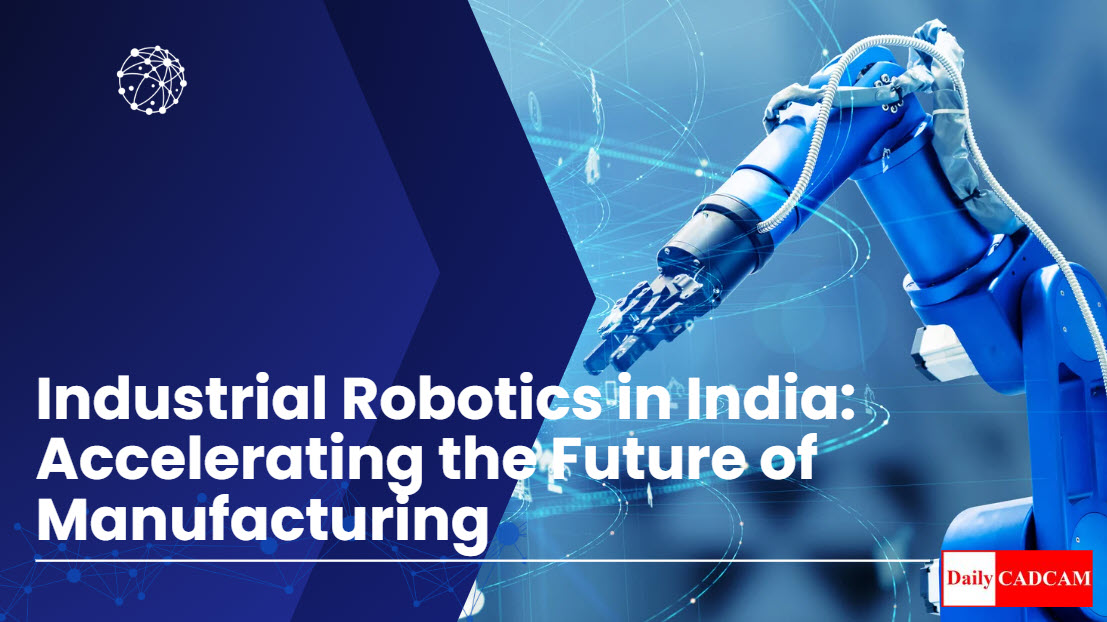
Industrial robotics is rapidly transforming the manufacturing landscape in India. As companies strive to improve productivity, maintain consistent product quality, and enhance workplace safety, robots are becoming a critical part of modern factories. Traditionally, Indian manufacturing relied heavily on manual labor, but with rising global competition and the push toward smart manufacturing, the adoption of robotics and automation is steadily increasing across multiple sectors.
Growing Adoption Across Industries
India’s industrial robotics market has gained momentum in recent years, especially in sectors such as automotive, electronics, pharmaceuticals, and metal fabrication. Manufacturing hubs like Pune, Chennai, and Bengaluru have seen significant deployment of robotic systems in production lines.
For example, automotive manufacturers in Pune widely use robots for spot welding, painting, and assembly operations. In many automotive plants, hundreds of robots operate simultaneously to perform precise welding operations on car body panels, ensuring uniform quality and faster production cycles.
Electronics manufacturing is another sector where robotics is gaining traction. Companies assembling smartphones, consumer electronics, and electronic components increasingly use robots for precision assembly, soldering, and inspection tasks. These robots can work with microscopic components and maintain extremely high accuracy levels.
Real-World Examples of Robotics in Indian Industry
Several companies in India have successfully implemented industrial robotics to improve efficiency and productivity.
- Automotive Manufacturing:
Global robotics leaders such as ABB and Fanuc supply robots widely used in Indian automotive plants. For instance, robotic arms perform spot welding on vehicle body structures, ensuring precise weld quality while significantly reducing production time. - Electronics Production:
In electronics manufacturing facilities, robots are used for automated pick-and-place operations where tiny electronic components are placed on printed circuit boards. These robots can place thousands of components per hour with extreme precision. - Metal Fabrication and Machine Shops:
Industrial robots are increasingly used for CNC machine tending, where robots load and unload parts from machines. This allows factories to run production lines continuously, even during night shifts. - Food and Packaging Industry:
Robots are also used in packaging lines to sort, pack, and palletize products. Robotic systems can handle repetitive packaging tasks with speed and accuracy, helping manufacturers increase throughput.
Collaborative Robots: Automation for SMEs
One of the most important developments in industrial robotics is the rise of collaborative robots (cobots). Unlike traditional industrial robots that operate inside safety cages, cobots are designed to work safely alongside human operators. These systems are easier to program, more affordable, and particularly suitable for small and medium-sized enterprises (SMEs).
Companies such as KUKA and Universal Robots offer cobots that are increasingly used for tasks like screw driving, quality inspection, and small assembly operations.
Government Initiatives Supporting Automation
The Indian government is actively encouraging advanced manufacturing technologies through initiatives such as Make in India and Production Linked Incentive Scheme. These programs aim to strengthen India’s manufacturing ecosystem and encourage companies to adopt automation, robotics, and digital technologies.
Benefits of Industrial Robotics
The adoption of industrial robotics offers several key advantages for Indian manufacturers:
- Higher productivity: Robots can operate continuously with consistent performance.
- Improved quality: Automated systems reduce human error and ensure precision.
- Enhanced safety: Robots can perform dangerous tasks such as welding, heavy lifting, or handling hazardous materials.
- Global competitiveness: Automation enables Indian manufacturers to meet international quality standards.
Challenges and Opportunities
Despite its growing adoption, industrial robotics in India still faces certain challenges. High initial investment costs, limited awareness among small businesses, and a shortage of skilled robotics engineers can slow down adoption. However, increasing training programs, technology partnerships, and affordable robotic solutions are helping overcome these barriers.
The Road Ahead
As India moves toward becoming a global manufacturing hub, the role of industrial robotics will become even more important. The integration of robotics with technologies such as artificial intelligence, industrial IoT, and digital twins will further transform manufacturing operations.
In the coming years, Indian factories will increasingly evolve into smart factories, where robots, machines, and digital systems work together to create more efficient, flexible, and intelligent manufacturing environments. For companies looking to remain competitive in the global market, investing in robotics and automation is no longer optional—it is a strategic necessity.
Thank you,
Sachin Nalawade, DailyCADCAM