MCKINNEY, TX, USA, May 21, 2026 – Sigmetrix, experts in mechanical variation management, announced their release of EZtol v3.2.1. This new version offers several enhancements to the standalone version of EZtol as well as EZtol for SOLIDWORKS.
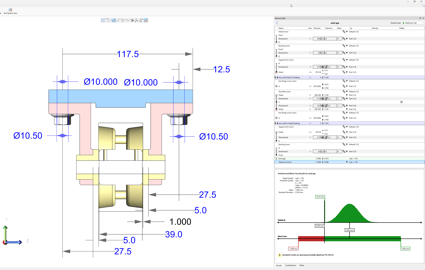
EZtol streamlines 1D tolerance stack-up analysis, making it easy for engineers to quickly calculate, visualize, and validate tolerance impacts without relying on error-prone spreadsheets. The result is faster design cycles, more accurate assemblies, and lower manufacturing risk.
EZtol v3.2.1
Added ability to clone a stackup
EZtol now allows you to create a copy of an existing stackup, and the new copy will remain independent of the original stackup. This can be useful if you want to evaluate the same stackup measurement but with different assembly shift settings (Maximize vs. Minimize), different stackup objectives (Tolerance type or value), or different analysis type (Worst Case vs. RSS).
Added ability to redefine mating features of an existing stackup
EZtol now allows you to redefine mating features in an existing stackup. This can be helpful if you inadvertently selected the wrong feature when initially defining the stackup, or if you want to evaluate a different path of mating features in the part loop of the stackup.
Switch license manager from Reprise to Flexera
EZtol has switched license managers from Reprise to Flexera. This change aligns EZtol with other Sigmetrix products in using Flexera and will simplify license management by consolidating all Sigmetrix solutions on the same license manager.
EZtol for SOLIDWORKS v3.2.1, all of the above plus:
Use of assembly mates to automatically define the stackup dimension sequence
EZtol will interrogate existing mates in the assembly. If at least one path between the start and end features of the stackup can be found, EZtol can use that path to automatically define the stackup dimension sequence. This can save time and streamline the process of generating a new stackup.
Sigmetrix’s comprehensive, integrated portfolio includes other products and services including:
CETOL 6σ, a 3D tolerance analysis solution that works directly with NX, SOLIDWORKS, PTC Creo and CATIA V5-6 models.
EZtol, a 1D tolerance analysis software that works directly with NX, SOLIDWORKS, and CATIA V5-6 models. The same technology is used in PTC Creo’s EZ Tolerance Analysis (EZTA) tool and Autodesk Inventor’s Tolerance Analysis tool.
GD&T Advisor, an interactive tool that provides expert guidance on the correct application of GD&T within the PTC Creo and Autodesk Inventor environments.
Training provided through more than a dozen instructor-led and computer-based courses covering basic to advanced GD&T/GPS, MBE, tolerance analysis, and instructional courses for software developed by Sigmetrix.
Consultation and implementation services team with years of experience in tolerance analysis and GD&T definition offers a variety of consulting services to augment your team, speed your project along and run analyses for your assemblies.
About Sigmetrix
Sigmetrix has been helping companies produce better solutions for over 25 years through a combination of software solutions, training, and consulting services that focus on managing the impact of mechanical variation. For more information, visit their website at https://www.sigmetrix.com.
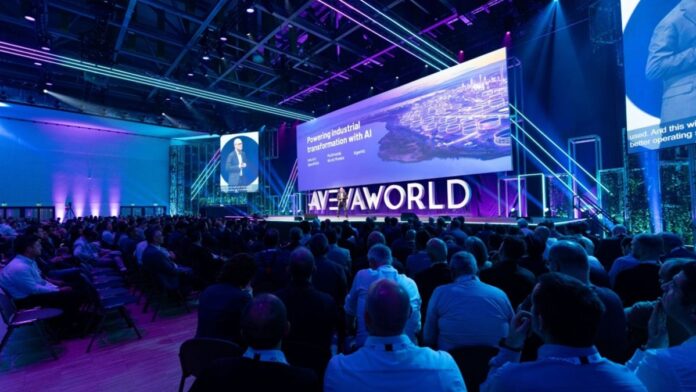
MILAN, Italy, May 21, 2026 – AVEVA, a global leader in industrial software, and the leading global business school, IMD have launched the inaugural Industrial Intelligence Report on Digital Ecosystems and the Future of Connected Industries at AVEVA World 2026 in Milan. In a fireside chat in the mainstage, AVEVA CEO, Caspar Herzberg spoke with IMD Professor Mike Wade about the findings from over 275 interviews with leaders across 12 different sectors worldwide. Encompassing both quantitative analysis and detailed interviews with experts from the Port of Rotterdam, Kwinana in Australia and many others, the report distils how organizations can harness their industrial intelligence to build, orchestrate and scale business ecosystems.
What is industrial intelligence?
The report defines it as organizational capability that integrates operational technology (OT), information technology (IT), and artificial intelligence (AI) to enable connected, data-driven decision-making across entire industrial ecosystems.
The report reveals that while 74% of leaders consider digital ecosystems a top strategic priority, only 27% report sharing data substantially or extensively with ecosystem partners. Several illustrative case studies also emphasize the gap between ambition and execution: integration complexity, legacy systems and weak governance.
The power of industrial intelligence in action
Increasingly, organizations are seeking to construct digital ecosystems to confront higher-order business challenges, whether that is innovating faster, navigating supply volatility, or decarbonizing complex global operations.
Yet, as the research makes clear, the gap between digital ecosystem ambition and execution remains wide. Understanding why that gap persists, and how organizations are beginning to close it, has become a strategic imperative for success in today’s volatile operating environment. Where ecosystems are working, companies are realizing tangible value through harnessing their industrial intelligence. Yet the barriers to success remain challenging, spanning the areas of corporate strategy, governance, and technology.
Caspar Herzberg, CEO, AVEVA explained: “With this collaboration with IMD, our ambition is not merely to understand the motivations behind the move to digital ecosystems, but to define the frameworks, competencies and leadership practices that will concretely enable companies to transcend silos and build more adaptive, ecosystem‑driven operating models.”
“Governance, integration and learning matter more right now than algorithms. Ecosystems are already delivering operational value. The next phase is about converting that foundation into strategic advantage through better data sharing, coordination, clearer roles and more deliberate leadership… Industrial sectors have decades of experience collaborating out of operational necessity. What is changing is that data, AI and connected platforms are turning those collaborations into real‑time, intelligence‑driven systems.” said Michael Wade, Director of IMD Global Center for Digital and AI Transformation and Professor of Strategy and Digital, IMD.
About IMD Business School
IMD has been pioneering leadership development for nearly 80 years. Founded by business for business, we are an independent university institute with Swiss roots and global reach. Operating from Lausanne with strategic hubs in Singapore, Shenzhen, and Cape Town, IMD works with 20,000+ executives from 120+ countries annually. Our 145,000+ alumni form a powerful global network. Consistently ranked among the world’s top business schools, IMD bridges cutting-edge research with real-world application to help leaders solve problems, scale solutions, and drive impact. Real Learning for Real Impact. To learn more, visit www.imd.org.
Follow IMD on social media for updates. Connect with us on LinkedIn, subscribe on YouTube, or follow us on Instagram, Facebook, or X.
About AVEVA
AVEVA is a global leader in industrial software, sparking ingenuity to drive responsible use of the world’s resources. Over 90% of leading industrial enterprises rely on AVEVA to help them deliver life’s essentials: safe, reliable energy, food, medicines, infrastructure and more. By connecting people with trusted information and AI-enriched insights, AVEVA helps them engineer capital projects more efficiently, operate better and create sustainable value, from the plant to the cloud and beyond. Through our industrial intelligence platform, CONNECT, and our trusted and secure information management applications enriched with industrial AI, AVEVA empowers businesses to drive deeper collaboration between teams and to accelerate insight across their ecosystem of suppliers, partners and customers.
Named as one of the world’s most innovative companies, AVEVA’s open solutions draw on the expertise of more than 6,000 employees, 5,000 partners and 5,700 certified developers. The company, which has operations around the globe, is headquartered in Cambridge, UK. Learn more at www.aveva.com.
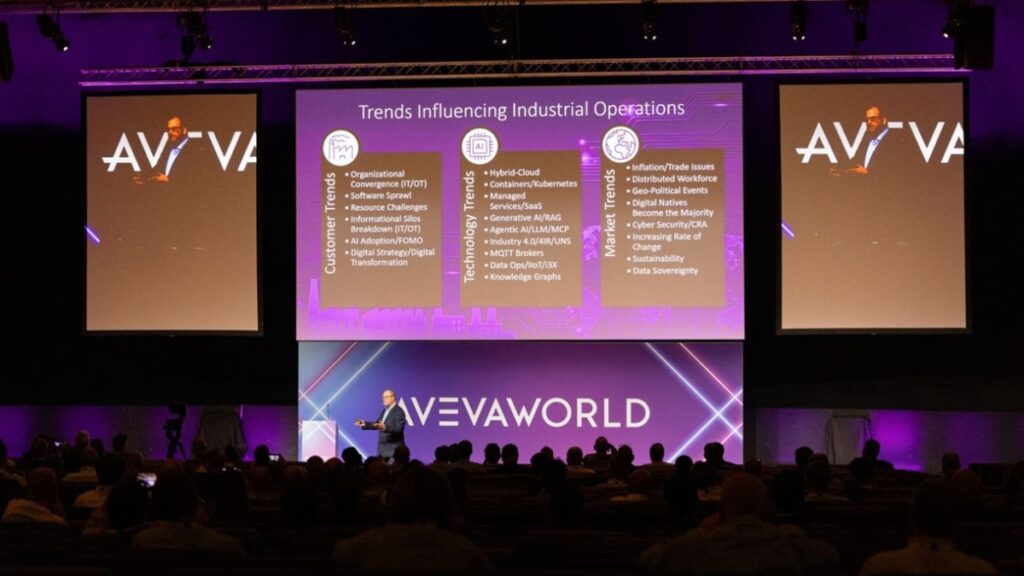
MILAN, Italy, May 21, 2026 – AVEVA, a global leader in industrial software, today announced a broad set of product innovations spanning its industrial software portfolio at AVEVA World 2026. The updates will make it faster and simpler for industrial organizations to put their operational data to work, driving better decisions, stronger compliance, and AI enhanced intelligent operations.
For industrial organizations, the pressure to adopt AI is intensifying, and so are the underlying challenges: complex regulatory environments, a growing sustainability imperative, ageing infrastructure and fragmented data. “Gartner predicts that through 2026, organizations will abandon 60% of AI projects unsupported by AI-ready data.”
“For industrial enterprises, the challenge is not ambition but infrastructure. The promise of AI remains largely unrealised for most industrial teams because the operational data, engineering data, workflows, and compliance frameworks required to safely deploy AI at scale have rarely been connected in one place,” shared Rob McGreevy, Chief Product Officer, AVEVA. “The innovations we are announcing are aimed at closing this gap, across every layer of the industrial technology stack.”
CONNECT: accelerating industrial intelligence
AVEVA’s industrial intelligence platform CONNECT is also expanding integrations with leading enterprise data platforms. AVEVA is extending CONNECT to Snowflake and ServiceNow, giving customers access to high-fidelity OT data within the tools they already use for analytics, industrial AI, automations, and machine learning.
A major CONNECT release is planned for Q1 2027, bringing a range of new capabilities, including an industrial knowledge graph that makes it faster to construct, enrich, and operationalise digital twins. By modelling the relationships and properties between real-world industrial assets, the knowledge graph preserves and strengthens the operational context that underpins them. Enriched with AI, this makes it easier for teams to troubleshoot and drive decisions that directly impact operations and efficiency. The knowledge graph model is populated using a twin builder that applies agentic AI to propose intelligent mappings that align existing data sources to a standard data model. This preserves information lineage and ensures data governance so every decision can be trusted.
Additionally, Flows, coming in Q2 2026 (from the Crosser acquisition), will enable the assembly and deployment of data processing pipelines for real-time cleansing, filtering, and transformation that simplifies data handling between systems and sources. Flows introduce more than 800 connectors vastly expanding the data sources CONNECT can integrate with, streamlining DataOps processes and hybrid architectures. The combination of flows, twin builder, and the industrial knowledge graph with CONNECT’s existing data management, visualization, and AI capabilities further enhances the rapid realization of the industrial digital twin with AI-ready data.
These integrations are supported by a deepening strategic partnership with Microsoft, a platinum sponsor of AVEVA World 2026. The partnership spans more than 40 years and is accelerating OT/IT convergence across some of the world’s most demanding industrial environments. Key joint capabilities include AI embedded in industrial operations, and a Customer-Hosted SaaS option for large enterprises with specific requirements around data sovereignty, security policy, and private network access.
“The announcements at AVEVA World reflect our commitment to matching the depth and pace of progress our customers are making. We are deepening the capabilities they rely on to run safer, smarter, more efficient operations,” said Rob McGreevy, Chief Product Officer, AVEVA. “From engineering to operations to compliance, we’re continuing to embed AI and intelligence more deeply into industrial workflows, helping them move faster, manage complexity, and scale with confidence.”
Bringing AI to industrial operations
AVEVA is embedding AI directly into the tools and workflows where industrial teams spend their time, from the operator interface to the engineering desktop, enabling teams to make faster, better-informed decisions without changing how they work.
From June 2026, AVEVA Operations Control updates will deliver unified visualisation across the full operational stack, seamlessly connecting HMI, SCADA, and enterprise systems via CONNECT with a consistent design language and a single operational data story. Native C# and Python support in the HMI/SCADA platform enables organisations to deploy sophisticated AI algorithms directly at the edge, bringing real-time intelligence to where decisions matter most. Open-format templates, data models, and graphics can also now serve as fuel for generative AI applications, reducing engineering time from months to days. (Hybrid and analytics value missing)
Looking ahead, AVEVA will bring Model Context Protocol (MCP) integrations and expanded AI Server and Client management capabilities to both on-premises and cloud systems, enabling large language models and enterprise AI platforms to utilize contextualized operational data.
AVEVA’s AI tools within Unified Engineering are on demonstration at AVEVA World Milan, including the industrial AI assistant, generative design AI assistant, predictive design AI assistant, and intelligent point cloud framework. Engineers can also now access Unified Engineering directly from any browser, with full cloud and on-premises project data shared seamlessly across both environments.
AVEVA is further introducing two new Unified Engineering updates: Flows via CONNECT, will be integrated by Q2 2026, and Unified Engineering for marine design will be available in Q4 2026, bringing hull design, outfitting, and 2D schematic production into a single connected solution.
Governing the data that powers AI
Across the AVEVA PI System portfolio, AVEVA is announcing a series of updates to make high-fidelity operational data more accessible, more scalable, and ready to support AI workloads, while maintaining the security and governance standards that regulated industries require.
Key innovations include performance and scalability enhancements to AVEVA PI Server to support analytics and AI-intensive workloads at enterprise scale; more efficient movement of PI Server data into CONNECT, including bulk data transfer and simplified enterprise-wide management; and new web-based management experiences for AVEVA Adapters that simplify the configuration and scaling of industrial data collection. AVEVA™ PI Vision™ is also receiving enhancements to trend analysis, navigation, and usability, enabling faster insight extraction from high-volume PI data environments. Additionally, AVEVA is introducing AVEVA PI Audit Reporter, a new web-based audit trail review and reporting solution developed in collaboration with Cognizant.
About AVEVA
AVEVA is a global leader in industrial software, sparking ingenuity to drive responsible use of the world’s resources. Over 90% of leading industrial enterprises rely on AVEVA to help them deliver life’s essentials: safe, reliable energy, food, medicines, infrastructure and more. By connecting people with trusted information and AI-enriched insights, AVEVA helps them engineer capital projects more efficiently, operate better and create sustainable value, from the plant to the cloud and beyond. Through our industrial intelligence platform, CONNECT, and our trusted and secure information management applications enriched with industrial AI, AVEVA empowers businesses to drive deeper collaboration between teams and to accelerate insight across their ecosystem of suppliers, partners and customers.
Named as one of the world’s most innovative companies, AVEVA’s open solutions draw on the expertise of more than 6,000 employees, 5,000 partners and 5,700 certified developers. The company, which has operations around the globe, is headquartered in Cambridge, UK. Learn more at www.aveva.com.
MASON, OH, USA, May 20, 2026 – Makino, a global leader in advanced machining and manufacturing solutions, announced a strategic expansion of its distribution network in the New England region with the appointment of Yamazen Inc. as its exclusive distributor of record.
This move reflects Makino’s continued investment in high-performance manufacturing markets and reinforces its commitment to delivering greater value, deeper technical engagement, and faster response times to customers across Connecticut, Massachusetts, Rhode Island, Vermont, New Hampshire, and Maine.
As customer demands evolve—driven by increasing complexity, tighter tolerances, and the need for higher productivity—Makino is aligning its regional strategy to ensure manufacturers have access to the strongest combination of technology, applications expertise, and local support.
“Everything we do starts with our customers,” said Bob Henry, executive vice president, Makino Inc. “Partnering with Yamazen in New England allows us to strengthen local support, improve responsiveness, and ensure our customers continue to get the most out of their Makino investment.”
Yamazen’s established presence in Connecticut and the broader Northeast, combined with its reputation for technical excellence and customer responsiveness, positions Makino to accelerate market development while enhancing the customer experience at every stage—from evaluation and purchase to optimization and long-term support.
Through this partnership, customers will benefit from:
Stronger local engagement with dedicated regional applications and service teams
Accelerated productivity gains through deeper process knowledge and support
Improved responsiveness to evolving production challenges and opportunities
A more integrated approach to capital equipment, automation, and process optimization
“Makino’s technology leadership combined with Yamazen’s customer-first execution creates a powerful advantage for manufacturers in this region,” said James Hansen, President of Yamazen Inc. “We’re focused on helping customers grow—whether that means increasing throughput, improving quality, or taking on more complex work.”
Makino and Yamazen are working in close coordination to ensure a seamless transition, with no disruption to current projects, service agreements, or customer support. Existing customers will be contacted directly with updated information and resources.
This strategic alignment underscores Makino’s long-term commitment to the New England market—investing in partnerships that not only support customers today, but help them compete and grow in the future.
About Makino Inc.
A world leader in advanced CNC machine tools. Makino manufactures a wide range of high-precision metal-cutting machining centers and Electrical Discharge Machines (EDM) including three, four, and five-axis machines in both horizontal and vertical configurations. Our turnkey and integration/automation services provide single source responsibility minimizing risk to production launch dates. With Makino engineering services, we offer industry-leading workpiece processing expertise for even the most challenging applications. For more information, call 1.513.573.7200 or visit www.Makino.com.
About Yamazen Inc.
Yamazen Inc. is a leading distributor of advanced manufacturing technologies, providing precision machine tools, automation solutions, and engineered systems across North America. Headquartered in Elk Grove Village, Illinois, Yamazen delivers application expertise, technical support, and integrated manufacturing solutions to customers across a wide range of industries. For more information, visit https://www.yamazen.com.
BURGETTSTOWN, PA, USA, May 20, 2026 – 6K Additive, Inc. (ASX: 6KA) a leader in the domestic production of high-performance metal powders, announced the appointment of Brandon Davis as Chief Operating Officer. Davis, a high-impact manufacturing executive with over two decades of experience, will oversee the company’s global operations, including metal powder production and alloy additions.
In his new role, Davis will manage all 6K Additive facilities, including the company’s headquarters in Burgettstown, PA, as well as sites in Hayward, CA; Washington, MO; Red Lion, PA; New Castle, PA; and New Cumberland, WV. He will report directly to Frank Roberts, Chief Executive Officer of 6K Additive.
“Brandon is a world-class leader with a proven track record of bridging the gap between high-level strategy and factory-floor execution,” said Frank Roberts, CEO of 6K Additive. “As we continue to expand our capabilities and capacity for defense and commercial applications, Brandon’s expertise in safety and operational excellence will be invaluable to our growth.”
Davis joins 6K Additive from Dexter Axle Corporation, where he served as Vice President of the Components Division. During his tenure, he had full P&L responsibility for a US$500M operation, achieving a company-leading safety improvement (reducing TCIR from 2.0 to 0.13) and increasing EBITDA over 20%. His extensive background also includes serving as President & CEO of EVRAZ Stratcor and leading National Oilwell Varco (NOV) to an Industry Week Best Plants in North America award.
“6K Additive is at the forefront of powder manufacturing revolution for additive manufacturing as well as decades of experience in the alloy additions industry, and I am thrilled to join a team that is redefining how high-performance materials are produced,” said Brandon Davis, incoming COO. “My focus will be on streamlining our manufacturing campuses into high-margin, safety-first organizations while accelerating our automation journey to meet the increasing demands of the aerospace, defense, medical, and energy sectors.”
A veteran of the United States Army, Davis served as a Military Police officer and was decorated with the Army Commendation Medal. His appointment reinforces 6K Additive’s commitment to building a world-class leadership team capable of executing complex global expansions and delivering high-quality metal powders and alloy additions to the market.
About 6K Additive
6K Additive, Inc. (ASX:6KA) is a US-based manufacturer and trusted supplier of premium metal powders for additive manufacturing and alloy additions for the aluminum melt industry, all made from sustainable sources. Headquartered in Burgettstown, PA, the Company’s manufacturing process produces the highest quality metal powders that are truly spherical, void of porosity and satellites with better unit economics than competing technologies. 6K Additive utilizes proprietary UniMelt microwave plasma system to produce the industry’s most comprehensive portfolio of metal powder including a variety of Nickel, Titanium, Copper, and refractory powders that include, Tungsten, Rhenium, Niobium/C103 and Tantalum. 6K Additive leverages feedstock such as certified turnings, millings, used additive powder, support material and failed builds that provide customers sustainable, domestically sourced metal powder. Visit us at www.6kAdditive.com.
NORRKÖPING, Sweden and KAPFENBERG, Austria, May 20, 2026 – Interspectral AB and Pankl Racing Systems AG announced an expanded strategic collaboration aimed at accelerating the industrialization of metal additive manufacturing through improved process monitoring, quality assurance, and data-driven production workflows.
Building on a multi-year partnership, Pankl will serve as both a reference customer and strategic development partner for Interspectral’s AM Explorer platform. The collaboration brings together Interspectral’s software capabilities with Pankl’s production expertise to address one of the key challenges in industrial additive manufacturing: making quality assurance more reliable, scalable, and production-ready.
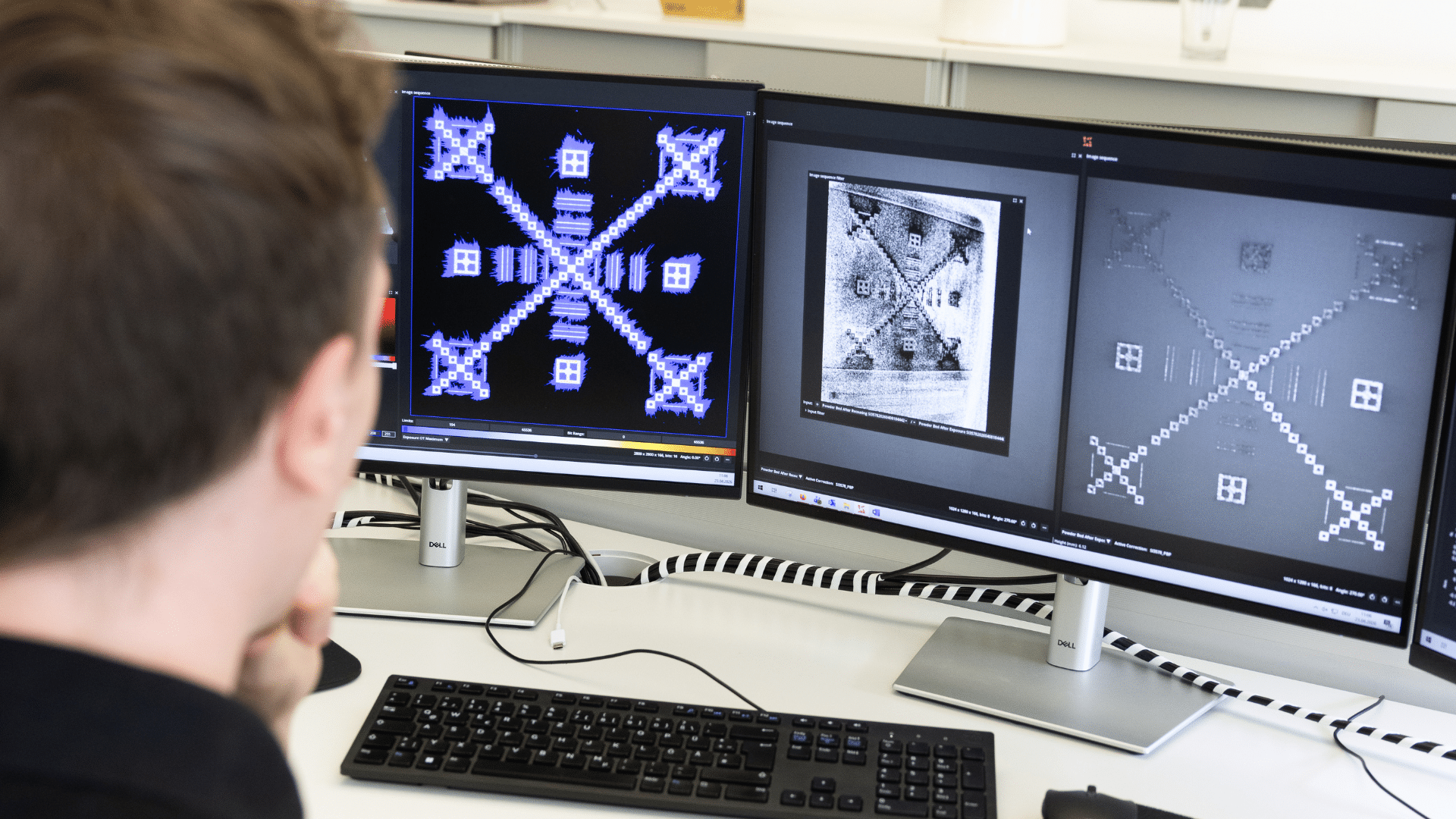
As part of the collaboration, AM Explorer will be further deployed across Pankl’s additive manufacturing operations to support anomaly detection, qualification workflows, data integration, and real-time monitoring. The companies will also work together to explore new capabilities in AI-driven defect detection, optical tomography analysis, and multi-source data correlation.
The expected outcome is faster qualification, improved repeatability, better traceability, and stronger production decision-making, helping move additive manufacturing further from a specialist process to a reliable industrial production method.
“This collaboration is about helping make additive manufacturing a more reliable and scalable production technology. As the industry moves from experimentation to industrial deployment, manufacturers need better ways to build trust into production. Working closely with Pankl allows us to develop those capabilities in a real manufacturing environment,” said Isabelle Hachette, CEO at Interspectral.
“Together with Pankl, we are focused on improving quality assurance and making production workflows more robust, repeatable, and easier to scale,” said Markus Meidenstein, Director Sales & Business Development – EMEA at Interspectral.
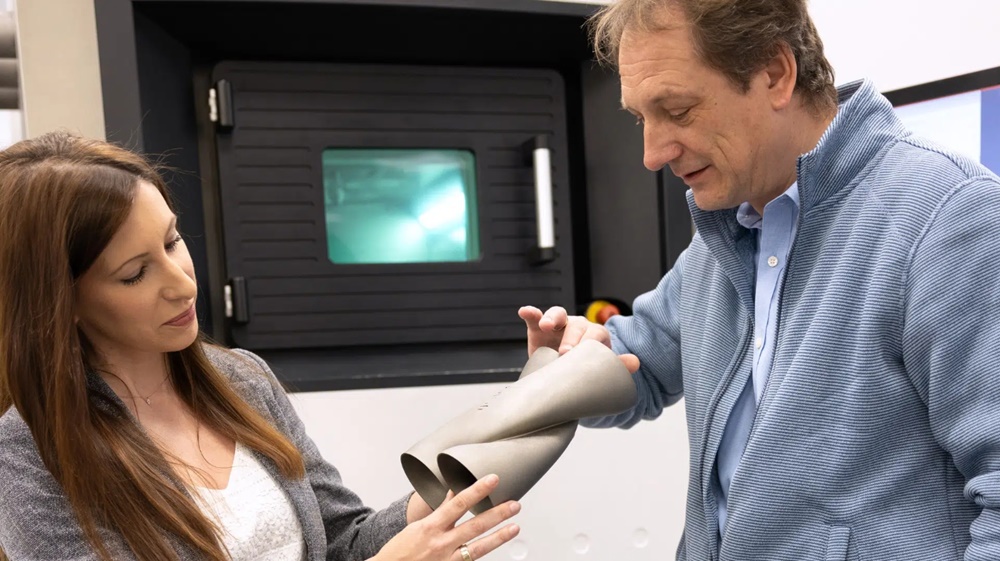
AM Explorer in Action at Pankl facility
“At Pankl, performance and reliability are critical,” said Tanja Pfeifer, Business Unit Manager at Pankl Racing Systems AG. “This partnership gives us the opportunity to work closely on technologies that can strengthen process control, quality assurance, and the industrial application of additive manufacturing in demanding production environments.”
The collaboration will also include joint case studies, industry presentations, and selected co-marketing activities to share learnings and best practices from industrial metal AM production.
About Pankl Racing Systems AG
Pankl Racing Systems AG is a leading supplier of high-performance components and systems for the motorsport, automotive, and aerospace industries. With additive manufacturing as a key production technology, Pankl develops and manufactures advanced mechanical systems and lightweight components for demanding, high-performance applications where precision, reliability, and innovation are critical. For more information, visit www.pankl.com.
About Interspectral
Interspectral is a Swedish tech company specializing in 3D digitization, visualization, data fusion, and AI-driven analysis. With customers in over 20 countries, Interspectral’s flagship product, AM Explorer, enables users in metal additive manufacturing to fuse, explore, and analyze data from simulations, monitoring, and post-build analyses, optimizing quality assurance and operational efficiency. For more information, visit https://interspectral.com.
SALT LAKE CITY, UT, USA, May 20, 2026 — GoEngineer, the world’s largest full-service engineering solutions provider and premier authorized partner for Dassault Systèmes, Stratasys, Bright Laser Technologies, and other leading technology vendors, announced the acquisition of SKA, Latin America’s leading SOLIDWORKS and engineering technology reseller. SKA will operate as SKA, a GoEngineer company. The acquisition extends GoEngineer’s presence into Latin America while strengthening its capabilities across manufacturing software, shop-floor technologies, automation, and product development.
Founded in 1989 and headquartered in São Leopoldo, Brazil, SKA serves thousands of customers across manufacturing, aerospace, medical, and industrial end markets. In addition to its leadership position in SOLIDWORKS, SKA brings meaningful capabilities in manufacturing execution systems (MES), machining automation, sheet metal, additive manufacturing, and engineering workflow integrations.
The acquisition expands GoEngineer’s ability to support its customers across the full product lifecycle – from design and engineering through production and factory-floor operations. It also extends its technical expertise and customer support capabilities throughout the Americas, further reinforcing its role as the leading engineering partner to its customers. This acquisition follows GoEngineer’s 2025 expansion into Canada and represents the company’s first presence in Latin America and the Southern Hemisphere. The transaction is a reflection of the growing global demand for the kind of deep, full-service engineering partnership that GoEngineer has built.
“GoEngineer has spent more than 40 years building something that no other organization in this space has: the certified experts, the training infrastructure, the additive manufacturing capability, the proprietary customer technology, and the innovation capacity to be a true global end-to-end engineering solutions partner. Bringing SKA into the GoEngineer family means that engineers and manufacturers in Brazil and throughout Latin America will now have access to that same world-class experience. This is a statement about what GoEngineer is becoming: the global standard for what an engineering solutions partner should be.” said, Justin Winter, CEO, GoEngineer.
What differentiates GoEngineer extends beyond the breadth of its vendor portfolio. As a fullservice engineering solutions partner, the company combines best-in-class software and hardware from more than a dozen leading technology vendors with significant in-house technical capabilities, including hundreds of certified specialists, a national training infrastructure spanning classroom, online, and on-site delivery, and an additive manufacturing services bureau operating across FDM, PolyJet, SLA, SLS, and metal 3D printing technologies.
SKA brings a complementary set of solutions and profile of excellence to the combined organization. SKA’s management team and local culture will remain fully intact as the business operates as SKA, a GoEngineer company, ensuring continuity for customers and partners throughout Brazil.
“This is a strategic step that launches SKA into a new era of growth and internationalization without sacrificing our DNA. We keep our team, our culture, and our commitment to the development of Brazilian industry. The connection with GoEngineer expands our vision of the future and strengthens our capacity to accelerate delivery and generate value for our customers.” said, Siegfried Koelln, CEO, SKA.
The combination of GoEngineer and SKA creates a uniquely powerful resource for engineering professionals across the Americas. Customers in Latin America gain access to GoEngineer’s expanded offerings and technical depth, while multinational manufacturers benefit from coordinated support delivered by two aligned partners across North and South America.
About GoEngineer
GoEngineer is the world’s largest full-service engineering solutions provider, serving tens of thousands of customers across high-tech, medical, aerospace, energy, and industrial manufacturing. GoEngineer supports the entire product lifecycle, from strategy and system implementation to operational optimization and hands-on engineering execution, helping organizations innovate faster and operate more efficiently.
With more than 40 years of experience and operations across the United States, Canada, and Latin America, GoEngineer delivers a depth of capability and partnership that no other engineering solutions provider can match. Learn more at goengineer.com.
About SKA
SKA is Latin America’s leading provider of SOLIDWORKS and engineering technology solutions, serving thousands of companies from twelve regional offices across Brazil. Founded in 1989 and headquartered in São Leopoldo, SKA has built a four-decade legacy of excellence in CAD, CAM, MES, simulation, 3D printing, and product development services. As part of the GoEngineer family, SKA now offers customers in Latin America access to a global ecosystem of resources, expertise, and innovation. Learn more at ska.com.br.
HOUSTON, TX, USA, May 20, 2026 – ROBOZE, the foundational advanced manufacturing layer for the world’s mission-critical industries, highlights the continued expansion of Cave Holdings USA Inc., a manufacturing company advancing its production capabilities through the strategic deployment of additive manufacturing technologies.
This evolution reflects a broader shift from initial technology adoption toward full-scale integration within complex industrial operations. By leveraging ROBOZE solutions, Cave Holdings USA Inc. is expanding its ability to manufacture high-performance components while continuing to refine production workflows, process control, and application-specific performance.
Cave Holdings USA Inc. identified additive manufacturing as a critical capability for supporting operations in challenging environments isolated by high-cost or low-reliability supply chains. Today, the company operates a growing fleet of ROBOZE systems, including one upgraded ARGO 500 HYPERSPEED units and six ARGO 500s, with an ARGO 1000 HYPERMELT scheduled for installation. This expansion strengthens the company’s ability to address both high-performance and large-format production requirements.
The decision to scale was driven by the strategic potential of ROBOZE systems to support advanced polymer manufacturing in real-world industrial applications. Cave Holdings USA Inc. continues to develop and optimize its additive manufacturing processes to meet the demands of mission-critical components across sectors such as energy, infrastructure, and defense.
ROBOZE technology provides a platform for advancing process control and repeatability as Cave Holdings USA Inc. progresses toward consistent, production-ready outcomes. Operating in environments where reliability is essential, the company is focused on continuously improving performance, reducing variability, and building a scalable manufacturing capability that aligns with industrial standards.
By expanding its additive manufacturing capacity, Cave Holdings USA Inc. is enhancing its responsiveness to customer requirements while reducing reliance on traditional supply chains. The ability to produce components on demand enables faster turnaround times compared to traditional manufacturing, increased design flexibility, and new opportunities to deploy advanced materials in applications where conventional manufacturing methods face limitations.
“For us, this isn’t about experimenting, it’s about pushing additive manufacturing into real production environments where performance truly matters. We’ve invested heavily in building this capability because we see the long-term value, not just in speed, design flexibility and rapid prototyping, but in transforming how complex components are manufactured in challenging operating conditions. As we continue refining our processes, the goal is clear: scalable, reliable production that delivers measurable impact for our customers.”, said Angela Kilic-Cave, President, Cave Holdings USA Inc.
“At ROBOZE, we see more companies moving beyond experimentation and scaling additive as a core production technology. Cave Holdings USA Inc. demonstrates how additive manufacturing can be deployed in complex environments while driving continuous improvement in performance and production capability.” said Alessio Lorusso, Founder & CEO of ROBOZE.
This collaboration highlights how additive manufacturing is evolving beyond prototyping into a critical component of industrial production strategies, driven not only by innovation, but by the practical demands of performance, reliability, supply chain risk mitigation, and operational impact.
About ROBOZE
ROBOZE is building the Physical AI backbone for autonomous manufacturing in strategic industries. Every era of progress has been defined by how societies build. From steel and electricity to automation and digitalization, industrial capability has always determined what nations can achieve. We are now entering a new chapter of industrialization, defined by complexity, speed, resilience, and industrial sovereignty. Defense, aerospace, energy, transportation, and critical infrastructure all depend on the same fundamental truth: nothing advances without the ability to manufacture what matters, reliably, repeatedly, and at scale. ROBOZE exists to provide the foundational infrastructure powering the world’s most strategic industries through autonomous manufacturing. Invisible when it works. Indispensable when it matters. For more information, visit https://www.roboze.com.
ABOUT Cave Holdings USA Inc.
Cave Holdings USA Inc. is an advanced manufacturing and engineering company focused on deploying high-performance production capabilities in complex and demanding environments. The company integrates additive manufacturing, precision engineering, and field-driven operational expertise to deliver critical components and solutions across energy, infrastructure, and defense sectors. By combining innovation with real-world application, Cave Holdings USA Inc. is building scalable manufacturing systems designed for performance, resilience, and long-term impact. For more information, visit https://cave-holdings.com.
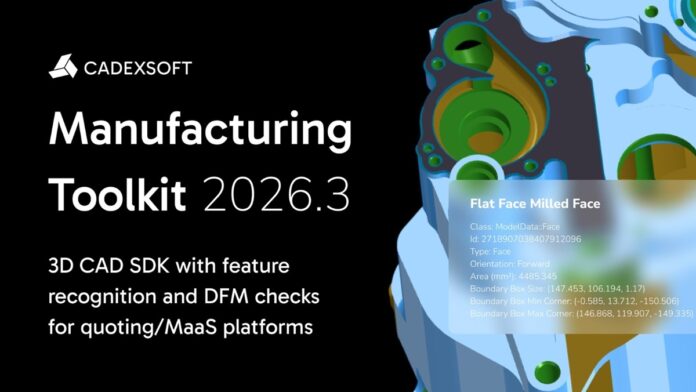
Estonia, May 20, 2026 – CADEXSOFT announces the release of Manufacturing Toolkit 2026.3 — a CAD SDK for developers building quoting and MaaS platforms, with DFM checks, native B-Rep, feature recognition, and web visualization. The new release improves CNC and sheet metal recognition, progress reporting, and wall thickness analysis with the new Ray Marching algorithm, while extending Nesting support and enhancing Workbench and Web capabilities.
Manufacturing Toolkit 2026.3 highlights:
Improved sheet metal bead recognition
Improved sheet metal bead recognition
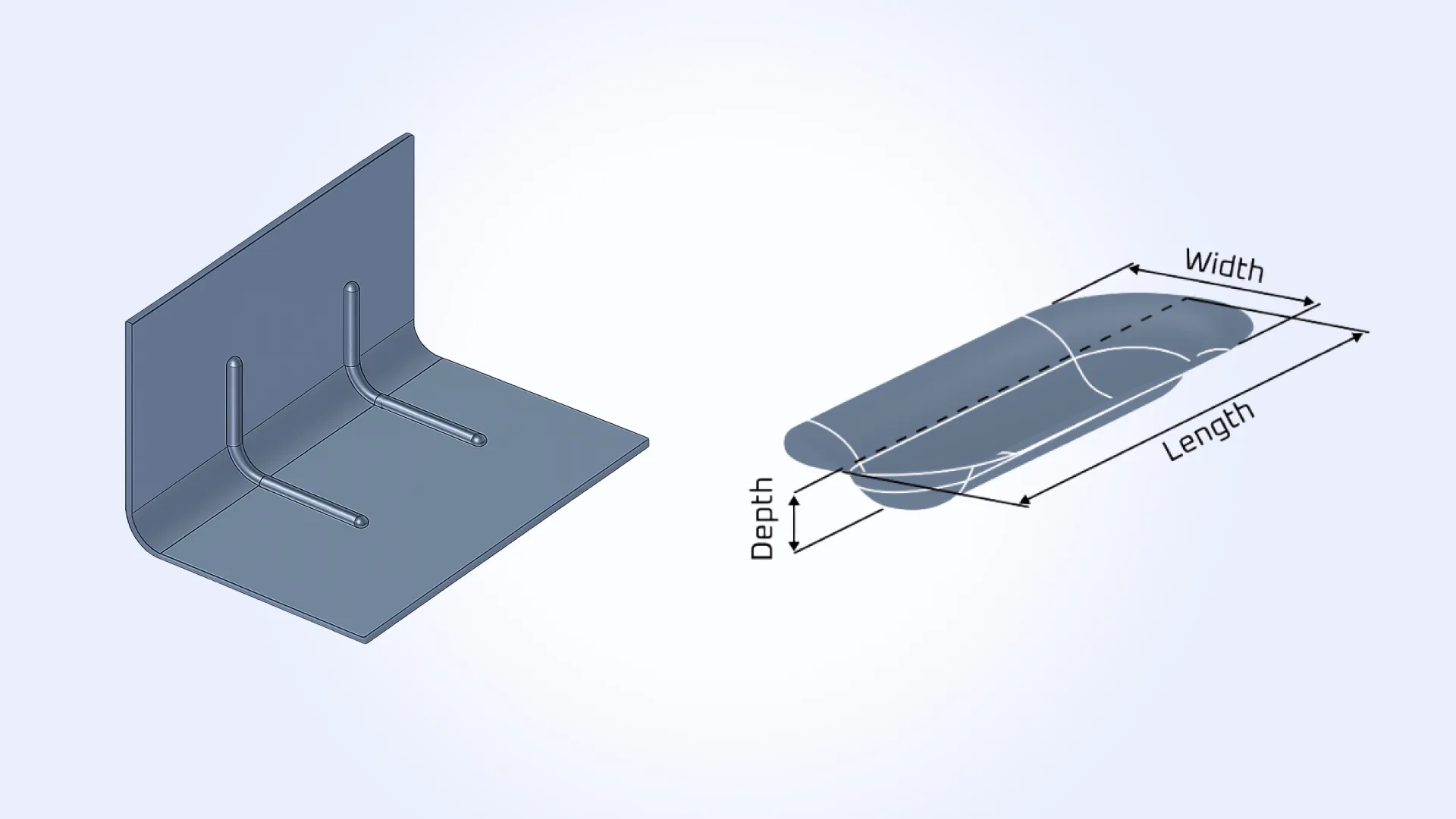
Sheet metal bead recognition has been improved to better match real-world manufacturing techniques. Previously, some bead-like features could be incorrectly classified as generic forming features, while certain overly wide forming regions could also be recognized as beads.
The updated recognition logic now identifies shallow and narrow forming features as beads more consistently, improving classification accuracy for typical sheet metal reinforcement geometry. Detection quality has been enhanced through point and derivative sampling, width statistics analysis, and depth estimation using ray casting and statistical evaluation.
In addition, the SheetMetal_Bead feature has been extended with new Width and Length parameters. Width represents the bead roller width used during forming, while length corresponds to the bead path length.
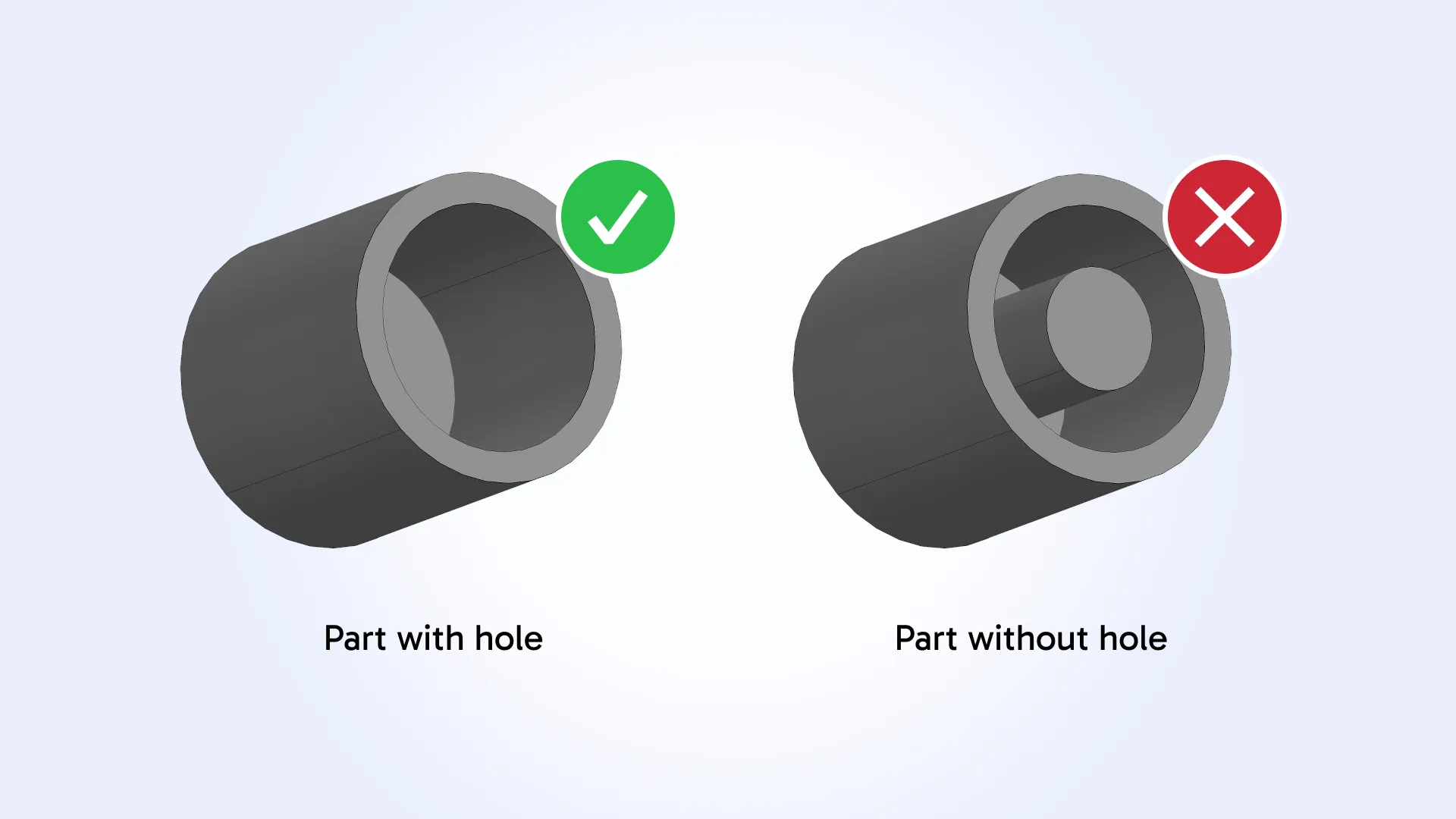
Improved CNC hole and countersink recognition
Non-hollow cylindrical or conical geometry is no longer recognized as holes or countersinks
CNC machining feature recognition has been improved to prevent cylindrical or conical geometry containing internal elements from being incorrectly recognized as holes or countersinks. The updated logic now verifies that recognized hole and countersink features are actually hollow.
As a result, cylindrical or conical cavities containing internal geometry (such as bosses, threaded studs, pins, or shafts) are no longer recognized as holes or countersinks. This improves recognition accuracy for machining features and reduces false-positive feature detection in machining workflows.
Wall Thickness updates
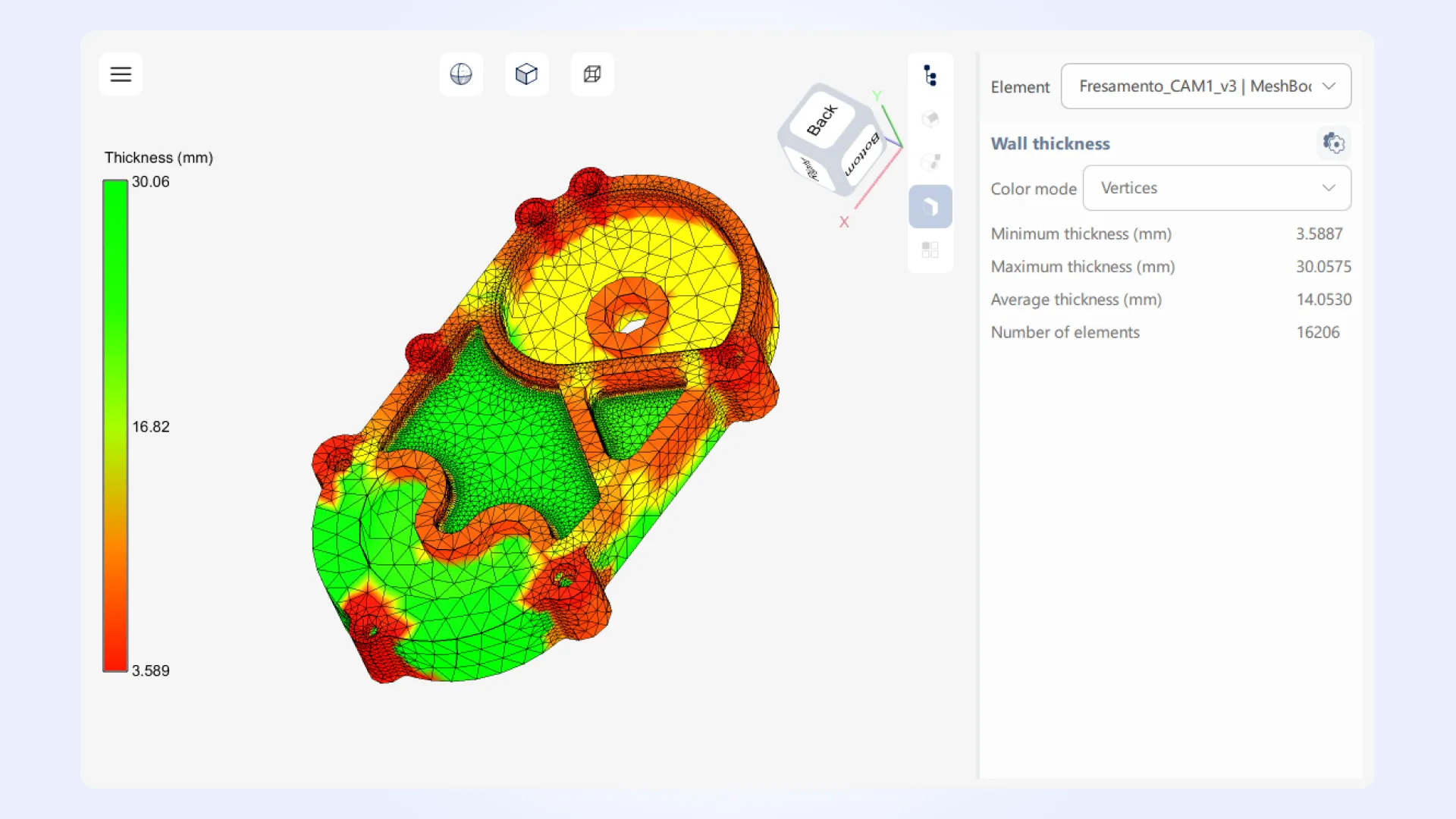
Wall thickness visualization as displayed in MTK Workbench
Wall Thickness analysis has been extended with the introduction of the new Ray Marching algorithm and updated analyzer parameters. The WallThickness_Analyzer API has been refactored to use WallThickness_AnalyzerParameters, allowing selection of different analysis methods through a unified configuration interface.
The new Ray Marching algorithm provides high-performance wall thickness computation with low memory usage and improved accuracy for finely tessellated models containing large numbers of triangles. Compared to the previous voxelization-based approach, the new method eliminates discretization artifacts and can detect very small thickness values more reliably. At the same time, the algorithm is more dependent on mesh quality, making triangulation accuracy an important factor for precise results.
Wall Thickness functionality has also been extended across the MTK ecosystem. MTK Web examples have been reworked with improved thickness-based coloring, configurable thickness ranges for custom color mapping, and interactive display of thickness values on mouse hover at any point on the model surface.
MTK Workbench now allows users to set the Ray Marching method directly in the UI, supports vertex selection in triangle inspection mode, and displays thickness values in tooltips at triangle vertices. Visualization of fixed-width parts has also been improved: models with thickness variation within tolerance are now displayed using uniform coloring for clearer interpretation of analysis results.
Nesting updates
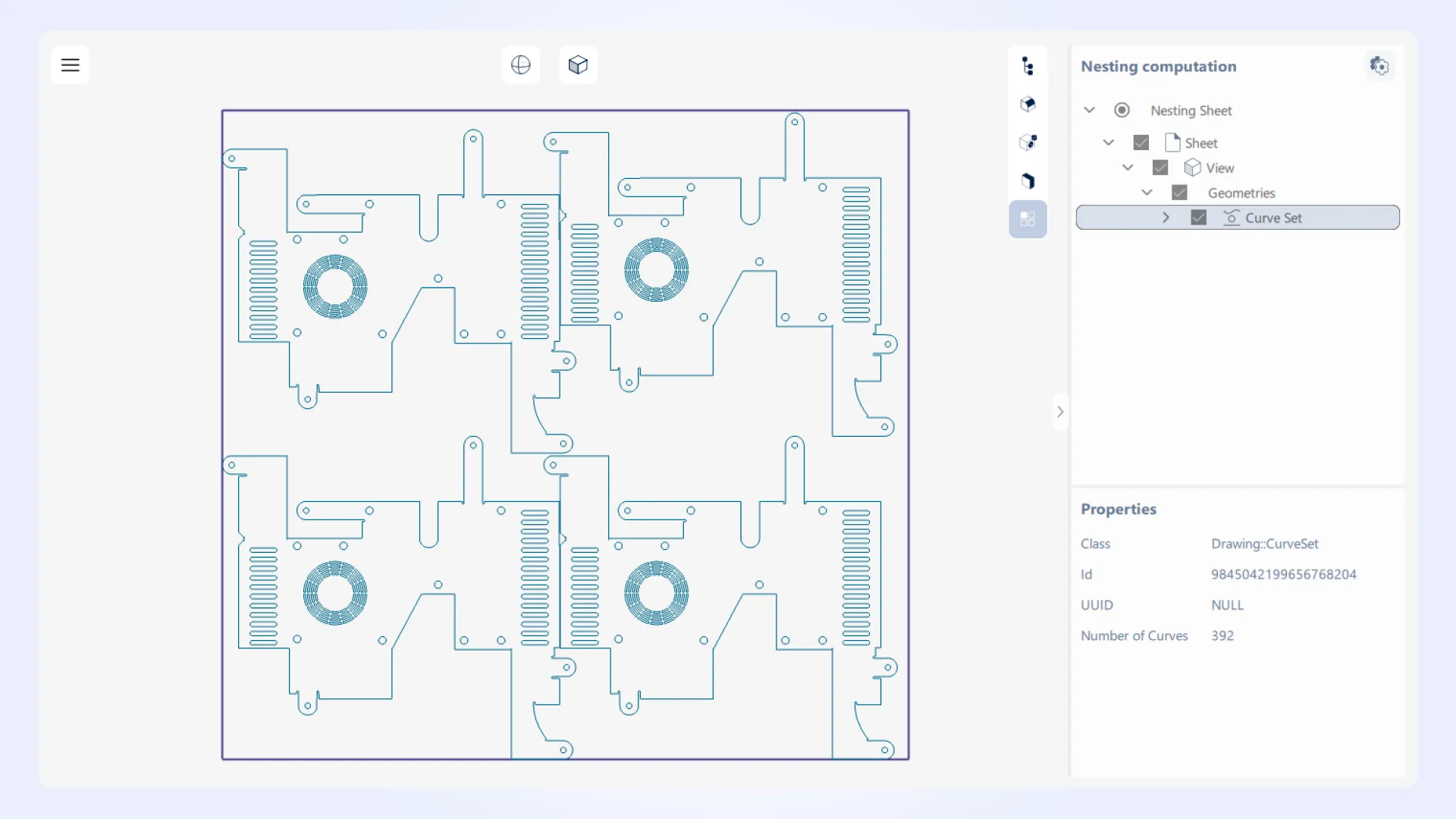
Nesting mode in MTK Workbench
Nesting support has been extended across the Manufacturing Toolkit ecosystem. MTK Converter wrappers for C#, Java, and Python now support nesting workflows, as reflected in the updated examples and documentation.
MTK Workbench now includes a dedicated Nesting mode that allows running nesting computations for specified patterns directly from the UI. It also supports running nesting directly on unfoldings produced by the Sheet Metal process. Visualization of nesting results has also been added, making it easier to inspect placement layouts and analyze computed nesting arrangements interactively.
MTK Web updates
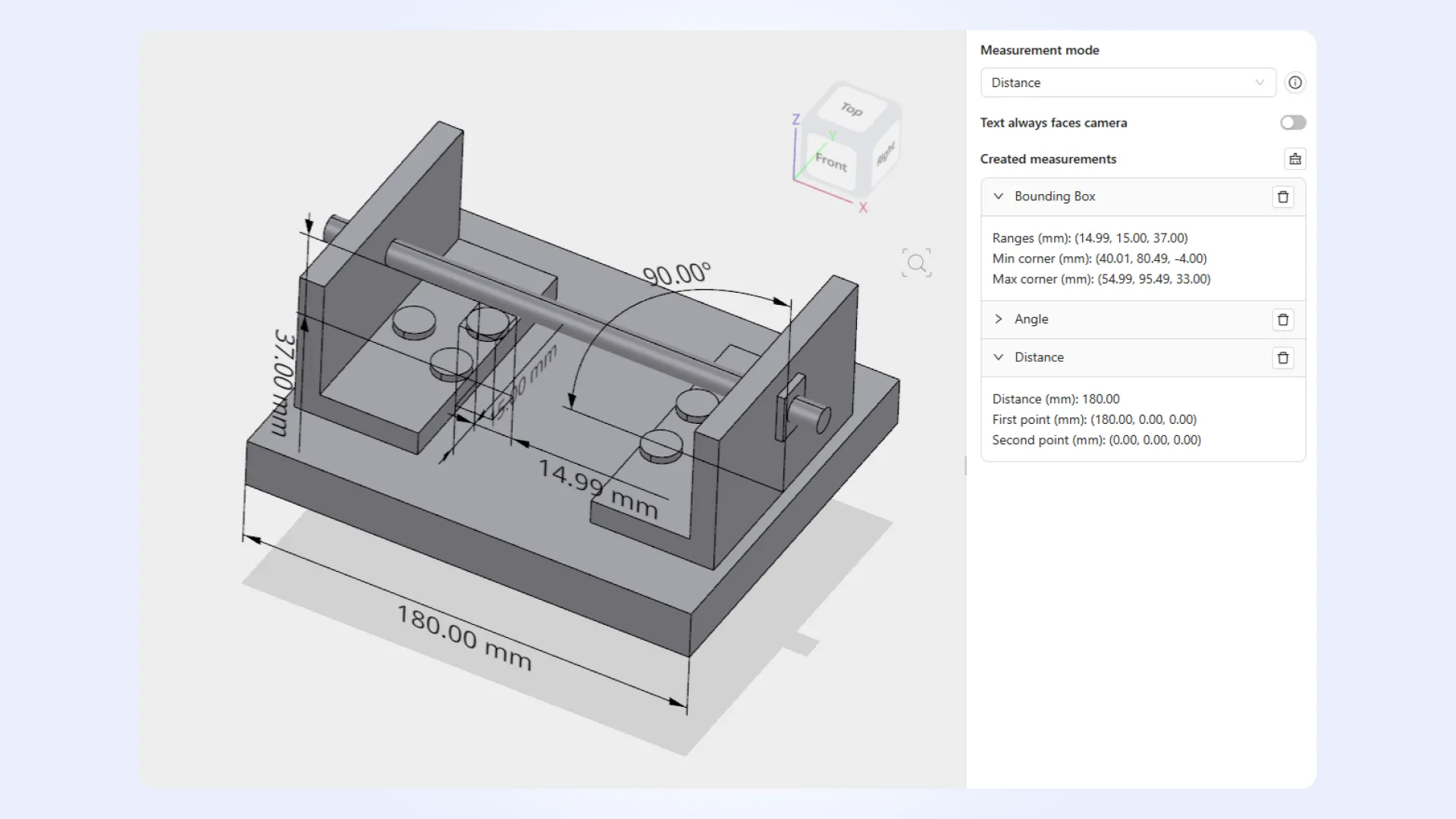
Measurement Creating Viewer example in MTK Web
The updated measurement API includes:
Angles between faces, edges, vertices, and points.
Length measurements for Edge, Wire, PolylineSet, and Polyline2dSet entities.
Surface area, volume, and other validation properties for Model, ModelElement, Body, Shape, and MeshShape objects.
MTK Web examples now support repositioning measurements after creation and include a reworked Measurement Creating Viewer example, as well as a new ObjectManipulator class for interactive object translation and rotation within the scene.
MTK Workbench updates
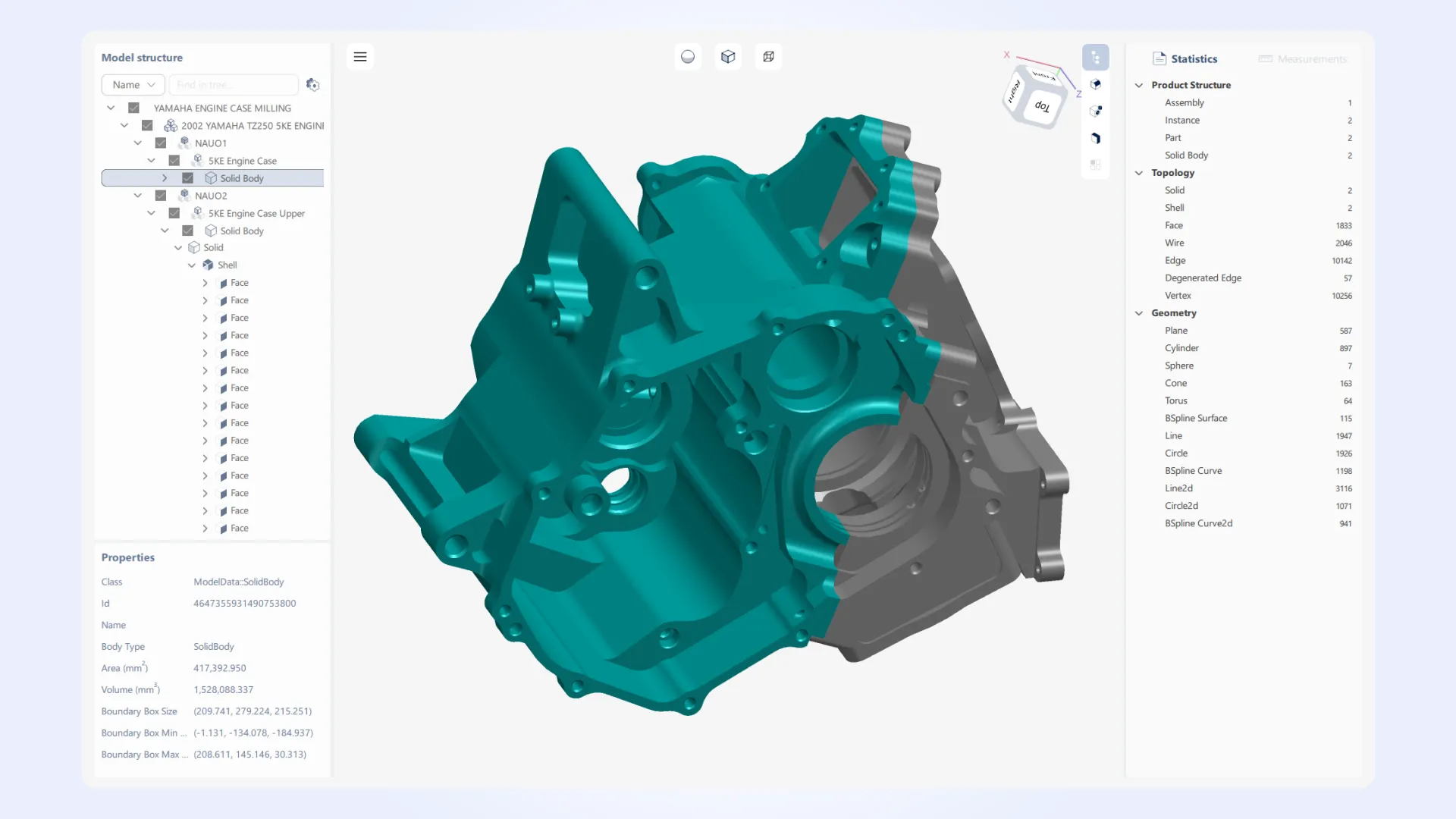
Model Structure and Statistics panels
Model Structure and Statistics panels
Structure View usability has been improved with keyboard navigation, “expand all” and “collapse all” actions for large branches, and support for displaying the Model object as the root item together with its properties. Further improvements include updated search bar option menus and enhanced Statistics tools with explanatory tooltips and the ability to switch between total and unique count display modes.
Measurements
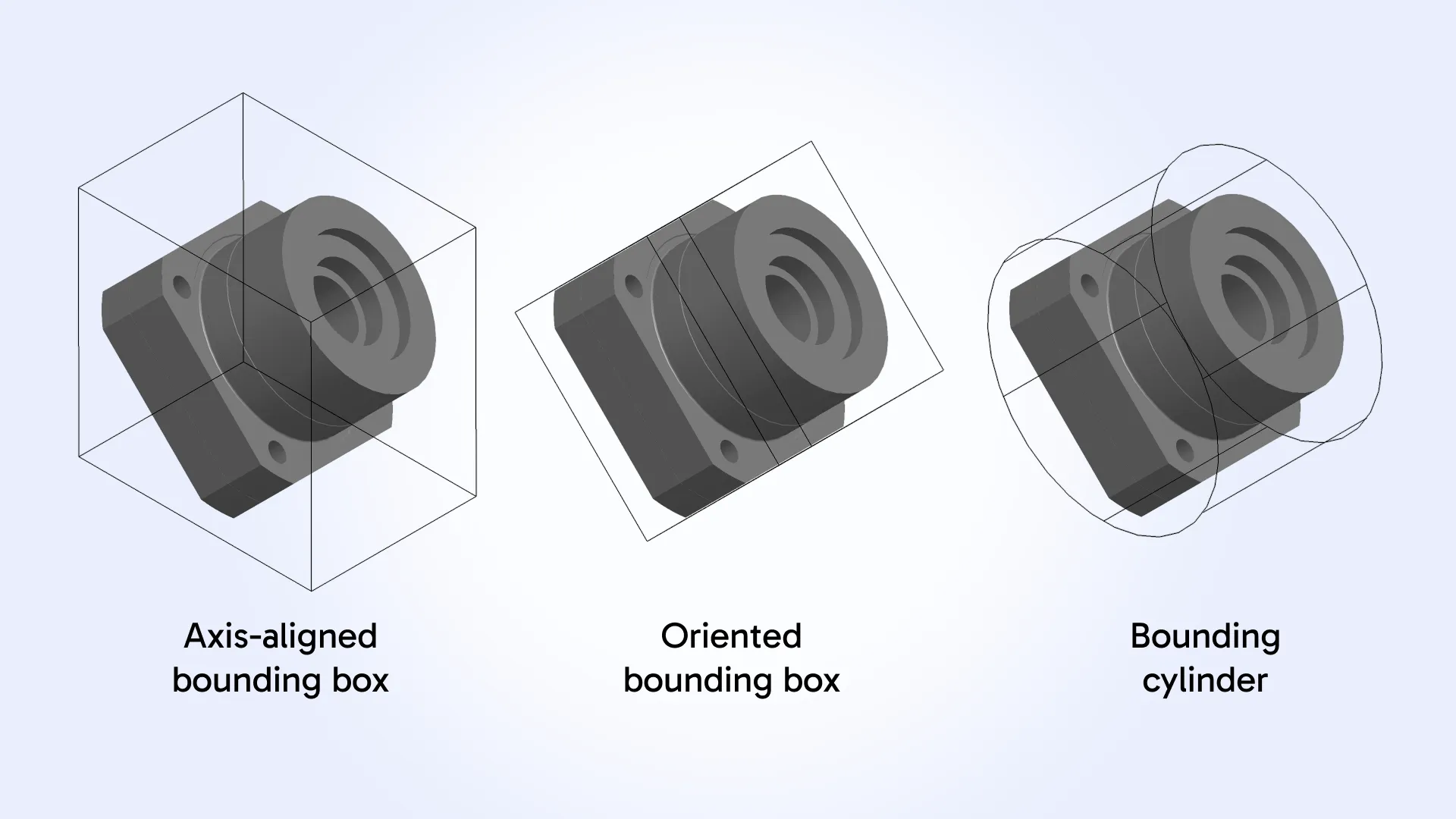
Bounding volume visualization
The Measurements module now supports axis-aligned bounding box (AABB), oriented bounding box (OBB), and bounding cylinder measurements. AABB visualization and related information are now also available directly in the Properties panel.
The Measurements panel has been reworked to display results as a hierarchical tree with grouping by measurement type. Additional usability improvements include:
Synchronized selection between the Measurements panel, 3D viewer, and Structure View.
Support for selecting measurement objects directly in the viewer.
Show/hide controls for measurements of the same type.
Feature recognition and DFM analysis
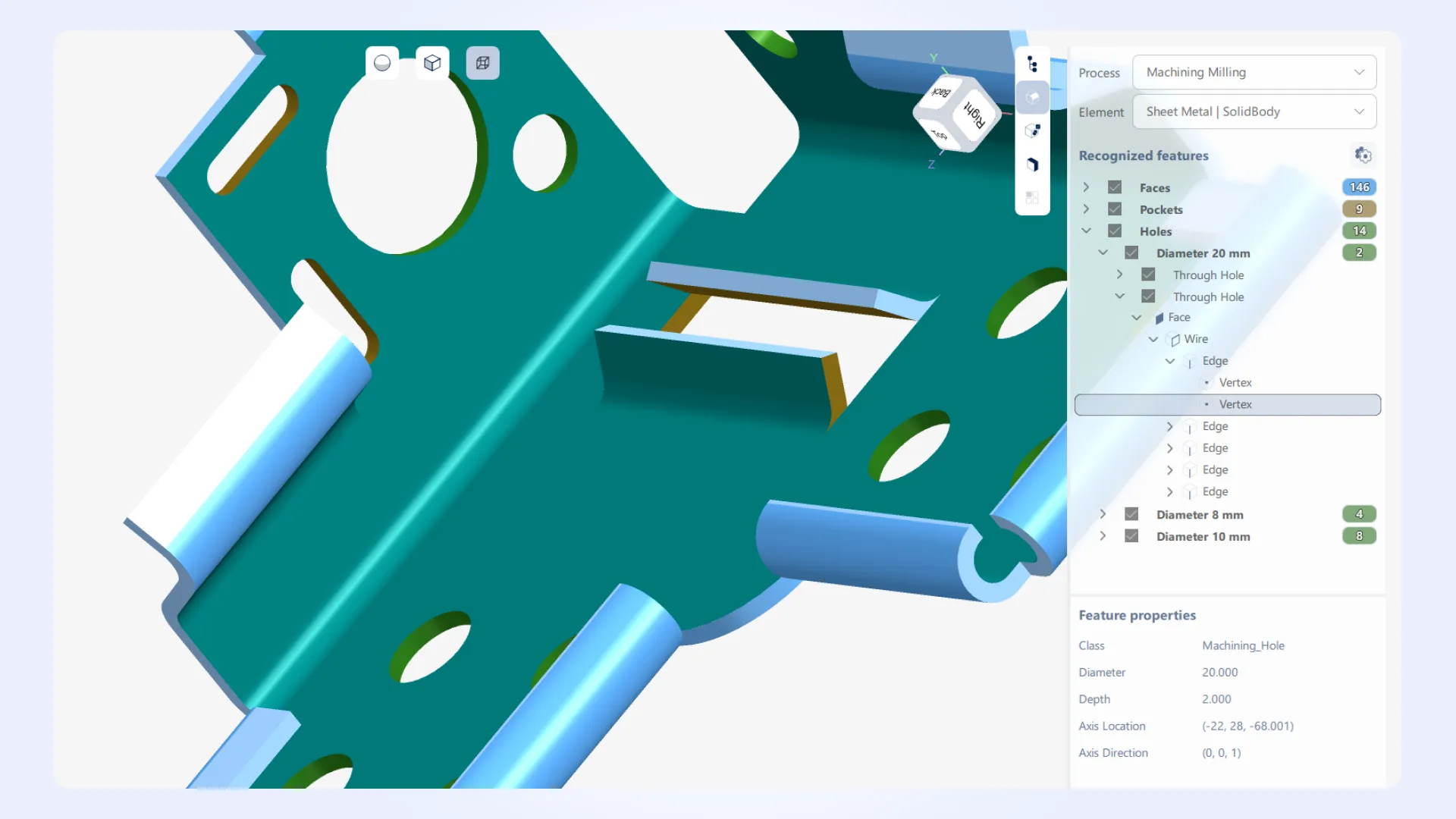
Hole grouping by diameter
Machining mode has been improved with explicit hole grouping by diameter, while feature display now shows diameters instead of radii for clearer manufacturing-oriented interpretation. DFM Analysis now validates parameters against allowed ranges, helping prevent invalid configuration values during analysis setup.
In addition, unfolded shapes are now displayed directly in Feature Recognition and DFM modes when unfolding view is active, improving visualization and analysis workflows for sheet metal models.
Improved progress reporting
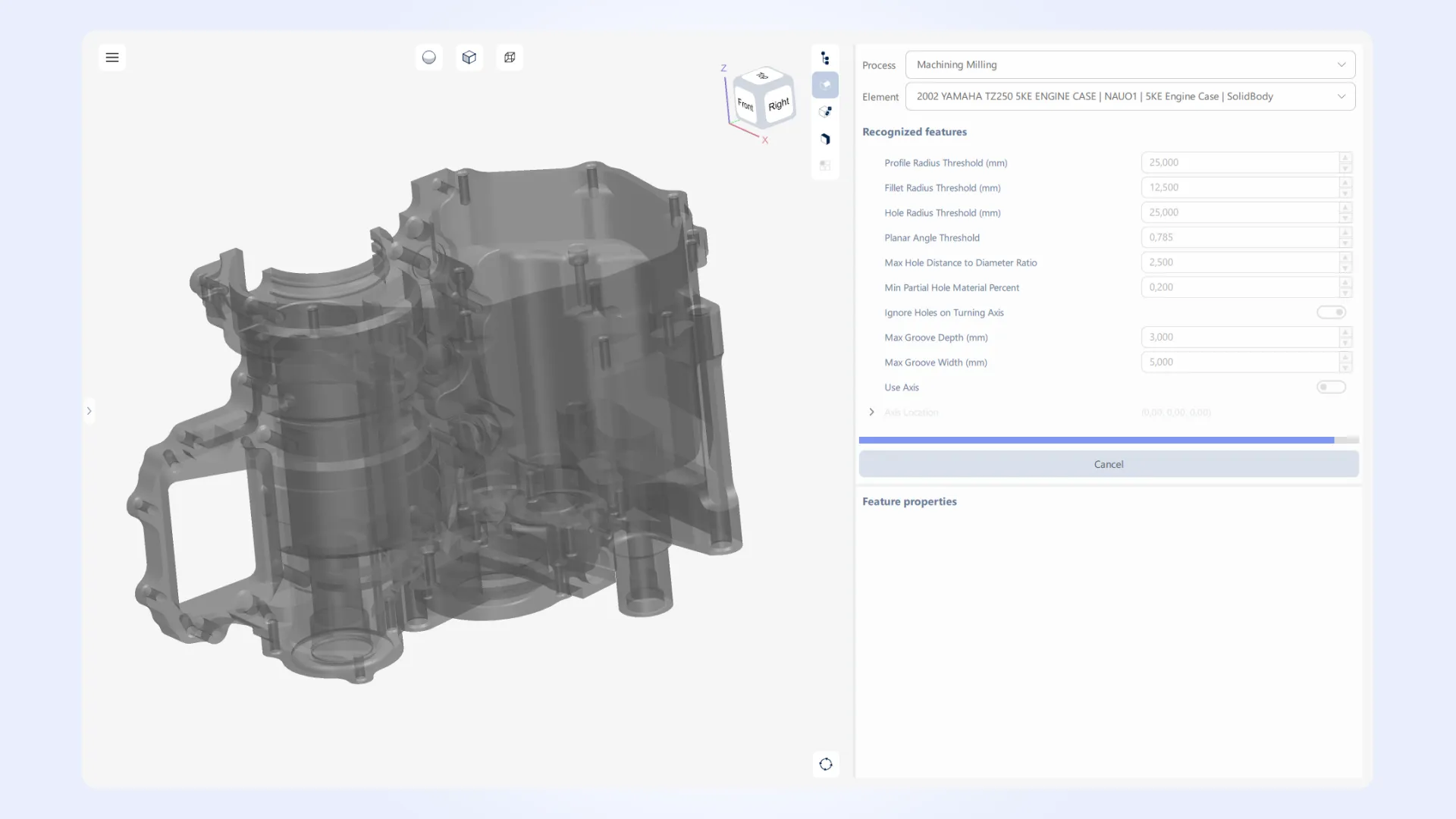
MTK Workbench progress bar
Progress status handling for CNC machining workflows has been improved to provide more detailed and responsive feedback during operation execution. Progress reporting granularity has been expanded, reducing noticeable jumps in progress updates and enabling more accurate tracking of algorithm execution stages. This improves progress visualization in UI applications as well as progress monitoring in programmatic workflows.
Cancellation responsiveness has also been improved for long-running operations, reducing delays between cancellation requests and actual operation termination. In addition, the overhead associated with frequent progress updates has been reduced, improving overall efficiency in workflows where progress status is updated at a high frequency.
This release also includes several minor improvements across the Manufacturing Toolkit. For the complete list of updates in MTK 2026.3, please refer to the changelog.
PASADENA, CA, USA, May 19, 2026 — Bluebeam, a leading developer of solutions and services for architecture, engineering, and construction (AEC) professionals worldwide and part of the Nemetschek Group, today announced that Bluebeam Max is now available to all customers globally, giving AEC teams the option to upgrade to a premium subscription that delivers AI-powered automation and next generation review tools.
First unveiled at Bluebeam’s Unbound 2025 conference, Bluebeam Max was made available to select customers under a beta program, where it delivered strong early results. Now widely available, Bluebeam Max expands the power of Bluebeam Revu with advanced automation and AI tools that help AEC teams reduce manual work and financial liability through early detection and improve collaboration across the entire project lifecycle.
“AI is ushering in a new era for the built environment – one where complexity becomes manageable and data becomes actionable,” said Usman Shuja, CEO of Bluebeam. “Bluebeam Max is designed to help every user operate like a superuser – embedding intelligence into familiar workflows while seamlessly bridging PDFs and BIM. The result is a more connected, more productive project experience, where teams can focus less on managing information and more on delivering outcomes.”
Intelligent Tools Designed for Real-World Work
With today’s launch, existing Bluebeam customers can now officially upgrade and access a set of innovations included in Bluebeam Max:
Revu + Anthropic Claude via MCP, enabling natural‑language prompts to automate repetitive tasks and transform markup data into actionable insights.
Stitching, automatically combines multiple drawing sheets into a single, navigable, to‑scale view for large and linear infrastructure projects.
Magic Markups, to automate repetitive markup and reduce manual clicks, making takeoffs faster and more accurate.
Smart Overlay, allowing teams to quickly identify design changes and discrepancies across entire drawing sets and disciplines.
Smart Review, provides clear, actionable insights into design discrepancies, scope gaps, and missing information to catch issues early and prevent costly setbacks.
Connected Studio Sessions with Revit, linking Bluebeam markups directly to the correct location in Revit drawing and model views to collaborate effectively across PDF and BIM.
Driving Real Impact for AEC Teams
Early adopters from a 2,000+ beta program report meaningful productivity gains with Bluebeam Max, with customers calling it a “gamechanger” for design and planning workflows.
Martin-Harris Construction
One success story from the Max beta program involves Martin-Harris Construction, a Las Vegas construction management firm consistently listed among the Top 10 Southwest General Contractors. Their Beta users leveraged Bluebeam Max to streamline complex project plans across a variety of developments. Martin-Harris’ projects span multifamily, industrial, educational, healthcare, and high-rise sectors. The team uses Smart Overlay and Smart Review in Max to compare revisions for pricing and impact analysis during both design and construction, helping quickly pinpoint where teams should focus their attention.
“Bluebeam is already the backbone of how we review and collaborate on projects, but Bluebeam Max takes that to another level,” said James Miranda, Director of Preconstruction at Martin-Harris Construction. “Features like Smart Overlay help us instantly see what’s changed and where to focus, which is critical when you’re managing complex projects at scale. As the full AI capabilities continue to evolve, this has the potential to significantly reduce manual effort and free up our teams to focus on higher-value coordination and decision-making.”
KPFF Consulting Engineers – Los Angeles (LA) Civil Office
Early adopters are already seeing meaningful gains with Bluebeam Max across design and planning workflows. At KPFF LA Civil Office, a leading civil and structural engineering firm, teams are using new capabilities to streamline day-to-day design tasks and reduce manual effort.
“Even small improvements can have a big impact on our workflows,” said Dillon Wilke, Associate and Bluebeam Max early adopter at KPFF LA Civil Office. “Features like offset are reducing the need to go back into CAD for certain tasks, especially when working with parallel utilities or curved geometry. What used to take multiple manual steps can now be done much more efficiently in one place.”
Bluebeam Max is now available globally. Customers can learn more, start a free trial, and purchase Bluebeam Max directly through the Bluebeam webstore by visiting www.bluebeam.com/bluebeam-max.
To keep up with the latest on what is available to Bluebeam users today, visit www.bluebeam.com/whats-new.
About Bluebeam
Bluebeam is the leading provider of digital productivity and collaboration solutions for industries that design and build our world. Since 2002, Bluebeam has made desktop, mobile and cloud-based solutions for paperless workflows that improve project communication and streamline processes across the entire project lifecycle. Trusted by over 3 million users in more than 160 countries, Bluebeam’s solutions empower professionals to make their mark, adapt to change, and deliver projects successfully. Headquartered in Pasadena, CA, Bluebeam has offices globally and is part of the Nemetschek Group.