Home Blog Page 10

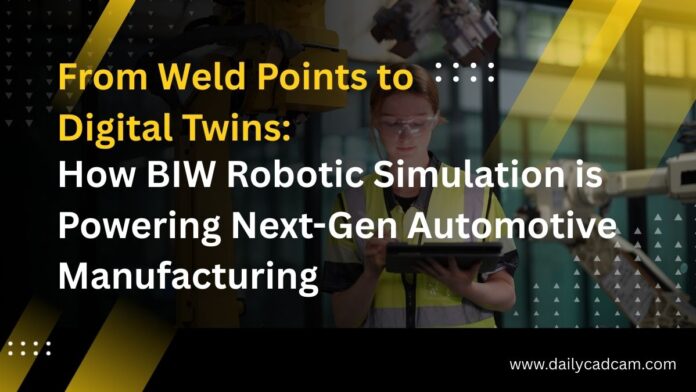
From Weld Points to Digital Twins: How BIW Robotic Simulation is Powering Next-Gen Automotive Manufacturing

0
1

In today’s automotive landscape—driven by electrification, customization, and shorter product cycles—Body-in-White (BIW) manufacturing has become more complex than ever. A typical BIW shop integrates hundreds of robots performing thousands of welds with extreme precision and synchronization.

To manage this scale and complexity, manufacturers are turning to BIW Robotic Simulation, enabling them to move from traditional trial-and-error methods to fully digital, simulation-driven production planning.

This transformation is not led by a single platform, but by a mature ecosystem of solutions from leading players such as Siemens, Dassault Systèmes, ABB, FANUC, and KUKA—each contributing unique strengths across the BIW lifecycle.


The Evolution of BIW: From Physical Tryouts to Digital Validation

Traditionally, BIW lines were validated physically:

  • Robots programmed on the shop floor
  • Weld sequences tested during commissioning
  • Issues resolved through costly iterations

Today, simulation enables:

  • Virtual validation before installation
  • Parallel engineering workflows
  • Faster ramp-up and reduced risk

At the heart of this evolution is the digital twin—a virtual replica of the BIW production system that mirrors real-world behavior.


Core Capabilities of BIW Robotic Simulation

1. 3D Workcell & Line Design

All major platforms allow engineers to create high-fidelity 3D models of BIW lines:

  • Robots, fixtures, and tooling
  • Safety zones and layouts
  • Assembly sequences
  • Tecnomatix Process Simulate enables full-scale factory and robotic cell modeling with strong PLM integration.
  • DELMIA offers immersive 3DEXPERIENCE-based design with collaborative capabilities.
  • Visual Components provides flexible layout creation and quick scenario evaluation.

Outcome: Early validation of layout feasibility and reduced design errors.


2. Robotic Path Planning & Optimization

Robotic motion planning is critical for:

  • Reachability
  • Collision avoidance
  • Cycle time optimization
  • Tecnomatix Process Simulate provides advanced path planning with multi-robot coordination.
  • DELMIA enables rule-based path generation and optimization.
  • ABB RobotStudio uses real robot controller logic for accurate path validation.
  • FANUC ROBOGUIDE ensures controller-level accuracy for FANUC robots.
  • KUKA.Sim offers intuitive robot programming and layout validation.

Outcome: Faster, collision-free, and optimized robotic operations.


3. BIW-Specific Process Simulation (Spot Welding & Beyond)

BIW is dominated by spot welding, along with sealing and material handling.

  • Tecnomatix Process Simulate includes specialized spot welding tools for weld planning and validation.
  • DELMIA supports detailed process planning for welding and assembly operations.
  • ABB RobotStudio and FANUC ROBOGUIDE provide dedicated welding application libraries.

Outcome: Optimized weld sequences, improved accessibility, and consistent quality.


4. Offline Programming (OLP)

Offline programming allows engineers to create and validate robot programs virtually.

  • Tecnomatix Process Simulate supports multi-brand robot OLP with PLM integration.
  • DELMIA enables collaborative robot programming across teams.
  • ABB RobotStudio offers exact controller-based programming.
  • FANUC ROBOGUIDE mirrors real FANUC robot behavior.

Outcome: Reduced shop-floor downtime and faster deployment.


5. Multi-Robot Coordination & Line Balancing

BIW lines require synchronized operations across multiple robots.

  • Tecnomatix Process Simulate excels in large-scale multi-robot coordination and cycle time balancing.
  • DELMIA provides advanced line balancing and resource optimization tools.
  • Robot OEM tools like ABB RobotStudio and KUKA.Sim ensure accurate robot-level synchronization.

Outcome: Improved throughput and efficient resource utilization.


6. Virtual Commissioning

Virtual commissioning enables testing of the entire BIW line before physical installation.

  • Tecnomatix Process Simulate integrates with PLC systems for full virtual validation.
  • DELMIA supports virtual factory validation within its digital platform.
  • Robot OEM tools validate controller logic and real robot behavior.

Outcome: Significant reduction in commissioning time and risk.


7. Digital Twin & Immersive Technologies

Digital twin technology is redefining BIW simulation by enabling real-time synchronization between virtual and physical systems.

  • Tecnomatix Process Simulate integrates with digital twin and IoT ecosystems.
  • DELMIA leverages the 3DEXPERIENCE platform for lifecycle digital twins.
  • Visual Components offers real-time visualization and quick simulation setups.

Outcome: Continuous optimization and data-driven decision-making.


Role in Product Development Lifecycle

BIW robotic simulation connects design and manufacturing seamlessly:

Concept Stage

  • Evaluate manufacturability of BIW design
  • Estimate cost and cycle time

Design Stage

  • Validate weld access and tooling
  • Optimize robot placement

Engineering Stage

  • Develop and simulate robot programs
  • Balance production lines

Commissioning Stage

  • Virtually validate full production system

Production Stage

  • Continuous improvement via digital twin

Key Benefits

  • Faster time-to-market
  • Reduced commissioning time (up to 40–50%)
  • Improved weld quality and consistency
  • Lower production risk
  • Enhanced collaboration across teams

Challenges

  • Integration across multiple software platforms
  • Managing large-scale simulation data
  • Skill gaps in advanced simulation tools
  • Alignment between OEMs, suppliers, and system integrators

BIW robotic simulation has become a cornerstone of next-generation automotive manufacturing, enabling companies to design, validate, and optimize complex production systems in a virtual environment.

What makes this transformation powerful is not just one tool—but a balanced ecosystem:

Together, they enable a shift from weld-point-level planning to full digital twins, powering the future of smart, connected, and highly efficient automotive factories.
Invitation
Siemens sd17

ENCY Partners with Factory of the Future to Expand Connected Manufacturing

0
Ency software logo

Limassol, Cyprus, March 18, 2026 — ENCY Software is now part of Factory of the Future, a cross-industry initiative in the Netherlands that brings together technology companies across the manufacturing chain and demonstrates how existing production can be transformed into a connected digital system. 

Presented by Federatie Productietechnologie (FPT), the Dutch Federation for Production Technology, Factory of the Future currently includes 22 partners:
ENCY Software, Cadmes, Cellro | CNC Automation, DMG MORI Netherlands, ECI Software Solutions, FANUC Europe, FUCHS Lubricants Benelux, Gühring Benelux, HEIDENHAIN Netherlands, Hoffmann Group | Nederland & België, High Tech Maintenance Nederland (HTM Nederland), Laagland BV, Mitutoyo Nederland | België, Proalpha MKG, MP Solutions Group, Okuma Benelux B.V., Renishaw Benelux B.V., SCHUNK Nederland, Supplydrive, Telko Netherlands, TRUMPF Nederland and Voortman Steel Machinery.
Together, they represent manufacturing software, ERP systems, CNC equipment, robotics, metrology, tooling, automation and industrial integration.

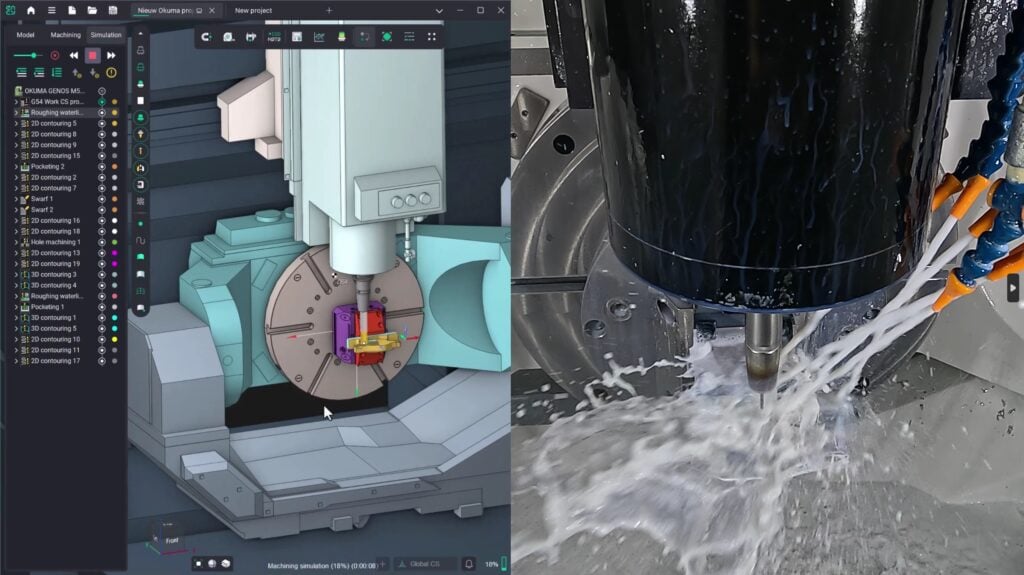
ENCY connects engineering data with real production 1024x575

ENCY joined Factory of the Future as a solution provider that connects engineering data with real production. CAM, postprocessing, machine connectivity and automation-ready workflows make it possible to build a continuous digital chain — from programming to machining and further automation.

At TechniShow ENCY was represented by its dealer CADCAMSTORE

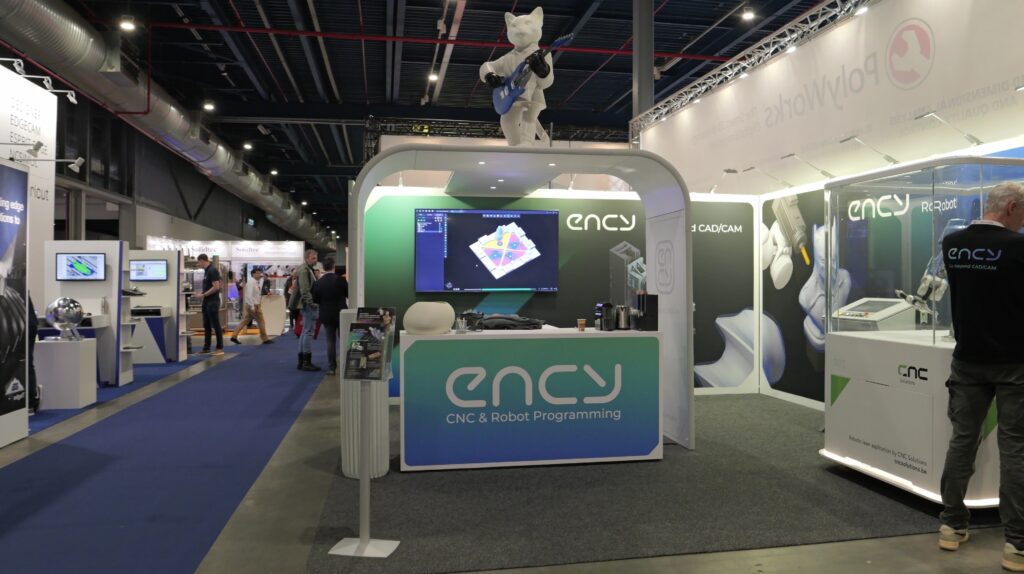
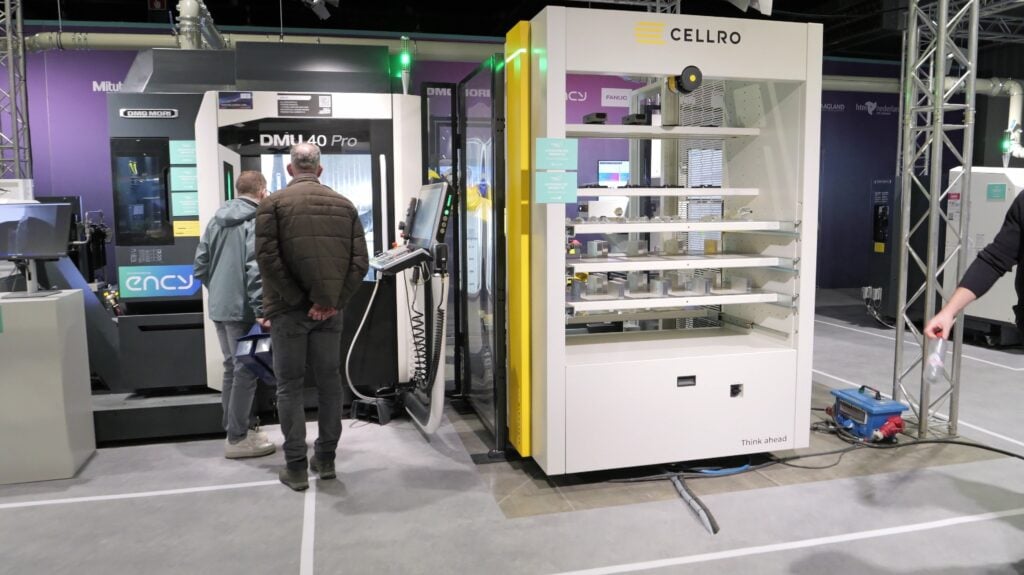
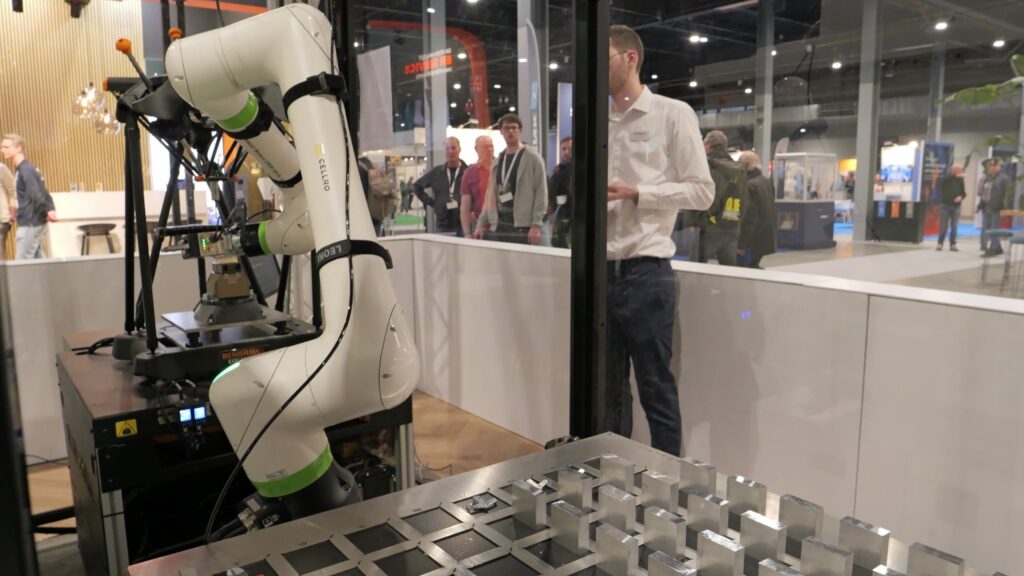
Factory of the Future was presented live at TechniShow, where ENCY was represented by its regional dealers — CADCAMSTORE in the Netherlands and CNC Solutions in Belgium. The demonstration focused not on standalone products, but on a connected production environment. Planning, order flow, CNC automation, process control and quality feedback worked as parts of one system.

This model is especially relevant for European manufacturing. Competition is intensifying. Skilled labor remains limited. Production is becoming more complex: batch sizes are shrinking, product variety is growing, and requirements for process stability are increasing. In these conditions, the advantage no longer goes to companies with more standalone solutions, but to those that connect programming, machining, automation and quality control more effectively.

For ENCY customers, this means more manageable production. Jobs can be launched faster. Manual work can be reduced. Automation becomes easier to implement. Production flows become more stable and transparent. This kind of connectivity increasingly determines how well a manufacturer can scale, meet deadlines and maintain predictable results.

Factory of the Future was presented live at TechniShow 2 1024x575

The next stage is already taking shape. Factory of the Future is moving beyond a one-time exhibition format toward deeper integration between software, CNC equipment, robotics, metrology and planning within one working environment. Another focus area is broader use of AI and data-driven workflows where they deliver practical value on the shopfloor — in flow control, setup reduction, autonomy and process stability.

Factory of the Future was presented live at TechniShow

For ENCY, participation in Factory of the Future reflects a broader market shift. Value is moving from individual functions to the ability to connect data, equipment and processes into one working production system. This is the direction in which ENCY is developing its solutions.

For more details – Visit – https://encycam.com/

PTC Connects Onshape CAD with NVIDIA Isaac Sim in Robotics Design-to-Simulation Workflow

0

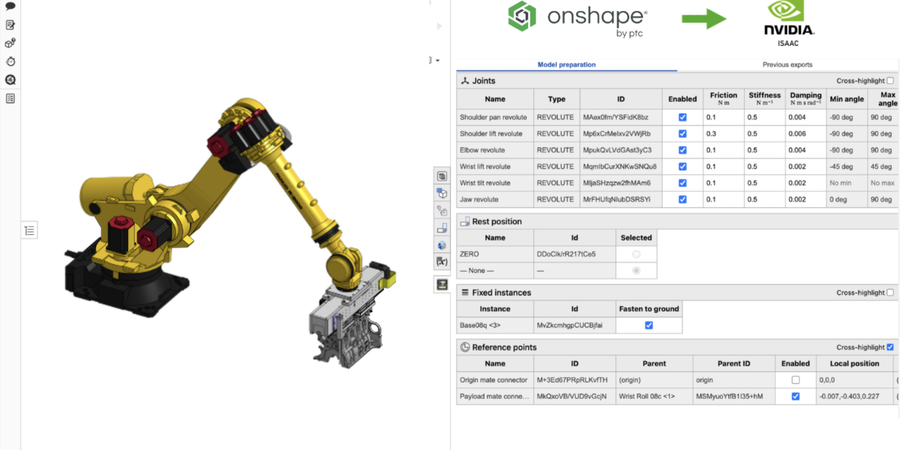
BOSTON, MA, USA, Mar 19, 2026 – PTC (NASDAQ: PTC) today announced a new robotics design-to-simulation workflow that connects PTC’s cloud-native Onshape computer-aided design (CAD) and product data management (PDM) platform with NVIDIA Isaac Sim open simulation framework. The workflow is being introduced at NVIDIA GTC 2026 to demonstrate how teams can simulate robot designs while maintaining a single source of truth, enabling time savings, reduced errors, and accelerated development, while also supporting physical AI through downstream robotic training in NVIDIA Isaac Lab.

Onshape NVIDIA

Robotics design requires constant iteration, with engineers updating mechanical designs and testing those changes in simulation. In many traditional workflows, that handoff is slow and manual, forcing teams to recreate joints, actuators, and other physical details after exporting CAD models. The Onshape–Isaac Sim workflow removes that friction by defining mechanical relationships once in Onshape and carrying them directly into Isaac Sim. When a design changes, the simulation updates automatically, helping companies such as FANUC America Corporation to move from CAD to physics‑based simulation more rapidly.

“The integration between Onshape and NVIDIA Isaac Sim will allow us to bring simulation earlier into how industrial robotic systems are designed and evaluated,” said Amar Dhaliwal, General Manager – Automation Systems Group, FANUC America Corporation. “That early insight enables better design decisions, faster integration, and smoother project execution—so our customers achieve the best possible results from their automation investments.”

“Robotics teams need workflows that keep pace with how fast ideas change,” said David Katzman, EVP and General Manager of Onshape and Arena, PTC. “By working with NVIDIA, we’re combining Onshape’s strength in continuous, collaborative design with world‑class simulation to help teams build the foundation for physical AI that supports the future of robotics engineering.”

“Robotics development depends on a continuous feedback loop between design and physics-accurate simulation,” said Rev Lebaredian, Vice President of Omniverse and simulation technologies. “Connecting PTC’s cloud-native Onshape platform to NVIDIA Isaac Sim ensures every design update is reflected instantly in simulation—enabling faster iteration and scaling the creation of intelligent machines.”

That connection is enabled by a cloud-native architecture built on Amazon Web Services (AWS), which keeps design and simulation in sync throughout development. As a result, engineers, researchers, and AI developers can focus on testing behavior and improving performance rather than preparing models for simulation.

The Onshape–Isaac Sim workflow is being showcased at NVIDIA GTC in San Jose from March 16 to 19, 2026. Additional technical sessions, partner content, and customer examples will be available throughout the event.

With Onshape and the rest of its portfolio, PTC is delivering on its vision for the Intelligent Product Lifecycle: enabling manufacturers and product companies to build a product data foundation, extend the value of that data across their enterprise, and accelerate AI-driven transformation. Broader use of product data enables companies to bring higher quality products to market faster, better manage product complexity, meet regulatory and compliance standards, and much more.

To learn more about Onshape, the industry’s only cloud-native CAD and PDM platform, visit www.onshape.com.

About PTC

PTC (NASDAQ: PTC) is a global software company enabling manufacturers and product companies to digitally transform how they design, manufacture, and service products. Headquartered in Boston, Massachusetts, PTC employs over 7,000 people and supports more than 30,000 customers globally. For more information, visit www.ptc.com.

Vectorworks 2026 Update 4 Released

0
VW2026 U4

COLUMBIA, MD, USA, Mar 19, 2026 – Global design and BIM software provider Vectorworks, Inc. releases its fourth update to the Vectorworks 2026 product line, expanding its data-driven workflow capabilities to help designers plan, document, and visualize projects with greater precision and efficiency at every stage of delivery. This update introduces intelligent phasing tools, enhanced embodied carbon analysis, and a real-time rendering integration with fellow Nemetschek Group brand Maxon, strengthening how teams manage project evolution, measure environmental impact, and communicate design intent.

“Vectorworks 2026 Update 4 reflects our ongoing commitment to empowering designers with smarter, more efficient tools,” said Vectorworks Vice President of Product Development Hugues Tsafak. “From the first iteration of phasing, supporting various project types and sizes, to enhanced sustainability dashboards and Maxon Redshift for Archviz, this release leverages our strength in data management to help designers plan, document, and visualize projects more accurately and sustainably. We remain committed to evolving these tools to meet the growing demands of modern design.”

Real-Time Visualization with Maxon Redshift for Vectorworks

High-quality rendering has traditionally been a time-consuming process, often requiring disconnected workflows and repeated exports between modeling and visualization tools. With Vectorworks 2026 Update 4, that process becomes significantly more seamless through Maxon Redshift for Vectorworks — making Vectorworks the first design platform to offer this level of direct, live integration with Maxon Redshift for Archviz rendering technology.

Available as a standalone product from Maxon, designers with a Redshift license can access the integration directly within the Vectorworks design environment with Update 4, allowing them to send active scenes to the Redshift Visualizer and immediately generate high-fidelity, real-time renderings. Unlike traditional export-based workflows, the Redshift Visualizer maintains live synchronization with the Vectorworks model. Geometry, lighting, cameras, and scene updates remain aligned between both environments, eliminating repetitive exports and reducing the risk of outdated visuals during presentations or design reviews, giving designers a faster, more reliable visualization workflow that supports both creative exploration and client communication.

A Smarter Renovation Workflow with the new Phasing System

Renovation and multi-phase projects now represent a significant share of work across the AEC industry, yet documenting existing building site conditions has historically required manual work and file duplication.

Now, Vectorworks 2026 Update 4 introduces a comprehensive Phasing system that embeds a time-based dimension directly into your BIM model. Assigning defined status conditions — including existing, new, demolished, relocated, or temporary — allows teams to track how projects progress across multiple stages accurately.

Integrated with Vectorworks’ powerful data management capabilities and leveraging Data Visualization, Phasing automatically controls object visibility and graphic representation across design layers and viewports. A dedicated Demolition tool further streamlines the process, improving documentation accuracy while eliminating redundant class and layer management.

As adaptive reuse and infill redevelopment become central to sustainable project delivery, clear renovation documentation is critical. Simplifying phased workflows within a unified environment means teams can reduce risk, improve coordination, and align projects with sustainability strategies focused on adaptation rather than replacement.

Advanced Sustainable Design with the Sustainability Dashboard’s Embodied Carbon Tools

As sustainability expectations intensify across the AEC industry, early-stage embodied carbon analysis has become critical. It often involves manual setup, inconsistent material categorization, and complex unit conversions that slow evaluation.

Update 4 advances the Vectorworks Embodied Carbon Calculator (VECC) in the Sustainability Dashboard by aligning predefined Concept and Planning categories with recognized frameworks, including RICS guidelines. Automated quantity aggregation and support for enhanced mixed-unit management streamline material analysis and strengthen standards-aligned reporting from concept through detailed design.

Embedding carbon intelligence directly into data-driven workflows means teams can assess impact earlier, compare design alternatives with greater clarity, and more readily integrate sustainability into everyday decision-making.

Enhancing Accuracy and Precision across Design Disciplines

Beyond its flagship capabilities, Vectorworks 2026 Update 4 introduces a series of discipline-specific refinements designed to enhance accuracy, efficiency, and documentation reliability across architecture, landscape, and entertainment workflows.

For AEC professionals, improved Class and Layer search functionality enables faster, more reliable navigation within complex files. The Linear Material tool now includes world-based parameters for stucco and plaster, allowing users to define exact Variation Length and Thickness for scale-accurate surface detailing in sections, producing realistic results without additional manual adjustments.

For landscape architects and designers, the Hedgerow tool is now fully integrated into the styled Landscape Area object, enabling more efficient, precise planting design. Designers can create complex staggered rows, visualize individual plants, and generate data-rich planting plans while maintaining accurate, easily updatable material schedules using styled objects.

Entertainment workflows continue to evolve in Vectorworks 2026 Update 4, with refinements to Spotlight numbering and device management tools. Visual directional previews and an Exclude field help prevent labeling errors before documentation is finalized, while the unified Device tool streamlines placement, editing, and tagging in a single interface. New Cable tool insertion modes further enhance efficiency by enabling one-click cable type switching during full-show design.

Availability

This update is now available for all currently released English-language versions of Vectorworks 2026 and is immediately accessible to subscription and Vectorworks Service Select customers. To install, select “Check for Updates” from the Vectorworks menu (Mac) or the Help menu (Windows).

Maxon Redshift for Vectorworks, which powers the new live rendering integration in Update 4, is available as a standalone product from Maxon and can be purchased either through Vectorworks or Maxon. To use Redshift for Vectorworks, customers must create a Maxon account and purchase a Redshift subscription. A 14-day free trial is available from Maxon, and students can access special pricing through Maxon’s student program. For more information on Maxon Redshift for Archviz, visit maxon.net/archviz.

To explore the latest features, start a free 7-day trial of Vectorworks Design Suite. For a comprehensive list of enhancements, visit the Tech Bulletin, and review the Public Roadmap to stay informed about upcoming developments and provide feedback on future features.

About Vectorworks, Inc.

Vectorworks, Inc. is an award-winning design and BIM software provider serving the architecture, landscape architecture and design, and entertainment industries in 85 countries. Professionals worldwide are using Vectorworks on Mac and Windows to create, connect, and influence the next generation of design. Built with designers in mind since 1985, Vectorworks software offers you the freedom to follow your imagination wherever it leads you. Headquartered in Columbia, Maryland, with offices in the UK, Canada, Australia, and Japan, Vectorworks is a part of the Nemetschek Group. Learn how you can design without limits at vectorworks.net or follow @Vectorworks.

Siemens Invests Over $165 Million to Scale Up Electrical Infrastructure Production across Carolinas

0

North and South Carolina, USA, Mar 19, 2026 – Siemens has invested more than $165 million across North and South Carolina to support America’s rapidly accelerating AI and data center markets. The new and expanded sites directly support Siemens’ record levels of data center-related electrical equipment orders while also increasing the company’s US manufacturing capacity.

These expanded facilities will enable faster production, assembly, and delivery of essential low and medium voltage products to customers. From protection and automation devices manufactured in Wendell, North Carolina, to busway systems produced in Roebuck, South Carolina, these solutions provide the electrical backbone needed to rapidly scale AI data centers and AI factories across the United States. These investments build on nearly $700 million Siemens has committed over the past several years to expand local U.S. manufacturing capacity, including new and expanded electrical products facilities in Pomona, California, and Fort Worth, Texas.

“Customer demand is at an all-time high as advanced infrastructure upgrades are needed to meet the power requirements from increasing AI workloads,” said Ruth Gratzke, President of Siemens Smart Infrastructure U.S. “Through sustained investment in U.S. manufacturing, Siemens is enhancing its capacity to meet the needs of data center and AI factory customers during this transformative phase of the AI industrial revolution, underscoring our long‑standing commitment to American made solutions.”

In North Carolina, Siemens is growing its footprint with two new all-electric, carbonneutral facilities. In Raleigh, the brand new 131,000-square-foot facility will add 100 jobs by the end of the year and will assemble Siemens’ integrated power delivery solutions. These prefabricated systems significantly reduce on-site installation time for critical power infrastructure, helping data center operators bring capacity online faster. In Wendell, a new 101,000-square-foot site will localize production of medium voltage protection and automation devices while adding 50 new roles. Lastly, Siemens’ Wendell-based Electrification and Automation U.S. headquarters will expand local switchgear production, creating more than 200 additional jobs at the facility by 2028.

In South Carolina, Siemens is opening a new 120,000-square-foot facility in Spartanburg that will house the company’s lighting panel production and distribution center. Nearby in Roebuck, the company’s current facility will also add 22,000 square feet. This will increase busway production capacity significantly along with additional fabrication capabilities. The expanded facility will feature a new paint line, epoxy line, and an expanded plating line. Together, the Spartanburg and Roebuck facilities will add 150 new manufacturing roles to Spartanburg County.

“Siemens’ investment in North and South Carolina will expand America’s ability to build the critical infrastructure that powers our grid, while also creating hundreds of American jobs,” said U.S. Energy Secretary Chris Wright. “The Trump Administration remains committed to unleashing the affordable, reliable, and secure power needed to power the future of American innovation and prosperity.”

These electrical products, together with Siemens’ simulation, automation and cooling optimization portfolios create a chip-to-grid-to-buildings solution that reshapes the infrastructure powering AI. Together these technologies ensure efficiency and resiliency for the data center industry as well as neighboring communities across the country.

As workforce development is as critical as production capacity for the future of AI infrastructure, the Siemens Foundation recently launched Careers Electric™, a national initiative designed to expand access to high-quality electrical training and create clear pathways to well-paying, in-demand electrical careers. Careers Electric™ launched in North Carolina with a $9.25 million investment from the Siemens Foundation, in partnership with state leaders, education institutions, and national workforce organizations. Together, through increased manufacturing capacity, technology development and workforce training initiatives, Siemens remains committed to aiding the U.S. in its position as a leader in innovation.

For more information on Siemens’ data center solutions, visit here.

About Siemens Smart Infrastructure

Siemens Smart Infrastructure (SI) is shaping the market for intelligent, adaptive infrastructure for today and the future. It addresses the pressing challenges of urbanization and climate change by connecting energy systems, buildings, and industries. SI provides customers with a comprehensive end-to-end portfolio from a single source – with products, systems, solutions, and services from the point of power generation all the way to consumption. With an increasingly digitalized ecosystem, it helps customers thrive and communities progress while contributing toward protecting the planet. To protect this journey, we foster holistic cybersecurity to ensure secure and reliable operations. Siemens Smart Infrastructure has its global headquarters in Zug, Switzerland, and its U.S. corporate headquarters in Peachtree Corners, Georgia, USA. As of September 30, 2025, the business had around 79,400 employees worldwide.

About Siemens AG

Siemens AG (Berlin and Munich) is a leading technology company focused on industry, infrastructure, mobility, and healthcare. The company’s purpose is to create technology to transform the everyday, for everyone. By combining the real and the digital worlds, Siemens empowers customers to accelerate their digital and sustainability transformations, making factories more efficient, cities more livable, and transportation more sustainable. A leader in industrial AI, Siemens leverages its deep domain know-how to apply AI – including generative AI – to real-world applications, making AI accessible and impactful for customers across diverse industries. Siemens also owns a majority stake in the publicly listed company Siemens Healthineers, a leading global medical technology provider pioneering breakthroughs in healthcare. For everyone. Everywhere. Sustainably.

In fiscal 2025, which ended on September 30, 2025, the Siemens Group generated revenue of €78.9 billion and net income of €9.0 billion. As of September 30, 2024, the company employed around 318,000 people worldwide on the basis of continuing operations. Further information is available on the Internet at www.siemens.com

CIMdata to Bridge Gap Between Digital Thread Theory and Practical Reality in its April Webinar

0
2026 April Webinar

ANN ARBOR, MI, USA, Mar 19, 2026 – CIMdata, Inc., the leading global research, consulting, and education firm specializing in Product Lifecycle Management (PLM) and the digital transformation it enables, announces an upcoming free educational webinar, Digital Threads and Twins in Theory and Practice: Benchmarked Industry Use Cases.” Hosted by James Roche, Aerospace & Defense Practice Vice President, and Janie Gurley, Director, Data Governance Practice, the webinar will take place on Thursday, 9 April 2026, at 11:00 a.m. (EDT) and last for one hour.

Today’s complex engineering systems demand unprecedented levels of data integration. While the vision of Digital Twins and Digital Threads (DTW-DTH) promises to revolutionize product lifecycles, many organizations struggle to translate concepts into tangible implementations. This session will tackle common industry pain points that often stall digital initiatives, moving beyond theory to demonstrate what is practical and achievable with currently available tools and methods.

The webinar will start by focusing on three core pillars of digital twins and threads:

  • The “What”: The scope of data required to form a digital thread or combine as a digital twin.
  • The “Why”: The tangible value realized from these data interrelationships and combinations.
  • The “How”: The architectural principles for designing views that enable collaboration between data creators and consumers along the entire product lifecycle.

Understanding that the theoretical “limitless possibilities” of DTW-DTH can be both a challenge and an opportunity, CIMdata, in collaboration with the Aerospace & Defense PLM Action Group (AD PAG), engaged with seven leading DTW-DTH solution providers. The group assessed the capabilities of commercially available software and services through a series of rigorous demonstrations using supported industry use cases.

During the webinar, CIMdata will review 7 of the 28 use cases demonstrated. These cases span all lifecycle stages and technical domains, from initial development and production to the utilization and support of complex systems, offering a clear view of real-world performance and value.

The webinar will help attendees:

  • Understand the core concepts and interrelationships between digital threads and twins.
  • Identify relevant product representations for creators and consumers across the lifecycle.
  • Learn basic guidelines for designing effective DTW-DTH structures.
  • Gain insights into solution provider implementations.
  • Understand the performance and value achieved from various real-world use cases.

According to James Roche, CIMdata’s Aerospace & Defense Practice Vice President, “The essential concepts of digital thread and digital twin are foundational to product lifecycle management (PLM), and examples can be found in industry that go back decades. Today, however, within an enterprise context of digital transformation, there is heightened corporate attention and investment to elevate and extend PLM with digital threads and digital twins that deliver value across all phases of the product lifecycle. And the methods and tools for implementation are advancing rapidly in response. This is an exciting time of challenge and opportunity.”

This educational webinar is essential for anyone responsible for or interested in product program integration, systems engineering, PLM program planning, or digital transformation. Target roles include Product & PLM Program Managers/Planners, Technical Architects, Systems Engineers, PLM & Digitalization Architects, Digital Transformation & Digitalization Strategists, and PLM Business Analysts.

About CIMdata

CIMdata, a global strategic management consulting firm, provides services designed to maximize an enterprise’s ability to design, deliver, and support innovative products and services. For more than forty years, CIMdata has provided industrial organizations, providers of digital technologies and services, and investment firms with world-class insight, expertise, and best-practice methods on a broad set of product lifecycle management (PLM) topics and the digital transformation they enable. CIMdata also offers research, subscription services, publications, and education through certificate programs and international conferences. To learn more, visit www.CIMdata.com or email info@CIMdata.com.

IRTI–Robotics Open House 2026 Showcases the Future of Automation in Pune

0
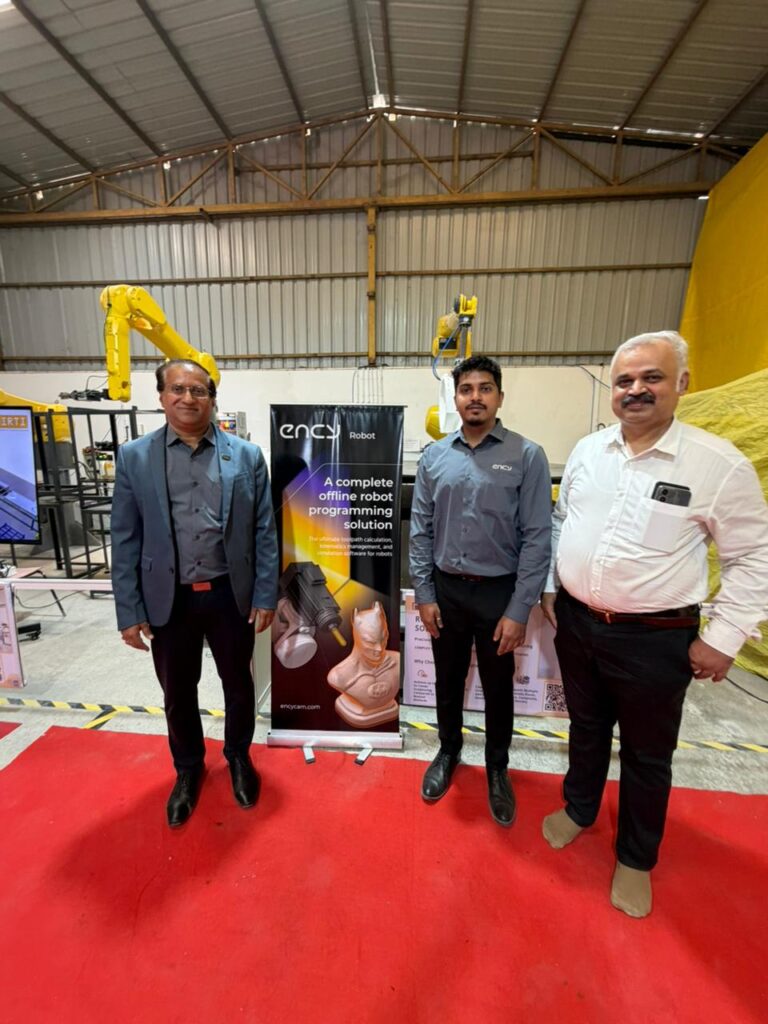
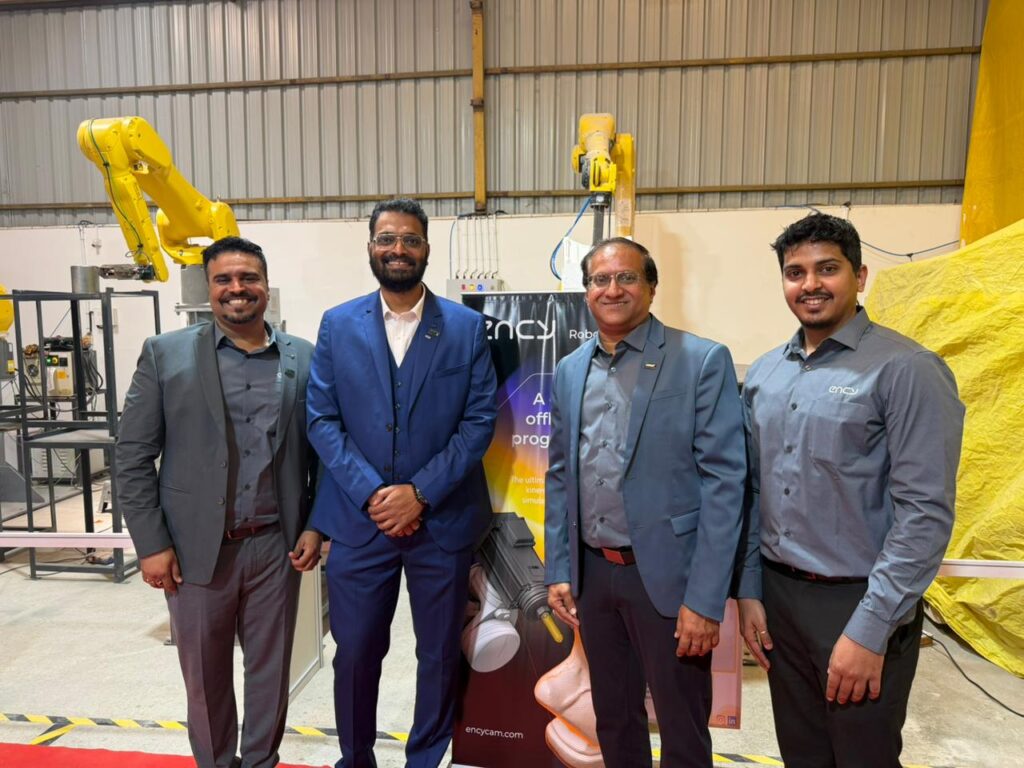
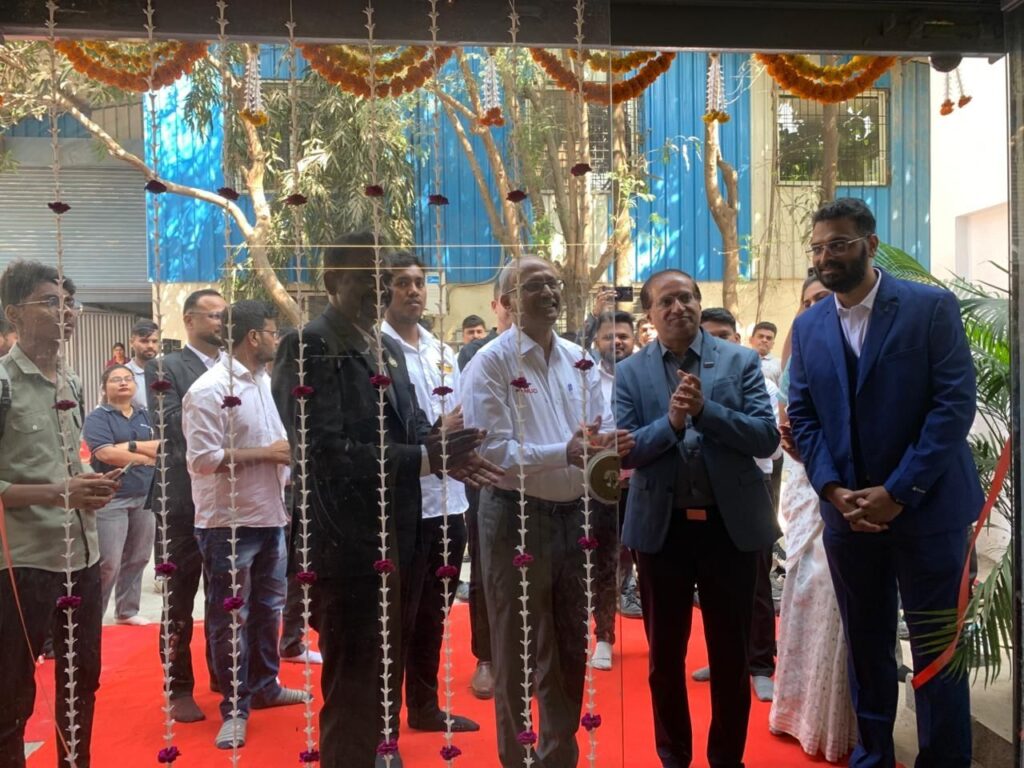
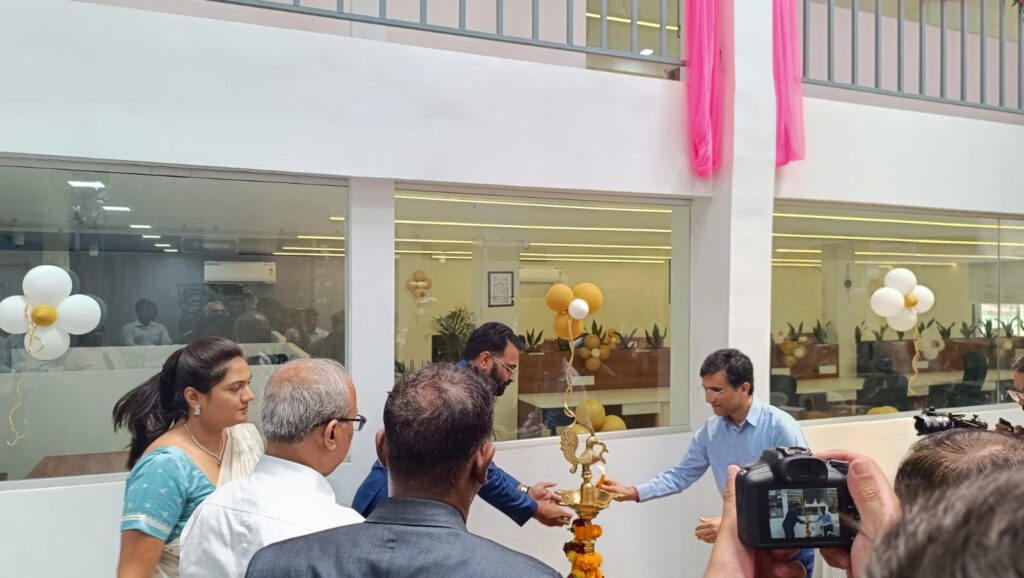
Innaguration

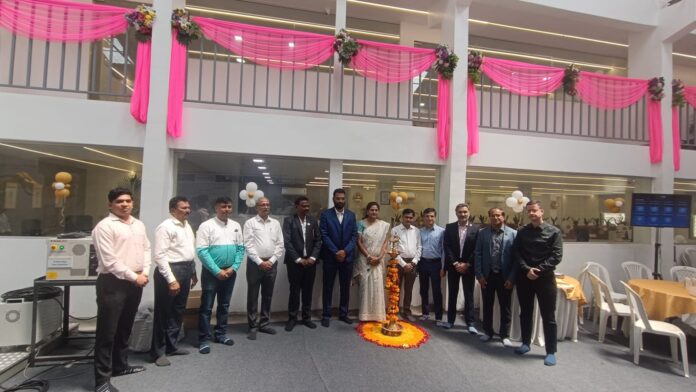
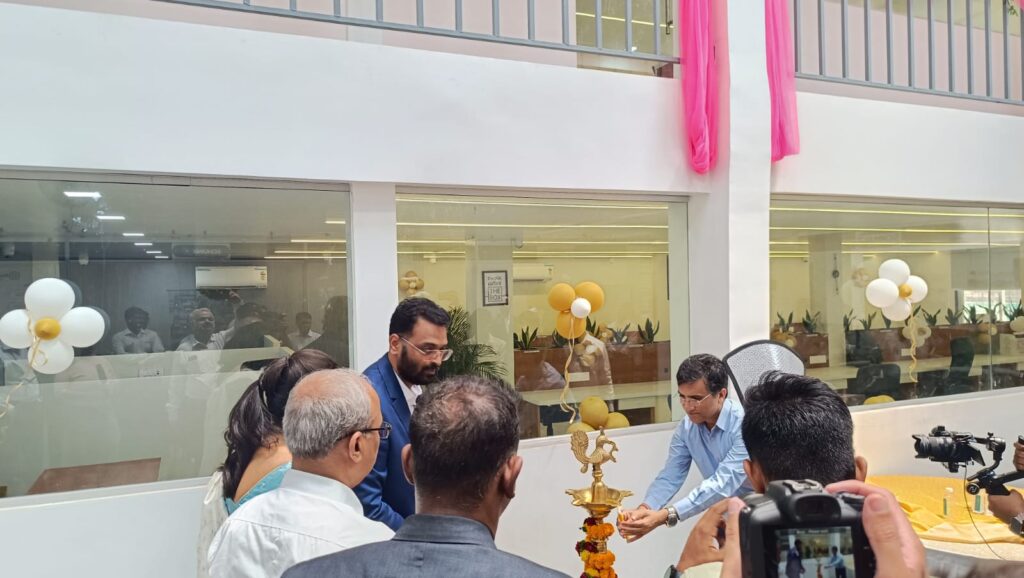
The IRTI–Robotics Open House 2026, held in Pune on March 16-17, 2026, brought together industry leaders, technology providers, and manufacturing professionals to explore the latest advancements in robotics, automation, and smart manufacturing. The event served as a dynamic platform for knowledge exchange, live demonstrations, and discussions on how robotics is reshaping industrial operations across sectors.

A Hub for Next-Gen Robotics Innovation

The open house featured a wide range of cutting-edge robotic solutions—from industrial robotic arms and collaborative robots (cobots) to advanced automation systems integrated with AI and machine vision. Attendees experienced live demonstrations showcasing real-world applications in welding, material handling, additive manufacturing, and precision assembly.

One of the key highlights was the increasing role of intelligent automation, where robotics systems are no longer standalone machines but part of interconnected digital ecosystems. Integration with IoT, data analytics, and digital twin technologies is enabling manufacturers to achieve higher productivity, flexibility, and efficiency.

Industry Collaboration and Knowledge Sharing

The event saw participation from global and regional technology providers, system integrators, and manufacturing companies. Experts shared insights on:

  • Adoption of robotics in SMEs
  • ROI and scalability of automation solutions
  • Human-robot collaboration for safer workplaces
  • The role of AI in predictive maintenance and process optimization

These discussions emphasized how Indian industries are steadily moving toward Industry 4.0, with robotics playing a central role in this transformation.

FANUC
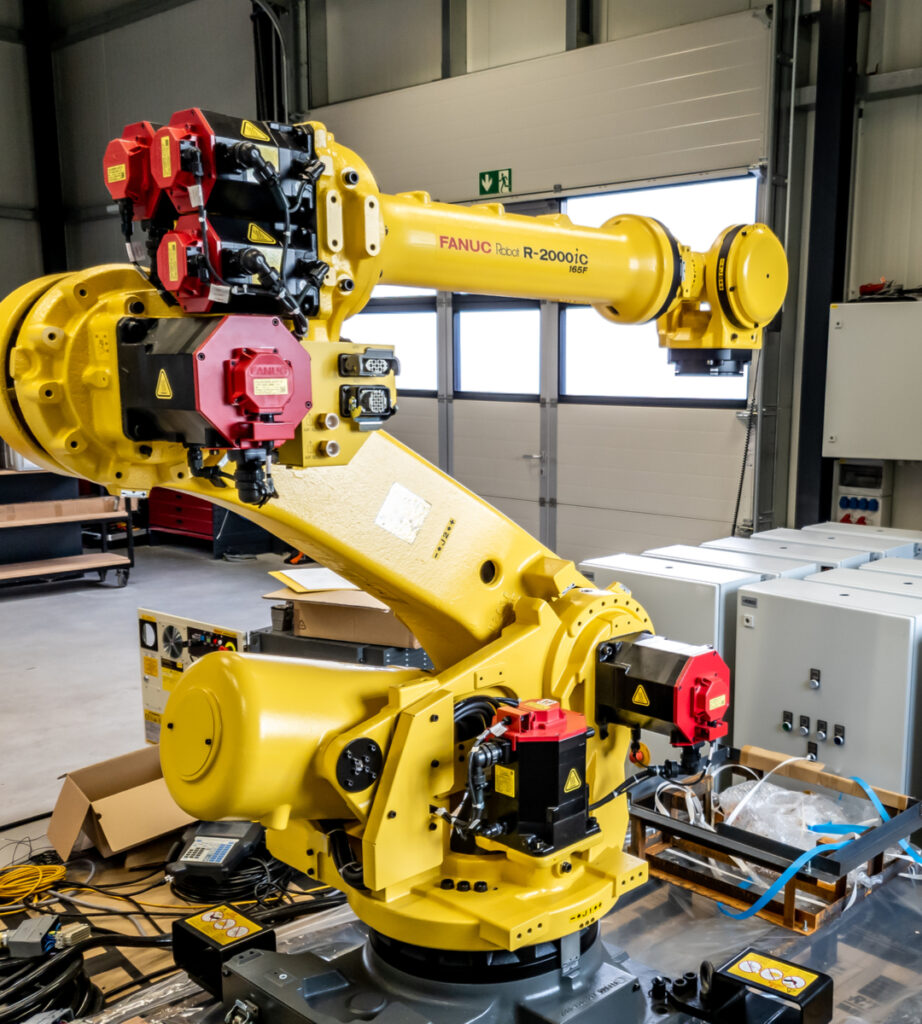
Image courtesy FANUC India

Strong Support from Industry Partners

The success of the event was driven by the collaboration of leading automation and technology partners. The organizers expressed their gratitude to key exhibiting companies, including:

  • FANUC India Pvt Ltd
  • SCHUNK India
  • Schmalz India
  • Meltio
  • Migatronic Group
  • Pilz
  • Renishaw India
  • DF Automation & Robotics
  • AUTOMECH ROBOTICS PVT LTD
  • ENCY Software
  • Boltmate Ventures LLP
  • Schaeffler

Their participation enabled attendees to experience a diverse ecosystem of solutions spanning robotics, tooling, metrology, AI-driven automation, and additive manufacturing.

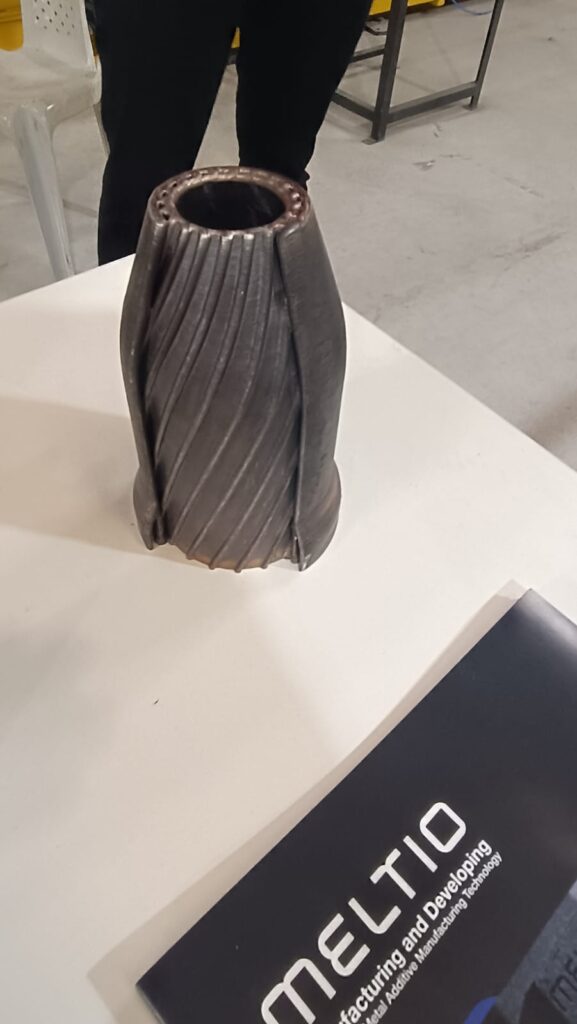
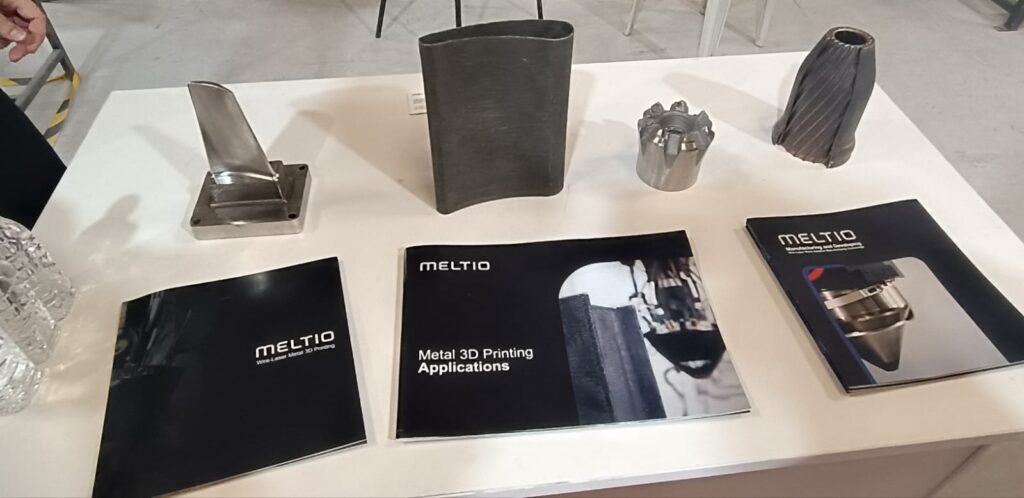
Spotlight on Metal Additive Manufacturing – Meltio 3D

A notable attraction was the demonstration of wire-laser metal 3D printing technology, highlighting how hybrid manufacturing is gaining traction in sectors such as aerospace, automotive, and heavy engineering. These solutions are enabling faster prototyping, repair, and production of complex components.

METAL

Pune: A Growing Robotics and Manufacturing Hub

Hosting the event in Pune further reinforced the city’s position as a key hub for engineering and manufacturing innovation in India. With its strong ecosystem of automotive, aerospace, and industrial companies, Pune continues to attract investments in advanced manufacturing technologies.

Driving the Future of Smart Manufacturing

The IRTI–Robotics Open House 2026 underscored a clear message: robotics and automation are no longer optional—they are essential for staying competitive in today’s fast-evolving industrial landscape. As companies embrace digital transformation, platforms like this open house play a crucial role in bridging the gap between technology providers and end users.

The event successfully demonstrated how robotics, combined with digital technologies, is redefining manufacturing processes. With increasing adoption across industries, India is poised to become a significant player in the global automation landscape—and initiatives like the IRTI–Robotics Open House are accelerating this journey.

Visit IRTI Website for more details – https://irti-robotics.com/

Bentley Systems Opens Submissions for 2026 Year in Infrastructure Awards, Inviting Global Projects to Showcase Digital Innovation

0
YIIAWARDS
  • Awards build on a two-decade legacy of recognized innovation, setting the benchmark for excellence across the world’s most critical infrastructure assets
  • Call for nominations now open; submissions will be accepted through May 3, 2026

EXTON, Pa. — March 18, 2026 — Bentley Systems, Incorporated (NASDAQ: BSY), the infrastructure engineering software company, today announced the opening of submissions for the Year in Infrastructure event and YII Awards program, which recognizes digital innovation in how infrastructure is designed, built, and operated using Bentley software.  Submissions will be accepted through May 3, at 11:59 p.m. EDT.

“Originally, the Bentley awards recognized designers who used 3D technology to drive efficiency,” said Monica Schnitger, founder, president, and principal analyst of Schnitger Corporation. “Now they assess how massive projects are building and leveraging rich data assets to create value throughout the entire lifecycle of a project — from initial financial decision-making through design and construction.”

Over the past two decades, more than 5,500 of the world’s most significant infrastructure projects have participated in Bentley’s award program. Past winners have included landmark projects such as the digital twin for structural monitoring of St. Peter’s Basilica in Vatican City; the Seine Nord Europe Canal in France; the Thames Tideway Tunnel in the UK; Siemensstadt Square in Germany; Sydney Airport in Australia; the Fairmont Udaipur Palace in India; the Beijing Zhangjiakou highspeed railway in China; the Ontario Line subway in Canada; and EchoWater, one of the largest agricultural water recycling facilities in the United States. These projects demonstrate how digital innovation delivers measurable economic, environmental, and societal impact.

“Around the world, infrastructure professionals rely on Bentley software to design, build, and operate infrastructure that is more resilient, efficient, and sustainable,” said Cate Lochead, chief marketing officer at Bentley Systems. “The YII Awards celebrate real world results from teams that are innovating in areas that include ground informed design, connected data, and AI. It is important to promote this work as best practice as these achievements set a new standard for what’s possible across the infrastructure ecosystem.”

Submissions are evaluated by independent panels of industry experts based on digital advancement and quantifiable results, including improvements in efficiency, cost performance, resilience, and sustainability.

The YII Awards 2026 recognize excellence across the full spectrum of infrastructure disciplines and innovation, with categories including Bridges and Tunnels; Cities and Facilities; Construction; Energy Production; Geospatial and Reality Modeling; Project Delivery; Rail and Transit; Roads and Highways; Structural Engineering; Subsurface Modeling and Analysis; Transmission and Distribution; and Water and Wastewater. Finalist projects contribute to the industry through detailed project stories, digital playbooks, and presentations shared as part of the awards program.

Submission Details:

  • Opens: March 18, 2026
  • Closes: May 3, 2026, at 11:59 p.m. EDT
  • Eligibility: Projects of any size or stage that utilize Bentley software
  • Finalists and Winners: Finalists will be announced in August 2026. Finalists will be invited to present their projects at the Year in Infrastructure event in Singapore, October 6-7, where category winners will be revealed.

For more information or to submit a project, visit Awards | The Year in Infrastructure | Bentley Systems.

# # #

About Bentley Systems

Around the world, infrastructure professionals rely on software from Bentley Systems to help them design, build, and operate better and more resilient infrastructure for transportation, water, energy, cities, and more. Founded in 1984 by engineers for engineers, Bentley is the partner of choice for engineering firms and owner-operators worldwide, with software that spans engineering disciplines, industry sectors, and all phases of the infrastructure lifecycle. Through our digital twin solutions, we help infrastructure professionals unlock the value of their data to transform project delivery and asset performance.

© 2026 Bentley Systems, Incorporated. Bentley and the Bentley logo are registered trademarks of Bentley Systems, Incorporated. All other brands and product names are trademarks of their respective owners.

Nore: Image courtesy of Bentley Systems, with credit to PT. Wika Tirta Jaya Jatiluhur (WTJJ), Voyants Solutions Private Limited, EGIS, and Baosteel Engineering & Technology Group Co., Ltd.

Siemens, Rittal Collaborate on Data Center Energy Infrastructure

0
Siemens Rittal

ZUG, Switzerland and HERBORN, Germany, Mar 18, 2026 – Siemens and Rittal have entered a strategic partnership to jointly develop future-proof, sustainable solutions for more efficient data center power distribution in the IEC market. The standardized infrastructure is intended to accelerate the construction of high-performance data centers, minimize time-to-compute, and address the rapidly increasing power densities of AI applications.

In AI data centers, power densities exceeding 100 kW per rack have become the norm. By 2030, the power density could increase to more than 1 MW. This requires innovative architecture for power distribution, cooling, and heat recovery. To address this, Siemens Smart Infrastructure, a leading international technology partner for efficient and safe power distribution, is partnering with Friedhelm Loh Group and its largest company Rittal, a global supplier of racks and standardized infrastructure, including power and cooling for leading hyperscalers.

“We have a long-standing collaboration with Siemens in a number of fields. We are proud to be taking our partnership to the next level,” said Prof. Dr. Friedhelm Loh, owner and CEO of the Friedhelm Loh Group. “Both companies are driven by the desire to innovate. As technology leaders, we have a responsibility to keep strengthening our customers’ competitiveness with the latest technologies.”

One of the first joint solutions will be a “sidecar” application that is housed directly in the white space of a data center, where the server cabinets and data storage are located. By bundling the power electronics in a dedicated power rack that supplies the server racks, this type of power supply represents a breakthrough for future AI applications. It provides computing units with a fast, simple, standardized, and scalable supply of power. OCP standards and the modular solution with tested technology from Rittal and Siemens ensure fast deployment, high availability, reliable operation, and maximized tokens-per-watt. These are the prerequisites for quickly bringing these relevant technologies to the digital economy.

“To enable the rapid growth of AI, we need smart, reliable, and scalable power supply solutions for data centers and we need them quickly. In combination with our innovative electrical products and solutions, Rittal is an ideal partner when it comes to speed and standardization in infrastructure,” said Andreas Matthé, CEO Electrical Products at Siemens Smart Infrastructure.

Other Siemens and Rittal projects include the development of a standardized low-voltage distribution system for modular and containerized data centers as well as optimized solutions for operational and personal safety. The first customer projects are already underway.

These data center applications are made possible by the coordinated components from Siemens and the power distribution platforms RiLineX and Ri4Power from Rittal Energy & Power Solutions.

The collaboration between Siemens and Rittal is set to extend to other industries and applications in the future.

About Siemens Smart Infrastructure

Siemens Smart Infrastructure (SI) is shaping the market for intelligent, adaptive infrastructure for today and the future. It addresses the pressing challenges of urbanization and climate change by connecting energy systems, buildings, and industries. SI provides customers with a comprehensive end-to-end portfolio from a single source – with products, systems, solutions, and services from the point of power generation all the way to consumption. With an increasingly digitalized ecosystem, it helps customers thrive and communities progress while contributing toward protecting the planet. To protect this journey, we foster holistic cybersecurity to ensure secure and reliable operations. Siemens Smart Infrastructure has its global headquarters in Zug, Switzerland. As of September 30, 2025, the business had around 79,400 employees worldwide.

About Siemens AG

Siemens AG (Berlin and Munich) is a leading technology company focused on industry, infrastructure, mobility, and healthcare. The company’s purpose is to create technology to transform the everyday, for everyone. By combining the real and the digital worlds, Siemens empowers customers to accelerate their digital and sustainability transformations, making factories more efficient, cities more livable, and transportation more sustainable. A leader in industrial AI, Siemens leverages its deep domain know-how to apply AI – including generative AI – to real-world applications, making AI accessible and impactful for customers across diverse industries. Siemens also owns a majority stake in the publicly listed company Siemens Healthineers, a leading global medical technology provider pioneering breakthroughs in healthcare. For everyone. Everywhere. Sustainably. In fiscal 2025, which ended on September 30, 2025, the Siemens Group generated revenue of €78.9 billion and net income of €10.4 billion. As of September 30, 2025, the company employed around 318,000 people worldwide on the basis of continuing operations. Further information is available on the Internet at www.siemens.com.

About Rittal

Rittal is a leading global systems provider for hardware, software and automation. Its solutions for industrial, IT, energy, power and cooling applications are used in over 90 per cent of industries worldwide – standardised, customised and of the highest quality. Our delivery promise: Rittal series products are delivered within 24 hours in Germany and within 48 hours in Europe. With a combination of hardware, software and automation, Rittal, Rittal Software Systems (Eplan, Cideon) and Rittal Automation Systems (RAS, Ehrt, Alfra) optimise and digitise their customers’ processes along the entire value chain – from control and switchgear manufacturing to mechanical engineering and the manufacturing industry to the energy sector and IT infrastructure. The companies are driving AI forward in industry and enabling high-performance IT infrastructure for AI applications worldwide. 

Environmental and climate protection, social commitment and ethical corporate governance are a given for Rittal. We take our responsibility for a sustainable future seriously. Our approach to conserving resources includes optimising our own production processes, minimising the carbon footprint of our products and providing solutions that support our customers in achieving their climate targets. With a ‘Gold’ rating from the independent rating agency EcoVadis, Rittal ranks among the top 5 per cent of the companies assessed. 

Family business and global player: Rittal was founded in 1961 and is the largest company in the owner-managed Friedhelm Loh Group. The family business stands for clear, lived values that unite ownership, management and staff. The Friedhelm Loh Group is internationally successful with 13 production sites and 95 subsidiaries, employs 12,600 people and achieved a turnover of 3.1 billion euros in 2024. In 2023, it was awarded ‘Best Place to Learn’ and ‘Employer of the Future’. In 2025, Rittal received the Top 100 seal for the fourth time in a row as one of the most innovative medium-sized companies in Germany. The Rittal plant in Haiger achieved overall victory in the ‘Factory of the Year’ benchmark competition in 2025, ranking it as one of the best factories in Europe.

Further information can be found at www.rittal.com and www.friedhelm-loh-group.com.

Maxon Releases Redshift for Vectorworks; Launches Beta for Revit

0
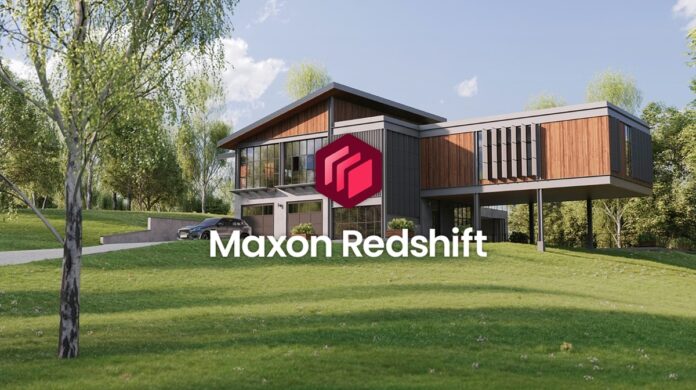
Maxon Redshift

BAD HOMBURG, Germany, Mar 18, 2026 – Maxon, maker of powerful, approachable software solutions for creators working in 2D and 3D design, motion graphics, visual effects, gaming, and more, announced the commercial availability of Redshift for Vectorworks. Additionally, the company announced the beta launch of Redshift for Autodesk Revit. This marks the next major milestone in Maxon’s expansion into the Architecture, Engineering & Construction (AEC) market, with additional integrations planned. 

Engineered for architects and interior designers, Maxon’s AEC solution brings the company’s industry-proven cinematic rendering technology, Redshift, and the creative depth of Cinema 4D directly into professional archviz workflows. Designed as a native plugin for leading CAD/BIM platforms, Maxon makes its official entry into the market with Redshift for Vectorworks, which launches alongside the release of Vectorworks 2026 Update 4. The solution enables users to seamlessly move from real-time design previews to high-end, photorealistic renders within a unified ecosystem. Redshift for Revit, now in beta, will launch later this year, with even more integrations planned for 2026 and 2027. 

“Maxon’s tools have a rich history in media and entertainment, used by the creative teams behind so many popular Hollywood movies to create Oscar-winning visual effects,” said Nicolas Burtnyk, Maxon’s Executive VP Rendering. “Now, we’re bringing this same magic to architects and interior designers, helping them translate their vision into cinematic visual experiences worthy of big screens.”

A New Standard for End-to-End Architectural Workflows

Built on Maxon’s robust 3D ecosystem, the new AEC solution provides:

  • Archviz in real-time. Architects can visualize designs instantly in real time, then elevate scenes using the same Redshift technology used in feature films – without leaving their CAD environment. Projects can be sent to Cinema 4D with a single click for advanced modeling, animation, simulation, fly-throughs, and rendering.
  • Exceptional ease of adoption. Early user testing highlights a key priority: effortless setup, intuitive controls, and fast results, especially for iterative workflows where architects need to explore lighting, materials, and composition quickly.
  • Intelligent, production-ready asset libraries. Maxon’s platform includes a vast library of assets known as “Capsules” – materials, plants, furniture, and environmental elements – updated monthly and supported by procedural tools and AI-assisted search for rapid scene building and creative iteration. As the Archviz solution evolves, so will its library.
  • Full Mac and Windows parity. Whether teams work on Mac, Windows, or a mix of both, Maxon’s AEC solution delivers consistent performance and functionality across platforms. Architects can collaborate fluidly, share files with confidence, and maintain unified workflows throughout their design-to-visualization process.
  • Better value for architects and studios. Compared with market alternatives, Maxon’s first-wave AEC offering launches at a significantly more affordable price, while offering compatibility with broader DCC pipelines, including Maya and Houdini.

See Redshift for Archviz at Upcoming AEC Events

Maxon will be showcasing the capabilities of Redshift for architectural visualization and interior design applications in live demonstrations at the following events in 2026:

Redshift for Vectorworks Availability

Redshift for Vectorworks is now available for purchase through either Maxon or Vectorworks (initial language support for English, with additional international versions rolling out through summer 2026). When bundled with Vectorworks, users can benefit from significant discounts on Redshift, making it the most affordable renderer in its category.

Sign Up for Redshift Beta

Redshift for Revit is now open for beta; Redshift for Graphisoft Archicad beta will be released later in 2026. To sign up, visit Maxon Archviz.

About Maxon

Maxon makes powerful, yet approachable software solutions for content creators working in 2D and 3D design, motion graphics, visual effects and visualization. Maxon’s innovative product portfolio helps artists supercharge their creative workflows. Our product lines include the award-winning Cinema 4D suite of 3D modeling, simulation and animation technology; the creativity-on-the-go Forger mobile sculpting app; the diverse Red Giant lineup of revolutionary editing, motion design and filmmaking tools; the leading-edge, blazingly fast Redshift renderer; and ZBrush, the industry-standard digital sculpting and painting solution. Maxon’s team is comprised of fun, passionate people who believe in building and empowering a successful artistic community. From our popular, inclusive events to our free Cineversity educational resources, Maxon recognizes that developing strong connections with creatives and fostering their professional growth is integral to our ability to stay on top of industry trends and better serve customers. Maxon is part of the Nemetschek Group.