Home Blog Page 17

DFM, DFA, DFMA, DFMEA, and DQA: Enabling Smarter Product Development with CAD and PLM

0
DFMA

In modern product development, engineering teams must balance innovation, manufacturability, quality, and speed to market. Designing a product that performs well is only one part of the challenge. The product must also be easy to manufacture, simple to assemble, reliable in operation, and compliant with quality standards.

To achieve these goals, organizations increasingly rely on structured engineering methodologies such as DFM, DFA, DFMA, DFMEA, and DQA. When integrated with advanced digital engineering tools such as SOLIDWORKS, Siemens NX, CATIA, Creo and product lifecycle management platforms like Teamcenter or 3DEXPERIENCE Platform, these methodologies help companies reduce costs, improve product quality, and streamline the entire product lifecycle.


Design for Manufacturing (DFM)

Design for Manufacturing (DFM) ensures that products are designed in a way that simplifies manufacturing processes and minimizes production costs.

In the past, manufacturability issues were often discovered only after design completion, leading to redesigns and delays. Today, modern CAD and simulation tools allow engineers to evaluate manufacturability early in the design stage.

How CAD tools support DFM

Using tools like SOLIDWORKS and Siemens NX, engineers can:

  • Analyze wall thickness and draft angles for molded parts
  • Evaluate machining feasibility
  • Optimize tolerances and materials
  • Identify potential manufacturing constraints

For example, NX Manufacturing can simulate machining processes directly from the CAD model, helping engineers validate tool paths and reduce production errors before actual machining begins.


Design for Assembly (DFA)

Design for Assembly (DFA) focuses on minimizing assembly complexity and improving production efficiency.

Assembly operations often represent a large percentage of manufacturing cost. DFA aims to simplify these processes by reducing part counts and improving component integration.

Digital support for DFA

Modern CAD tools provide powerful assembly modeling capabilities.

Using CATIA, NX or SOLIDWORKS, engineers can:

  • Create detailed assembly structures
  • Evaluate assembly sequences
  • Detect interference and collisions
  • Simulate assembly processes

Digital assembly simulations help teams identify potential issues such as accessibility problems or incorrect part orientation before physical prototypes are built.


Design for Manufacturing and Assembly (DFMA)

Design for Manufacturing and Assembly (DFMA) integrates the principles of DFM and DFA into a unified design strategy.

Instead of optimizing manufacturing and assembly separately, DFMA encourages engineers to evaluate the entire production workflow from design to final assembly.

Benefits of DFMA in digital engineering

With integrated platforms like the 3DEXPERIENCE Platform, teams can collaborate across disciplines, including design, manufacturing, and supply chain.

Key advantages include:

  • Reduced component count
  • Simplified product architecture
  • Lower manufacturing and assembly costs
  • Faster product development cycles

By leveraging digital twins and collaborative engineering environments, organizations can implement DFMA practices much earlier in the product development lifecycle.


Design Failure Mode and Effects Analysis (DFMEA)

Design Failure Mode and Effects Analysis (DFMEA) is a systematic method used to identify and mitigate potential design failures before production begins.

DFMEA is especially critical in industries such as automotive, aerospace, and industrial machinery, where product reliability and safety are essential.

Role of PLM systems in DFMEA

PLM platforms like Teamcenter or the 3DEXPERIENCE Platform help manage DFMEA processes digitally.

These platforms allow organizations to:

  • Document potential failure modes
  • Track risk assessments and mitigation actions
  • Maintain traceability between design changes and risk analysis
  • Enable collaboration across engineering teams

By linking DFMEA directly to CAD models and product data, companies can ensure that risk management remains an integral part of the design process.


Design Quality Assurance (DQA)

Design Quality Assurance (DQA) ensures that the final product design meets performance, regulatory, and customer requirements.

DQA involves continuous validation of design decisions throughout the product lifecycle.

How digital tools enable DQA

Advanced simulation and PLM platforms help ensure design quality through:

  • Design verification and validation workflows
  • Simulation-driven design analysis
  • Compliance and documentation management
  • Change management and version control

For example, integrated simulation capabilities within Siemens NX or CATIA allow engineers to test structural performance, thermal behavior, and product durability during the design phase itself.


The Role of Digital Engineering in Modern Product Development

The convergence of CAD, simulation, manufacturing software, and PLM platforms has transformed how engineering teams implement DFM, DFA, DFMA, DFMEA, and DQA.

With connected digital workflows, organizations can:

  • Detect design issues earlier
  • Reduce physical prototyping costs
  • Improve cross-team collaboration
  • Accelerate product innovation

Digital engineering platforms create a single source of truth for product data, enabling companies to make faster and more informed design decisions.


As products become more complex and markets demand faster innovation cycles, integrating methodologies such as DFM, DFA, DFMA, DFMEA, and DQA into the digital product development workflow is becoming essential.

By leveraging advanced tools such as SOLIDWORKS, Siemens NX, CATIA, and PLM platforms like Teamcenter and the 3DEXPERIENCE Platform, engineering organizations can deliver products that are efficient to manufacture, reliable in performance, and competitive in today’s global market.

For readers in the engineering and manufacturing ecosystem, adopting these practices is not just about improving design—it is about building a smarter, more connected digital engineering environment that supports innovation from concept to production.
Invitation
Siemens sd17

CONTACT Launches Fourier AI for Next-Gen Product Creation

0
CONTACT software

BREMEN, Germany, Mar 9, 2026 – CONTACT introduces a powerful, scalable AI infrastructure for demanding industrial environments. CONTACT Fourier AI combines leading AI technologies with full data sovereignty and deep Engineering and Manufacturing Intelligence – delivering maximum efficiency and speed in development, production, and service.

FourierAI PM 800px

For industrial companies, Artificial Intelligence (AI) is no longer a vision of the future. Instead, they are faced with the challenge of using this technology safely, efficiently, and profitably. Instead of delivering real value, general AI tools fail to meet industrial requirements, fragment the data and system landscape, drive up operational costs, and compromise data sovereignty.

With Fourier AI, CONTACT now provides the technological basis for the next level of industrial value creation. The holistic Fourier AI architecture is specifically designed for the complex requirements of mechanical and plant engineering, the automotive sector, and highly compliance-driven industries. It anchors AI in every phase of the product lifecycle and significantly increases productivity. “Fourier AI makes AI a strategic success factor,” says Karl Heinz Zachries, CEO of CONTACT. “Thanks to its outstanding automation capabilities, companies become faster, boost their productivity, and today’s labor cost disadvantages become less significant in global competition.”  

Domain-specific AI for industrial requirements

Unlike general AI tools, Fourier AI provides domain-specific AI applications in public cloud, private cloud, or on-premises environments that make multimodal data contextually and seamlessly available. “We developed Fourier because industrial AI has different requirements than consumer applications,” explains Frank Patz-Brockmann, CTO of CONTACT. “Engineers who are looking for similar components, for example, need AI that has a precise understanding of geometries, materials, and manufacturing processes.”

To achieve this, Fourier AI combines leading AI models with highly specialized AI applications developed by CONTACT for demanding engineering tasks. The Fourier Orchestrator dynamically and automatically selects the best model for each task – whether from third-party providers, open source, or in-house development. In addition to saving time, it provides a transparent overview of usage and precise cost control.

Seamless integration into CONTACT Elements

The strength of CONTACT’s Industrial AI offering over existing solutions on the market lies in its interaction with the modular CONTACT Elements platform. Fourier AI is deeply integrated into the platform’s end-to-end architecture as an intelligent layer and makes all engineering processes and data available contextually across disciplines. This enables AI applications to deliver reliable results based on a holistic understanding of the product development process – from the initial customer requirement to the finished assembly or product. Existing security policies and access rights of the platform are automatically adopted, and every action is comprehensively documented in an audit-proof manner. This guarantees maximum compliance and audit security.

Digital sovereignty as standard

Fourier AI was developed according to the “Security by Design” principle and offers full data sovereignty. The Fourier AI architecture ensures that sensitive engineering data can remain entirely local at the customer’s premises, while compute-intensive AI operations run anonymously in a GDPR-compliant, secure cloud environment. This guarantees maximum protection of the customer’s data and know-how. CONTACT Elements’ robust role and rights concept ensures that the AI only accesses the information for which respective users are authorized.

For more information, visit https://www.contact-software.com.

America Makes, NCDMM Announce Two New Project Calls of $35 Million

0

YOUNGSTOWN, OH, USA, Mar 9, 2026 — America Makes and the National Center for Defense Manufacturing and Machining (NCDMM) announced two new project calls worth over $35M. Both are funded by the Office of the Under Secretary of Defense, Manufacturing Technology Office (OSD ManTech).

The 2026 Department of Defense (DoD) Organic Industrial Base (OIB) Modernization Challenge, released in cooperation with our fellow Manufacturing Innovation Institutes (MII), focuses on advancing additive manufacturing (AM) and related technologies to support defense manufacturing modernization. Typical awards will range from $10M to $15M. Larger concepts up to $25M will be considered with appropriate justification.

The project targets AM and advanced manufacturing challenges across the OIB, including digital operations technology, AI robotic process planning, in-situ quality checks, reducing operation exposure to hazards, lowering operational costs, pilot lines for emerging military products, and mobile/large surface automation. Addressing these technological gaps is crucial to national security, ensuring a robust and responsive Defense Industrial Base (DIB) capable of meeting the DoD’s evolving needs.

“Modernizing the organic industrial base is a readiness imperative,” said John Martin, Additive Manufacturing Research Director at America Makes. “Through this project, we’re hardwiring shopfloor improvements and additive manufacturing into daily production to drive measurable reductions in cost per pound of material, while boosting throughput, quality, and resilience. By making AM a core requirement for submissions, we turn fragmented innovation into award-winning capabilities that scale across depots and arsenals.”

Proposed efforts are expected to deliver actionable insights that reduce technical and industrial risk while enabling realistic transition pathways. Collectively, the outcomes are intended to provide mutual value to the DoD and OIB.

The 2026 DoD OIB Modernization Challenge encompasses nine topic areas, including:

  • Topic 1: Digital Operations Technology
  • Topic 2: Real-Time Manufacturing Sensors for Robotics
  • Topic 3: AI Robotic Process Planning
  • Topic 4: In-Situ Quality Checks
  • Topic 5: Reduced Operator Exposure
  • Topic 6: Reduced Cost of Operations
  • Topic 7: Pilot Line of Non-Traditional OIB Products
  • Topic 8: Mobile and Large Surface Automation
  • Topic 9: Other AM Technology or Process

The second project call, Joint Additive Qualification for Sustainment – Supplier Qualification (JAQS-SQ) – Groups 2 & 3, is worth $10.5M in funding and focuses on unified requirements and training for the qualification of laser powder bed fusion (LPBF) AM and directed energy deposition (DED) suppliers for the metal AM industrial base. Up to 30 awards are anticipated in total.

This project builds on the original JAQS‑SQ effort to strengthen manufacturing readiness and expand the capabilities of the DIB by standardizing AM training and audits, aligning suppliers with acquisition requirements, accelerating the onboarding of non-traditional vendors, and ensuring consistent, qualified production. The training curriculum will be developed in partnership with Wichita State University – National Institute for Aviation Research (WSU‑NIAR). Specifically designed for production and engineering operations managers, this practical training will teach leaders how to implement process control documents and qualification principles effectively. Once suppliers have completed training and integrated the guidance, an audit will be conducted to verify the capability of operating as a qualified AM manufacturer for the DoD. This includes demonstrating the ability to execute a performance qualification as defined in the curriculum and required by the audit.

“The Defense Industrial Base needs more qualified additive manufacturing suppliers — and JAQS is scaling to deliver them,” said Ben DiMarco, Technology Transition Director at America Makes. “Preparing these suppliers now strengthens the U.S. Defense Industrial Base and builds the advanced manufacturing capacity our warfighters will depend on for decades. A year from now, we expect more than 30 qualified suppliers. The AM community, especially parts producers, should lean in.”

Project call timeline:

  • Launch: Thursday, March 5
  • Kickoff Webinars:
    • March 10 for DoD OIB Modernization Challenge (Registration Required HERE)
    • March 12 for JAQS-SQ – Groups 2& 3 (Registration Required HERE)
  • Submission Deadline:
    • April 2 by 5 p.m. ET for DoD OIB Modernization Challenge
    • April 29 by 5 p.m. ET for JAQS-SQ – Groups 2 & 3

Proposers for the 2026 DoD OIB Modernization Challenge are advised to reference the RFP for full details HERE.

Proposers for JAQS-SQ – Groups 2 & 3 are advised to reference the RFP for full details HERE.

About America Makes

America Makes is the nation’s leading public-private partnership for additive manufacturing (AM) technology and education. America Makes members from industry, academia, government, workforce and economic development organizations, work together to accelerate the adoption of AM and the nation’s global manufacturing competitiveness. Founded in 2012 as the Department of Defense’s national manufacturing innovation institute for AM and first of the Manufacturing USA network, America Makes is based in Youngstown, Ohio, and managed by the not-for-profit National Center for Defense Manufacturing and Machining (NCDMM). For more information, visit americamakes.us.

Maxon, Tencent Cloud Collaborate to Integrate HY 3D AI Engine into Cinema 4D

0
Maxon and Tencent Cloud

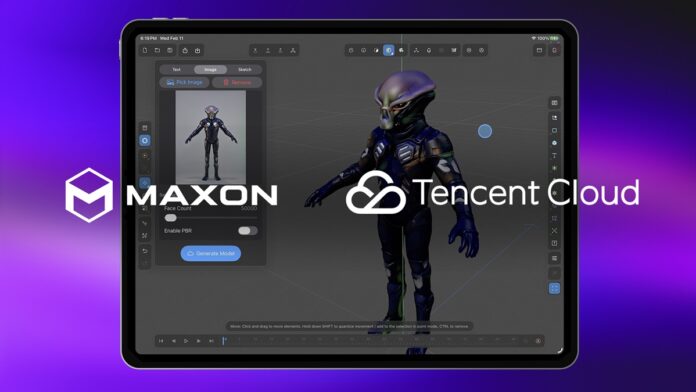
BAD HOMBURG, Germany, Mar 9, 2026 – Maxon, maker of powerful, approachable software solutions for creators working in 2D and 3D design, motion graphics, visual effects, gaming, and more, has announced a strategic partnership with Tencent Cloud to integrate Tencent HY 3D Global AI engine into Cinema 4D.

The collaboration, unveiled at Mobile World Congress 2026 in Barcelona, introduces an AI-assisted workflow within Cinema 4D that enables artists to generate base 3D and UV models from text prompts or image references, which can then be refined, sculpted, animated, and rendered using Maxon’s professional toolset. 

AI as a Creative Accelerator

The HY 3D engine, developed by Tencent Cloud and trained on Tencent’s vast library of games, helps artists jumpstart their work, serving as a starting point for creative exploration. Once generated, assets are fully customizable in Cinema 4D and compatible with Maxon’s broader ecosystem, including ZBrush, Redshift, and Red Giant tools.

“At Maxon, our mission has always been to empower artists,” said David McGavran, CEO of Maxon. “This partnership is about giving creators additional tools to move faster when they choose to, especially in early-stage ideation and prototyping. The artist remains in complete control of the final result. AI can assist with iteration and experimentation, but authorship and creative direction stay firmly in the hands of the creative.”

The integration reflects Maxon’s longstanding philosophy of meeting artists where they are, while preserving creative freedom. Use of the HY 3D integration within Cinema 4D is entirely optional; artists who prefer traditional modeling workflows can continue working exactly as they do today.

“Artists care deeply about authorship and originality – and so do we,” said Philip Losch, Chief Technology and AI Officer at Maxon. “Our approach is focused on responsible integration of AI capabilities into our tools. We are not building an autonomous system that creates finished art. We are applying technology that accelerates certain steps in a broader creative process that remains artist-led.”

Expanding Creative Possibilities Across Industries

Cinema 4D is widely used across film, broadcast, motion graphics, advertising, product visualization, and game development. The addition of AI-assisted base model generation provides new flexibility for creators working under tight timelines or exploring multiple visual directions. Once generated, assets can be refined in ZBrush, textured and lit in Cinema 4D, and rendered using Redshift, enabling artists to transform their original concepts into fully realized, production-ready work with their unique signature look and feel. 

The partnership builds on a long-standing relationship between Maxon and Tencent, including Tencent’s continuous use of Maxon technologies in game development pipelines. This marks the first time Maxon is integrating Tencent Cloud AI technology directly into its own toolset.

HY 3D for Cinema 4D Availability

The HY 3D integration will be introduced in late 2026. Additional technical details and rollout timing will be shared closer to the release.

About Maxon

Maxon makes powerful, yet approachable software solutions for content creators working in 2D and 3D design, motion graphics, visual effects and visualization. Product lines include the award-winning Cinema 4D suite of 3D modeling, simulation and animation technology; the diverse Red Giant lineup of revolutionary editing, motion design and filmmaking tools; the leading-edge, blazingly fast Redshift renderer; and ZBrush, the industry-standard digital sculpting and painting solution available on desktop and on the iPad.

Marc Nikutowski Named as Director, Essemtec EMEA Sales

0

AESCH, Switzerland, Mar 9, 2026 – Essemtec, a leading provider of flexible SMT production equipment and advanced dispensing solutions, is proud to announce the appointment of Marc Nikutowski as Head of Sales EMEA. This strategic step reflects Essemtec’s continued commitment to strengthening customer proximity, harmonizing sales activities, and accelerating growth across Europe, the Middle East, and Africa.

Marc Nikutowski

Since joining Essemtec as Head of Sales Germany, Marc has quickly demonstrated strong leadership, deep market understanding, and a clear customer-first mindset. His appointment to a broader EMEA role recognizes both his impact to date and his ability to lead in a diverse, multicultural environment.

Marc brings over 20 years of experience in sales leadership, supply chain management, and strategic business development within the electronics and high-tech manufacturing industries. Prior to Essemtec, he held senior roles at EIZO Technologies GmbH, NCAB Group, ASM Assembly Systems, and Siemens, where he successfully drove regional and international growth while building long-term customer relationships.

A key asset in his new role is Marc’s ability to operate seamlessly across borders and cultures. He is fluent in German (native), English, and Spanish, and is proficient in French, enabling close and effective collaboration with customers and teams throughout the EMEA region.

In his new position, Marc will lead Essemtec’s EMEA sales organization, aligning regional strategies while preserving the local responsiveness and tailored approach that define Essemtec’s philosophy: Our Focus – Your Solution.
He will continue to directly oversee the regions of Bavaria, Baden-Württemberg, the new German federal states and Austria, as before.

“Marc has shown an exceptional ability to combine strategic vision with a very hands-on, customer-oriented approach,” said Olivier Carnal, General Manager at Essemtec. “Expanding his role to Head of Sales EMEA is a natural step. His international experience, cultural fluency, and leadership will be key assets as we continue to grow and strengthen our presence across the region.”

Marc will continue to be based out of Essemtec’s Munich office and will work closely with customers, local sales teams, and partners across EMEA to deliver high-performance, flexible SMT and dispensing solutions.

About Essemtec

Essemtec, a division of Nano Dimension, is a Swiss-based technology leader (founded in 1991) specializing in high-flexibility, adaptive SMT assembly solutions. They develop, manufacture, and sell precision pick-and-place equipment, high-speed dispensing systems, and intelligent storage logistics, serving NPI and mid-range serial production.. For more information, visit https://essemtec.com.

AMUG Announces 2026 Scholarship Winners

0

ZEELAND, MI, USA, Mar 9, 2026 – The Additive Manufacturing Users Group (AMUG) today announced the recipients of its scholarships. Li Yang, Ph.D., an associate professor in the Department of Industrial and Systems Engineering at the University of Louisville, has been awarded the Randy Stevens Scholarship for educators in additive manufacturing. Abby L. Stamper, who is pursuing a bachelor’s degree in mechanical engineering at Boise State University, has been awarded the Guy E. Bourdeau Scholarship for students in additive manufacturing.

AMUG Scholarship Winners 2026
Abby Stamper (left) and Li Yang—AMUG’s 2026 Scholarship winners.

As scholarship recipients, Stamper and Yang will attend the AMUG Conference to engage with additive manufacturing users. They are scheduled to take the main stage to present their work on Tuesday, March 17. The AMUG Conference will be held in Reno, Nevada, from March 15-19, 2026.

The scholarships recognize students and educators who demonstrate a passion and vision for additive manufacturing while working towards advancing education and industry. Dr. Olga Ivanova and Brent Griffith, co-chairs of AMUG’s Scholarship Committee, jointly said, “We were thrilled with the quality and diversity of this year’s applicants. The submissions demonstrated outstanding talent, creativity, and potential in the next generation of additive manufacturing leaders.”

Dr. Li Yang has worked in the educational space for most of the past 19 years, starting with his doctoral work in industrial and system engineering at North Carolina State University and continuing on to the University of Louisville. Over the years, his focus has been re-aligned to the design and realization of lightweight structures produced with additive manufacturing. In particular, he is working to bridge the knowledge gap between design and the realization of these structures for real-life applications.

Yang said, “I am working towards an integrated design framework that employs an analytical approach for the multi-scale design relationship of lightweight structures, while utilizing both process physics and experimentation to capture the compound geometry-process-property relationships of lightweight features.”

Ivanova said, “Dr. Yang demonstrates exceptional technical expertise and a strong commitment to mentorship in additive manufacturing. His innovative work in geometry-process integration and metamaterial exploration equips students with the skills and knowledge to push the boundaries of additive manufacturing, making him an outstanding choice for the AMUG scholarship.”

Ed Herderick, EWD director at America Makes, has been collaborating with Yang since his time at NC State. Hendrick said, “Li Yang is a passionate educator who has inspired and taught hundreds of students over many years.” He continued, “He is an enthusiastic additive collaborator who will leverage the Randy Stevens Scholarship to build new relationships and grow our industry.”

Abby Stamper, the Guy E. Bourdeau Scholarship winner, is pursuing a mechanical engineering degree at Boise State University. Fueled by an interest in digital design, she applied her skills to found Brown Box Cookie Cutters, which 3D prints original designs.

Increasingly drawn to applications where digital fabrication directly affects human movement, she now focuses her efforts on orthotics and prosthetics. To enrich her knowledge in this area, she has completed two internships with Western Prosthetics & Orthotics.

Stamper said, “I want to solve problems related to biomechanical efficiency, durability, and accessibility in prosthetic and orthotic systems, particularly where device performance, cost, and coverage limit real-world use.”

Richard Miltenberger, owner/founder of Western Prosthetics & Orthotics, said, “I am confident that Abby’s strong technical foundation, drive to learn, and ability to contribute meaningfully to advanced engineering projects make her an excellent candidate for this scholarship.” He continued, “She has a promising future ahead, and I give her my highest recommendation.”

Griffith said, “We were truly impressed by Abby’s dedication and innovation in 3D printing. Even as a student, she is actively contributing to a startup focused on patient-specific prosthetics, applying cutting-edge orthotic workflows with real-world impact. From starting 3D printing in the fourth grade to founding her own company for 3D-printed cookie cutters, her work exemplifies the spirit of AMUG and the transformative potential of additive manufacturing.”

The Guy E. Bourdeau Scholarship—founded by Guy’s wife, Renee Bourdeau, and financially supported by Formnext—is awarded annually to one college student. The Randy Stevens Scholarship—founded by In’Tech Industries, Inc. and financially supported by GreatAmerica—is awarded annually to one educator focusing on additive manufacturing.

About Additive Manufacturing Users Group (AMUG)

The Additive Manufacturing Users Group (AMUG), a 501(c)(6) nonprofit corporation, is a catalyst for its community of members to drive additive manufacturing forward. We are committed to educating and advancing AM applications for industrial purposes. Our annual gatherings provide a platform for in-depth technical presentations, workshops, and hands-on experiences, focusing on processes, technologies, and real-world applications. Join us at www.amug.com to be part of the innovation shaping the future of manufacturing.

Mastercam Canada Acquires In-House Solutions

0
In House Solutions

CAMBRIDGE, ON, Canada, Mar 9, 2026 – Mastercam Canada, an affiliate of Mastercam, the world’s leading CAD/CAM software provider and part of the Sandvik Group, announced the successful close of its strategic acquisition of In-House Solutions, a longtime Mastercam channel partner. With the transaction complete, In-House Solutions is now operating as Mastercam Canada, expanding Mastercam’s direct presence across the Canadian manufacturing market.

This transition brings together In-House Solutions’ deep regional expertise with Mastercam’s global technology leadership, enabling faster response times, more personalized service, and enhanced customer support for manufacturers throughout Canada.   

“This marks an important milestone for Mastercam and for our customers in Canada,” said Russ Bukowski, President of Mastercam. “By bringing In-House Solutions fully into the Mastercam organization as Mastercam Canada, we are strengthening our local connections while delivering the full power of Mastercam’s global resources. Customers will benefit from closer collaboration, faster technical support, and solutions tailored to their regional manufacturing needs.  

The move from a channel partner model to direct operations enables Mastercam Canada to provide accelerated problem resolution, customized training programs, and regional specialists who understand the unique challenges facing Canadian manufacturers. The acquisition supports Mastercam’s broader growth strategy of combining innovation with targeted acquisitions to enhance customer experience and service delivery.   

As part of Sandvik’s digital manufacturing portfolio, Mastercam continues to advance connected manufacturing technologies and deliver comprehensive support to customers worldwide, helping manufacturers improve productivity, efficiency, and competitiveness. 

About Mastercam

Shaping the Future of Manufacturing, Mastercam is the world’s leading provider of CAD/CAM solutions. As part of Sandvik, we empower manufacturers to enhance productivity, streamline processes, and drive innovation. With a global network of resellers and an extensive developer community, Mastercam continues to set industry standards by delivering comprehensive, connected solutions across the manufacturing enterprise. We lead the way with cutting-edge technology and unparalleled expertise. Discover more at mastercam.com.

Xometry Deepens AI-Native Marketplace Advantage with New Enterprise Lead Time Intelligence, Personalized Pricing Models

0

NORTH BETHESDA, MD, USA, Mar 6, 2026 – Xometry, Inc. (NASDAQ:XMTR), the global, AI-native marketplace connecting buyers and suppliers of custom manufacturing, announced the release of its new Enterprise Machining Lead Time Prediction Model and enhanced dynamic pricing logic. These releases expand the Xometry Instant Quoting Engine, strengthening Xometry’s proprietary data advantage and deepening the design-to-fulfillment intelligence that powers its AI-native marketplace.

Together, these advancements deliver higher prediction accuracy, improved operational efficiency, and expanded rapid lead-time options. They accelerate customers’ time to market and increase delivery reliability, while reinforcing Xometry’s leadership in AI-powered industrial sourcing and its ability to close the loop between digital quoting and real-world production outcomes.

New Enterprise Machining Lead Time Prediction Model

As AI reshapes expectations in manufacturing, Xometry continues to advance its proprietary Instant Quoting Engine, which leverages deep learning trained on real-world production and delivery data from its extensive global Partner Network of manufacturing suppliers. This continuously expanding dataset enables Xometry to dynamically refine market-driven lead time options while improving reliability and execution speed for enterprise buyers.

The new Enterprise Machining Lead Time Model represents a significant expansion of Xometry’s predictive intelligence capabilities, enabled by the scale and depth of performance data generated across its global Partner Network.

Key impacts of this release include:

  • Superior prediction accuracy: The model provides customers with more reliable timelines for their custom-ordered parts, having achieved a significant improvement in RMSLE (Root Mean Squared Logarithmic Error) compared to its predecessor.
  • Expanded rapid delivery offerings: Based on learning from Xometry’s historical supplier performance dataset, the model now optimizes for and facilitates 1-day lead times across a growing catalog of materials and geometries.
  • Enhanced operational throughput: Beyond enabling faster turnarounds, the model will drive a reduction in standard lead time offering for Xometry’s customers.
  • Expanded feature integration: The updated model leverages a training dataset four times larger than previous versions and now factors in critical overhead requirements, including specialized certifications (example AS9100D, ISO 9001), new materials, and advanced finishing options (example PTFE Impregnated Hard Anodize, Black Oxide).

Personalized Pricing for Optimized Sourcing

Complementing these speed advancements, Xometry is enhancing the dynamic pricing logic that powers the pricing intelligence layer of its Instant Quoting Engine.

In contrast to traditional supply chain software, which relies on static pricing rules or predefined cost tables, Xometry utilizes a “conversion rate model” that analyzes unique geometric features, quote configurations, and customer-specific historical data to construct a price-response function for every individual quote and part.

Following successful user testing in Q4 2025, these models are being deployed more broadly to U.S. customers in Q1 2026, with the goal of improving the buyer and partner experience and increasing revenue per user.

Accelerating the Marketplace Flywheel

“This release represents more than just an incremental update; it is a foundation for future innovations and a fundamental shift in how we approach manufacturing speed and reliability at scale,” said Vaidy Raghavan, Chief Product & Technology Officer at Xometry. “By closing the data loop with our Partner Network and accelerating model deployment cycles through continuous training, we have reduced the time from insight to production impact. This allows us to solve complex, context-dependent sourcing challenges that static software or isolated AI agents cannot address.”

Xometry’s proprietary pricing and sourcing models are embedded directly within live marketplace transactions, integrating digital quoting, supplier selection, production performance, and delivery outcomes into a closed-loop learning system. Each completed order strengthens future predictions, increasing accuracy, speed, and reliability across the network.

By embedding design-to-fulfillment intelligence directly into engineers’ workflows, Xometry reduces information asymmetry in manufacturing procurement, transforming what has historically been a fragmented, manual coordination problem into a scalable competitive advantage grounded in both digital intelligence and physical-world execution.

For more information about Xometry’s AI-native manufacturing solutions, visit xometry.com.

About Xometry

Xometry’s (NASDAQ: XMTR) AI-native marketplace, popular Thomasnet industrial sourcing platform and suite of cloud-based services are rapidly digitizing the manufacturing industry. Xometry provides manufacturers the critical resources they need to grow their business and streamlines the procurement process for buyers through real-time pricing and lead time data. Learn more at xometry.com or follow Xometry on LinkedIn.

IGA Obtains License from C3D Labs for Software Components

0

IGA has obtained a license for the C3D Modeler and C3D Converter modules (with IFC support) to enhance its IT solutions for major sectors, including manufacturing, oil & gas, and transport. The C3D Modeler and C3D Converter components are part of C3D Toolkit, a software development kit (SDK) to create, edit, visualize, and convert geometric models.

Since 2016, some IGA projects have used CATIA Geometric Modeler from Dassault Systèmes and an open-source geometric kernel. The company has thoroughly explored the capabilities and limitations of these technologies. As IGA enhanced its products and expanded the offering, it became clear that the old approaches were no longer sufficient to support further growth. To develop engineering digital products and services, the company needed mature, scalable technologies from Russian vendors.

IGA sought a technology partner to advance its software solutions by integrating 3D modeling capabilities. A C3D Labs proposal, with a vision for a strategic partnership, emerged as the best option. The key factors in favor of C3D Modeler and C3D Converter were:

  • The vendor’s excellent reputation in the geometric kernel market.
  • Many years of applied, continuous experience; extensive 3D modeling resources.
  • Consistent technology development.
  • Proven ability to handle large and complex 3D models typical of infrastructure and industrial projects.

Currently, the C3D Converter module is used to convert 3D models from various CAD systems to the .c3d format for use in the IGA applications. It enables consistent handling of 3D models, product and manufacturing information, and visualization.

The introduction of the C3D Modeler geometric kernel lays the foundation for a new stage in the vendor’s proprietary 3D model handling tools.

For IGA, the collaboration with C3D Labs is a long-term technology partnership. Cloud platforms and AI technologies are driving new requirements for engineering and 3D data processing. It creates new opportunities for collaborative technology and solution development. Another area of cooperation is joint entry into new markets and new applications of the software products. Real-world requirements and use cases from IGA projects will also contribute to further improvements of the C3D Labs technology platform.

Novodvorskij
Philip Novodvorsky, Director for Digital Business Transformation Solutions, IGA:

“The partnership with C3D Labs marks a significant milestone in advancing our concept for the future industry. The integration of C3D Labs components creates new possibilities for handling 3D models. We are working hard seamlessly integrate complicated models from various CAD systems into our IT solutions. For users, this means a consistent approach to working with product and manufacturing information, 3D models, and visualization. We view our collaboration with C3D Labs as a long-term technology partnership and a foundation for a new stage in the company’s growth”.

Vbcccc
Oleg Zykov, CEO, C3D Labs:

C3D Labs shares IGA’s approach to engineering data processing and creating digital applications. The selection of C3D Modeler and C3D Converter demonstrates that our toolset is effective for handling large, complex 3D models and BIM files. We see the collaboration as a starting point for a long-term partnership. We expect that real-world experience and use cases from IGA projects will make an important contribution to the C3D Toolkit components.

About IGA

IGA is an engineering, technology, and consulting group with 16 years of experience in industries such as manufacturing, oil & gas, and transportation. Its key business line is IT solutions for product lifecycle and engineering information management. IGA solutions are used in complex industrial and infrastructure facilities, and in the federal information systems.

For more information, please visit www.igatec.com

Fictiv Expands Export Control Services to Deliver EAR-Regulated Programs for Aerospace, Advanced Technology Industries

0
Export Control Services

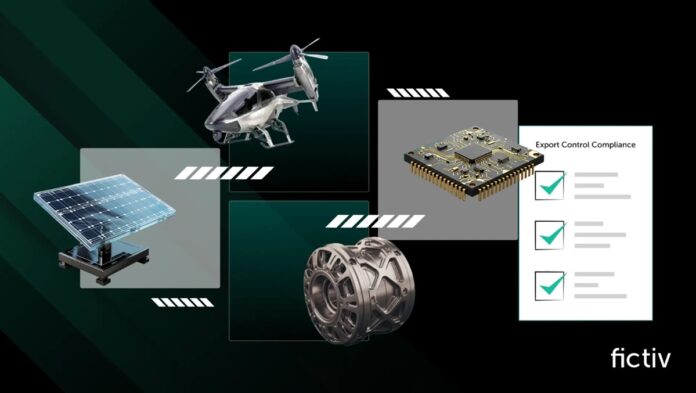
OAKLAND, CA, USA, Mar 6, 2026 — Fictiv, a global supply chain and manufacturing company, today announced enhancements to its export control services, embedding classification confirmation and automated safeguards directly into its digital manufacturing platform and services to deliver faster, clearer pathways for Export Administration Regulations (EAR)-regulated programs.

The updated export control service integrates classification confirmation and automated detection safeguards into Fictiv’s Digital Manufacturing and Supply Chain Platform and service offerings,  balancing speed, security, and regulatory responsibility, reducing ambiguity and enabling faster decision-making while maintaining compliance integrity.

Projects requiring this process may include aerospace and propulsion components, commercial spacecraft hardware (such as ECCN 9A515 classifications), avionics and navigation systems, and certain advanced electronics and materials technologies.

“As advanced manufacturing programs become more technically complex and globally regulated, customers need both speed and certainty,” said Andy Sherman, General Manager of U.S. Operations at Fictiv. “By embedding automated export safeguards directly into our service offerings, we’re delivering greater clarity and confidence in compliance for EAR-regulated projects — reinforcing our commitment to responsible innovation.”

Helping Manufacturers Navigate Rising Global Regulatory Risk

In regulated industries, export control missteps can lead to shipment delays, financial penalties, reputational damage, and operational disruption. Fictiv’s enhanced services and framework are designed to proactively reduce these risks before they impact production timelines.

“Fictiv’s export control framework gives us greater confidence when managing EAR-regulated projects,” said Lillian Ortiz, Sr. Project Manager, ITW Automotive. “The built-in classification confirmation and automated safeguards reduce ambiguity while helping us move faster without compromising compliance.”  

By requiring export classification confirmation and leveraging automated detection technology to flag export-control language in technical documentation, Fictiv helps customers:

  • Minimize regulatory exposure
  • Prevent accidental submission of ITAR-controlled technical data
  • Reduce manual compliance bottlenecks
  • Maintain secure handling of sensitive project information
  • Enable faster internal approvals with clearer documentation

EAR-controlled projects that fall outside of our platform-supported classifications (ECCN EAR99/9E991) need to be initiated off-platform so our Sales and Compliance teams can review them before any files are uploaded.

This proactive, system-level approach strengthens supply chain resilience while preserving speed.   

“We’re excited to partner with Fictiv to support more complex, regulated programs. With Fictiv’s robust quality systems, industry-recognized certifications, and deep regulatory expertise, we’re well positioned to serve customers in highly regulated industries with confidence and precision.” commented, Bill Bonadio, CEO, Prototek Digital Manufacturing.

Supported Classifications

To comply with EAR (15 CFR § 730 et seq.) and ITAR (22 CFR § 120–130), Fictiv maintains defined processes governing the submission, review, and handling of technical data and manufacturing projects through its platform.

By formalizing and automating these procedures, Fictiv strengthens its ability to serve customers in aerospace, space commercialization, advanced electronics, and other cutting-edge industries — where regulatory precision is as critical as production speed.

About Fictiv

Fictiv is a global manufacturing and supply chain company that enables organizations to scale globally without the typical barriers of cost, complexity, and risk. By leveraging Fictiv’s four global manufacturing centers in India, Mexico, China, and the U.S., companies can access high-quality production, optimize logistics, and mitigate supply chain risk—ensuring they can move from prototype to production with speed and confidence. To date, Fictiv has delivered more than 39 million prototype and commercial parts and assemblies for early-stage companies and large enterprises alike, helping them innovate faster, free up precious resources, and drive profitable growth. For more information, visit www.fictiv.com