ANDOVER, MA, USA, Mar 2, 2026 – Aras, a leading provider of digital thread solutions for product lifecycle management (PLM) and engineering AI, announced an expanded cloud strategy for Aras Innovator that gives customers greater flexibility in how they deploy, modernize, and scale cloud PLM without sacrificing configurability, control, or access to advanced AI capabilities.
Aras leads the industry in delivering highly capable SaaS PLM solutions, earning recognition from leading analysts. It was recently placed among the highest-scoring vendors in the PLM application market and was awarded the IDC 2025 SaaS Customer Satisfaction Award for PLM. Aras is seeing a strong shift toward cloud adoption, with well over 50% of new Aras Innovator deployments delivered as SaaS and a growing number of long-time Aras customers making the transition.
As enterprises modernize digital engineering and manufacturing environments to capitalize on advances in cloud and AI, many struggle to adopt SaaS without sacrificing flexibility, governance, or existing investments. Aras Cloud addresses these challenges with a unified, enterprise-class SaaS platform built on a centralized control plane that governs identity, tenant management, policy, and lifecycle operations. This architecture eliminates forced migrations while preserving full configurability, extensibility, and upgrade agility. Customers stay current on platform and AI innovations without disruptive reimplementation cycles.
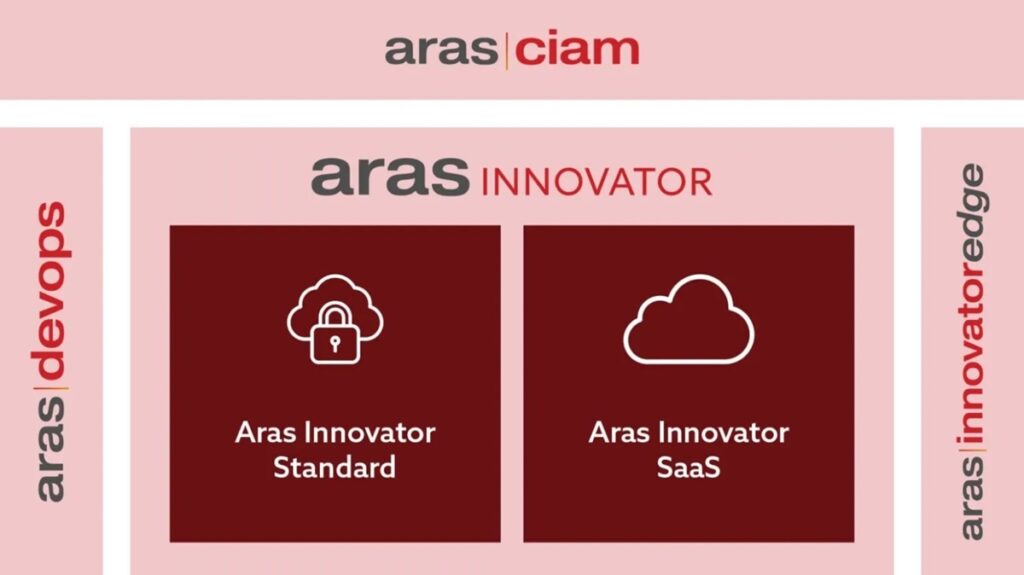
Aras Cloud gives enterprises the flexibility to adopt highly integrated, cloud-enabled PLM and digital thread solutions through a single platform architecture that best fits their business, regulatory, and IT requirements:
Aras Innovator SaaS: Aras’ flagship cloud offering is a fully capable PLM and digital thread platform delivered as enterprise-class SaaS with the same level of configurability and extensibility that makes Aras Innovator unique. Aras Innovator SaaS for GovCloud is purpose-built for aerospace, defense and government contractors, supporting ITAR requirements and safeguarding Controlled Unclassified Information (CUI) in alignment with CMMC 2.0 expectations.
Customer-Managed Cloud: Customers can host Aras Innovator Standard in their own cloud environment while leveraging the scalability and efficiency of Aras Kubernetes services, reference architectures, and best practices.
Aras InnovatorEdge: Extends Aras Innovator with cloud-delivered governance and API utilities that connect external users, developers, applications, and AI resources. With the introduction of new InnovatorEdge services – Edge API Manager, Edge App Builder, and Edge AI – users can extend SaaS and customer-managed deployments or adopt hybrid cloud solutions that fit their specific needs.
Aras DevOps: Provides cloud-based CI/CD of Aras Innovator applications for both Standard and SaaS subscribers.
Aras CIAM: Provides a centralized identity and access foundation for the Aras platform enabling secure, single sign-on access to Aras Innovator, Aras InnovatorEdge services, the Aras Community, and the Aras Marketplace.
“Every organization is at a different point in its cloud journey, and we’re focused on meeting customers where they are.” said Leon Lauritsen, CEO at Aras. “We do that by giving our customers optionality – how they use software to support PLM business processes, how they configure their digital thread, how they leverage the power of modern cloud capabilities, and how they introduce AI into their engineering and product development environments. That optionality can be leveraged to create a competitive advantage across virtually every business process and industry globally.”
About Aras
Aras provides a digital thread platform for product lifecycle management and engineering AI. Built on an AI-native, low-code foundation, it enables the rapid delivery of flexible solutions. Aras connects teams across disciplines and functions to critical product data and agentic AI throughout the product lifecycle and extended value chain. Visit aras.com to learn more and follow Aras on LinkedIn, YouTube, X, and Facebook.
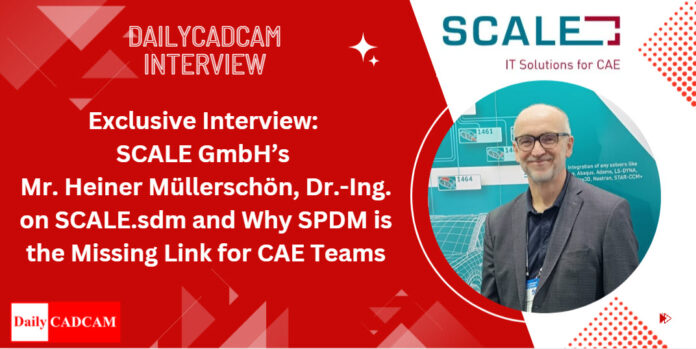
It was a pleasure meeting Mr. Heiner Müllerschön, Dr.-Ing., Managing Director of SCALE GmbH (Germany) during the SIAT 2026 Expo in Pune, India. We had an insightful discussion on SCALE’s innovative solutions for product development, especially for simulation and CAE engineers working across different industries. What stood out most was how many organizations that already use PDM or PLM systems are still not fully aware of Simulation Process and Data Management (SPDM/SDM)—a dedicated approach that helps engineering teams streamline simulation workflows, optimize resources, and significantly reduce time-to-market. At SIAT 2026, SCALE’s booth received strong interest and demand from automotive and simulation professionals, highlighting the growing need for structured simulation data management. Special thanks to Heiner for taking the time to speak with us—here is our exclusive interview for DailyCADCAM.com readers.
DailyCADCAM: Heiner, it was great meeting you at SIAT 2026 in Pune. For our readers, can you tell us a little about SCALE and what you do?
Heiner Müllerschön: Yeah, sure. SCALE is basically all about simulation data management. That’s our core focus. Some people call it SDM and some call it SPDM, which is Simulation Process and Data Management. If you compare it to what most people already know, it’s similar to PDM systems. Everyone understands PDM—product data management—mainly for CAD data. And SDM is kind of the same idea, but dedicated to simulation data and simulation workflows. And for us, this is not one of many products—we are 100% focused on simulation data management. That’s the only thing we do.
DailyCADCAM: Honestly, I thought PLM and PDM already cover everything, including simulation. So is this really something separate?
Heiner Müllerschön: Yes, and that’s exactly the point. Most companies think PLM covers simulation, but in practice, it usually doesn’t. PLM and PDM are mainly optimized for CAD and design data. Simulation has different requirements. It’s not just storing files. Simulation work has processes, workflows, solver runs, iterations, results, reports, correlations, and different specialists working on the same product. That’s why SDM exists—it’s specifically built for simulation and test data and the processes around it.
DailyCADCAM: So, what is SCALE.sdm exactly? How would you describe it?
Heiner Müllerschön: SCALE.sdm is our platform for simulation and test data management. The simplest way to explain it is: it becomes the central hub for CAE engineers. You can organize, version, manage, analyze, and collaborate on simulation models and results in one connected system. It helps teams keep everything structured and traceable, so you don’t lose data and you don’t repeat work. And it’s not only about storage, it’s also about how simulation teams actually work day-to-day.
DailyCADCAM: What is the main purpose of the system for simulation engineers?
Heiner Müllerschön: Collaboration, definitely. That’s the biggest purpose. Simulation work is done by many people—crash, NVH, durability, CFD, thermal, safety—and very often these teams are spread across different locations worldwide. Without a proper SDM, people end up working in disconnected folders and local hard drives. With SCALE.sdm, teams can share data, work simultaneously, and still keep everything controlled, structured, and consistent.
DailyCADCAM: During our discussion, you mentioned many companies still don’t use SDM. Is that really true today?
Heiner Müllerschön: Yes, it’s still true. What we see is that a large part of the automotive industry—maybe around 80%—does not use any dedicated simulation data management system. They might have PLM for CAD and product data, but simulation teams still work on desktops, hard disks, shared drives, and unstructured server folders. And the result is that over the years, companies lose valuable simulation knowledge. They cannot reuse results properly, they repeat simulations, they waste compute resources, and development becomes slower.
DailyCADCAM: That’s interesting. So, what kind of simulation data is typically stored in SCALE.sdm? Only results or complete models?
Heiner Müllerschön: It depends on the customer, but usually its simulation data starting from mesh data up to the full functional finite element model, including results and reports. You can store each component as a separate object, and then you can assemble those objects into a full model. There are many possibilities. Some customers also store corresponding CAD data, but most of the time it’s mainly simulation-focused, because that’s where the biggest challenge is.
DailyCADCAM: Is SCALE.sdm cloud-based?
Heiner Müllerschön: Yes, it can be. Some customers host it on-premise, some host it in the cloud. It really depends on what the customer wants and what their security policies are. But yes, cloud is possible, and actually it’s a native cloud installation. Cloud has many advantages, but some companies still prefer on-premise. We support both.
DailyCADCAM: What about integration? Can it work with tools from Siemens, Dassault, Synopsys, and other CAE solvers?
Heiner Müllerschön: Yes, that’s one of our strengths. SCALE.sdm is an open platform, so it’s tool-agnostic. You can integrate any solver, any preprocessor, postprocessor, or automation tool you want. This is very important for customers because engineers don’t want to change their tools. So when we implement SCALE.sdm, we usually take the existing tools and processes and integrate them into our platform. We don’t force customers to change everything.
DailyCADCAM: Which industries are using SCALE.sdm today?
Heiner Müllerschön: Mainly automotive. More than 90% of our customers are automotive. And that’s because automotive has huge simulation volumes and many engineers working on the same product. That’s where SDM brings the biggest benefit. But we also see aerospace and medical becoming more interesting, because simulation is growing fast in those industries too.
DailyCADCAM: SIAT 2026 had a strong automotive audience. How was the response at your booth in Pune?
Heiner Müllerschön: It was really good. We had a strong interest and demand. People were genuinely curious because simulation data management is still not widely known, especially compared to PLM. We also showcased our newest GenAI capabilities integrated into CAE workflows. The response was amazing because engineers today expect AI to help them find data faster, reuse knowledge, and improve productivity.
DailyCADCAM: Do you have customers in India already?
Heiner Müllerschön: Yes, we have one large customer in India right now—An automotive OEM in Bangalore. It’s a larger installation. We are just entering the Indian market, so this is the first step. But we are in discussions with other OEMs, and we hope to expand soon.
DailyCADCAM: Many engineering service providers support global OEMs. Do they also use your platform?
Heiner Müllerschön: Yes, typically the OEM has the enterprise installation and they collaborate with engineering service partners through the platform. The service providers use SCALE.sdm to work together with the OEM, share models, tasks, and results. This is a big advantage because OEMs can manage collaboration and control access through the system.
DailyCADCAM: Where is SCALE based, and how big is your team?
Heiner Müllerschön: The company is about 60 people. We do software development in Germany and also in India. We have a subsidiary in Jaipur, Rajasthan, and software is developed there as well. So it’s a combined development effort between Germany and India.
DailyCADCAM: What kind of training and support do you provide to customers?
Heiner Müllerschön: We provide training, of course. Usually we start with a one-day introduction training, mainly online. And then we support customers with installation, customization, consulting, and operations—whatever is needed. In general, the system is easy to use, and because it integrates with existing tools, the training requirement is not too heavy.
DailyCADCAM: Engineers are talking a lot about AI now. How does AI fit into simulation data management?
Heiner Müllerschön: AI becomes useful when your data is structured and accessible. If your simulation data is scattered across folders, AI can’t really help much. But when you have a data management system like SCALE.sdm, everything is in one place, structured, and traceable. Then you can apply AI methods. Some companies already have their own AI, and SDM makes it easier for them. And we also have integrated AI for certain purposes, and we are developing more.
DailyCADCAM: Do you plan to expand beyond automotive into aerospace, defence, or medical?
Heiner Müllerschön: Yes, absolutely. Aerospace and medical are very interesting. In India, you have large GCCs and centers where thousands of engineers work on simulation for aerospace and defense. Any organization with a lot of simulation, a lot of engineers, and a lot of data will benefit from SDM. The bigger the simulation volume, the bigger the benefit.
DailyCADCAM: Are you planning to appoint resellers or partners in India?
Heiner: Yes, we are looking for a partner in India, but nothing is finalized yet.
We welcome companies and resellers working in simulation software to discuss partnership opportunities.
India is huge, and partners can help us expand faster.
DailyCADCAM: Finally, what message would you like to share with our readers, mostly design and simulation engineers?
Heiner: My message is simple: start using a simulation data management system.
Of course, I’d love if it’s SCALE.sdm—but even if it’s another SDM system, it doesn’t matter.
The benefits are huge. It makes life easier. Yes, it takes some effort in the beginning because it changes the way you work. But once installed, it’s absolutely worth it.
DailyCADCAM: Thank you, Heiner, for your time and for sharing these insights with our readers.
Heiner Müllerschön: Thank you! It was a great discussion, and I’m happy to connect with companies and engineers in India who want to explore SDM.
For India: Contact Harsh Sharma, GM & Executive Director, SCALE Esdm India Pvt. Ltd. harsh.sharma@scale-sdm.in
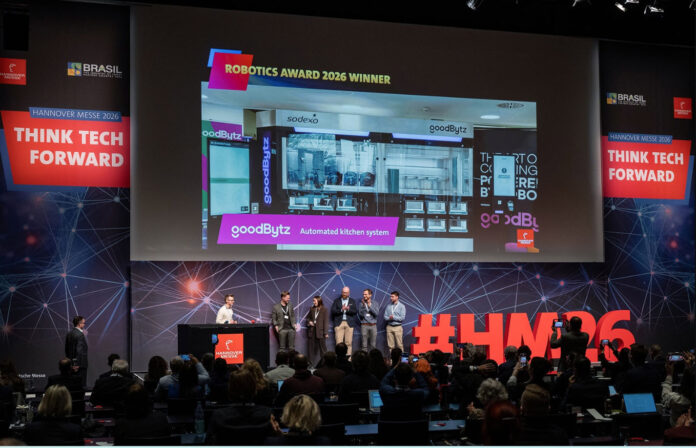
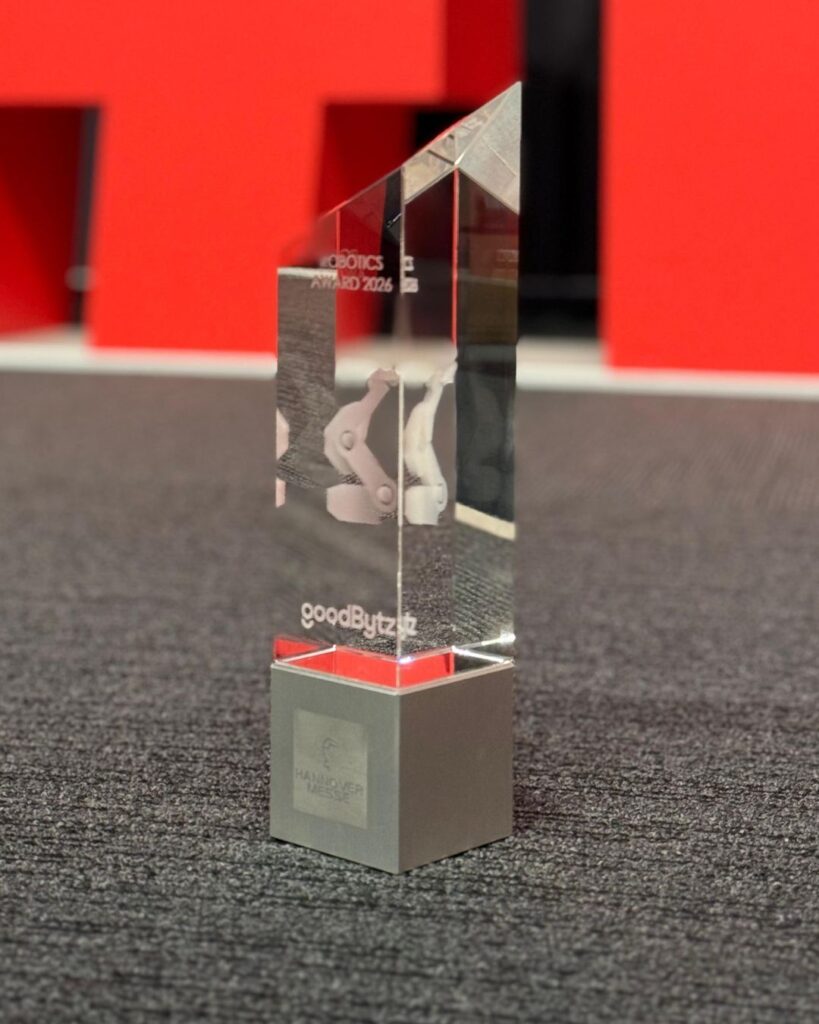
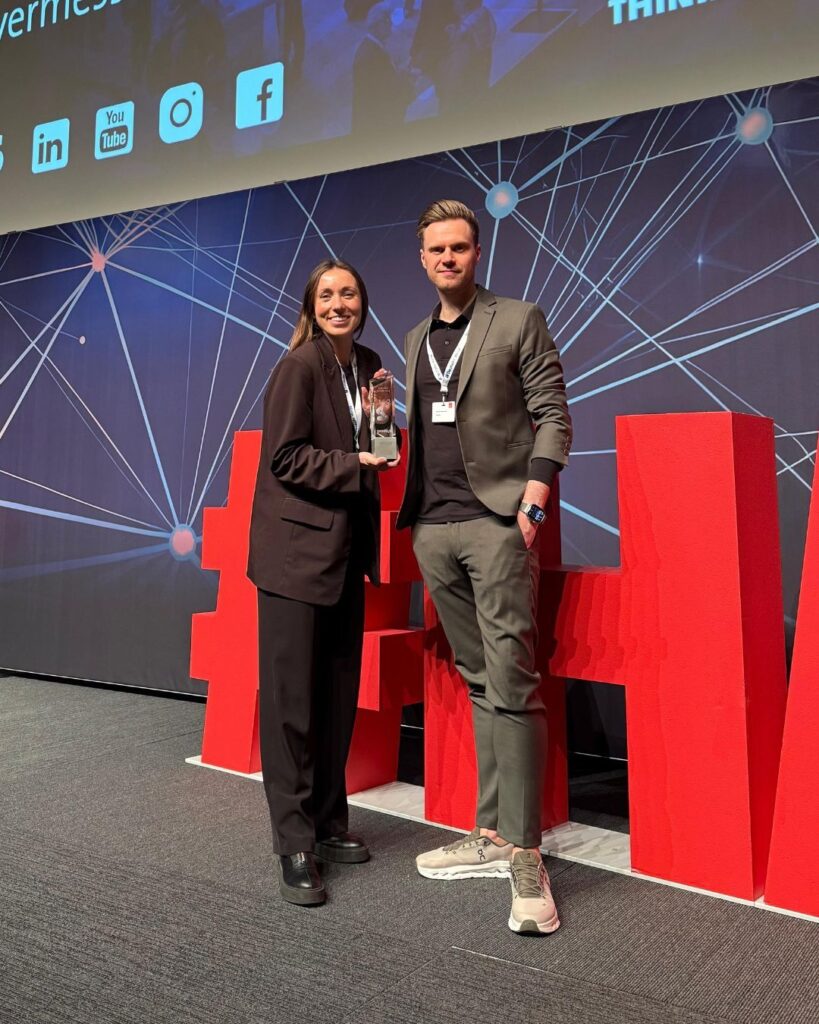
The ROBOTICS AWARD 2026, one of the international robotics community’s most coveted awards, was presented to startup company GoodBytz during the HANNOVER MESSE Press Preview on February 25. The award-winning product is an automated kitchen system designed to prepare individualized meals quickly and simultaneously.
Feb 25, 2026, Hannover, Germany. Presented annually at HANNOVER MESSE by Deutsche Messe, the ROBOTICS AWARD honors innovative robot-assisted solutions in the fields of automation and logistics. This year’s award-winning solution features an advanced robotic kitchen that integrates lightweight, compact industrial robots manufactured by Fanuc. The Fanuc robots are specifically engineered to meet stringent food processing requirements, incorporating specialized seals, food-grade materials, and high levels of protection against heat, moisture, and cleaning processes. The robots are guided by a proprietary AI-driven control logic capable of intelligently sequencing workflows even when multiple orders are received simultaneously. These automated and flexible production processes ensure high-quality, customized food supply for hospitals, universities, or corporate facilities while maintaining consistent output – regardless of staffing levels or order complexity. Given the ongoing shortage of skilled labor in the food service industry, GoodBytz anticipates rapidly growing market demand for this system.
The award was presented by Dr. Jochen Köckler, CEO of Deutsche Messe: “The award-winning solution from GoodBytz impressively demonstrates how robotics technologies originating in traditional industry are successfully expanding into new sectors, such as gastronomy and food supply. This opens up entirely new fields of application, and contributes significantly toward ensuring quality, efficiency, and supply reliability across diverse areas of daily life.”
The prize includes a comprehensive, premium package comprising exhibition space in the Application Park at HANNOVER MESSE, together with a speaking slot on the Spotlight Stage.
HANNOVER MESSE
HANNOVER MESSE is the world’s premier trade fair for industry. 3,500 exhibiting companies from the mechanical engineering, electrical and digital industry as well as the energy industry gather there to present solutions for a competitive and sustainable industry. The main exhibition areas are Automation & Digitalization, Energy & Industrial Infrastructure, and Research & Technology Transfer. The topic of artificial intelligence is a common thread running through all exhibition areas. A high-caliber conference program complements the exhibition. The next edition of HANNOVER MESSE will be held in Hannover from 20 to 24 April 2026, with Brazil as the partner country.
If you’ve spent any time on LinkedIn or tech platforms lately, you’ve seen the hype. Generative AI is transforming content creation, software development, and even digital art. Naturally, the CAD/CAM community is asking: When is engineering next?
We are indeed standing at a powerful intersection of artificial intelligence and physical manufacturing. Industries are under pressure to innovate faster, reduce material usage, optimize cost, and meet sustainability goals. AI appears to be the long-awaited catalyst.
But amid this excitement, a misconception is quietly gaining momentum — what I call the “Text-to-3D Trap.”
The Illusion of “Prompt-Driven Engineering”
The trap is the belief that AI-driven design will soon resemble tools like conversational AI or image generators:
“Design me a lightweight automotive bracket.” → AI generates a fully manufacturable, validated 3D model.
For professionals working in R&D labs, FEA environments, or on the shop floor, this notion is not just optimistic — it is dangerously simplistic.
Engineering is not an aesthetic generation. It is physics, validation, and accountability.
Probability vs. Physics
To understand why serious engineering will not fall into this trap, we must examine the difference between two fundamentally different AI paradigms.
1️⃣ The “Text-to-3D” Model (Probability-Based Systems)
Large language models and image generators operate on statistical prediction. They generate outputs based on pattern recognition — predicting the most likely word, pixel, or geometry configuration based on training data.
Applied to geometry, this means:
The AI recognizes what a “bracket” typically looks like.
It generates a mesh that visually resembles one.
It has no intrinsic understanding of load paths, stress distribution, fatigue, or safety factors.
It creates an appearance, not an engineered intent.
2️⃣ The Engineering Generative Design Model (Constraint-Based Optimization)
True Generative Design — as seen in platforms like Autodesk Fusion, SOLIDWORKS, or advanced solutions within **Siemens Digital Industries Software — operates differently.
It begins with engineering inputs that actually matter:
Boundary conditions – Where is the part fixed? Where are loads applied?
Constraints – Material selection (e.g., Aluminum 6061 vs Ti-6Al-4V), manufacturing method (casting, 5-axis milling, additive), safety factor.
Under the hood, algorithms leverage topology optimization and embedded FEA to iteratively remove or redistribute material until an optimal solution satisfying all constraints is achieved.
This is not guessing. It is deterministic, physics-driven optimization.
Are We Going to Prompt the 20,000 Parts of a Car?
A modern automobile consists of 10,000 to 30,000 components, each subject to:
Geometric tolerances
Structural requirements
Assembly interfaces
Regulatory compliance
Thermal and vibration constraints
Text-to-3D tools lack the geometric precision and contextual awareness required for such complexity. Even minor dimensional deviations can cause interference, functional failure, or safety risks.
Engineering systems demand constraint logic, assembly intelligence, and validation loops — capabilities far beyond prompt-driven generation.
The Four Pillars That Prevent the “Trap”
Manufacturing is not about generating shapes. It is about solving physical problems. Four pillars distinguish serious Generative Design from prompt-based hype:
1️⃣ Determinism & Validation (FEA Integration)
Engineers cannot approve a part because it “looks right.” Physics-based optimization integrates simulation directly into the design loop. Text-generated geometry remains a black box requiring post-validation.
2️⃣ Manufacturability (DFMA)
Design for Manufacturing and Assembly (DFMA) is non-negotiable.
Constraint-driven generative tools allow designers to specify:
3-axis milling compatibility
Minimum wall thickness
Casting draft angles
Additive manufacturing constraints
Consumer-grade AI often produces geometries that are either unmanufacturable or economically impractical.
3️⃣ Spatial & Assembly Logic
Engineering design is contextual. A bracket must:
Avoid collision with adjacent parts
Accommodate fasteners
Meet clearance requirements
Fit within assembly envelopes
Constraint-based systems can incorporate preserve geometry and obstacle geometry. Prompts cannot effectively encode such spatial relationships.
4️⃣ Copilot vs. Autopilot
Engineers do not want automation that replaces their judgment. They want acceleration of workflows.
Modern AI in CAD increasingly acts as a Design Copilot:
This evolution is already visible in AI-assisted features across major CAD ecosystems.
The Real Future: AI as Engineering Infrastructure
The future of AI in engineering will not resemble chatbots generating random meshes. It will look like:
Embedded simulation intelligence
Real-time design validation
Sustainability optimization
Automated documentation
Predictive design guidance
Companies are investing in AI that strengthens engineering rigor, not bypasses it.
Industrial AI — showcased extensively at events like Hannover Messe — increasingly focuses on digital twins, simulation-driven optimization, and integrated lifecycle intelligence, not aesthetic generation.
Conclusion: Precision Over Hype
Generative Design is revolutionary — but not in the way social media suggests.
Industry will always prioritize:
Physics-based validation
Deterministic optimization
Manufacturability
Accountability
The “Text-to-3D Trap” may attract attention in consumer applications, but serious engineering will continue to rely on constraint-driven, physics-embedded systems.
AI is not replacing engineers. It is amplifying them.
The future belongs not to prompt writers — but to engineers who understand how to combine intelligence, constraints, and physics into smarter workflows.
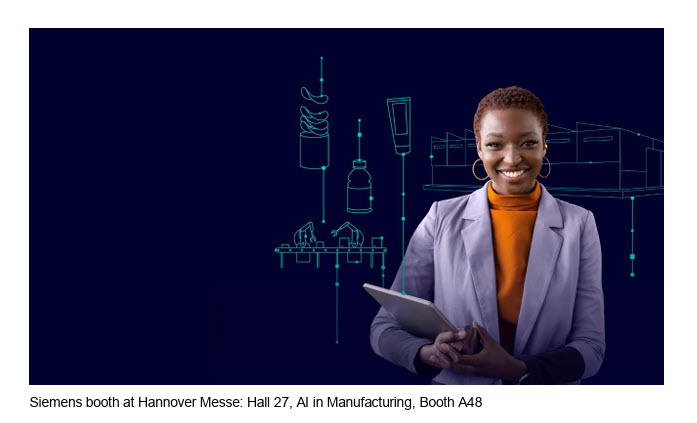
Siemens brings Industrial AI to the entire industrial value chain • AI-enabled humanoid robot as part of a flexible shoe production line • Digital Enterprise & pop-up factories: end-to-end showcase for consumer-packaged goods manufacturers • Siemens in Hall 27, AI in Manufacturing, Booth A48
Siemens at Hannover Messe 2026 demonstrates how Industrial AI improves the full lifecycle of products and production systems – from development and engineering to commissioning, operations, and continuous optimization. The focus is on applications that do not treat AI as a stand-alone analytics tool, but connect it with digital twins, software-defined automation, and a consistent data foundation.
Industrial AI for orchestration and closed-loop optimization Siemens showcases Industrial AI where it matters in day-to-day operations: as intelligent orchestration across planning, production, and intralogistics. Rather than relying on experts to re-plan manually with every change, AI can align workflows across multiple steps – from planning and simulation to production and intralogistics. In doing so, AI does not replace human experts; it augments them and helps enable nonexperts to coordinate complex processes with confidence, supported by AI-driven guidance and recommendations. Processes can also be adjusted using natural language, for example, when priorities shift or disruptions require rapid re-scheduling.
Physical AI: humanoid robot in shoe production One highlight is a Physical AI use case – AI systems that not only provide recommendations but act safely at the shop floor level. At the Siemens booth, visitors can see a flexible, adaptive shoe production setup with additive manufacturing and high product variability. Siemens presents a dedicated Physical AI cell in which a robot packs manufactured shoes into bags. Integrated into the production process, the robot performs complex, repetitive handling tasks in an AI-enabled and autonomous way.
Digital Enterprise: end-to-end from product to supply chain
Another key focus is the Digital Enterprise for Consumer-Packaged Goods (CPG). The end-to-end showcase illustrates how CPG manufacturers can innovate faster and with greater confidence despite increasing product variability, sustainability requirements, volatile demand, and stringent regulation—by breaking down data silos across product development, recipe management, production, infrastructure, and the supply chain.
Using examples from chips, cosmetics, and soft drink production, Siemens demonstrates how a contextualized data foundation connects information and makes Industrial AI actionable at every stage—from idea and specification management to enterprise recipe management (developing recipes, scaling them, and transferring them into production), through manufacturing with digital twins and virtual commissioning. In production and packaging, Industrial AI supports inline quality inspection, changeover optimization, predictive maintenance, and the optimization of plant and building infrastructure. In the supply chain, track & trace and data-driven logistics deliver end-to-end transparency.
Pop-up factories: producing closer to the consumer
Siemens presents modular pop-up factories based on real CPG customer examples. Small, agile facilities bring product, production, and supply chain closer to demand— and therefore closer to the end consumer. This is illustrated with the example of a new beverage whose recipe, sensory profile, and packaging were developed and tested entirely virtually using immersive digital twins and simulations.
Additional demos: energy and distribution infrastructure
Siemens also showcases applications for energy and distribution grids to address rising electrification demand and the modernization of aging infrastructure. Virtualized protection and control as well as Industrial AI help customers prioritize operational alarms, assess OT vulnerabilities, and turn large, complex datasets into actionable recommendations which improves safety, reliability, and sustainability while reducing operating and total lifecycle costs.
Follow us on social media Blog: https://blog.siemens.com LinkedIn: linkedin.com/siemens X: x.com/Siemens
Siemens Digital Industries (DI) empowers companies of all sizes within the process and discrete manufacturing industries to accelerate their digital and sustainability transformation across the entire value chain. Siemens’ cuttingedge automation and software portfolio revolutionizes the design, realization and optimization of products and production. And with Siemens Xcelerator – the open digital business platform – this process is made even easier, faster, and scalable. Together with our partners and ecosystem, Siemens Digital Industries enables customers to become a sustainable Digital Enterprise. Siemens Digital Industries has a workforce of around 70,000 people worldwide.
Siemens AG (Berlin and Munich) is a leading technology company focused on industry, infrastructure, mobility, and healthcare. The company’s purpose is to create technology to transform the everyday, for everyone. By combining the real and the digital worlds, Siemens empowers customers to accelerate their digital and sustainability transformations, making factories more efficient, cities more livable, and transportation more sustainable. A leader in industrial AI, Siemens leverages its deep domain know-how to apply AI – including generative AI – to real-world applications, making AI accessible and impactful for customers across diverse industries. Siemens also owns a majority stake in the publicly listed company Siemens Healthineers, a leading global medical technology provider pioneering breakthroughs in healthcare. For everyone. Everywhere. Sustainably. In fiscal 2025, which ended on September 30, 2025, the Siemens Group generated revenue of €78.9 billion and net income of €10.4 billion. As of September 30, 2025, the company employed around 318,000 people worldwide on the basis of continuing operations. Further information is available on the Internet at www.siemens.com.
LIVERMORE, CA, USA, Feb 27, 2026 – AGTEK, part of Hexagon, announced Reveal Transform, a new AI module that simplifies and accelerates how contractors convert plan sets into actionable digital data.
Built specifically for the heavy construction industry, Reveal Transform uses AI‑assisted automation to reconstruct PDF plan sheets back into CAD‑like digital form, eliminating hours of manual cleanup and enabling estimators and project teams to understand quantities earlier, with higher accuracy, and far less effort.
Turning PDF plans into structured, usable data – fast
Reveal Transform addresses a persistent bottleneck in heavy construction: preparing plan data for takeoff and modeling. With a guided, step‑by‑step workflow, the new module enables users to:
Quickly reassemble PDF plan sheets into clean, structured digital linework.
Automatically extract and convert text into usable data
Snap, align, and classify plan elements with AI assistance
Align sheets to real‑world coordinates
Export clean, ready‑to‑use data into AGTEK’s Gradework platform for the fastest takeoffs and machine control model
Driving value across estimating and construction
Reveal Transform allows contractors to put data to work earlier in the project lifecycle, improving quantity accuracy at bid stage and establishing a consistent digital foundation that carries through to project delivery and production tracking. By accelerating bid turnaround in compressed tender cycles, reducing manual rework in pre-bid quantities and standardising takeoff workflows across teams, it helps organisations move from plans to dependable data with greater speed and confidence.
“As bid cycles shorten and skilled estimators remain in short supply, contractors need faster ways to convert plans into dependable quantities,” says Matthew Desmond, President at AGTEK. “The industry is moving toward more connected, data-driven workflows, yet too often that process still begins with manual plan cleanup. Reveal Transform helps establish reliable digital data at the outset, improving bid-stage accuracy and supporting connected workflows through to production.”
Reveal Transform is scheduled for release in March 2026.
About AGTEK
AGTEK, part of Hexagon, provides Dirt.Simple.Solutions for the heavy construction industry to accurately takeoff and estimate construction quantities, model efficient construction processes and measure progress throughout the construction life cycle.
About Hexagon
Hexagon is the global leader in measurement technologies. We provide the confidence that vital industries rely on to build, navigate, and innovate. From microns to Mars, our solutions ensure productivity, quality, safety, and sustainability in everything from manufacturing and construction to mining and autonomous systems.
Hexagon (Nasdaq Stockholm: HEXA B) has approximately 24,800 employees in 50 countries and net sales of approximately 5.4bn EUR. Learn more at hexagon.com.
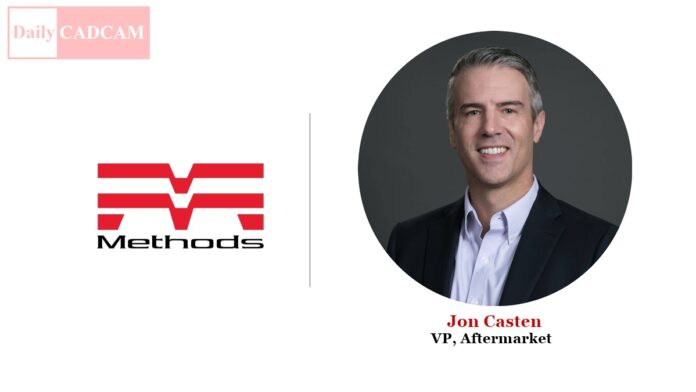
SUDBURY, MA, USA, Feb 27, 2026 — Methods Machine Tools, Inc., North America’s foremost supplier of leading-edge precision machine tools and automation solutions, has hired Jon Casten as Vice President of Aftermarket.
Casten, who has more than 25 years of experience leading post-sales strategy and commercialization, will lead Methods’ comprehensive aftermarket strategy across technical service, parts, warranty, and customer support including the national and field-based support teams, and national parts distribution.
“I’m excited to join Methods at this pivotal stage in the company’s growth. Methods has an exceptional reputation for delivering world-class machine tool solutions,” said Casten. “With countless installations across North America, the opportunity to further strengthen the aftermarket platform is incredibly compelling. I look forward to partnering with the team to enhance our service model and expand the lifecycle value we deliver to our customers.”
“Jon brings extensive leadership experience in delivering unified strategies that combine aftermarket initiatives, exceptional service, and digital transformation projects into high-revenue growth,” said Rick Alton, Methods Chief Executive Officer. “He is known for improving customer uptime by unlocking business efficiencies, discovering new market opportunities for the best customer experiences, and building high-performing, accountable teams.”
Prior to joining Methods, Casten spent the last 15 years in executive aftermarket services roles, recently at Terex Corporation and Diploma PLC. He led multi-site parts, service and distribution organizations that increased on-time delivery to more than 98% through process modernization and KPI discipline, and improved customer retention by more than 65%.
Methods Machine Tools, Inc. delivers leading-edge CNC machine tools from premium global suppliers to the North American manufacturing sector and supports them with best-in-class automation and engineering solutions, and superior technical support. In continuous operation since 1958, Methods operates seven technical centers throughout the United States, and a one-of-a-kind precision center. Methods has installed more than 45,000 machine tools throughout North America. For more information, call 877-668-4262 or visit www.methodsmachine.com.
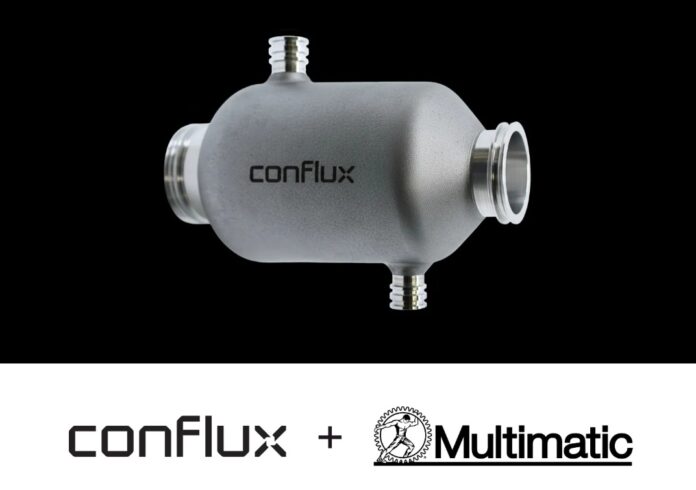
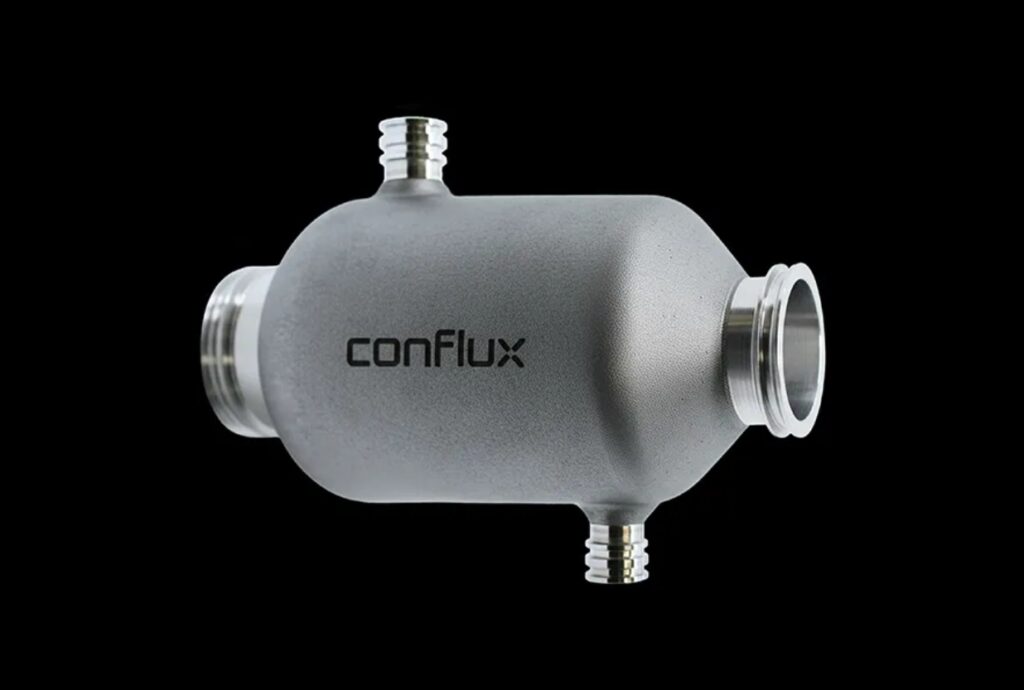
MELBOURNE, Australia, Feb 27, 2026 – A 3D-printed, configurable transmission oil cooler from Conflux Technology has successfully completed a full-distance endurance race on a Multimatic-engineered car, underlining Conflux’s credentials as a cooling supplier to top-level international motorsport.
Using Conflux’s configurable core platform, the transmission cooler was adapted to the programme’s specific boundary conditions and produced in just two weeks using metal additive manufacturing. Multimatic Motorsports selected and integrated the unit for an endurance application, gaining a race-proven solution without the cost and delay of a clean-sheet design.
The Conflux oil cooler used engine coolant to manage gearbox oil temperatures within a shared water circuit. In this application, it delivered approximately 20% higher heat rejection than the incumbent solution within the same packaging envelope, providing additional thermal headroom without extra space, weight or aero penalty.
“Endurance racing is the ultimate test for any cooling system,” said Glenn Rees, Principal Engineer at Conflux Technology. “We’ve shown that our configurable, 3D-printed technology can move from design to race car in weeks, deliver significantly improved performance, and still be trusted to reach the finish line in some of the world’s toughest races.”
The 3D-printed core incorporates highly optimised internal channels to increase heat transfer while controlling pressure drop within a compact, lightweight envelope. Conflux’s configurable design platform allows engineers to rapidly tune geometry for different gearboxes, layouts and duty cycles, reducing non-recurring engineering costs and shortening programmes’ time-to-track, without compromising durability or consistency over long stints.
“At Multimatic we look for partners who can combine innovation with robust delivery,” said Julian Sole, Design Manager at Multimatic Motorsports. “The Conflux oil cooler, built from their configurable design and packaged efficiently in a very tight space, delivered the reliability we required over a full endurance race distance.”
The successful endurance outing adds to Conflux’s growing body of work supplying 3D-printed heat exchangers into motorsport and high-performance automotive programmes. The same configurable oil cooler architecture is now available to other OEMs and race operations seeking a step change in thermal capacity and packaging without a complete cooling-system redesign.
About Conflux Technology
Conflux is a global leader in the design and manufacture of heat transfer technology for visionaries and innovators across high-performance sectors. Conflux designs and manufactures ultra-high performing heat transfer solutions using metal additive manufacturing technology. Vertically integrated proprietary process backed by AS 9100D certification. For more information, visit https://www.confluxtechnology.com.
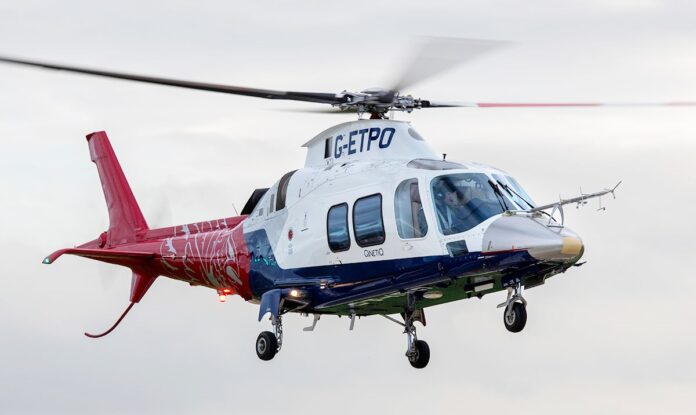
FARNBOROUGH, UK, Feb 27, 2026 – QinetiQ, in partnership with Additive Manufacturing Solutions Limited (AMS Ltd.), has completed the maiden flight of an aircraft containing a 3D-printed structural component, made from recycled titanium.
The flight – believed to be a world first – was conducted by QinetiQ’s Flight Test Organisation and took place at MOD Boscombe Down in Wiltshire.
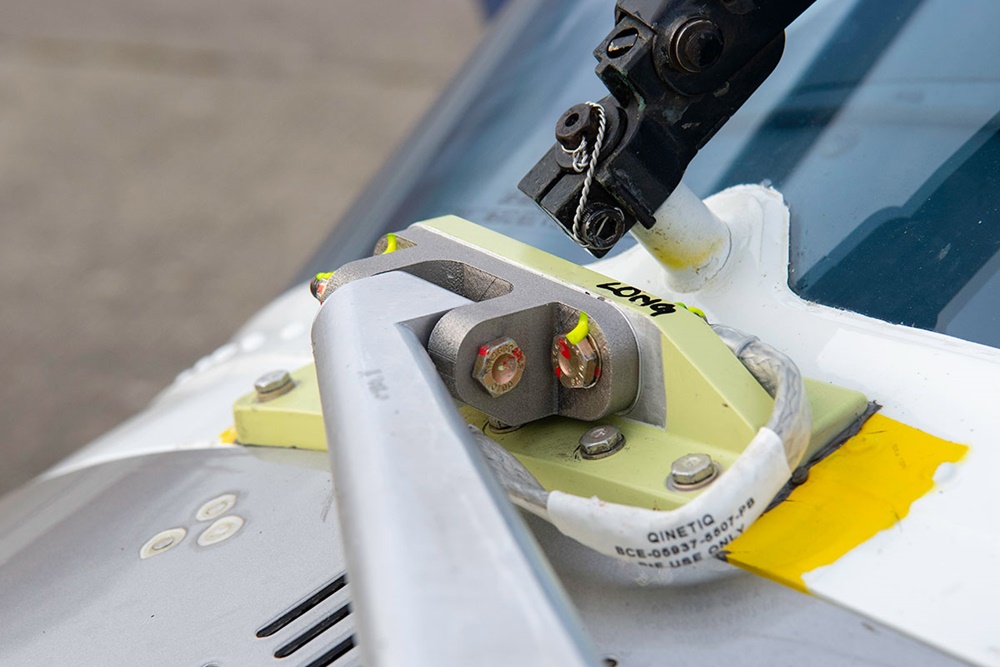
The component flown was a hinge, forming part of an Air Data Boom, attached to a QinetiQ-owned A109S helicopter which is being developed for ETPS, the world-renowned flight test training school. QinetiQ designed and integrated the hinge while it was manufactured by AMS Ltd. using titanium recovered from a decommissioned aircraft.
AMS Ltd.’s proprietary process recycles scrap metal and creates powder which meets the quality requirements needed for the printing of a new product, achieving 97% efficiency and minimising material loss – particularly valuable for high-cost, hard-to-source metals like titanium. The process also uses 93.5% less CO2e, offering a step change in environmental impact, in comparison to traditional supply chains.
Titanium is commonly used in defence platforms, due to its high strength-to-weight ratio and its resistance to corrosion. Global demand for the material has increased due to urbanisation and infrastructure growth, with China and Russia as the largest suppliers of aerospace grade titanium globally.
The approach adopted by AMS Ltd. and QinetiQ could reduce UK dependency on imported titanium, with AMS Ltd. estimating that the UK could become self-sufficient, if all the titanium held in scrap aircraft was extracted for recycling.
Simon Galt, Managing Director Air, QinetiQ, said: “Our testing and engineering expertise is helping to prove the technology which will reduce the UK’s dependency on other nations for aerospace grade titanium. Not only are we helping to strengthen UK supply chains, we are also leading the rest of the world in the very latest 3D printing technology.”
Rob Higham, AMS Director & CEO, commented: “AMS has tirelessly built momentum and expertise within the additive powder market, with a sharp focus on providing recycled feedstocks. This milestone reflects the dedication of our team and QinetiQ’s commitment to a more resilient and sustainable future.”
About QinetiQ
QinetiQ is an integrated global defence and security company focused on mission-led innovation. We employ c.8,000 highly-skilled people, committed to creating new ways of protecting what matters most; testing technologies, systems, and processes to make sure they meet operational needs; and enabling customers to deploy new and enhanced capabilities with the assurance they will deliver the performance required. For more information, visit www.QinetiQ.com. Follow us on LinkedIn and X @QinetiQ.
About Additive Manufacturing Solutions Ltd.
Additive Manufacturing Solutions Ltd (AMS) is a leading UK partner in advanced metal additive manufacturing, delivering cutting edge solutions from powder development to production ready metal AM parts. Founded in 2017 and based in West Lancashire, AMS combines additive manufacturing, novel material development, and comprehensive materials testing to help organisations innovate faster and manufacture more sustainably. With innovations such as powder re life technology and early adoption of Digital Product Passports, AMS is redefining sustainable manufacturing while improving performance and traceability across the product lifecycle.
GOTHENBURG, Sweden, Feb 27, 2026 – TECHNIA, the #1 knowledge leader in virtual twin solutions and digital engineering, announced the launch of CAD Essentials. This innovative suite of modular productivity tools is designed to enhance and simplify workflows for CATIA V5 and 3DEXPERIENCE users, offering cost-effective automation without the need for full-scale customization projects.
CAD Essentials provides engineering teams with a scalable solution that grows with their needs. The suite includes seven specialized tools, each addressing specific workflow challenges faced by CATIA users across automotive, aerospace, and industrial equipment sectors.
“CAD Essentials represents a new approach to productivity enhancement for CATIA users. By offering modular, subscription-based tools, we’re making powerful workflow automation accessible to companies of all sizes without requiring costly custom development projects.” Sarah Ponader, Product Manager, TECHNIA Software.
Key Benefits:
Cost Efficient
– Avoid costly custom development projects – Mix and match tools to fit budget and business needs – Add new tools as requirements evolve without major investments
Time Savings
– Accelerate design-to-documentation workflows for faster project delivery – Eliminate repetitive manual tasks and reduce costly errors – Enhance and simplify workflows in CATIA
Reliable
– Ensure consistent, error-free workflows across teams
– Minimize risk of data inconsistencies and version conflicts
– Stay aligned with internal standards and best practices
We are committed to continuously expanding the CAD Essentials portfolio with additional productivity tools, providing engineering teams with innovative solutions to optimize their workflows and accelerate product development.
TECHNIA is a multinational provider of digital engineering software, services, and consulting. TECHNIA has 600+ employees across 30+ office locations.
TECHNIA is part of Addnode Group, listed at the Nasdaq OMX Nordic List.
Robust partnerships with industry-leading organizations such as Dassault Systèmes, Atlassian, and rFpro, coupled with strategic mergers and acquisitions, contribute to TECHNIA’s growth strategy.
Working with 6000+ clients worldwide, TECHNIA has seen significant revenue growth from 237 MSEK to more than 1580 MSEK, since 2014. For more information, visit https://www.technia.com.