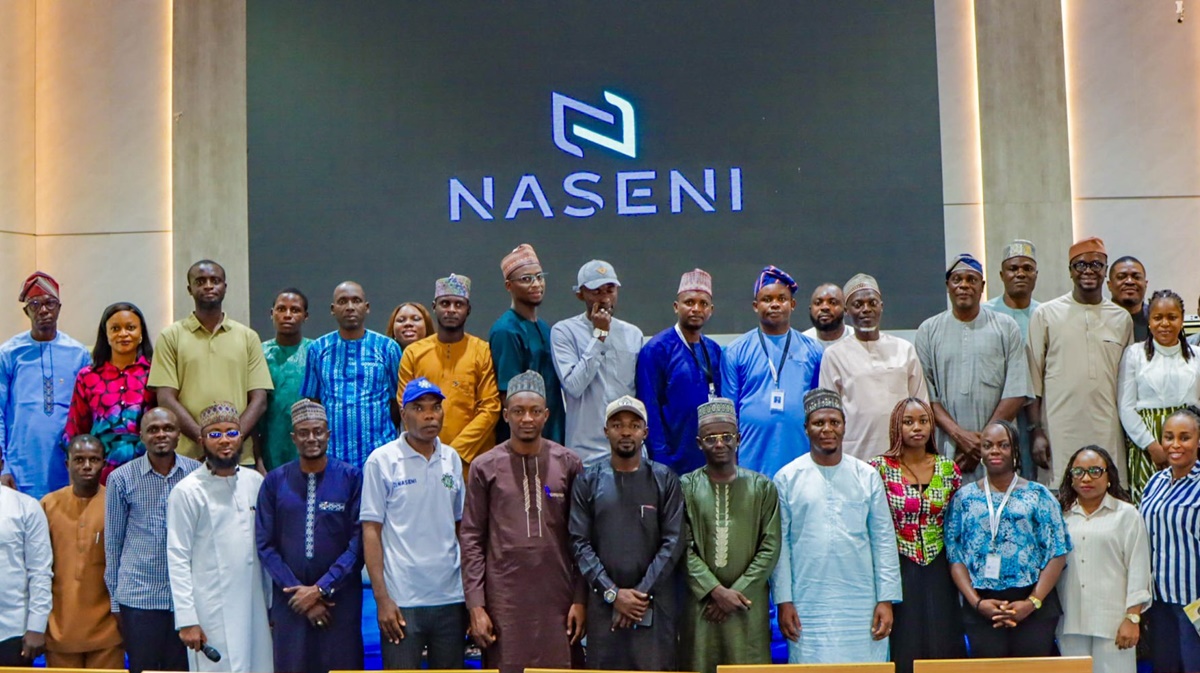
ABUJA, Nigeria, Sep 7, 2026 – The National Agency for Science and Engineering Infrastructure (NASENI) has unveiled plans to drive Nigeria into the future of advanced manufacturing through the establishment of a Metal Additive Manufacturing Hub, a strategic initiative aimed at strengthening local production, reducing dependence on imported industrial components and unlocking greater value from the nation’s vast mineral resources.
The vision was presented at the second edition of NASENI’s Science Perspective Engagement Series held on Tuesday at the Technology Orientation Centre (TOC), NASENI Headquarters, Abuja, where experts highlighted the transformative potential of metal additive manufacturing, popularly known as metal 3D printing.
Presenting a paper titled “The Science of Layer-by-Layer Fabrication of High-Value Metallic Components: Towards Establishing Nigeria’s Metal Additive Manufacturing Hub,” Overseeing Officer of Advanced Manufacturing Technology Development Institute (AMTDI), a division of NASENI at Jalingo, Taraba State, Mr. Abdulrahman Barkindo Bawuro, represented by Chief Engineer Dr. Okechukwu Chijioke, described the technology as a game changer for industrial development.
According to him, additive manufacturing creates components directly from digital designs by building materials layer upon layer, unlike conventional manufacturing processes that remove material from larger workpieces and often generate significant waste. The result, he explained, is greater efficiency, precision and the ability to produce highly customized and complex parts.
The technology is already reshaping industries worldwide, including aerospace, automotive, healthcare, energy, oil and gas, construction and defense. Components such as aircraft parts, medical implants, turbine systems, electric vehicle components, pistons, brake calipers and oilfield equipment are now being produced using metal additive manufacturing.
Mr. Bawuro noted that developing local capacity in such technology would help Nigeria retain capital currently spent on imported components while expanding indigenous manufacturing capabilities. He added that the initiative aligns with efforts to deepen value addition in the solid minerals sector, as locally processed minerals can serve as feedstock for producing metal powders used in advanced manufacturing.
Beyond industrial growth, he said the proposed hub could stimulate new businesses, create skilled jobs, generate revenue and strengthen national competitiveness in emerging technologies.
He explained that the envisioned hub would integrate the entire manufacturing ecosystem, including digital product design, process simulation, laser powder-fusion systems, powder recovery and recycling, surface finishing and quality assurance facilities.
To ensure sustainability, Mr. Bawuro advocated a public-private partnership model in which government provides enabling infrastructure while private sector players contribute specialised equipment, technical expertise and investment capital.
Earlier, Deputy Director and Head of Research and Laboratory Development, Dr. Hassan Bakare, described the Science Perspective Engagement Series as an important platform for knowledge exchange, innovation and practical solutions to Nigeria’s technological and industrial challenges.
Closing the session, Deputy Director, NanoBio, Mr. Oladipo Dele Kayode, urged participants to convert insights from the engagement into tangible innovations capable of advancing Nigeria’s industrial and technological development.
About NASENI
NASENI was established to promote and develop science, technology, and engineering infrastructure in the country. It was also set up to address various challenges and needs in Nigeria’s scientific and technological development. It has a network of 12 Development Institutes spread across Nigeria each with its own focus area and mandate. For more information, visit https://naseni.gov.ng/