Home Blog Page 7

Exclusive Interview: Mr. Andrey Kharatsidi, CEO of ENCY Software, on the Future of CNC and Robotic Programming

0
Ency interview cad cam

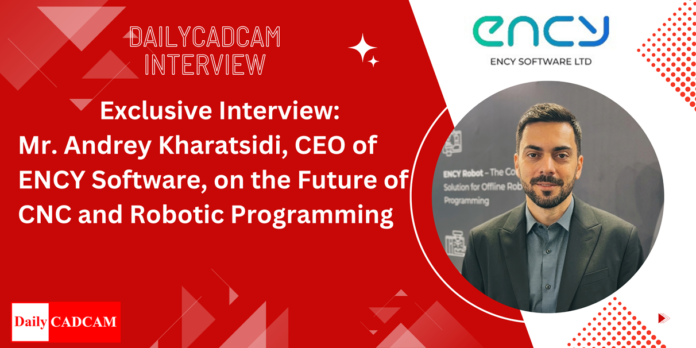
At IMTEX 2026 in Bengaluru, DailyCADCAM had the opportunity to engage in an in-depth conversation with Mr. Andrey Kharatsidi, CEO of ENCY Software Ltd. As ENCY strengthens its presence in India and expands its global footprint across CNC and robotic programming solutions, Andrey shared insights into the company’s independent technology philosophy, AI-driven development strategy, ecosystem approach, and long-term vision for the Indian manufacturing sector. The discussion offered a clear perspective on how advanced CAM and robotic software solutions are evolving to meet the demands of modern digital manufacturing.

DailyCADCAM: Let’s begin with a brief introduction about yourself and ENCY Software.

Andrey Kharatsidi: I come from a background in physics and mathematics, with a specialization in neural networks—long before AI became as popular as it is today. We are essentially a family-rooted IT company that was founded over 30 years ago by my father. I grew up watching him develop CAM software at home. Approximately ten years ago, I officially joined the company, and I currently manage most of its operations. We had a strong international focus from the beginning. Our first international sales were in Italy in 2000, and today we operate in 54 countries. India is now one of our priority markets, and we have established a local office and team here because we see strong long-term potential.

DailyCADCAM: What differentiates ENCY Software from other CAM developers?

Andrey: One of our key strengths is independence. We are a fully independent CAM developer, and all core technologies—toolpath calculation, simulation, 3D model import, and post-processing—are proprietary. While we use certain SDKs for integrations like SOLIDWORKS, the main functionality is completely developed in-house. This gives us full control over our source code, allows faster innovation, ensures tighter integration between components, and removes dependency on third-party limitations. For us, controlling the technology is critical in delivering reliable and scalable solutions.

DailyCADCAM: Can you tell us more about the ENCY product ecosystem?

Andrey: Our ecosystem is built around a unified platform that covers the complete digital manufacturing workflow. We offer ENCY CAD/CAM for CNC programming, ENCY Robot for offline robot programming, ENCY Tuner for shop-floor NC code verification, ENCY Hyper for hybrid robot programming, and ENCY Clouds for collaboration. We also provide MachineMaker for building digital twins, additive manufacturing capabilities, AI-driven features, and structured training through ENCY Academy. The idea is to bridge design, simulation, programming, and production in a seamless environment.

DailyCADCAM: ENCY Robot has gained attention. What makes it special?

Andrey: We have been developing robot programming solutions since 2008. Robots present different challenges compared to CNC machines, particularly in managing kinematics. ENCY Robot enables users to create complete digital twins of robotic cells, calculate advanced multi-axis toolpaths, manage complex kinematics, and simulate operations before execution. It supports a wide range of applications including milling, trimming, welding, painting, and pick-and-place tasks. Recently, we introduced ENCY Hyper, which combines offline programming precision with real-time robot control in one interface. It’s still evolving, but we see it as a breakthrough direction.

DailyCADCAM: How does your ecosystem approach benefit manufacturers?

Andrey: We take a practical view of cloud integration. What needs to stay offline remains offline, and cloud functionality is introduced only where it truly adds value. For example, a CAM programmer can complete a project and push it to the cloud. The shop-floor engineer receives an instant notification in ENCY Tuner, reviews the program, suggests changes if necessary, and communicates directly through an integrated chat. This enables real-time collaboration between office and production without disrupting workflows.

DailyCADCAM: AI is a major topic today. How is ENCY integrating AI into its solutions?

Andrey: We believe proper AI integration requires context awareness. AI must understand the full CAM project—what machine is used, which tools are selected, and what toolpaths are generated. Instead of relying heavily on prompts, we focus on intelligent tools where users can simply click options like “Explore this part” or “Suggest next operation.” AI should accelerate workflows, not complicate them. We are also developing AI-based post-processor customization, and I believe post-processing challenges will soon be significantly simplified through automation.

DailyCADCAM: How do you see the Indian manufacturing market?

Andrey: India is one of our top strategic markets since 2025. During our annual strategy planning, we identified India as a priority due to its strong growth potential and dynamic manufacturing landscape. IMTEX 2026 confirmed this decision, as we saw high interest in both CNC and offline robot programming solutions. We have established a local office and are investing in expanding our presence because we believe India offers long-term opportunities.

DailyCADCAM: Do you focus on specific industries?

Andrey: We prefer diversification rather than focusing on a single segment. In different countries, our solutions are widely used across die & mold, automotive, aerospace, robotics, additive manufacturing, and general machining. Relying on only one industry can be risky, so we aim to provide flexible solutions adaptable to multiple sectors.

DailyCADCAM: What about post-processors and customization?

Andrey: We support two post-processor languages—our proprietary language and C# for users familiar with other systems. We provide a built-in development environment and tools such as CL Data Viewer to simplify customization. Our dealer network maintains shared post-processor libraries, and we are actively integrating AI tools to further streamline development and customization.

DailyCADCAM: How is customer support structured in India?

Andrey: We have Tier-1 support locally in India. If cases require deeper technical intervention, they are escalated to our global development team through a centralized service desk. We are also integrating ecosystem-based live collaboration tools to enable direct interaction between customers, support engineers, and developers in a unified communication environment.

DailyCADCAM: What is your partnership with SOLIDWORKS?

Andrey: We are recognized as a solution partner of SOLIDWORKS under Dassault Systèmes. We offer direct integration and associativity, meaning any change made in the SOLIDWORKS model is automatically reflected in ENCY without breaking operations. Since SOLIDWORKS is widely used globally, this integration is highly beneficial for many customers.

DailyCADCAM: What is your approach to training and academic collaboration?

Andrey: We offer special programs for universities and academic institutions. Through ENCY Academy, users can access structured video training and certification programs. We aim to maintain a short learning curve with a clean interface design, ensuring that users can quickly become productive without unnecessary complexity.

DailyCADCAM: Finally, what is your message to Indian manufacturers?

Andrey: In my view, even the most advanced machine reveals its full potential only with the right software behind it. In many cases, the real constraint in manufacturing is not the hardware itself, but how effectively it is programmed and utilized.

This is not always immediately obvious. But once manufacturers start looking at software as a key factor of productivity, they begin to see new opportunities for improvement and efficiency. At that point, we are always ready to support them in finding the right solutions. Our team in India is ready to support customers, and IMTEX 2026 clearly showed that ENCY is gaining strong momentum in the Indian market.

Vcqa

As the conversation concluded at IMTEX 2026, one message stood out clearly: in today’s manufacturing landscape, software defines productivity. With a strong commitment to proprietary development, AI integration, ecosystem-based collaboration, and growing investments in India, ENCY Software Ltd is positioning itself as a strong technology partner for manufacturers aiming to streamline operations and accelerate digital transformation.

We sincerely thank Mr. Andrey Kharatsidi, CEO of ENCY Software, for taking the time to share his valuable insights with DailyCADCAM.com readers. We look forward to witnessing ENCY’s continued growth and innovation in the Indian and global manufacturing markets.

Visit ENCY Software Website for more details – https://encycam.com

Vcqa
Invitation
Siemens sd17

AMC Bridge Develops MCP Connector for Autodesk Platform Services, Procore Tech Demo

0

WALTHAM, MA, USA, Mar 24, 2026 — As construction firms continue to struggle with fragmented systems, unstructured data, and time‑consuming manual processes, the need for tighter integration between Building Information Modeling (BIM) environments and construction management platforms is becoming increasingly urgent. To explore a new path forward, AMC Bridge developed the MCP Connector for Autodesk Platform Services and Procore—a technology demonstration showcasing how the emerging Model Context Protocol (MCP) and AI‑driven natural language interfaces can streamline workflows and reduce cross‑platform friction.

To see the current functionality of the MCP Connector for Autodesk Platform Services and Procore technology demonstration, watch a short demo video.

As the industry moves toward deeper interoperability, many organizations still encounter persistent gaps across the full construction lifecycle. These disconnects often arise because the wide range of software systems servicing construction processes are not built to communicate natively. As a result, field data lacks context, critical processes remain siloed, and schedules and budgets stay disconnected from the model information they depend on.

Addressing these challenges, the MCP Connector for Autodesk Platform Services and Procore demonstrates how MCP and agentic AI can replace brittle, point‑to‑point integrations with adaptive, intelligent, cross‑system workflows—resulting in stronger alignment between design intent and field execution, with significantly less manual effort.

This Proof of Concept was inspired by recurring client requests to eliminate cumbersome manual quantity takeoff workflows and by a broader industry movement toward AI‑assisted design/field coordination. As APS and Procore gain traction as complementary platforms, and as MCP grows in adoption, this moment presents a compelling opportunity to showcase practical, AI‑driven interoperability.

A New Kind of Integration

Most integrations today are rigid, point‑to‑point connections that hard‑code specific mappings and behaviors. The MCP Connector represents a very different approach.

Instead of custom scripts or “glue code”, the connector uses Model Context Protocol and natural‑language AI to dynamically orchestrate multi‑step operations across APS and Procore. This means:

  • Workflows adapt more easily when project structures or codes change.
  • BIM and construction data become accessible through intuitive, conversational interactions.
  • AI agents can reason across tools, understand context, and execute sequences—moving far beyond traditional API chaining.

By abstracting complexity, MCP brings a new level of agility and intelligence to cross‑platform workflows.

Why APS and Procore Form the Ideal Testbed

Autodesk Platform Services offers world‑class tools for model viewing, geometry interrogation, and rich design metadata, all accessible directly in the browser. Procore®—widely used throughout the construction sector—provides centralized capabilities for budgets, cost codes, and field progress tracking. Together, they span the critical design-to-delivery continuum, making them the perfect pair to demonstrate how MCP can bridge previously disconnected phases of the construction lifecycle.

What the Demonstration Brings to Life

The POC showcases how APS, Procore, and MCP work together to enable smarter, more intuitive collaboration:

  • Conversational BIM Interactions

Users can query BIM models inside the APS Viewer using plain language—locating elements, extracting metadata, or calculating quantities without navigating complex UI structures.

  • Automated Budget and Cost Code Alignment

Quantities and element properties extracted from the model can be automatically synchronized with corresponding cost codes in Procore, eliminating duplicate entry and reducing inconsistencies.

  • Contextualized Field Data

Unstructured information from the field—photos, PDFs, daily logs—can be parsed, structured, and linked back to BIM elements, turning raw data into actionable insight.

  • Instant, Visual Progress Tracking

Color‑coded 3D views driven by live Procore data reveal what is complete, underway, or pending. Stakeholders gain immediate, accurate visibility into project status.

Together, these capabilities create a unified, conversational workspace that reduces friction between design and construction teams.

Solving Real AEC Pain Points

The custom solution based on this POC has a string potential to address several high‑impact industry challenges:

  • Cost and schedule overruns tied to late or inaccurate quantity data
  • Data silos between modeling tools and field management systems
  • Rework caused by mismatched codes, properties, or version drift
  • Slow reporting due to manual progress capture
  • Cost estimation errors stemming from spreadsheet‑based workflows

By transforming BIM data and construction records into a single, AI‑powered experience, the MCP Connector can empower teams to make faster, more confident decisions, and reduce the burden of repetitive tasks.

A Look at the Longer‑Term Opportunity

AI‑orchestrated, cloud‑native workflows offer advantages that extend well beyond immediate productivity gains:

  • Scalability: New systems can be added without rebuilding integrations.
  • Resilience: Natural‑language workflows adapt more easily to changing processes.
  • Speed: Design updates flow more quickly into field action.
  • Knowledge Retention: Conversational logs capture institutional expertise.
  • Lower Cost of Ownership: Organizations avoid maintaining dozens of bespoke connections.

These benefits position MCP‑enabled architectures as a sustainable approach to digital transformation.

The Interoperability Future: Powered by Open Standards

The APS‑Procore integration highlights the critical role of open, well‑documented APIs and emerging standards like MCP in enabling more composable, future‑proof workflows. As AEC organizations increasingly demand data continuity across all phases—from design through operations—this standards‑driven approach reduces vendor lock‑in and lays the foundation for lifecycle‑wide integration.

Room to Grow: Beyond APS and Procore

Because MCP abstracts tool capabilities behind a consistent interface, the same principles used in this POC can be extended across the broader tech stack, including:

  • Estimating systems (e.g., Sage, WinEst)
  • Scheduling platforms (e.g., Primavera P6)
  • ERP and financial management solutions commonly used in construction (e.g., CMiC, Viewpoint Vista, or industry‑agnostic platforms such as SAP)

Natural‑language orchestration can coordinate changes holistically across estimating, scheduling, and cost controls, preserving traceability from design decisions through commercial outcomes.

What MCP Enables That APIs Alone Can’t

  • Contextual orchestration of tools, sequences, and dependencies
  • Natural‑language alignment between user intent and multi‑step actions
  • Composable extensibility through discoverable tools, not hard‑coded integrations
  • A higher level of abstraction that lets AI agents operate across platforms without needing system‑specific engineering

This makes MCP a meaningful step forward for real, scalable interoperability in AEC.

If you are interested in learning more about the demonstrated technologies and how they can be utilized for your organization’s needs, please contact us to discuss the details.

About AMC Bridge

AMC Bridge is a trusted software technology partner for engineering, manufacturing, and construction enterprises, whether they are actively pursuing AI-driven digital transformation or only beginning to recognize its potential. We help organizations to move beyond experimentation and achieve consistent ROI by delivering production-ready software and end-to-end solutions for their transformation journey.

We design, build, and integrate enterprise-grade software – applications, workflow extensions for CAD/PLM/BIM, data integrations, AI-enabled features – and deploy them with monitoring and lifecycle management so they remain reliable over time. Our services include assessing data readiness; preparing and unifying product and project data; and embedding AI into the workflows teams use every day. With 25+ years of industrial software expertise and deep ecosystem partnerships, including Aras, Autodesk, Bentley, Dassault Systemes, PTC, Siemens, Tech Soft 3D, and others, we empower enterprises to move confidently from experimentation to operational AI at scale. For more information, visit https://www.amcbridge.com.

AML3D Receives AU$9.9M ARCEMY X Order from US Military Shipbuilder HII’s NNS Division

0

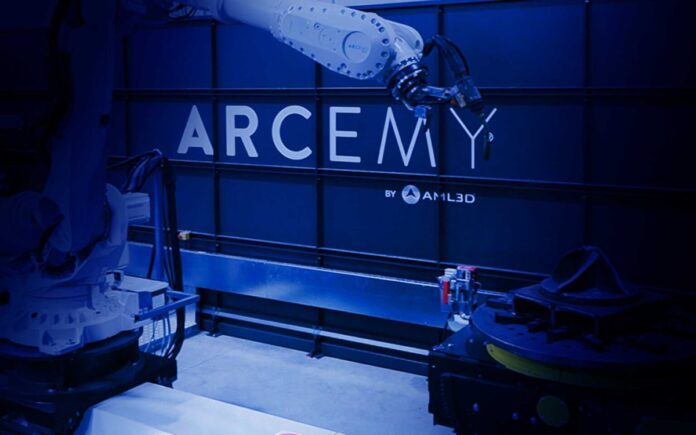
EDINBURGH, Australia, Mar 24, 2026 – AML3D Limited (ASX:AL3) (“AML3D” or “the Company”) is pleased to announce a ~AU$9.9 million1 order for four custom, large scale ARCEMY X 6700 systems (“ARCEMY X”) from HII’s Newport News Shipbuilding (“NNS”) division. HII is America’s largest military shipbuilder, delivering ships, aircraft carriers, submarines and defense technologies. On completion of the order, NNS will have a fleet of six custom ARCEMY X systems.

The ARCEMY systems ordered by NNS are being supplied from AML3D’s New U.S. Technology Centre in Ohio. All four additional NNS ARCEMY Xs are expected to be installed and operational during the third quarter of FY2027.

The NNS ARCEMY Xs are custom systems based on the large scale ARCEMY X 6700 but using a

~11,000kg positioner to create a heavy capacity build capability. HII’s continued adoption of AML3D’s advanced additive manufacturing technology helps to expedite lead times, produce components to a higher standard than traditional manufacturing and with significant reductions in waste and environmental impacts. The additional ARCEMY® Xs will be used for a variety of shipbuilding applications, including ship component fabrication and replacement.

AML3D CEO Sean Ebert said, “The step change in the size and value of this HII ARCEMY order is very much reflective of the strong and growing demand signals that underpin AML3D’s continued expansion into the U.S. defense market. It is also a strong endorsement of our U.S. ‘Scale up’ strategy which included establishing our U.S. technology Center in Stow Ohio and our plans to invest $12 million to expand our U.S. production capabilities.

Not only do we expect to see a continued growth in U.S. defense orders we are also looking to continue to expand into other sectors. We have already successfully supplied ARCEMY technology to the Tennessee Valley Authority, the largest public utility in the U.S., and are targeting growth across the U.S. Marine, Energy, Aerospace and Oil & Gas sectors. In addition, we are seeing the emergence of early-stage demand in our UK and European markets that is similar to the demand signals that are driving our success in the U.S.

About AML3D

AML3D Limited, a publicly listed technology company founded in 2014, utilizes new technologies to pioneer and lead metal additive manufacturing globally. Disrupting the traditional manufacturing space, AML3D has developed and patented a Wire Additive Manufacturing (WAM) process that metal 3D prints commercial, large-scale parts for Aerospace, Defense, Maritime, Manufacturing, Mining and Oil & Gas. AML3D provides parts contract manufacturing from its Technology Centre in Adelaide, Australia, and is the OEM of ARCEMY, an industrial metal 3D printing system that combines IIoT and Industry 4.0 to enable manufacturers to become globally competitive. For more information, visit https://aml3d.com.

Hypertherm Launches Powermax33 XP Plasma Cutting System

0
Powermax33 XP

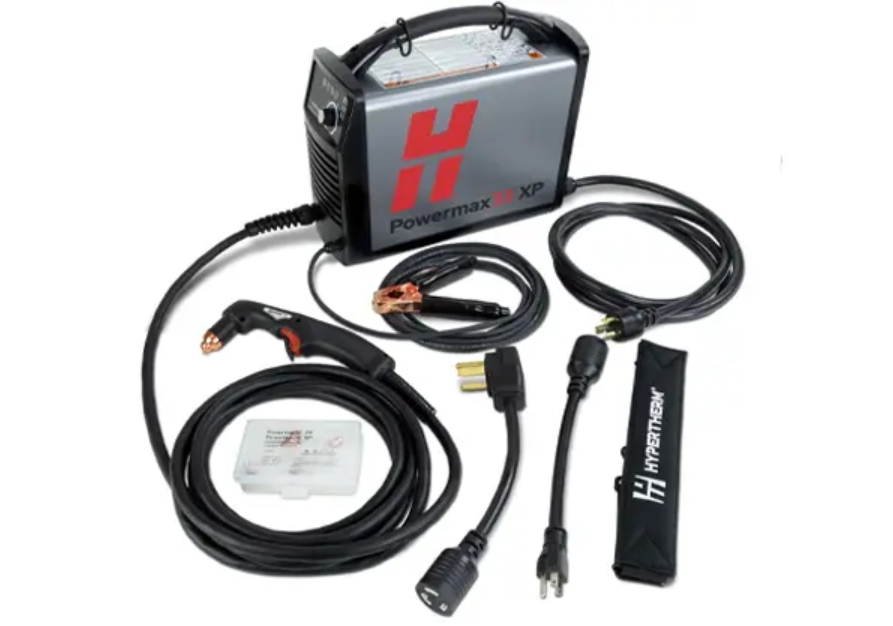
HANOVER, NH, USA, Mar 24, 2026 — Hypertherm Associates, a U.S.-based leading manufacturer of industrial cutting systems and software, has announced the launch of the newest Powermax plasma cutting system: the Powermax33 XP.   

Engineered for metalworkers who require high-quality cuts, greater capacity, and portability, the new air plasma system delivers more power, more value, and an unrivaled six-year power supply warranty. Built to handle a broad range of cutting tasks, across multiple industries and offered at a lower price point, the Powermax33 XP combines enhanced cutting performance with the Powermax reputation for reliability and long consumable life. The system‘s versatility provides high power for thick metal cutting, while also supporting FineCut consumables for detailed, high-quality cuts on thinner materials.

Powermax33 XP

We developed the Powermax33 XP to solve real-world challenges our customers face,” explains Jeff Hluchyj, Powermax product manager. “The system delivers professional-grade performance in a compact, lightweight system that is built to last.” 

The easy-to-use, portable plasma system offers a recommended cutting capacity of 13 mm (0.5 in.) and a severance capacity of 20 mm (0.75 in.), delivering cutting power comparable to some competitive 45-amp systems. With dual-voltage design, the Powermax33 XP can operate on either 120V or 240V power, making it well suited for shop or field use.  

Key Benefits of the Powermax33 XP:

  • More power and greater cut capacity for thicker metals and faster cut speed
  • Portable and easy-to-use, get cutting quickly with improved cut quality.
  • Longer consumable life, lasting up to 10 times longer than competitive systems, saves money in the long run
  • Robust design ensures system durability in harsh environments, backed by an industry-leading warranty
  • Versatile design, weighing just 9.5 kg (21 lbs.)
Powermax33 XP

Built for demanding environments, the Powermax33 XP is engineered and assembled in the USA and tested to perform reliably for decades in the field. It is well-suited for applications including automotive repair and restoration, metal art and signage, property and plant maintenance, HVAC and mechanical contracting, agricultural equipment maintenance, and educational and trade school programs.

“Hypertherm Associates is committed to advancing plasma technology through customer-focused innovation and engineering,” says Hluchyj. “With the Powermax33 XP, we’re delivering what customers are asking for: more power, more value, and performance they can depend on.”

About Hypertherm Associates

Hypertherm Associates is a U.S. based manufacturer of industrial cutting products and software. Its products, including Hypertherm plasma and OMAX waterjet systems, are used by companies around the world to build ships, airplanes, and railcars; construct steel buildings, fabricate heavy equipment, erect wind turbines, and more. In addition to cutting systems, the company creates CNCs and software trusted for performance and reliability that result in increased productivity and profitability for hundreds of thousands of businesses. Founded in 1968, Hypertherm Associates is a 100 percent Associate-owned company, employing approximately 2,000 Associates, with operations and partner representation worldwide. Learn more at www.HyperthermAssociates.com.

3D Systems Appoints Phyllis Nordstrom as Chief Financial Officer

0
Phyllis Nordstrom

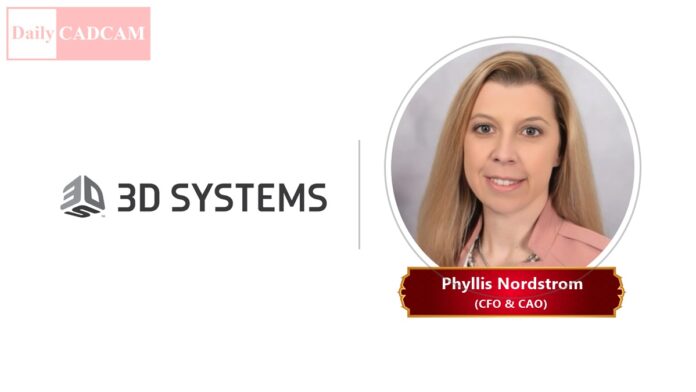
ROCK HILL, SC, USA, Mar 24, 2026 — 3D Systems (NYSE: DDD) today announced the appointment of Phyllis Nordstrom as Executive Vice President and Chief Financial Officer, effective March 23, 2026. Ms. Nordstrom, who has served as Interim Chief Financial Officer since August 2025, will also continue in her role as Chief Administrative Officer, reporting directly to President and CEO Dr. Jeffrey Graves.

Ms. Nordstrom’s promotion reflects the company’s strong confidence in her leadership and commitment to financial discipline, efficient capital allocation, and long-term shareholder value in the additive manufacturing sector. Over the last six months, she has effectively guided the global finance organization – encompassing financial planning and analysis, reporting, accounting, treasury, tax, investor relations, and internal audit – while maintaining a sharp focus on strategic investments and profitability improvements.

“I have had the privilege of working closely with Phyllis for over ten years, first at MTS Systems and now at 3D Systems, and I have complete confidence in her ability to lead our finance organization. As Interim CFO, she has demonstrated exceptional leadership in strengthening our financial foundation, optimizing cash flow, and aligning resources with our strategic priorities. Her appointment as Chief Financial Officer further accelerates our path to sustained growth, profitability and shareholder value creation.”

Ms. Nordstrom joined 3D Systems in September 2021 and brings more than 25 years of progressive leadership in finance, accounting, controls, and risk management across public companies and public accounting firms. In her ongoing role as Chief Administrative Officer, she will continue to oversee global human resources, risk and compliance, and information technology and cybersecurity. Previously, she held senior positions at MTS Systems Corporation, PricewaterhouseCoopers, Target Corporation, and U.S. Bank. Ms. Nordstrom holds a Bachelor of Science degree in Accounting from Louisiana State University.

About 3D Systems 

For nearly 40 years, Chuck Hull’s curiosity and desire to improve the way products were designed and manufactured gave birth to 3D printing, 3D Systems, and the additive manufacturing industry. Since then, that same spark continues to ignite the 3D Systems team as we work side-by-side with our customers to change the way industries innovate. As a full-service solutions partner, we deliver industry-leading 3D printing technologies, materials and software to high-value markets such as medical and dental; aerospace, space and defense; transportation and motorsports; AI infrastructure; and durable goods. Each application-specific solution is powered by the expertise and passion of our employees who endeavor to achieve our shared goal of Transforming Manufacturing for a Better Future. More information on the company is available at www.3dsystems.com.

Velotic Launched to Shape Future of Industrial & Manufacturing Software

0
VELOTIC

BOSTON, MA, USA, Mar 24, 2026 – Velotic today announced its launch as a leading independent industrial software company, uniting multiple trusted platforms to advance a new era for industrial and manufacturing technology. The formation of Velotic coincides with the closings of TPG’s previously announced acquisitions of Proficy, the former manufacturing software business of GE Vernova, and PTC’s former industrial connectivity and Internet of Things (IoT) businesses. Backed by TPG, Velotic delivers a leading suite of data-driven solutions focused on improving processes by unlocking efficiency, enhancing productivity, and providing visibility across complex data and industrial operations.

Velotic is purpose-built to meet the rapidly evolving productivity and data needs of manufacturing operators across the globe with a focus on creating next-generation, AI-powered industrial and manufacturing software solutions. By bringing together Proficy’s automation and production management expertise with Kepware’s industrial connectivity leadership and ThingWorx’s best-in-class industrial data and analytics applications, Velotic will provide customers with greater visibility, unparalleled insight, and the robust data and AI capabilities needed to produce and compete in today’s complex manufacturing environment.

Manufacturing software veteran Brian Shepherd will serve as the CEO of Velotic, bringing more than 25 years of leadership experience and expertise in manufacturing technology, including at Rockwell Automation, Hexagon Manufacturing Intelligence, and PTC. James Heppelmann, former Chairman & CEO of PTC, will serve as the company’s Executive Chairman.

“Today marks an exciting new chapter for our industry, our partners, and the customers we serve,” said Brian Shepherd, CEO of Velotic. “Manufacturing is transforming as the world’s leading operators seek to support their workforces with purpose-built technologies that enhance operations, strengthen output, and drive growth by harnessing AI-powered solutions. Velotic was formed for this moment – to propel the future of manufacturing technology and solve manufacturers’ most pressing technology challenges. With experienced teams and proven platforms under one roof, I am excited about the future of our new business and look forward to accelerating our velocity, together.”

“Velotic’s solutions have independently driven our customers’ organizations forward for more than a decade. Now, together as a unified company, Velotic will be able to strengthen and expand its portfolio to deliver next-generation solutions that improve business outcomes,” said James Heppelmann, Executive Chairman of Velotic. “Under Brian’s experienced leadership, and with the support of TPG, Velotic will be even better positioned to solve the challenges manufacturers face today and tomorrow, and I look forward to supporting this mission-critical business in this exciting new chapter.”

“There is a growing need to bring AI to operational technology, and Velotic has the capabilities and credibility to accelerate the technological evolution taking place across industrial and manufacturing operations,” said Art Heidrich, Partner at TPG. “Velotic unites a suite of trusted platforms that customers rely on to operate and improve their businesses. We’re excited to partner with Brian, James, and the broader Velotic team to invest in innovation that unlocks new value for customers.”

Velotic is a leading independent industrial software company, providing an AI-focused, hardware-agnostic, and flexible suite of platforms for customers around the world. Based in the Boston area, Velotic has more than $300 million of revenue and serves customers across manufacturing, oil & gas, utilities, and infrastructure. Proficy, Kepware, and ThingWorx will remain as distinct product lines within the broader Velotic portfolio, now operating under one mission and platform.

About Velotic

Velotic is a leading independent industrial software company providing data‑driven solutions that improve manufacturing efficiency, productivity, and operational insight. Serving customers across manufacturing, oil & gas, utilities, and infrastructure, the company generates more than $300 million in revenue. Velotic’s portfolio, anchored by Proficy, Kepware, and ThingWorx, supports the growing data and performance requirements of industrial operators globally, with an emphasis on AI‑enabled manufacturing and industrial software. Learn more at www.velotic.com.

About TPG

TPG is a leading global alternative asset management firm, founded in San Francisco in 1992, with $303 billion of assets under management and investment and operational teams around the world. TPG invests across a broadly diversified set of strategies, including private equity, impact, credit, real estate and market solutions, and our unique strategy is driven by collaboration, innovation and inclusion. Our teams combine deep product and sector experience with broad capabilities and expertise to develop differentiated insights and add value for our fund investors, portfolio companies, management teams and communities.

Farsoon Launches FS1311M-U Large-Format Metal PBF AM System

0

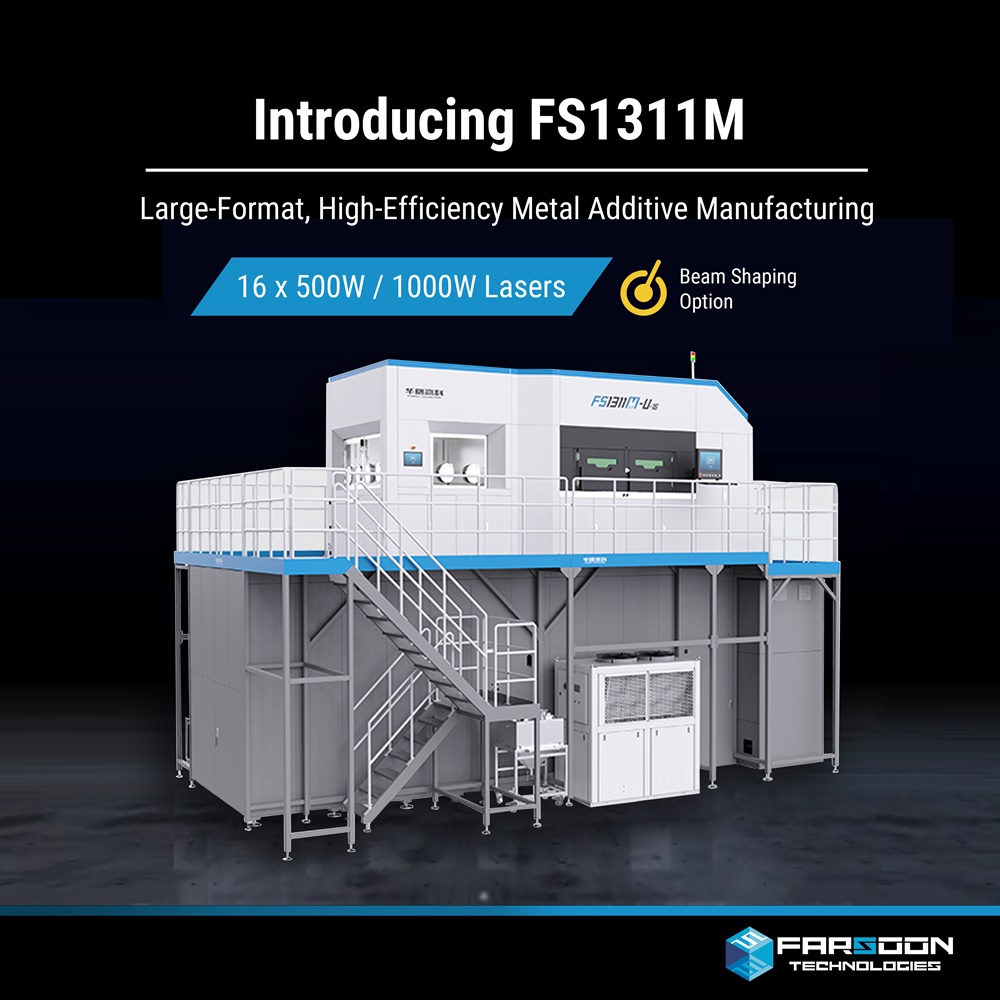
CHANGSHA, China, Mar 24, 2026 – Farsoon Technologies announces the launch of the FS1311M-U, a next-generation large-format metal Powder Bed Fusion (PBF) system engineered to address key challenges in industrial additive manufacturing— productivity for large parts, batch quality, and process control.

FS1311M U

Designed for high-end manufacturing sectors such as aerospace, automotive, and energy sectors, the FS1311M-U enables efficient production of meter-scale, complex metal components with enhanced consistency and reliability.

Built for Large-Scale Production

With an ultra-large build volume of 1310 × 1310 × 1650 mm, the FS1311M-U meets the growing demand for large, integrated part manufacturing and batch production. Its compact, space-efficient design ensures easy integration into production environments where floor space is critical.

Breakthrough Productivity with Advanced Laser Technology

Powered by a 16-laser configuration and optional beam shaping technology, the FS1311M-U delivers a dramatic leap in build efficiency. By optimizing energy distribution, the system enables wider scan spacing, thicker layers, and faster scanning speeds—achieving build rates of up to 1440 cm³/h in Ti-6Al-4V at 150 µm layer thickness. This translates directly to reduced material waste, improved energy utilization, and a lower cost per part, empowering manufacturers to scale production with confidence.

Consistent Quality at Scale

To achieve repeatable, high-quality results in volume production, the FS1311M-U is equipped with a robust optical system, uniform multi-laser overlap, and intelligent recoating monitoring. Its sophisticated airflow architecture—combining multi-layer gas flow with an air-wall design—effectively suppresses turbulence and prevents contamination across the entire build area. This creates stable, consistent process conditions that support reliable, long-duration manufacturing.

Optimized for Serial Production Efficiency

Designed to accelerate the path to series production, the FS1311M-U features intelligent MES connectivity that streamlines workflows and drives down operational costs. To maximize throughput across the entire manufacturing cycle, the system integrates a closed-loop powder management platform, and a three-station design enabling parallel operations —all working together to enhance productivity and simplify every step of the process.

Engineered for Safety and Control

Built on Farsoon’s proprietary control card and supporting hardware, the FS1311M-U delivers seamless system integration and long-term reliability. To support uninterrupted production, a permanent filtration system enables extended build jobs with minimal downtime. Combined with real-time process monitoring, the system provides enhanced safety and complete operational confidence throughout every print cycle.

With its combination of scale, speed, and stability, the FS1311M-U empowers manufacturers to transition from prototyping to true serial production—unlocking new efficiencies for large-format metal additive manufacturing in automotive and beyond.

About Farsoon

FARSOON Technologies, founded in 2009 in China, is a system supplier of industrial grade plastic laser sintering and metal laser melting systems. Farsoon has developed a team of world-class experts with competencies in electrical/mechanical engineering, laser, scanning and optics, thermal controls, as well as material development and applications engineering. As a globally diverse company, Farsoon was founded with the clear vision and core commitment to creating open platform systems which will give the industry the freedom to innovate and expand the implementation of additive manufacturing in the global product’s marketplace. For more information, visit www.farsoon-gl.com.

Siemens Boosts Industrial AI Operating System, Unveils New Technologies, Partnership at its 2026 RXD Summit in Beijing 

0
Joe Tsai Roland Busch Siemens RXD Beijing

BEIJING, China, Mar 23, 2026 – Artificial intelligence is rapidly moving from the digital world into the real economy. At its Siemens RXD Summit in Beijing, the company brings together more than 2,000 customers, partners, developers and industry leaders to demonstrate how industrial AI is moving from experimentation into large-scale deployment across factories, infrastructure and industrial supply chains.

In his opening keynote, Siemens President and CEO Roland Busch was joined on stage by  Joe Tsai, Chairman of Alibaba Group, Wang Xingxing, founder, Chairman and CEO of  Unitree Robotics, and Professor Ni Jun, Chief Manufacturing Officer and Co-President of Engineering and R&D of CATL. 

“Bringing AI into the real world requires more than great models,” said Roland Busch, President and CEO of Siemens AG. “It requires an industrial AI operating system: a technology stack that connects data, software and intelligent hardware. Here in Beijing, we are showing how this system is advancing – with deeper partnerships and new products built around our customers’ real needs. Through Siemens Xcelerator, our open digital business platform, webring these capabilities together and make industrial AI accessible at scale.”

To advance this ambition, Siemens introduced 26 new products and deepened its strategic partnership with Alibaba, combining global innovation with local innovation in China and spanning industrial infrastructure, automation and AI-powered applications.  

“Siemens has long been an indispensable part of China’s industrial ecosystem,” said Xiao Song, President and CEO Siemens Greater China. “As we enter the era of Industrial AI, we are more convinced than ever that only a strong ecosystem can truly unlock AI’s vast potential. Siemens is combining its global technological strengths with China’s speed of innovation, industrial scale and rich application scenarios to enable high-quality growth for customers in China and beyond.”

Expanding access to advanced simulation and industrial AI 

As part of its efforts to make advanced engineering and AI capabilities more accessible, Siemens and Alibaba Cloud announced an expansion of their partnership. Together, the companies are working to provide computer-aided engineering (CAE) capabilities as Infrastructure-as-a-Service (IaaS) for customers in China by combining Siemens’ simulation portfolio with Alibaba Cloud’s advanced computing and trusted cloud infrastructure.

Through this collaboration, Siemens plans to validate and deploy its cloud-enabled CAE solutions on Alibaba Cloud, enabling customers to access scalable simulation environments, including virtual simulation appliances and high-performance computing clusters, delivered through the cloud. This will help engineering teams run complex simulations more efficiently while benefiting from the elasticity and scalability of the Alibaba Cloud infrastructure.  

The collaboration also explores how Alibaba’s Qwen large language models could support AI-driven capabilities in Siemens’ product lifecycle management software, opening new possibilities for AI-assisted engineering workflows and intelligent product development. 

Building the infrastructure for the AI era 

At the same time, Siemens technologies are helping power the infrastructure behind the AI economy, including large-scale data centers such as Alibaba Cloud’s Zhangbei Data Center. To support these critical environments, Siemens introduced new technologies designed for the next generation of AI infrastructure. 

These include solutions for industrial connectivity and data, enabling the data flows and system integration required for intelligent industrial operations.

Additional infrastructure protection technologies safeguard critical computing environments and support the reliable operation of systems running large-scale AI workloads. 

A locally developed new generation of direct-current (DC) circuit breakers ensures reliable DC power distribution in high-performance data centers, helping operators manage rapidly growing energy densities efficiently.  

AI is also helping optimize cooling in energy-intensive environments. A new AI-powered cooling solution analyzes and continuously optimizes cooling operations, improving efficiency and reducing energy consumption. 

Strengthening the execution layer for AI-powered manufacturing 

Scaling modern manufacturing requires systems that can both generate intelligence and execute it on the shop floor. At the summit, Siemens addressed this challenge with the introduction of new edge, automation and AI solutions, combining global technology leadership with local innovation in China. 

A new generation of programmable logic controllers, for example, provides significantly improved performance and memory capacity, acting as the control brain of production lines and coordinating machines in real time. 

Precise execution on the shop floor is then enabled through advanced motion technologies such as compact servo systems, which translate digital commands into highly accurate robotic and machine motion while reducing system complexity and cost. 

Beyond advanced automation solutions, Siemens also introduced new AI-powered applications designed to optimize industrial operations. Predictive maintenance software, for example, analyzes operational data from critical assets to detect anomalies early and prevent costly downtime. 

Together, these innovations strengthen the execution layer of industrial AI – enabling intelligent systems to translate digital insights into reliable action across modern production environments.

About Siemens AG

Siemens AG (Berlin and Munich) is a leading technology company focused on industry, infrastructure, mobility, and healthcare. The company’s purpose is to create technology to transform the everyday, for everyone. By combining the real and the digital worlds, Siemens empowers customers to accelerate their digital and sustainability transformations, making factories more efficient, cities more livable, and transportation more sustainable. A leader in industrial AI, Siemens leverages its deep domain know-how to apply AI – including generative AI – to real-world applications, making AI accessible and impactful for customers across diverse industries. Siemens also owns a majority stake in the publicly listed company Siemens Healthineers, a leading global medical technology provider pioneering breakthroughs in healthcare. For everyone. Everywhere. Sustainably. In fiscal 2025, which ended on September 30, 2025, the Siemens Group generated revenue of €78.9 billion and net income of €10.4 billion. As of September 30, 2025, the company employed around 318,000 people worldwide on the basis of continuing operations. Further information is available on the Internet at www.siemens.com.

Hexagon MI Launches APOLLO AI-powered Predictive Condition Monitoring Platform for Metrology Assets

0

NORTH KINGSTOWN, RI, USA, Mar 23, 2026 – Hexagon Manufacturing Intelligence today announced the launch of APOLLO, an AI-driven platform designed to transform how manufacturers manage their metrology assets. APOLLO provides real-time predictive condition monitoring for Coordinate Measuring Machines (CMMs) and machine tools, empowering quality and maintenance teams to maximize uptime, measurement reliability, and overall equipment effectiveness (OEE).

APOLLO moves manufacturing operations from reactive repairs to predictive maintenance. By leveraging advanced AI analytics, the platform monitors machine behavior, environmental conditions, and operational status to detect anomalies. It identifies patterns indicating potential defects or failures up to 90 days in advance, enabling teams to address issues during planned downtime rather than suffering unexpected production stoppages. This foresight enables teams to keep critical measurement equipment available and accurate when production demands are highest.

As manufacturers face skilled labor shortages and rising production complexity, predictive visibility into metrology performance is critical to maintaining quality and throughput. APOLLO is built to meet these demands and is designed for seamless integration into diverse manufacturing environments. Compatible with both Hexagon and third-party devices, the platform provides a unified dashboard for fleet-wide asset health visibility, supporting cloud deployment for rapid scalability or on-premises installation to meet strict data sovereignty and cybersecurity requirements.

“Manufacturers can’t afford unexpected metrology downtime,” said Gary Peacock, Vice President Product Technology Software at Hexagon.” APOLLO brings automated intelligence to asset monitoring, enabling teams to detect issues early, plan maintenance proactively, and protect both measurement accuracy and production schedule.”

APOLLO replaces manual logs and undocumented institutional knowledge with data-driven insights. By identifying underperforming assets and optimizing maintenance cycles based on actual usage and environmental conditions, the platform helps stabilize measurement performance, reduce drift, and increase throughput without compromising quality standards.

About Hexagon

Hexagon is the global leader in measurement technologies. We provide the confidence that vital industries rely on to build, navigate, and innovate. From microns to Mars, our solutions ensure productivity, quality, safety, and sustainability in everything from manufacturing and construction to mining and autonomous systems.

Hexagon (Nasdaq Stockholm: HEXA B) has approximately 24,800 employees in 50 countries and net sales of approximately 5.4bn EUR. Learn more at hexagon.com.

BMF Launches microArch S150 Series 3D Printers

0
MicroArch S150

MAYNARD, MA, USA, Mar 23, 2026 – Boston Micro Fabrication (BMF), the global leader in micro-precision 3D printing, announces the launch of the microArch S150 Series, a next-generation line of compact 3D printers designed to meet the growing demand for faster build cycles, streamlined workflows, and accessible micro-precision capabilities. The series introduces two advanced systems: the microArch S150 Ultra, a high-throughput system designed for fast production workflows and the microArch S150, ideal for flexible lab development and precision prototyping. Desktop-friendly, the S150 Series opens the door to reliable, industrial-grade micron-level additive manufacturing for a broader range of users across applications that include microfluidics, fiber optics, biomedical devices, electronics, and advanced research.

High-Speed Performance and Repeatable Micro-Scale Detail

Leading the series in speed, the microArch S150 Ultra sets a new benchmark in micro-scale manufacturing — delivering up to 9x faster print speeds than the microArch S150, enabling rapid prototyping, iterative design, and low-volume production of finely detailed parts such as microneedles, channels, nozzles, and chips – perfect for use in academics, labs and advanced manufacturing settings. Built upon BMF’s proprietary Projection Micro Stereolithography (PµSL) technology, the microArch S150 Series produces highly accurate, repeatable micro-scale features ideal for functional testing and validation, thanks to 25 µm optical resolution with ±3 µm positional accuracy. With layer thicknesses ranging from 10–100 µm, it supports the fabrication of intricate components with exceptional surface quality and dimensional fidelity.

Image 9 scaled
Housing with 130µm features – 3D Printed on the microArch S150 Ultra in 39 minutes

Overcoming Operational Barriers with Streamlined Micro-Scale Workflows

Engineered for seamless deployment across lab, office, and industrial environments, the microArch S150 Series is purpose-built to eliminate operational barriers that have historically hindered the adoption of micro-precision additive manufacturing. By tackling challenges such as lengthy print cycles, complex calibration, inconsistent results, and reliance on bulky infrastructure, the series enables a more efficient, reliable workflow that boosts productivity and outperforms traditional micro-precision systems.

Through the microArch S150 Series, BMF introduces a comprehensive suite of advanced features designed to streamline and stabilize micro-scale production. The Series combines one-touch operation with the renowned process stability synonymous with BMF’s industrial platforms. A fully automated setup eliminates manual calibration entirely — simply press a button and print. Preloaded printing parameters and an integrated touchscreen workflow remove the guesswork from daily operations, while high-viscosity material handling expands formulation possibilities. A built-in HEPA13 filtration system maintains a clean and safe operational environment, and a UV-C (253.7nm) sterilization system keeps the build chamber sanitized between print runs — supporting use in contamination-sensitive applications and allowing teams to focus on outcomes rather than machine management.

Image 10 scaled
Heat exchanger for blood cooling – 3D Printed on the microArch S150 Ultra in 1 hour, 18 mins.

“Our mission is to make micro-precision 3D printing a more accessible technology for innovators across multiple industries and the microArch S150 Series is a true game-changer in enabling us to achieve that,” says John Kawola, CEO, BMF. “Designed to directly support customers seeking to accelerate their research and development without sacrificing quality, these systems remove long-standing barriers and make true micro-precision 3D printing genuinely accessible. By introducing this series, we are empowering users to easily and successfully create high-resolution parts with the speed and efficiency required for today’s fast-paced development cycles.”

Live Demonstrations at RAPID+TCT

The CE-certified microArch S150 Series will make its North American debut at the RAPID + TCT additive manufacturing event, taking place from April 13 to 16 in Boston. Show visitors will have the opportunity to see the microArch S150 Series at the BMF Stand (1347) and explore firsthand how the system promises to redefine possibilities in micro 3D printing, by bringing enterprise-level precision to compact platforms.

The microArch S150 Series is available for order beginning Q2 2026, with pricing available upon request. For more information, visit www.bmf3d.com.

About Boston Micro Fabrication

Boston Micro Fabrication (BMF) enables highly precise micro-scale 3D printing across the healthcare, life sciences, electronics, and machining industries. Using the company’s proprietary PμSL (Projection Micro Stereolithography) technology, the microArch system printers produce the industry’s most accurate and precise high-resolution 3D prints for product development, research, and industrial short run production. Founded in 2016, BMF has offices in Boston, Shenzhen, Chongqing and Tokyo. For more information on BMF, please visit www.bmf3d.com or follow the company on LinkedIn.