Home Blog Page 6

Lightium Selects Aras Innovator to Support Development of Photonic AI Chips

0
Aras new

ANDOVER, MA, USA, May 14, 2026 — Aras, a leading provider of digital thread solutions for product lifecycle management (PLM) and engineering AI, today announced that Lightium, a Switzerland-based startup specializing in photonic integrated circuits (PICs), has selected Aras Innovator to establish a connected foundation for managing the complexity of its photonic chip development.

Operating in one of today’s most technically demanding domains, Lightium is addressing the growing challenge of data transfer in modern computing environments. Its photonic integrated circuits transmit data using light instead of electrical signals, delivering significant advantages in speed and energy efficiency for data centers. Aras Innovator provides the digital thread to connect data, processes, and disciplines across the organization.

“In modern AI data centers, the biggest bottleneck is no longer computing power, but the transmission of data,” said Amir H. Ghadimi, Co-Founder & CEO of Lightium. “This is exactly where we come in: with photonic integrated circuits, we can scale performance beyond today’s technologies while significantly reducing energy consumption.”

As technological ambition increases, so does the complexity of development processes. This drives the need for structured, end-to-end data and full traceability, both critical for scaling and managing yield in photonic production. “Unlike more established industries such as electronics or mechanical engineering, photonics has no established PLM standards, as development sits between software-driven approaches and traditional hardware and industrial processes—making flexibility essential. This is why Aras Innovator was such a great fit for our needs,” said Kevin Radican, Head of Data at Lightium.

Lightium selected Aras Innovator for its ability to support evolving requirements and bring structure to its development processes. The platform enables the company to integrate development data, simulations, and design processes on a robust foundation for managing part structures and projects. It also provides the flexibility to develop custom front-end applications tailored to photonics-specific workflows and day-to-day use. Lightium is implementing the platform while leveraging AI-driven approaches to further optimize development workflows.

“Lightium represents a new generation of high-tech innovators taking a fundamentally different approach to how photonic integrated circuits are developed,” said Matthias Fohrer, Vice President, EMEA, at Aras. “In a field where established frameworks are still evolving, success depends on a foundation that can adapt to their approach while supporting scale.”

Lightium was founded in September 2023 and builds on more than six years of prior research and development. The fast-growing startup offers foundry services for photonic chips based on 200 mm manufacturing processes, enabling scalable industrial production. Lightium reports that its technology reduces energy consumption by more than 30% compared to conventional solutions. Current systems support transmission rates of up to 800 Gbit/s, with the next generation targeting 1.6 Tbit/s. Lightium is working to enable speeds exceeding 6 Tbit/s in the coming years.

About Lightium

Lightium AG is a Swiss startup offering Photonic Integrated Circuits (PIC) foundry & design services based on its proprietary, production-grade, thin-film lithium niobate (TFLN) platform. Lightium’s solution accelerates the photonic breakthroughs of our customers, offering them unmatched photonic performance, a simplified and cost-effective supply chain, and rapid scale-up capabilities from prototyping to large-volume manufacturing. As Europe’s first production-grade TFLN foundry, Lightium empowers the next generation of photonic solutions in a wide range of industries, including Telecom, Datacom, Quantum Computing, AI, and Space.

About Aras

Aras provides a digital thread platform for product lifecycle management and engineering AI. Built on an AI-native, low-code foundation, it enables the rapid delivery of flexible solutions. Aras connects teams across disciplines and functions to critical product data and agentic AI throughout the product lifecycle and extended value chain. Visit aras.com to learn more and follow Aras on LinkedInYouTubeX, and Facebook.

Invitation
Siemens sd17

Chaos Releases V-Ray 7, Update 3 for SketchUp, Rhino, 3ds Max

0
Chaos new

KARLSRUHE, Germany, May 13, 2026 – Chaos announces V-Ray 7, Update 3 for SketchUp, Rhino and 3ds Max , delivering real-time rendering directly inside the V-Ray viewport, alongside new AI-powered tools and collaboration improvements that streamline projects from first concept to final delivery. Architects, designers, and artists can now explore and iterate on scenes in real time at final-frame quality, without switching tools or breaking their workflow.

“By bringing real-time ray tracing directly into the V-Ray viewport, artists can iterate faster while maintaining the quality that V-Ray is known for, all within a single, unified workflow,” said Vlado Koylazov, Head of Innovation at Chaos.

Real-time ray tracing technology in Chaos Vantage has transformed how archviz teams work, handling complex lighting, large-scale geometry, and detailed materials without slowdown. Now, with V-Ray 7, Update 3, users with a Vantage license can tap into its real-time rendering power without leaving their V-Ray workflow.

More Realism, Less Complexity

New workflow improvements remove the technical overhead traditionally associated with complex rendering tasks, so architects and designers can focus on the work itself.

  • Parallax Interiors — Architects can now add realistic interior depth and lighting to exterior renders without modeling or heavy geometry. Using parallax interior shaders from Cosmos, the effect holds from any camera angle and can be varied across a façade to avoid repetition, bringing convincing life to every window, especially in night scenes.
  • Quick Caustics — The new quick caustics are easier to control and faster to render. This removes the complexity traditionally associated with photon-based setups and makes it easier than ever to create realistic surface reflections and refractions in both production and interactive rendering.
  • Gaussian Splats Relighting — Users can adjust the lighting of Gaussian splats to better match a scene, so assets integrate naturally into V-Ray projects.
  • Node Material Editor (V-Ray for SketchUp and Rhino) — Users can now build and adjust V-Ray materials visually using a node-based editor, making it easier to understand material logic and create complex shaders with greater control. The node editing workflow offers a more intuitive and visual alternative to traditional material creation and editing. The tool is now available as a preview, with more possibilities to come in future releases.

Powerful AI Tools

V-Ray 7, Update 3 brings AI deeper into the production process, accelerating the steps that slow teams down without sacrificing the creative control that final-quality work demands.

  • AI Mood Match — Users can now use a reference photo to automatically align a scene’s lighting with the look and atmosphere of the image, reducing manual setup and reaching the desired outcome faster. AI Mood Match is available now in V-Ray for SketchUp and Rhino, and is coming to more V-Ray integrations soon.
  • AI Enhancer: Large Surfaces Coverage — Architects can add more realistic details to large surfaces, such as floors, walls, asphalt and terrain, adding natural variation at the correct scale without manual re-texturing.
  • AI Enhancer: Improved Accuracy and Single Object Creative Enhancement — Users can achieve more precise results across the board, with new support for applying creative enhancement to individual objects.
  • AI Materials: 4K Support — AI-generated materials support 4K resolution output, ensuring they hold up in close-ups and final presentation deliverables.

Smoother Workflow and Collaboration

For the best user experience, getting from render to approval shouldn’t require leaving the platform. New collaboration tools bring review, feedback and sign-off into one place, keeping projects moving and reducing the back-and-forth that costs teams time.

  • Chaos Cloud Reviews — Design approvals can now happen directly inside the Chaos Cloud platform, with comments, decisions and timestamps captured in one place.
  • Video Collaboration — Chaos Cloud becomes a professional-grade video review platform for animations and render sequences, with precise commenting tied to timestamps, ranges and visual annotations.
  • Cosmos Sets and New Assets — Cosmos sets provide a fast and simplified way to populate scenes with grouped assets that naturally work together. This update adds 700+ new Cosmos assets, including 400 high-poly Globe Plant models and new branded models.

To learn more and explore what’s new, visit the V-Ray Collection page on chaos.com.

Pricing and Availability

Launching first on V-Ray for SketchUp and Rhino, real-time rendering in the V-Ray viewport is available to users with an active Chaos Vantage or V-Ray Collection license. AI Mood Match and real-time rendering in the V-Ray viewport are expected to be introduced to V-Ray for 3ds Max.

Pricing can be found on the Chaos website.

About Chaos

Founded in 1997, Chaos provides world-class visualisation and design solutions that empower creative minds to bring ideas to life.

The company serves multiple industries, including architecture and design, media and entertainment, and product e-commerce, providing an ecosystem of accessible tools that support every stage of the design and creation process. Its innovative solutions help architects, designers, VFX artists/animators, and other creative professionals share ideas, optimize workflows and create immersive experiences.

Headquartered in Karlsruhe, Germany, Chaos has offices in 11 cities worldwide. For more information, visit chaos.com.

ROBOZE Acquires Dimanex to Build Physical AI Layer for Distributed Manufacturing

0
Roboze new

LOS ANGELES, CA, USA, May 13, 2026 – ROBOZE is the foundational advanced manufacturing layer of the world’s most strategic industries, today announced the acquisition of key assets from Dimanex, a digital platform specialized in spare parts digitization and distributed manufacturing. This transaction marks a pivotal step in ROBOZE’s strategy to build a fully interconnected, intelligent manufacturing ecosystem powered by Physical AI. This acquisition is expected to accelerate the transition from centralized production models to resilient, on-demand manufacturing networks, reducing downtime and enhancing supply chain resilience for the most strategic industries

By integrating Dimanex’s capabilities with its existing software Pandora and SlizeR, ROBOZE is creating a unified platform where machines, factories and digital inventories operate as a coordinated system, continuously exchanging data through the cloud.

“We are moving beyond standalone machines into intelligent, connected manufacturing system.This acquisition brings physical AI into production environments, where machines learn, adapt and operate as part of a global network. The result is a more resilient and efficient manufacturing system with reduced dependence on centralized hubs to deliver critical components with speed and at scale.” Alessio Lorusso, CEO of ROBOZE

The combined platform enables:

  • Intelligent machines powered by advanced algorithms that optimize production parameters and performance in real time;
  • Interconnected factories that share data across locations, creating a distributed manufacturing network capable of responding dynamically to demand;
  • Cloud-based orchestration, enabling seamless coordination between digital workflows and physical production assets;
  • Digitalization of global warehouses, transforming physical spare parts inventories into digital libraries ready for on-demand production.

This approach targets industries such as maritime, defense, oil and gas, and aerospace, where managing obsolete or hard-to-source spare parts is a persistent impediment to scaling production in industries critical to economic growth and national security.

“Roboze is tackling systemic challenges in the industrial base like long lead times and physical inventory constraints,” added Lorusso. “ We are connecting the physical and digital worlds of manufacturing, from the identification of a part in a warehouse, to its qualification, to its production anywhere in the world, this entire process becomes intelligent, automated and interconnected.”

As global industries face increasing pressure to modernize supply chains and ensure operational readiness, ROBOZE’s platform provides a scalable solution to digitize inventory, decentralize production and unlock a new level of efficiency through physical AI. The Dimanex technology will be integrated into ROBOZE’s ecosystem while maintaining a platform-agnostic approach, enabling collaboration across different production technologies and partners.

About ROBOZE

ROBOZE is a manufacturing technology company developing advanced production platforms for mission-critical industries. By combining proprietary hardware, materials science, software and embedded Physical AI, ROBOZE enables the distributed production of high-performance components for aerospace, defense, energy and transportation. Through its global Smart Factory network, ROBOZE provides certified, repeatable manufacturing solutions where performance, reliability and supply chain resilience are essential. For more information, visit https://www.roboze.com.

Graphisoft Advances Open Collaboration, AI-assisted Design under its Design Intelligence Strategy

0
Graphisoft design inteligence strategy

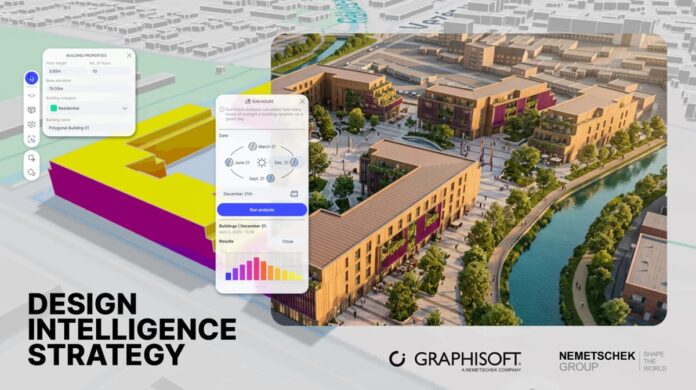
BUDAPEST, Hungary, May 13, 2026 — Graphisoft, the leading developer of Building Information Modeling (BIM) software solutions for architecture and multidisciplinary design and part of the Nemetschek Group, today announced the next phase of its Design Intelligence Strategy, previewing new collaboration and AI-assisted design initiatives currently being developed. This cloud-native platform connects early-stage decision making, open collaboration, and Graphisoft’s “Best Design Experience” across its product ecosystem.

“Building on the Design Intelligence Strategy introduced last year, Graphisoft is unifying key components into a single, cloud-native platform that extends from feasibility studies to detailed BIM and lifecycle collaboration,” said Márton Kiss, Chief Product Officer, Design Division & Graphisoft. “This next step reinforces our mission to deliver an intuitive, data‑driven design experience that helps architects and engineers focus on how buildings should be built, not just how they can be built.”

Advancing open collaboration across the AEC ecosystem

Research shows that over 92% of construction projects experience significant delays and budget changes, resulting in US$2.1 trillion (€1.8 trillion) in annual losses globally.

To help eliminate roadblocks and cost overruns due to broken handovers, misalignment, and miscommunication across AEC projects, Graphisoft has announced a Nemetschek Group-level initiative being developed as the open collaboration fabric of the Nemetschek design ecosystem. It is intended to synchronize models, documents, issues, and decisions across Graphisoft solutions and the broader Nemetschek portfolio, while supporting open standards such as IFC, BCF, PDF, DWG, and RVT. This solution will offer a browser-based, multidisciplinary collaboration environment that brings architects, engineers, builders, owners, and operators into a common source of truth, with early access planned for 2026.

“Our goal is simple,” said Sylwester Pawluk, VP, Product Management – Collaboration, Graphisoft and Nemetschek Group. “To offer the AEC industry a truly open alternative — one that is trustworthy and accessible for everyone. This is the open collaboration layer our entire industry has been missing.”

Previewing AI-assisted design capabilities

Also in development is a next-generation, web-based design intelligence platform that uses AI and integrated simulations to help teams make better decisions earlier in the building lifecycle. Users will be able to explore hundreds of massing, layout, and performance scenarios in seconds, while keeping stakeholders aligned in a shared, browser-based workspace—without requiring BIM expertise. Developed by Graphisoft and scaled across the Nemetschek Group, this AI-assisted design solution plans to launch early access in October.

“From the start, our goal with the Design Intelligence Strategy has been to help design teams make decisions faster and with more confidence,” Márton Kiss said. “With these new developments and our other AI tools, users will spend less time on manual work and more time designing better buildings for their clients.” For more information about Graphisoft’s Design Intelligence Strategy, click here.

Accelerating AI solutions and Open industry partnerships

Graphisoft’s broader AI portfolio, including AI Assistant, AI Visualizer, and upcoming services built on a common platform, continues to evolve as a core pillar of the Design Intelligence Strategy. For more information about Graphisoft’s AI solutions, click here.

In 2026, Graphisoft plans further expansion of these AI offerings, along with a coordinated update to its product ecosystem in early October. Anchored by Archicad, BIMx, BIMcloud, MEP Designer, DDScad, and new integrations such as the Archicad–Autodesk Forma Connection (coming in June 2026), this ecosystem is designed to provide seamless, open, and data‑driven workflows from early feasibility to detailed BIM and beyond.

For more information, please visit graphisoft.com.

About Graphisoft

Graphisoft empowers teams to design great buildings through AI-assisted software solutions, learning programs, and professional services for the AEC industry. Our award-winning solutions and services support OPEN BIM to enhance workflow transparency, asset longevity, and data accessibility for built assets. Archicad, the architects’ BIM software of choice, offers end-to-end design and documentation workflows for architectural and engineering practices of any size, with MEP Designer enabling engineers to model, coordinate, and document building systems directly within the BIM environment. BIMx, the most popular mobile and web BIM app, extends the BIM experience to include all stakeholders in the building design, delivery, and operations lifecycle. BIMcloud, the industry’s first and most advanced cloud-based team collaboration solution, makes real-time collaboration possible across the globe. DDScad BIM solutions enable users to design and deliver high-quality Mechanical, Electrical, and Plumbing projects on time and on budget. Graphisoft is part of the Nemetschek Group. To learn more, visit graphisoft.com.

About Nemetschek Group

The Nemetschek Group is a leading global provider of vertical software and AI solutions that drives the digital transformation of the AECO and media industries. With deep industry expertise and intelligently connected software solutions, the Group enables its customers to transform data into insights and more informed decisions in real time across the entire lifecycle of buildings and infrastructure, from ideation through planning, visualization, construction, and operation to renovation. The AI-powered technologies and the use of open standards promote productivity, collaboration, and sustainability for architects, engineers, contractors, operators, and creative professionals. Worldwide, more than 7 million users rely on the Group’s customer-centric AI solutions, and the company employs more than 4,000 experts worldwide. Founded in 1963 by Professor Georg Nemetschek, the Group is listed on the MDAX and TecDAX and generated revenue of EUR 1.19 billion and EBITDA of EUR 371.1 million in 2025.

Walter Introduces New Xtra·tec S3 Milling Cutter Series

0
Walter Xtra·tec S3

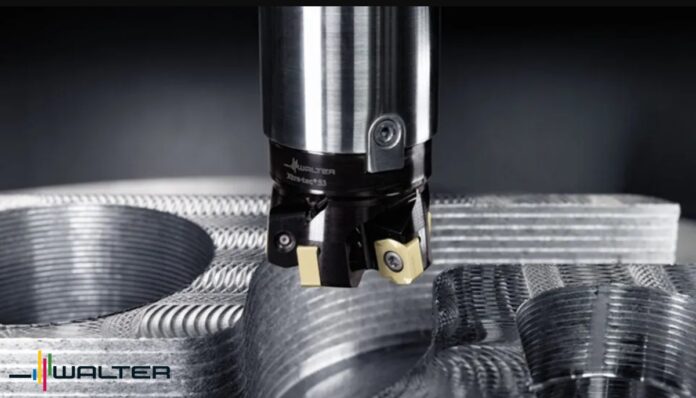
TUBINGEN, Germany, May 13, 2026 – With the new Xtra·tec S3 series, Walter AG is expanding its indexable insert milling cutter range with a completely new line of milling cutters, thereby responding to market demands: greater cutting depths, higher feed rates, and maximum stability—even under difficult cutting conditions or with unstable workpieces. The name S3 stands for the line’s three core advantages: Stability, Supply, and Selection. As the first tool in the series, the new M6420 high-feed milling cutter already meets these requirements to perfection: Its innovative, patent-pending new chip space design enables reliable chip evacuation even with high chip volumes. This allows large amounts of chips to be safely evacuated, particularly during roughing of a wide variety of ISO materials. 

Higher rigidity for low-vibration cuts 

The stability of the new series is achieved through an innovative, patent-pending, vibration-damping chip-flute design. The cutter body itself has up to 30% higher rigidity (according to FEM analysis), which in turn extends tool life. High cutting forces acting on the cutter body, particularly during high-feed milling strategies, are effectively minimized.  In combination with the large contact and support surfaces of the M6420, feeds of up to 3 mm per tooth can also be reliably achieved. 

Maximum cooling for efficient chip evacuation 

Another decisive factor for the performance and long tool life is the optimized coolant  supply: With up to three coolant channels per insert seat, the milling cutter makes maximum use of the coolant volume available from the machine without any loss of pressure. The targeted supply increases the coolant volume by 48 percent, which lowers  the temperature at the cutting edge while ensuring efficient chip removal—especially at high feed rates and large cutting depths. 

Intuitive handling and increased cost-effectiveness 

To simplify handling in everyday production, Walter relies on a user-friendly, intuitive selection system for the S3 series based on a self-explanatory nomenclature of insert geometries: L5 (= Light-cutting geometry), M5 (= Medium geometry), and R5 (= Roughing geometry). The easy identification via the initial letters improves handling. With four cutting edges per insert and wear-resistant Tiger·tec Gold grades, Walter  further increases cost-effectiveness.

About Walter

For over 100 years, Walter has stood for competence and quality in the field of machining technology. The company was founded in 1919 by Richard Walter and has its headquarters in Tübingen, Germany. The portfolio includes precision tools for milling, turning, grooving, drilling and threading as well as individual special tools and technology solutions along the process chain. With production facilities in North and South America, Europe and Asia, numerous subsidiaries and sales partners, and 4,400 employees worldwide, Walter has a global presence and customers in more than 80 countries around the world. In addition to engineering expertise, a sustainable corporate strategy and a diversity approach are part of the corporate culture. Since 2022, the Frezite Group has been part of Walter, including the Frezite portfolio brand FMT, which deals with cutting tools for lightweight materials. For more information, visit https://www.walter-tools.com.

Registration Opens for 2026 ALLPLAN Global Infrastructure Digital Summit

0
Allplan Global Infrastructure Summit

MUNICH, Germany, May 13, 2026 – ALLPLAN, a global provider of AEC software and part of the Nemetschek Group, will host its Infrastructure Digital Summit 2026 on June 10, 2026. The virtual event brings together leading infrastructure experts from around the world to share practical insights into digital design, engineering, and delivery. The agenda combines expert presentations with international project case studies, showing how engineering firms are using Building Information Modeling (BIM), automation, and data-driven workflows to deliver complex infrastructure projects more efficiently.

“With infrastructure projects becoming increasingly complex, digital workflows are no longer optional—they are essential,” said Sunil Pandita, CEO of ALLPLAN. “The summit brings together experts from around the world to share practical approaches to BIM, automation, and collaborative infrastructure delivery.” 

International expertise in a compact format

Designed for structural engineers, infrastructure designers, BIM managers, and project leaders, the summit delivers a concise agenda featuring international speakers and project-based applications. The program combines technical presentations with project-driven sessions, offering insights into current workflows and emerging digital engineering trends.

Participants will gain insights into how BIM and collaborative engineering approaches are being applied across bridges, roads, tunnels, and other civil engineering projects.

Real-world projects at the core

A key focus of the summit is presenting customer projects, highlighting how digital technologies improve collaboration, streamline processes, and enhance project outcomes.

Featured sessions include:

  • “End-to-end bridge & tunnel design with ALLPLAN” by YÜKSEL PROJE A.Ş. (Turkey)
  • “Complex bridges, complex workflows – Collaboration between ALLPLAN and other design software in bridge design projects” by CÉH Planning, Developing and Consulting Inc. (Hungary)
  • “SCIA Engineer: A key partner in BESIX engineering project design” by BESIX (Belgium)

Additional presentations will explore bridge detailing in India, BIM-based railway infrastructure delivery in Romania and lifecycle approaches to bridge engineering from Switzerland.

By grounding the agenda in practical use cases, the event provides directly applicable knowledge for engineers and planners. 

Virtual format enables efficient knowledge sharing

The fully virtual format enables global participation and offers flexible access to high-quality content without the need for travel. By combining international expertise with a compact agenda, the summit provides an efficient way for professionals to stay up to date with the latest developments in digital infrastructure delivery. 

Registration

The Infrastructure Digital Summit 2026 is free to attend. The full agenda and registration details are available at: Global Infrastructure Digital Summit 2026.

About ALLPLAN

As a global provider of BIM solutions for the AEC industry, ALLPLAN covers the entire planning and construction process from initial design to execution planning for the construction site and precast design, in line with the motto “Design to Build”. Thanks to lean workflows, users create planning documents of the highest quality and detail. In the process, ALLPLAN supports interdisciplinary collaboration on projects in building construction and infrastructure engineering with integrated cloud technology. Over 600 employees worldwide continue the company’s success story with passion. ALLPLAN, headquartered in Munich, is part of the Nemetschek Group, the pioneer for digital transformation in the construction industry. For more information, visit www.allplan.com.

About Nemetschek Group

The Nemetschek Group is a globally leading software provider for digital transformation in the AEC/O and media industries. Its intelligent software solutions cover the entire lifecycle of building and infrastructure projects and enable creatives to optimize their workflows. Customers can design, build, and manage buildings and infrastructures more efficiently and sustainably and develop digital content such as visualizations, films and computer games more creatively. The software provider is driving innovations such as digital twins as well as open standards (OPEN BIM), and sustainability in the AEC/O industry, constantly expanding its portfolio by also investing in deep-tech startups. Currently more than seven million users worldwide are shaping the world with the customer-focused solutions of our four divisions. Founded by Prof. Georg Nemetschek in 1963, the Nemetschek Group today employs around 3,600 experts globally.

Publicly listed since 1999 and quoted on the MDAX and TecDAX, the company generated revenues amounting to EUR 801.8 million and an EBITDA of EUR 257.0 million in 2022. For more information, visit https://www.nemetschek.com.

Amnovis Acquires Westconn’s AM Activities, Launches US Operations

0
AMNOVIS

AARSCHOT, Belgium, May 13, 2026 – Amnovis, a Belgian additive manufacturing contract manufacturing organization serving regulated industries including medical devices, announces the establishment of a new operational entity in the United States and the acquisition of the additive manufacturing activities of Westconn Precision Technologies. Together, these steps represent a key milestone in Amnovis’ strategy to build a global additive manufacturing organization with harmonized operations across Europe and North America.

3656

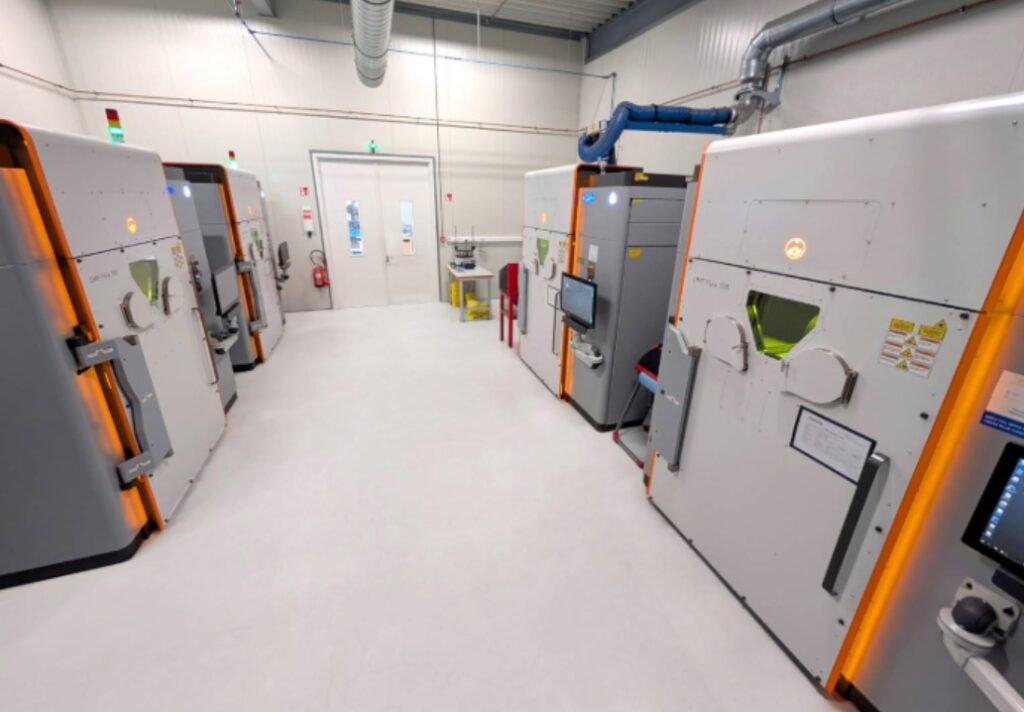
The new US operations will be located in North Webster, Indiana, and directly within the unique ecosystem surrounding Warsaw, Indiana. The site is being developed as a mirror site of Amnovis’ Belgian headquarters, operating under the same global quality management system, procedures, digital workflows, validation frameworks and equipment strategy. 

To lead the US operations, Amnovis has appointed Chris Cook as General Manager, US Operations. Cook brings extensive leadership experience across scale ups and large international medical device organizations, and will oversee the ramp up and operational execution of Amnovis’ US manufacturing activities. 

3653

“Expanding our operational footprint to the United States is a logical next step in the evolution of Amnovis,” said Ruben Wauthle, CEO and Co founder of Amnovis. “Being close to the largest medical device market globally, and specifically within the Warsaw, Indiana ecosystem, allows us to better support customers who require reliable, high quality additive manufacturing capacity with minimal logistical complexity.”

By establishing mirrored production sites in Europe and the United States under a single global quality management system, Amnovis enables customers to deploy manufacturing capacity across regions while maintaining consistent processes, equipment and validation approaches. This operating model is designed to support flexible and scalable manufacturing in regulated environments.

3654

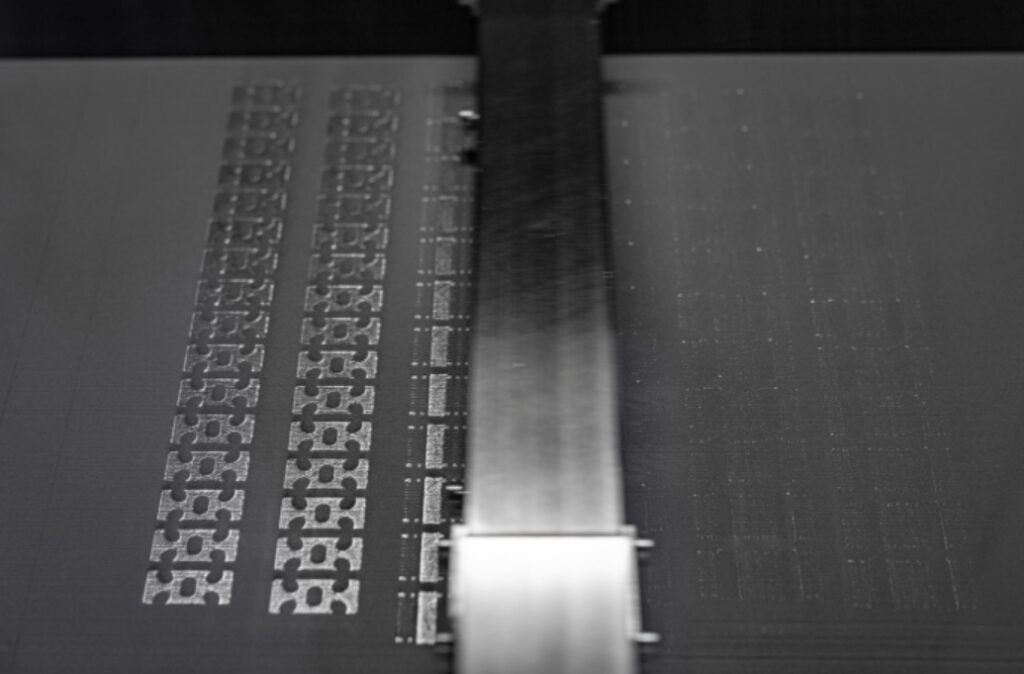
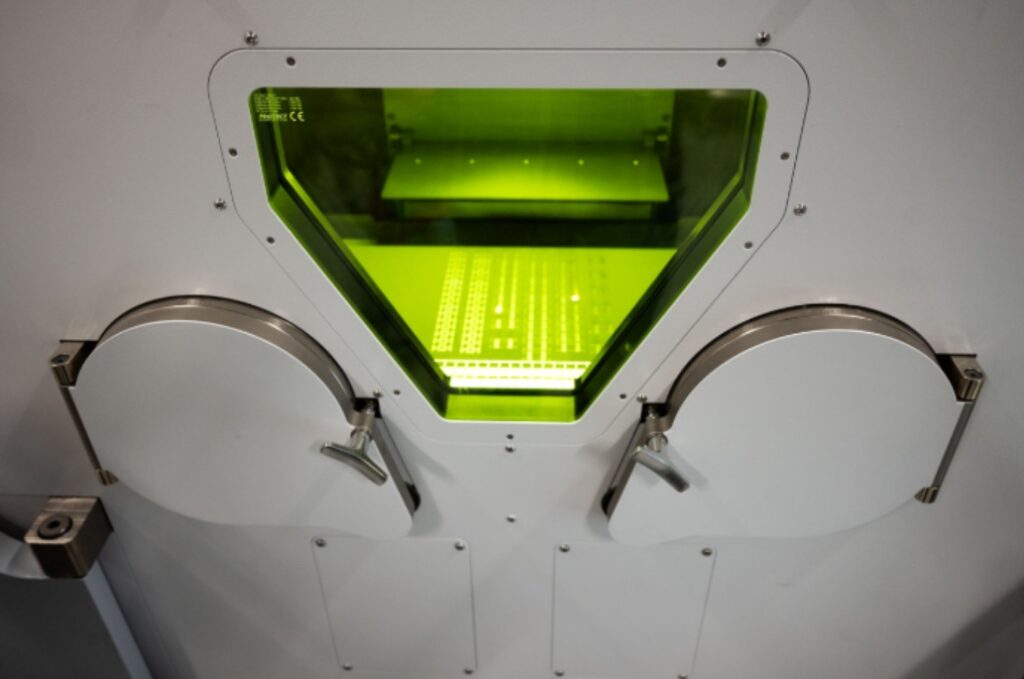
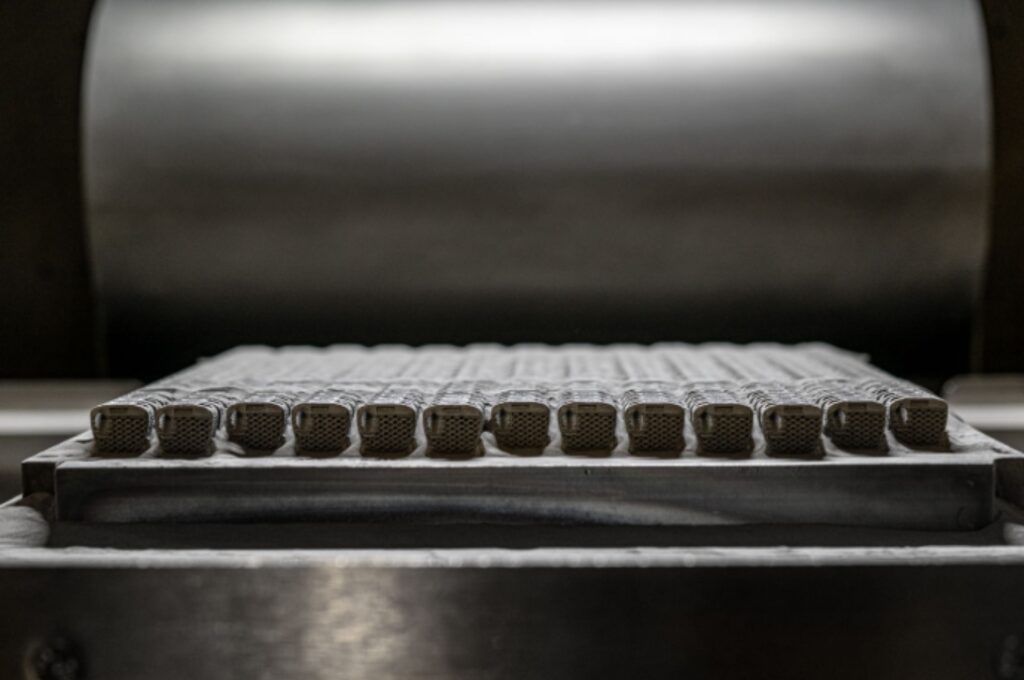
As part of its US expansion, Amnovis has acquired the additive manufacturing activities of Westconn Precision Technologies. These activities will be integrated into Amnovis’ new US operations in North Webster, Indiana, strengthening its North American footprint and hybrid manufacturing capabilities by combining metal additive manufacturing with conventional CNC and post processing technologies.

In support of this expansion, Jake Marasco will join Amnovis and take responsibility for account management and business development in North America. Marasco brings deep experience in integrating additive manufacturing into broader manufacturing workflows, with a strong focus on combining additive manufacturing and precision machining strategies.

3655

  “The acquisition of Westconn’s additive manufacturing activities further strengthens Amnovis’ position as a global partner for industrialized additive manufacturing,” said Ruben Wauthle. “By aligning equipment strategies and technical expertise across both sites, we are able to scale our operating model globally while further reinforcing our already strong capabilities in metal additive manufacturing. This combination allows us to support customers with a level of consistency, scale and technical depth that is increasingly required as more customers develop applications that truly unlock the full potential of additive manufacturing.”

3652

Marasco adds, “Westconn’s additive manufacturing work has been built around helping customers move complex programs from development into reliable production. Joining Amnovis creates a strong path to continue supporting those customers with deeper additive manufacturing expertise, a broader global platform, and a clear commitment to building U.S.-based capacity.”

The US expansion is driven by long term market dynamics, including the size of the US medical device market, the growing demand for patient specific and time critical applications, and the need for flexible, regionally available manufacturing capacity. With operations now spanning Europe and the United States, Amnovis continues to execute on its ambition to become a leading global additive manufacturing contract manufacturing organization for regulated and high tech industries.

About Amnovis

Amnovis is an independent, innovation-driven additive manufacturing company specializing in high-end 3D-printed products for regulated and high-tech industries, with a strong focus on medical devices. Leveraging deep process and material expertise, Amnovis delivers state-of-the-art solutions, from patient-specific implants to scalable volume production. With a fully digital, ISO 13485:2016-certified workflow, Amnovis partners with OEMs worldwide to accelerate product development, streamline validation, and raise the bar in additive manufacturing. By bridging emerging technologies with real-world applications, Amnovis continuously redefines the possibilities of 3D printing. 

For more information, visit www.amnovis.com or follow Amnovis on LinkedIn.

Digitizing Japan’s historic Odawara Castle with Artec Jet, Ray II & Leo 

0
Artec jet

Using Artec Jet, Artec Ray II & Artec Leo, 3D scanning experts have digitized Japan’s historic Odawara Castle for heritage preservation and potential future restoration projects

Guest Post By Paul Hanaphy 

Challenge: Capturing a massive heritage site, including every detail from courtyards and buildings down to a drawbridge and individual rivets on castle gates. 

Solution: Artec Jet, Artec Ray II, Artec Leo, Artec Twins 

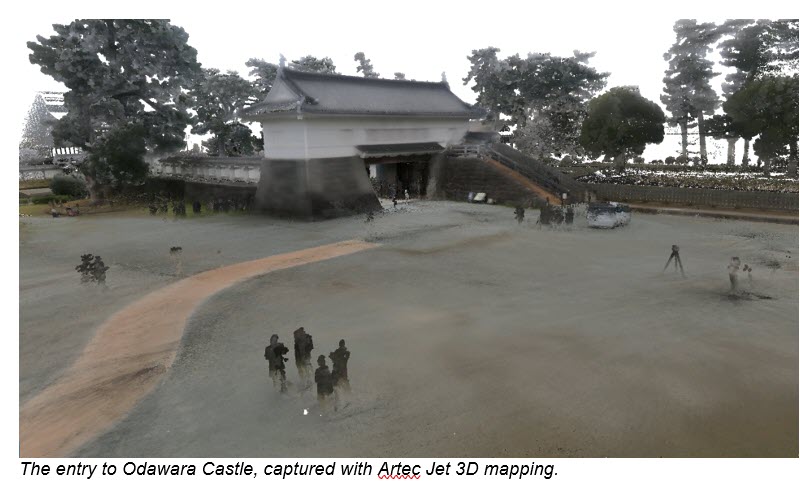
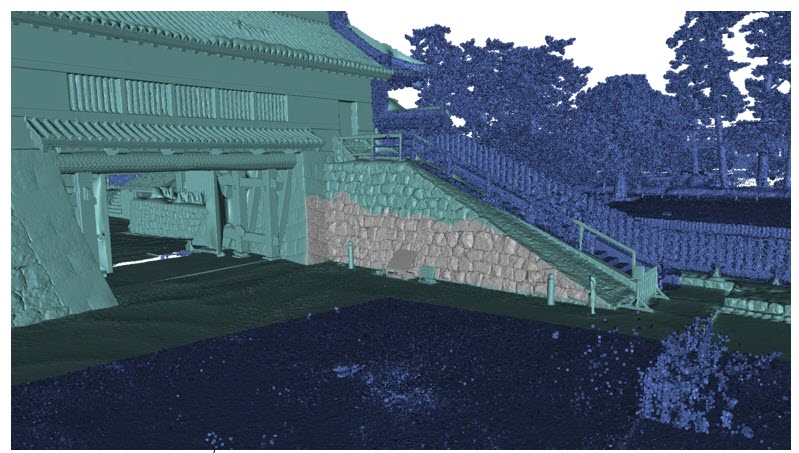
Result: A single, interconnected point cloud covering the entire facility – scanned mostly with Artec Jet, but with areas of interest captured more accurately using Artec Ray II & Leo. The resulting high-density dataset can be explored in 3D, making it ideal for virtual museum tours, or continuous monitoring to ensure Japan’s famed Odawara Castle stands the test of time. 

Why Artec 3D?: The highly maneuverable Artec Jet can be attached to a backpack and simply walked through an environment. Entire scenes can be captured from ground level in minutes, including tall structures from a range of up to 300 meters. Artec Ray II & Leo deliver higher accuracy for applications like long-term monitoring, damage assessment, and restoration. 

Artec scanner

Odawara Castle: A gateway into Japan’s past

Odawara Castle was built more than 500 years ago, with fortifications first erected during the Kamakura period – a time famous for the emergence of the Samurai and Japan’s first Shogun. 

The site’s illustrious walls are steeped in history. Situated on a hill and surrounded by a moat, the castle has strong fortifications, so it was coveted and fought over for generations. Three sieges of Odawara took place from 1561-90 and the structure changed hands (and shape) multiple times over the next century as different leaders left their stamp on the property. 

At times, the legacy of Odawara Castle has been difficult to protect. The entire site was shaken to its foundations by multiple earthquakes from 1703-1853 and the Meiji government of the late 19th century ordered that all feudal structures be destroyed, so it was mostly torn down. 

In 1938, what remained of Odawara Castle was made a heritage site and slowly rebuilt. But over the years, it has remained a delicate piece of history in need of ongoing renovation. With this in mind, the Artec 3D support team – in Japan for a recent trade mission – opted to digitize the entire structure for future generations to enjoy using Artec Jet, Artec Ray II & Artec Leo

Artec jet
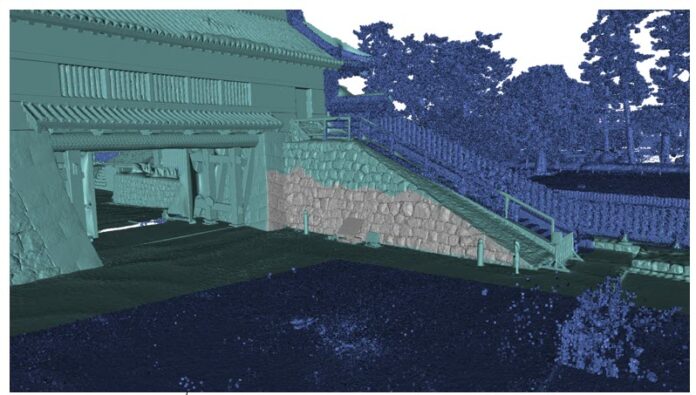
Artec Jet (dark blue), Artec Ray II (light blue), and Artec Leo (grey) point cloud data fused together for high detail on every scale.

Capturing an entire castle in minutes 

When they arrived at the castle, engineers immediately understood the scale of the challenge  they were embarking on. Once one of medieval Japan’s largest fortifications, the site’s outer defensive perimeter is a whopping nine kilometers long. Odawara Castle is also a national landmark that’s open to visitors, so they didn’t have the facility all to themselves either.

This meant that speed and subtlety were critical. It would’ve been entirely possible to capture the site with a LiDAR, tripod-mounted Ray II, by positioning it around different areas of the fort. But this would take a prohibitive amount of time – especially when you consider that double scans are required to remove moving objects. Using Artec Jet was a lot more straightforward. 

Attaching the device to a backpack meant the castle could be scanned on-foot. Walking the site, almost as if they were a tourist, was enough to capture the entire scene. Artec Jet’s remote app gave real-time feedback on scan progress, so the team didn’t leave any detail uncaptured – and compared to capture with shorter-range scanners, the time savings were enormous. 

“Artec Jet scans in a linear fashion. If it takes you two minutes to walk, it’ll take two minutes to scan – the complexity of the scene has little bearing,” explains Artec 3D scanning expert Keynan Tenenboim. “In the same time it took for Leo to scan 2-3 walls, Ray II scanned a building, and Jet digitized an entire castle. Adding in Ray II & Leo was great for areas with accessibility issues – and capturing higher detail around the walls, gate, and courtyard.” 

Artec scanner India
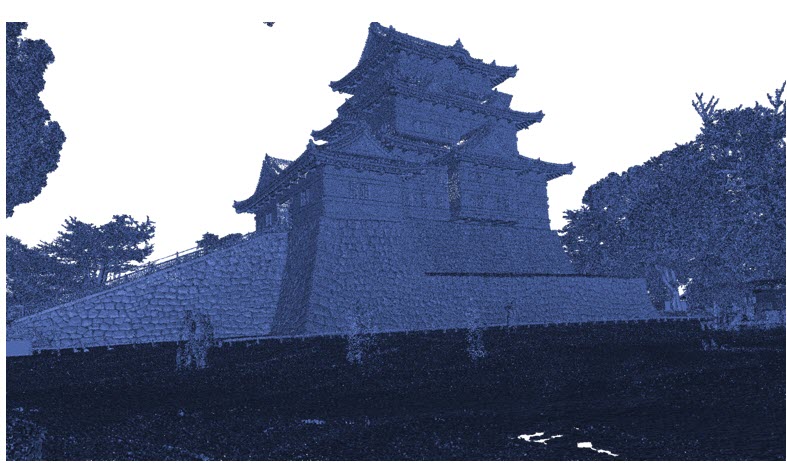
Artec Jet scan of the temple at the heart of Odawara Castle.

The Dream Team: Artec Jet, Ray II & Leo

Natural environments like trees, rivers, and larger connecting spaces often offer valuable site context, but don’t need to be captured with high accuracy. Artec Jet was perfect for picking up this sort of background information, generating a continuous point cloud, and connecting the site’s more interesting features: historic walls, ornate roofs, and courtyards around the castle. 

Jet’s 300-meter range meant there was no need for ladders or scaffolding. The inner structure was captured from ground level without other visitors even noticing. Unlike Ray II, which scans from static viewpoints, Jet could also be maneuvered into difficult-to-reach areas. Both scanners are less accurate than Leo – but that’s why it’s best to combine datasets, for peak results. 

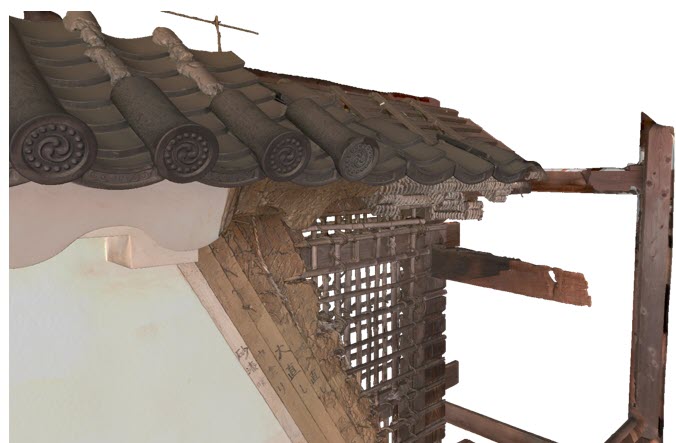
In this case, Ray II was deployed to scan the inner courtyard and gate, with Leo being used to pick up smaller details like the confined area behind the entrance. Handheld 3D scanning was also perfect for capturing a nearby medieval wall. As you can see from the scan below, fine details like tile patterns, lettering, and the wall’s internals were all captured in a single sweep. 

“This was the perfect project for demonstrating the benefits of all three scanners,” added Tenenboim. “The main castle wouldn’t be a good fit for Leo and it didn’t really fit Ray II. There was no good vantage point where we could see the facade from 100 meters away. Thanks to Jet’s range, we were able to scan from a ground level. Okay, we could’ve improved roof capture by flying Jet on a drone – but this would require more site preparation.” 

Artec leo
Fine details of an exterior wall captured just outside the castle with Artec Leo. 
 

Heritage preservation with end-use potential 

Once engineers had finished scanning, they sent data back to Artec’s Luxembourg HQ via cloud sharing for processing in Artec Twins. Specifically designed to handle large datasets, Artec Twins software allows Artec Jet, Ray & Leo scans to be merged – either into a unified point cloud, or a 3D mesh that can be measured and exported to industry platforms like Autodesk Revit. 

In terms of applications, the resulting 3D point cloud would be perfect for building a virtual museum tour that allows visitors to virtually explore Odawara Castle. Regular data capture sessions would also allow site operators to monitor conditions over time. If a building’s traditional rooftop began to sag, for example, it’d be possible to carry out rapid repairs.

Deployable in seven modes: by-hand, backpack, pole, cage, robot, vehicle, or drone, Artec Jet adapts to any environment – allowing users to replace complicated multi-tool workflows. Clearly, Artec’s Odawara Castle scan is just the beginning, there are plenty more sites left to explore. 

You can find out more about Artec Jet by contacting sales@artec3d.com. Or take a closer look at the captured dataset from this project here. 

Schaeffler India Strengthens Industry-Academia Collaboration with New Computational Research Facility at IISC, Bengaluru

0
Scheindia

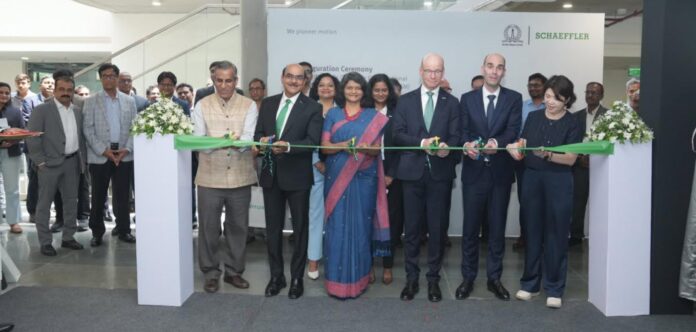
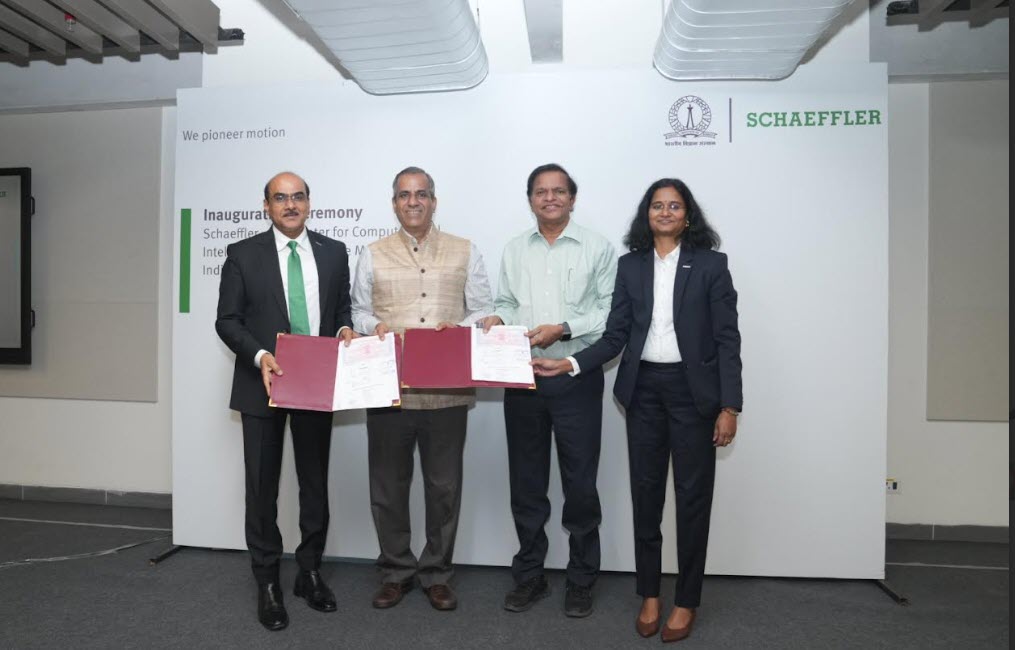
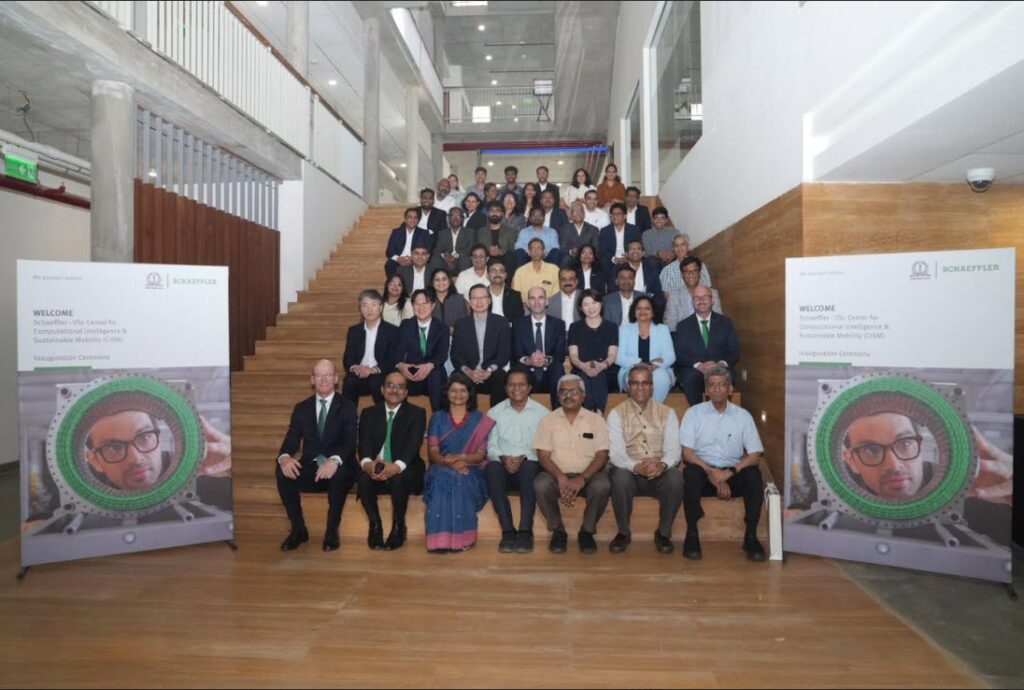
Bengaluru, India | 13th May 2026 | Schaeffler India, the motion technology company, has announced the opening of a computational research infrastructure at the Foundation for Science Innovation and Development (FSID), Bengaluru. Part of Schaeffler India’s purposeful engagement with IISC, premium research academia, this supported facility strengthens research capabilities by enabling HPC (High- Performance Computing) large-scale simulations, data-intensive modelling and advanced analytics across materials, energy systems, and sustainable mobility. Additionally, these improvements will foster stronger industry collaborations, improved research quality and efficiency, and increased relevance of research in industry projects.

Lab iisc bangalore

The initiative focuses on expanding FSID’s computational facilities through the acquisition of dedicated lab space, advanced in-rack cooling systems, power backup and high-performance hybrid computing workstations or clusters. These enhancements will significantly improve computational efficiency and support cutting-edge research.

The enhanced facility will benefit a wide range of stakeholders directly, including faculty members of the Indian Institute of Science (IISC), FSID-incubated startups, external startups and MSMEs accessing advanced digital infrastructure, industry partners engaged in R&D collaborations. Indirectly, the expanded infrastructure will support PhD scholars, postgraduate and undergraduate students, postdoctoral researchers, and the broader academic and industrial ecosystem.

Schaeffler India has also signed a Master Research Agreement (MRA) with the Indian Institute of Science (IISC), setting foundation for multiple future research projects and further strengthening its commitment to collaborative innovation and advanced research.

“At Schaeffler India, we are committed to building skills and manufacturing excellence rooted in India’s unique strengths, aligned with its needs, and geared towards creating lasting value. Such efforts depend on strong academia-industry collaboration, with institutions like Indian Institute of Science playing a critical role in equipping researchers with the right tools and expertise.

Scheone

We’re proud to support its latest computational infrastructure through Schaeffler India’s CSR programme, HOPE. Beyond its immediate purpose, the facility will empower a wide spectrum of IISC research projects across diverse streams and teams, thereby amplifying the impact of collaborative research. Schaeffler India and IISC have a strong pipeline of joint projects, and our teams are fully aligned to move into execution. It reflects what’s possible when two organizations come together with a shared purpose to strengthen research across multiple disciplines at IISC.” said Mr. Harsha Kadam, MD & CEO, Schaeffler India.

“The initiative of Schaeffler India to establish a high-performance computational facility for developing intelligent and sustainable systems at FSID, IISC, is highly commendable. With the long-term aim of creating a computational facility with a peak performance of around 32 PFLOPs, comprising a mixture of CPUs and GPUs, the facility will be highly beneficial for the research groups at IISC, startups incubated at FSID, and industries that collaborate with FSID/IISC. We look forward to the increasing digitalization, automation, and acceleration of research that this facility can create around the IISC ecosystem and the upcoming long-term collaborative activities with Schaeffler India.” said Sai Gautam Gopalakrishnan, Associate Professor of Materials Engineering, IISC.

Prof B. Gurumoorthy, Director- Foundation for Science Innovation and Development, said,  “Being the interface for collaborative research with industry and deep science innovation at Indian Institute of Science, we are pleased to have this new infrastructure, which will significantly strengthen our ability to support faculty and other researchers pursuing interdisciplinary research across materials, energy systems, and sustainable mobility. This collaboration with Schaeffler India marks an important step in enhancing FSID’s capabilities in high-end simulations, data-intensive research, and next-generation technology development. We see this as a strong example of how industry-academia partnerships can accelerate research and innovation with real-world relevance”.

By strengthening FSID’s computational infrastructure, Schaeffler India aims to catalyze agile and impactful research engineering domains. This partnership will accelerate scientific deliverables, skill up the next-generation workforce, and drive industry-relevant solutions.

Schaeffler India Limited

Schaeffler India brings a 75-year global legacy of innovation in motion technology to the Indian market, offering precision engineering solutions. As a trusted partner for making motion more efficient, intelligent, and sustainable – over the entire life cycle, Schaeffler offers innovative technologies, products, and solutions for electric mobility, CO₂-efficient drives, chassis solutions and renewable energies. With four manufacturing plants in India (Pune, Savli, Maneja, and Hosur), three R&D centers, eight sales offices, and a strong industrial and automotive aftermarket network, Schaeffler India ensures nationwide accessibility of products and solutions to its customers.

With renowned product brands and a comprehensive range of products and services in the mobility ecosystem by means of eight motion families: from bearing solutions and linear guidance systems through to repair and monitoring services, Schaeffler is committed to partnering with its customers across segments for their engineering and motion technology needs. With its presence in India for over 60 years and with a dedicated workforce of over 3,000 employees Schaeffler is a leading motion technology company in India. Explore more – www.schaeffler.co.in

***

Schaeffler Group – We pioneer motion: The Schaeffler Group has been driving forward groundbreaking inventions and developments in the field of motion technology for 80 years. With innovative technologies, products, and services for electric mobility, CO₂-efficient drives, chassis solutions and renewable energies, the company is a reliable partner for making motion more efficient, intelligent, and sustainable – over the entire life cycle. Schaeffler describes its comprehensive range of products and services by means of eight product families: From bearing solutions and all types of linear guidance systems through to repair and monitoring services. Schaeffler is with around 110,000 employees and more than 250 locations in 55 countries, one of the world’s largest family-owned companies and one of Germany’s most innovative companies.

IMSI Design Releases TurboCAD 2026

0
TurboCAD2026

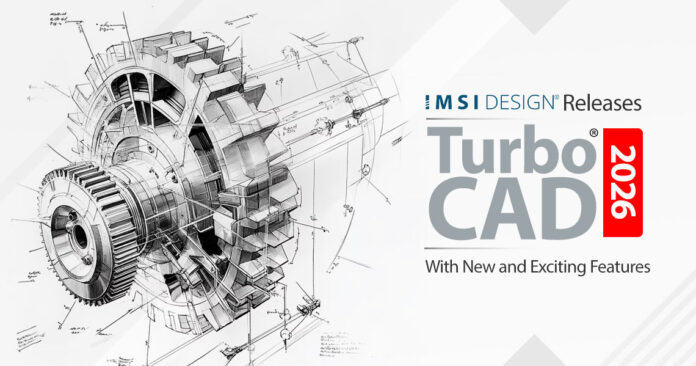
NOVATO, CA, USA, May 12, 2026 – IMSI Design, a leader in CAD software innovation, announces the release of TurboCAD 2026, a milestone upgrade that advances performance, interoperability, visualization, and AI‑powered design assistance. With more than 100 new features and enhancements, TurboCAD 2026 delivers a faster, more intuitive, and more intelligent design environment for professionals across architecture, engineering, manufacturing, and visualization. 

Performance, User Interface & Usability

TurboCAD 2026 introduces a modernized interface with a new Dark/Light Theme Toggle, a redesigned Draw Menu, and a faster Command Finder that surfaces tools instantly with predictive suggestions and visual icons.

The Drafting Palette now adapts more fluidly to evolving models, keeping annotations stable while allowing objects to be added or removed at any time. Additional refinements include clearer Start Page messaging, a Recent Commands menu for quick access, and an updated WebView2 engine for smoother, more responsive HTML‑based components.

Installation & Deployment

A new Unified Multi‑Language Installer simplifies setup by including all supported languages in a single package. Users can select their preferred interface language during installation and switch languages at any time without reinstalling.

TurboCAD 2026 is fully localized in English, French, and German. Additional languages are included in the installer, but their localization work is going on. Updated language files will be delivered through upcoming in‑app patches as localization work continues.

TurboCAD 2026 also introduces smarter file organization for images, reports, and logs, along with a Clean Startup mode that bypasses initial dialogs for troubleshooting or controlled deployment.

Interoperability & File Formats

TurboCA 2026 integrates updated Teigha (ODA) libraries for improved DWG/DXF compatibility and adds direct 2D Adobe PDF import, converting PDF drawings into editable CAD geometry. New IGES options provide both ODA‑based and ACIS‑powered import paths, supporting a wide range of engineering workflows. This release also updates native CAD translator support for SOLIDWORKS, NX, CATIA, and Solid Edge in the Platinum product.

2D, 3D & Modeling Enhancements

New drafting and modeling tools expand creative and technical control. Graphic on Path enables smooth placement of objects along curves, while the enhanced Split Tool supports precise, dimension‑driven segmentation.

For 3D workflows, TurboCAD 2026 introduces Direct 2D Unfolding for sheet metal, an improved Unbend Tool with K‑Factor control, a Closed Loft option for continuous surfaces, and Imprint Projection for embedding curves or text directly into solids.

Rendering and Visualization

TurboCAD 2026 delivers the fastest ACIS performance to date, with 10–15× faster render‑prep for models using multiple face materials. The Visualize engine has been updated for smoother navigation, improved stability, and more accurate display of complex assemblies.

Copilot — Smarter, More Integrated Assistance

The new Copilot Render, available in the Copilot Professional add‑on, brings concept visualization directly into TurboCAD. Describe the style, lighting, materials, or mood you want, and Copilot generates expressive concept images right on top of your drawing—without changing geometry or leaving the workspace. Variations appear instantly, making it easy to compare directions and refine ideas as they develop. Each result is saved as a Copilot Named View, so designers can revisit concepts or branch into new ones at any time. Copilot Render turns early‑stage visualization into a fast, intuitive part of the design process, fully integrated with the technical model. Additional Copilot Professional capabilities include Copilot‑generated textures and a Part Finder for mechanical components.

The new Command Assistant interprets natural‑language requests and surfaces relevant commands instantly. The Smart Help Trigger displays contextual guidance as tools are activated, while new toggle‑based request tabs make Copilot interactions clearer and more predictable.

Executive Insights

“Copilot Render is a breakthrough for early‑stage visualization,” says Tim Olson, Vice President of IMSI Design. “Designers can explore ideas instantly, right inside the CAD environment, without breaking their workflow. Combined with faster ACIS performance and smarter interoperability, TurboCAD 2026 delivers meaningful improvements for professional design.”

“TurboCAD 2026 delivers a cleaner, faster, and more intuitive design experience across the entire product,” says Rita Buschmann, Vice President of Product Management, CAD and Home Design. “From the modernized interface and unified installer to improved drafting tools, smarter file handling, and major performance gains in ACIS and Visualize, this release strengthens everyday workflows for professionals. Our focus was clarity, speed, and reliability — helping users stay productive from the moment TurboCAD launches.”

Availability and Pricing

TurboCAD 2026 is now available for purchase. Visit www.turbocadpro.com or  www.imsidesign.com to explore detailed comparison charts, term plans, and upgrade options.

TurboCAD 2026 is available in four variants:

  • Platinum: $1,499.99 – The ultimate CAD solution for professionals demanding the best.
  • Professional: $999.99 – Precision, power, and productivity for advanced users.
  • Deluxe: $399.99 – A perfect blend of 2D simplicity and 3D capability.
  • Designer: $149.99 – Efficient and precise 2D drafting for beginners and hobbyists.

All variants are available as standalone licenses or through flexible term plans, including 1-year and 3-year options.

Copilot Availability & Term Plans

All TurboCAD 2026 purchases include a complimentary trial of TurboCAD Copilot Help, an optional plug‑in powered by Retrieval‑Augmented Generation (RAG). Copilot Help delivers context‑aware answers drawn from trusted documentation, FAQs, video tutorials, and product guides—providing immediate, relevant assistance directly inside the design environment. It also includes the new Command Assistant, which interprets natural‑language requests and surfaces relevant tools, and the Smart Help Trigger, which displays contextual guidance automatically as commands are activated. After the trial, Copilot Help is available for $99.99.

For users seeking a more dynamic, design‑integrated experience, TurboCAD Copilot Professional is offered as an optional plug‑in. It includes everything in Copilot Help and extends it with advanced AI‑powered tools for visualization, material development, part discovery, natural‑language interaction with CAD data, general AI assistance, text‑to‑image generation, rendering‑scene analysis, visual reporting tools, basic text‑to‑CAD creation, and parametric part creation and editing. New 2026 capabilities include Copilot Render for concept imagery directly on top of CAD drawings, Copilot Images as Material Textures, and the Copilot‑Powered Part Finder for inserting mechanical components through natural‑language search. Copilot Professional delivers a more intelligent, fluid, and visually driven design experience. It is available as a 1‑year term plan for $299.99 or a 3‑year term plan for $899.99.

Additionally, our Training Guides, Add-ons and Symbols are specially designed to complement and expand capabilities when working with TurboCAD 2026.

Note: Feature availability varies by TurboCAD 2026 variant and by optional add‑on. For a detailed overview of included tools and capabilities, please refer to the feature comparison on the TurboCAD website.

About IMSI Design

IMSI Design is a global leader in mechanical and architectural CAD (Computer-Aided Design) and a pioneer in mobile solutions for the AEC (Architectural Engineering and Construction) industry. Since 1988, IMSI Design has distributed its products to over 20 million users worldwide, including the award-winning TurboCAD, DesignCAD, FloorPlan, TurboViewer, TurboReview, and TurboSite—a diverse suite of precision design applications for both desktop and mobile. Please visit www.turbocadpro.com or www.imsidesign.com for more information.