A complete guide for engineering leaders and simulation professionals
In today’s manufacturing and engineering landscape, simulation tools are no longer isolated specialist tools — they are mission-critical engines of design innovation. But with the rapid growth of simulation usage across teams and disciplines comes increasing complexity in managing models, data, workflows, and results.
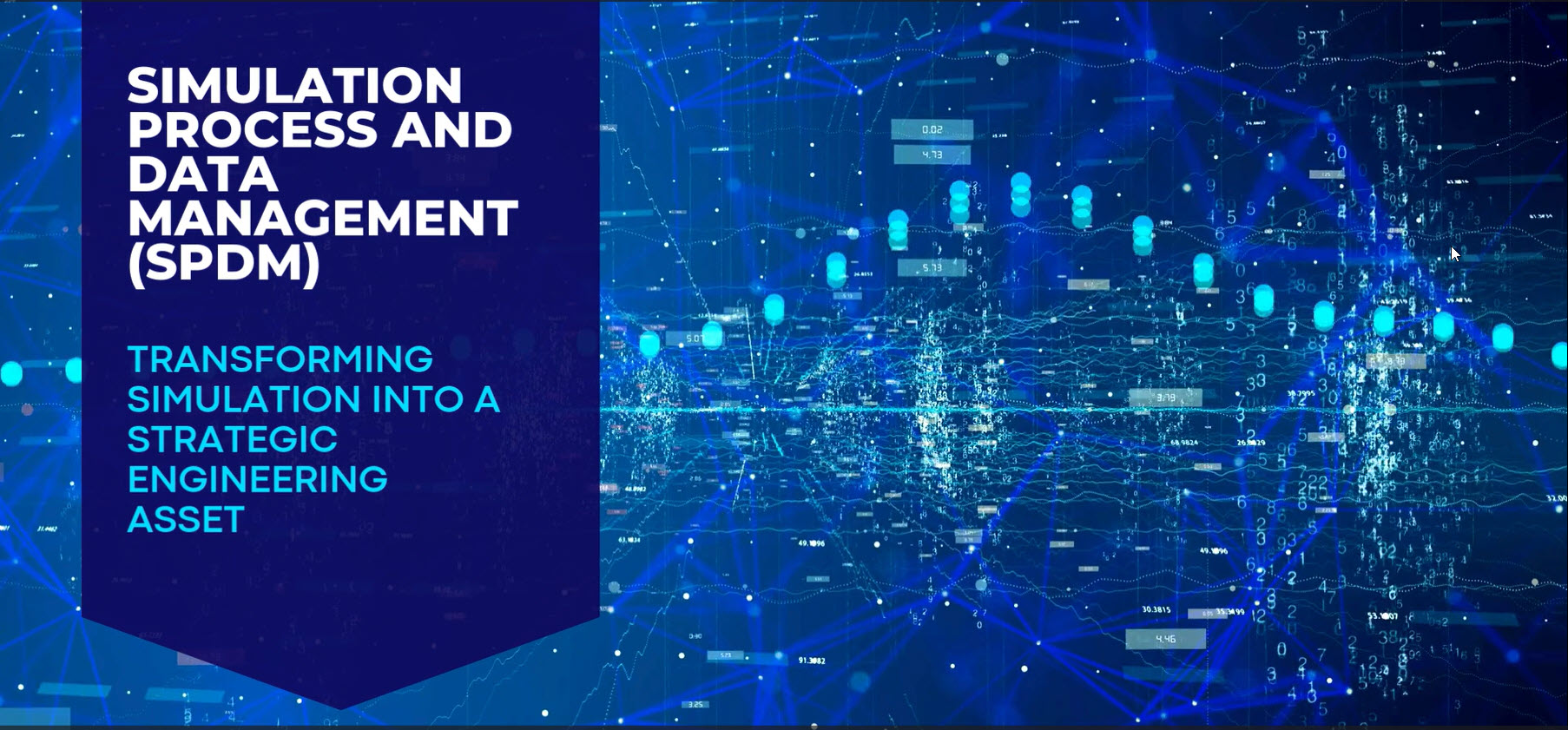
This is where Simulation Process and Data Management (SPDM) becomes essential.
What Is SPDM?
Simulation Process and Data Management (SPDM) is a structured methodology and software capability that helps engineering organizations:
- Organize and govern simulation models, inputs, and results
- Capture relationships between simulation data and engineering decisions
- Automate routine tasks and workflows
- Enable cross-team collaboration, traceability, and version control
Unlike traditional file-based simulation management — where data lives in folders, spreadsheets, and local drives — SPDM ensures that data and processes are centralized, searchable, secure, and reusable across the engineering enterprise.
Why SPDM Matters in Digital Engineering
Digital engineering is not just about running simulations — it is about connecting simulation into the broader digital thread of product development. SPDM plays a foundational role in this transformation by:
- Scaling simulation operations beyond small CAE teams
- Standardizing engineering workflows and governance
- Connecting simulation to CAD, PLM, and digital twin frameworks
- Improving collaboration across distributed engineering teams
- Enabling automation and AI-assisted decision-making
- Ensuring data traceability and regulatory compliance
For organizations adopting Industry 4.0 and advanced digital engineering strategies, SPDM is no longer optional — it is strategic infrastructure.
Various SPDM / SDM Software Available
Several leading engineering software providers offer SPDM or SDM (Simulation Data Management) solutions:
A modern SPDM platform that links simulation models, loads, materials, solver settings, and results in a governed environment focused on traceability, collaboration, automation, reporting, and AI-assisted insights.
The digital engineering platform for simulation process and data management (SPDM) and multidisciplinary design optimization (MDO).
A leading PLM platform with integrated simulation process and data management capabilities designed to connect CAE workflows with enterprise product data.
3DEXPERIENCE Platform – by Dassault Systèmes
Provides simulation lifecycle management alongside design, systems engineering, and manufacturing on a unified digital platform.
Focused specifically on simulation data governance and workflow automation in high-throughput CAE environments.
A web-based SPDM environment that centralizes simulation projects, workflows, and collaboration across distributed teams.
Cadence – BETA CAE – SPDRM Software
Each of these tools targets different engineering needs, integration levels, and scalability requirements — from PLM-driven ecosystems to simulation-centric governance platforms.
What Are the Benefits of SPDM?
Adopting SPDM delivers measurable advantages for engineering and product development teams:
Increased Engineering Productivity
Automation reduces manual effort and repetitive tasks, allowing engineers to focus on innovation and optimization.
Faster Time to Market
Standardized and reusable workflows accelerate validation cycles and design iterations.
Better Data-Driven Decisions
Centralized and validated simulation data improves confidence in design decisions and reduces risk.
Reduced Rework
Version control and traceability prevent errors caused by outdated models or mismanaged data.
Improved Collaboration
Engineering teams across locations and disciplines can securely share and reuse simulation assets.
Improved ROI on Simulation Investments
Structured management maximizes the value of CAE tools, HPC infrastructure, and engineering expertise.
What’s the Best Way to Get Started with SPDM?
Implementing SPDM is both a technical and organizational initiative. A structured approach ensures long-term success.
1. Assess Current Simulation Maturity
Evaluate how simulation data is stored, shared, and validated today. Identify inefficiencies and duplication of effort.
2. Identify High-Impact Use Cases
Start with a pilot area such as structural analysis, CFD, crash simulation, or multi-physics workflows where automation can deliver measurable value.
3. Define and Standardize Processes
Document best practices and approval workflows before automating them.
4. Integrate with Existing Systems
Ensure connectivity with CAD, PLM, and enterprise systems to maintain digital continuity.
5. Focus on Change Management
Train teams and secure leadership support to drive adoption and cultural alignment.
6. Scale Gradually
Expand SPDM usage across departments once initial ROI is demonstrated.
Final Thoughts for DailyCADCAM Readers
As simulation becomes central to digital twins, AI-driven optimization, and model-based engineering, unmanaged simulation data can become a bottleneck to innovation.
SPDM transforms simulation from a siloed technical activity into a governed, scalable, and enterprise-ready digital asset.
For engineering leaders and CAD/CAE professionals evaluating their next digital investment, the question is no longer whether SPDM is needed — it is how strategically and efficiently it can be implemented.
Thank you,
DailyCADCAM