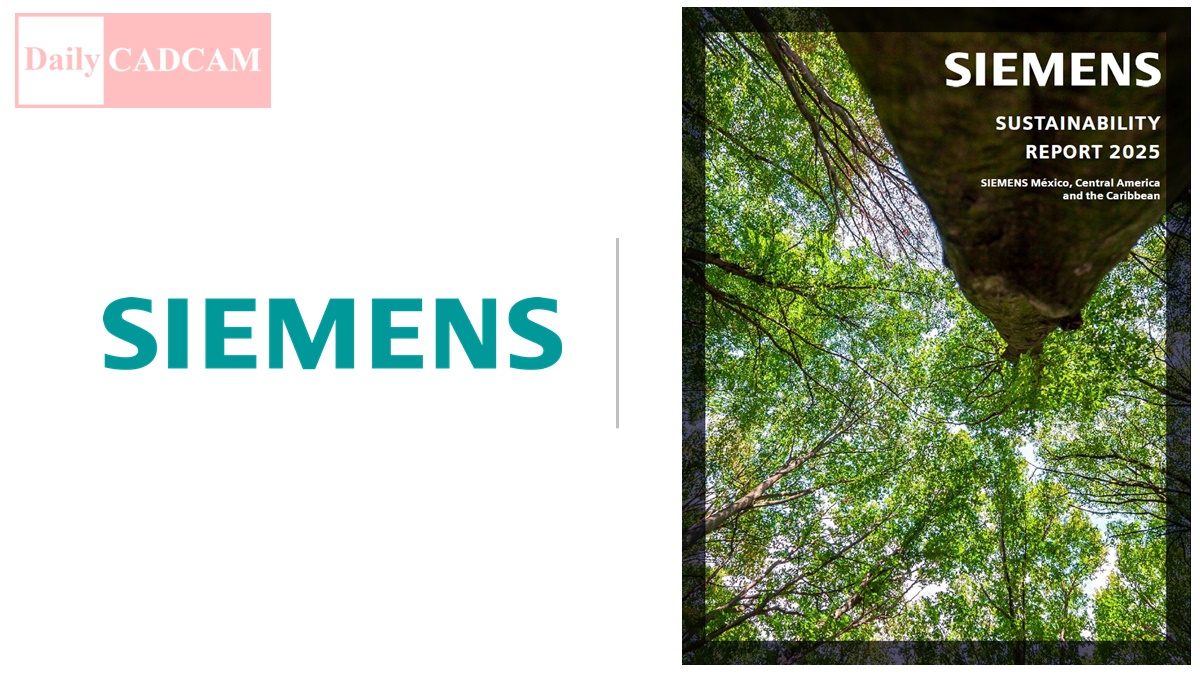
MEXICO CITY, MX, Jun 8, 2026 – Siemens Mexico, Central America and the Caribbean announced the results of its 2025 Sustainability Report, an annual publication highlighting the company’s ESG achievements and its direct contribution to the United Nations Sustainable Development Goals (SDGs) through technological innovation and strategic partnerships.
During fiscal year 2025 (FY25), Siemens strengthened sustainability as a cross-cutting pillar of its corporate strategy, reinforcing its role as a key partner in the region’s digital and industrial transformation. This approach is reflected in the evolution of its operations and in the way it collaborates with customers and partners to drive more efficient and sustainable development.
Alejandro Preinfalk, President and CEO of Siemens Mexico, Central America and the Caribbean, noted that this period marked a turning point in the integration of sustainability into the business. He emphasized that the company has strengthened both its internal processes and its ability to support other organizations in their transformation journeys.
Progress in Climate Action
One of the company’s main achievements was an approximately 27% reduction in Scope 1 and Scope 2 emissions, driven by initiatives focused on electrification, energy efficiency, and the transition to renewable energy sources.
Currently, 98.89% of Siemens’ electricity consumption in the region is backed by renewable energy certificates, aligning its operations with global initiatives such as RE100 and EP100 and reaffirming its commitment to decarbonization.
In addition, its technology portfolio—based on digitalization, automation, and electrification—has enabled customers to reduce emissions, optimize resources, and improve competitiveness, extending positive impact beyond Siemens’ own operations.
Circular Economy and Efficient Resource Use
In the environmental arena, Siemens consolidated its goal of sending zero waste to landfill at relevant sites, strengthening its circular economy strategy. A notable initiative is the black plastic recovery program in Monterrey, developed in collaboration with the Autonomous University of Nuevo León (UANL) and Tecnológico de Monterrey.
This project enables the reuse of waste as alternative fuel in the cement industry and as a clinker substitute in eco-friendly bricks, reducing environmental impact across multiple sectors.
Additionally, the Balvanera site reused approximately 7,293 cubic meters of treated water for irrigating green areas, promoting more efficient water management. Meanwhile, the ITESA plant in Ciudad Juárez received the Zero Waste to Landfill Award, a validation program administered by UL Solutions, a global safety science company. The Santa Catarina site in Nuevo León was also recognized with the 2025 IMEI Award for Sustainable Development.
Technological Innovation for Sustainable Development
Sustainability at Siemens is also advanced through its business units—Digital Industries, Smart Infrastructure, and Mobility—which promote solutions for industry, infrastructure, and sustainable transportation.
During FY25, the company collaborated with the Federal Electricity Commission (CFE) and private-sector organizations to modernize energy infrastructure, integrate clean energy sources, and optimize industrial processes. Siemens also played a key role in the modernization of public transportation in Mexico City through CBTC (Communications-Based Train Control) technology, improving the system’s efficiency, safety, and sustainability.
These actions reinforce the organization’s commitment to SDG 7 (Affordable and Clean Energy), SDG 9 (Industry, Innovation and Infrastructure), and SDG 11 (Sustainable Cities and Communities).
People at the Center
On the social front, Siemens surpassed 7,000 employees across the region and achieved a 95% employee satisfaction rate, further strengthening its position as one of the best places to work.
In the area of inclusion, through the Global Gender Equity Program and FAIR, the company achieved an 82% inclusion index, promoting pay equity and programs that integrate diverse talent, including people with disabilities, thereby fostering more equitable and innovative workplaces.
The company also maintained high health and safety standards, promoting a preventive culture focused on the overall well-being of its employees.
Corporate Citizenship
Through its corporate citizenship strategy, Siemens generated a positive impact across various communities. More than 100 computers were donated to educational institutions, over 1,500 volunteer hours were contributed, and 480 trees were planted.
Additionally, partnerships with social organizations and dual education programs have enhanced youth employability and skills development, aligning with SDG 4 (Quality Education).
Governance and Recognition
Siemens’ FY25 performance was recognized by several organizations. In 2025, the company received the ESR (Socially Responsible Company) distinction for the sixteenth consecutive year, reinforcing its leadership in sustainable and responsible business practices.
Siemens also received awards for innovation, efficiency, and sustainability, reflecting the strength of its governance model.
With these results, Siemens reaffirms its leadership in sustainability and innovation. The company will continue driving digitalization and the energy transition, working alongside governments, businesses, and society to build a more resilient and inclusive future.
“Our commitment is clear: to integrate technology, innovation, and purpose to accelerate the transition toward more sustainable models across the region,” concluded Alejandro Preinfalk.