India’s construction and infrastructure sector is scaling fast. Across metros, airports, healthcare campuses, data centers, commercial developments, industrial facilities, and large residential projects, BIM is becoming more than a design and documentation method. It is becoming part of how teams coordinate, manage risk, make decisions, and keep delivery moving.
As BIM adoption matures, a new challenge is becoming clear: project teams are not short of information. They are short of connected, trusted, decision-ready information.
With its India launch events in June 2026 as part of BIMcollab’s APAC expansion, BIMcollab is entering the market with direct sales representation and customer success support. The company aims to help Indian project teams improve BIM coordination, issue management, model quality checking, openBIM workflows, and accountability across multidisciplinary projects.
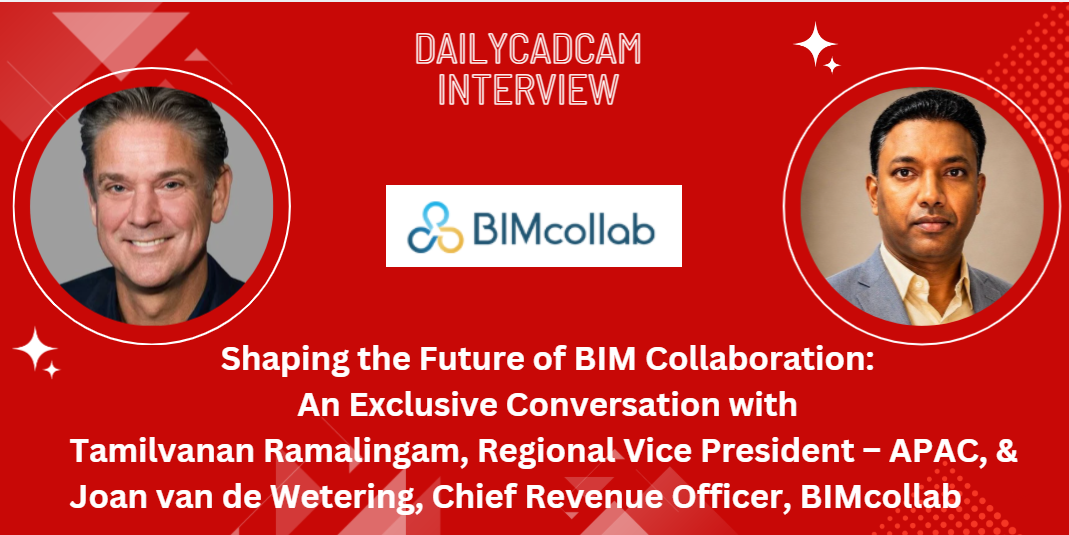
In this exclusive interview, Tamilvanan Ramalingam, Regional Vice President – APAC, BIMcollab, and Joan van de Wetering, Chief Revenue Officer, BIMcollab, discuss why India is ready for the next stage of BIM maturity, where coordination breaks down, and how BIMcollab fits into existing project ecosystems.
Interview
Question: BIMcollab is hosting India launch events in June 2026 as part of its APAC expansion. Why is this the right moment?
Tamilvanan Ramalingam: India is no longer at the start of its BIM journey. Many design firms, BIM consultants, contractors, PMCs, and owner-side teams already understand the value of model-based working. The question now is how to turn that BIM capability into more predictable project delivery.
Indian projects are becoming larger, faster, and more multidisciplinary. A single project may involve designers, engineers, BIM service providers, contractors, MEP specialists, PMCs, owners, and site teams working across different locations and tools. At that level of complexity, coordination cannot depend only on meetings, spreadsheets, emails, and manual follow-up.
The market is ready to move from BIM usage to BIM coordination maturity. Teams need better ways to connect information, ownership, and decisions.
Joan van de Wetering: From BIMcollab’s perspective, India is a natural next step. We see strong BIM capability in the market, and we also see a familiar global challenge: teams have powerful design tools, but the process around decisions, accountability, and issue resolution is often still fragmented.
BIMcollab helps close that gap. We are not coming to India to tell teams they need BIM. They already understand that. We are here to help them get more value from BIM by making coordination clearer, more accountable, and easier to manage across the project lifecycle.
Question: Where do project teams typically lose time in coordination?
Tamilvanan: The challenge is rarely a lack of effort or technical skill. The issue is that information can become scattered across models, drawings, coordination reports, WhatsApp messages, emails, spreadsheets, meeting notes, and site conversations.
When that happens, people may be discussing the same project, but not always from the same context. A decision may be made in a meeting, but afterward the team still needs to know who owns it, what the next action is, whether it has been resolved, and whether the model reflects the decision.
That is where time is lost. Issues return, meetings become repetitive, and senior people spend time chasing status instead of making decisions.
Joan: We describe this as the gap between finding an issue and resolving it. Many teams are good at detecting clashes or model problems, but detection is only the first step. Value comes when an issue is assigned, understood, resolved, verified, and visible to everyone who needs to act.
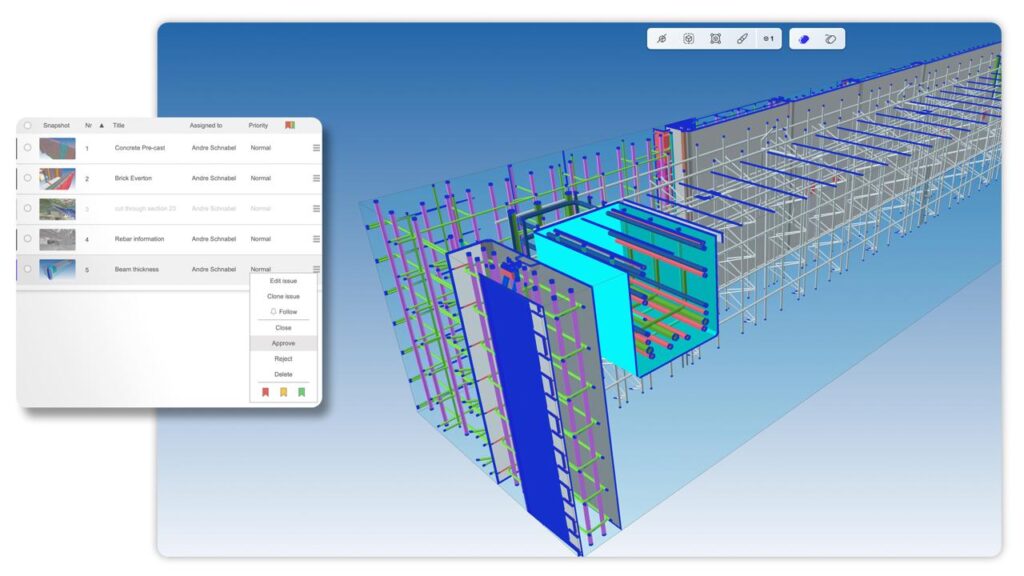
BIMcollab connects issues to context, responsibility, status, model information, and decision history, helping teams move from status chasing to coordinated action.
Question: India is investing heavily in infrastructure and urban development. How does that change the role of BIM coordination?
Tamilvanan: On large infrastructure and building projects, coordination is directly connected to delivery. If an issue is not resolved at the right time, it can affect procurement, sequencing, site coordination, approvals, and cost control.
In India, we see this across metro and rail projects, airports, hospitals, commercial developments, data centers, industrial facilities, logistics assets, and large residential schemes. These projects involve multiple disciplines and fast-moving decisions. They need workflows that are practical, repeatable, and easy for different stakeholders to follow.
Coordination is no longer just a technical BIM activity. It is a project delivery capability.
Joan: The most successful BIM teams connect model information to action. A model can contain a lot of data, but teams still need to know what changed, what needs attention, who owns the next step, and whether the resolution has been verified.
As India’s construction market scales, that connection becomes even more important. Better coordination supports predictability, reduces uncertainty, and gives project leaders more confidence before critical decisions are made.
Question: Many platforms talk about a “single source of truth.” How is BIMcollab’s approach different?
Joan: A single source of truth is valuable, but storing information is not enough. Project teams need decision context. They need to understand what changed, who owns the issue, what decision was made, why it was made, and what should happen next.
BIMcollab connects models, issues, documents, workflows, and teams so information becomes decision-ready. Coordination is not just document management. A project leader needs confidence that the team is looking at the latest issue, that responsibility is clear, and that progress can be tracked.
Tamilvanan: That distinction matters in India because BIM maturity can vary across the supply chain. One project may include an advanced BIM team, a specialist BIM service provider, contractors at different stages of digital adoption, and an owner or PMC that needs visibility without working inside authoring software.
For those teams, information has to be practical: detailed enough for technical users, but clear enough for project leaders. BIMcollab helps create that bridge.
Question: Most Indian firms already use established tools such as Autodesk, Bentley, Tekla, and others. Where does BIMcollab fit?
Tamilvanan: Indian firms have already invested in their software, training, standards, and project workflows. They are not looking to replace everything. They want to improve coordination around the tools they already use.
An MEP team may already detect clashes, but still need every issue to have an owner, a due date, a clear status, and a verified resolution. A PMC may receive regular reports, but still need better visibility into blockers, overdue actions, and project-level risk. That is where BIMcollab adds value: it helps existing tools and models produce better coordination outcomes.
Joan: We are very pragmatic about this. Authoring and design tools are essential. BIMcollab focuses on the coordination layer around them: issue management, model quality checking, project visibility, accountability, and collaboration.
Interoperability is central to that approach. Real projects rarely happen inside one software environment. BIMcollab supports open and connected workflows so teams can manage issues, model information, and coordination processes across the tools they already use.
Question: Many teams already perform clash detection. What does continuous coordination add?
Tamilvanan: Clash detection is important, but it is not the full coordination process. Many Indian BIM teams are already technically strong. The next step is process maturity.
Continuous coordination asks more than “what clashes exist?” It asks: Which issues matter most? Who owns them? What is blocking resolution? Has the issue been verified? Is the decision reflected in the latest model?
When teams standardize how issues are created, assigned, reviewed, and closed, they reduce repetitive meetings and create a clearer link between BIM work and project outcomes.
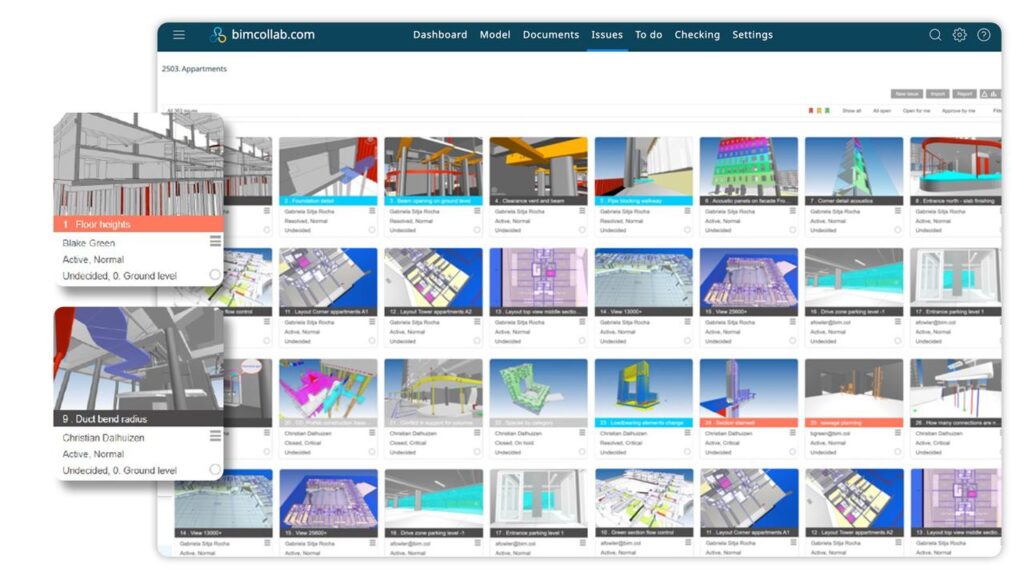
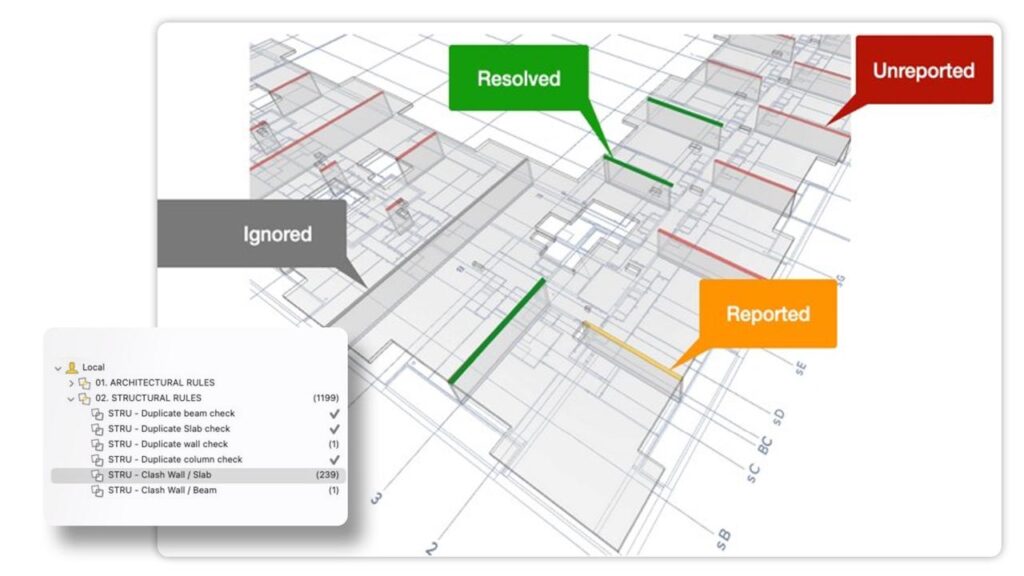
Joan: Model checking, issue management, and coordination visibility are part of one workflow. Model checking identifies clashes, missing information, rule-based issues, or quality problems. Issue management turns those findings into accountable actions. Coordination visibility helps project leaders understand what is open, what is overdue, where bottlenecks are appearing, and whether the team is making progress.
That is how teams move from detection to ownership, from ownership to resolution, and from resolution to project confidence.
Question: Which teams in India do you expect to benefit most from BIMcollab?
Tamilvanan: We see strong relevance for BIM coordination teams, BIM service providers, MEP-heavy contractors, design-build teams, PMCs, owner-side BIM teams, and mid-sized BIM-mature firms that need stronger process control.
These teams often sit in the middle of project complexity. They need to keep disciplines aligned, make blockers visible, follow up on decisions, and give leadership confidence that coordination is moving forward.
BIMcollab is especially useful where there are many stakeholders, frequent design changes, and high pressure to avoid rework.
Joan: The teams that benefit most are often the ones responsible for translating technical issues into project action. They are expected to keep everyone aligned, but they may not always have a workflow that gives them enough visibility or authority.
BIMcollab makes that work transparent. It shows what is open, what is resolved, who owns what, and where decisions are needed. That creates value for technical teams, contractors, PMCs, and owners.
Question: Indian firms are commercially disciplined when adding new software. How do you make the business case?
Tamilvanan: Cost discipline is a strength in India. Firms do not want another tool simply because it sounds innovative. They want to know where the value comes from.
That conversation should not start only with software cost. It should also look at what poor coordination already costs: repeated meetings, unresolved issues, delayed decisions, manual reporting, rework, additional site queries, slower approvals, and senior people spending time chasing status.
Indian customers respond well when the discussion is practical: Where is coordination waste highest? Which process creates the most manual work? Which decisions are slowing the project down? That is where the value becomes tangible.
Joan: A strong business case is not built on a feature list. It is built on the problem the customer wants to solve.
If a team can reduce coordination waste, improve predictability, and make responsibility clearer, that has direct business value. BIMcollab helps teams make that value visible by connecting issues, actions, decisions, and progress in a structured workflow.
Question: What does local sales and customer success support mean for Indian customers?
Tamilvanan: It means customers can work with people who understand the Indian market, local delivery pressures, commercial expectations, and project realities. A local presence helps us understand whether the priority is MEP coordination, issue follow-up, model quality, owner reporting, PMC visibility, or standardizing coordination across teams.
The goal is not only to set up software. It is to help customers build better coordination habits.
Joan: Local customer success is important because value comes from adoption. Teams need to agree how issues are created, assigned, reviewed, and closed. They need to onboard the right stakeholders and define workflows that fit their projects.
Tamilvanan and the India team bring local understanding. BIMcollab brings proven coordination workflows, technology, and customer success experience from other markets. Together, that allows us to support Indian customers in a practical and relevant way.
Question: If a project leader opens BIMcollab before a coordination meeting, what should they see?
Joan: They should see a clear picture of the project’s coordination status: what is open, what has changed, who owns what, which issues are overdue, which decisions need attention, and where the biggest blockers are.
They should not have to wonder which report is latest or whether the team is discussing the same issue again. The meeting should move from status chasing to decision-making.
Tamilvanan: For Indian project leaders, that confidence is very important. When the right information is visible, the team can focus on resolving issues, assigning responsibility, and keeping delivery on track.
That is the promise of better BIM coordination: clearer context, better decisions, and more confidence in project delivery.
Launch Event
Meet the BIMcollab team at one of the launch events:
- Mumbai — June 16, 2026: Novotel Mumbai International Airport
- New Delhi — June 18, 2026: Hotel Aloft New Delhi Aerocity
- Bengaluru — June 24, 2026: Novotel Bengaluru Outer Ring Road
Register via BIMcollab’s India launch events page.